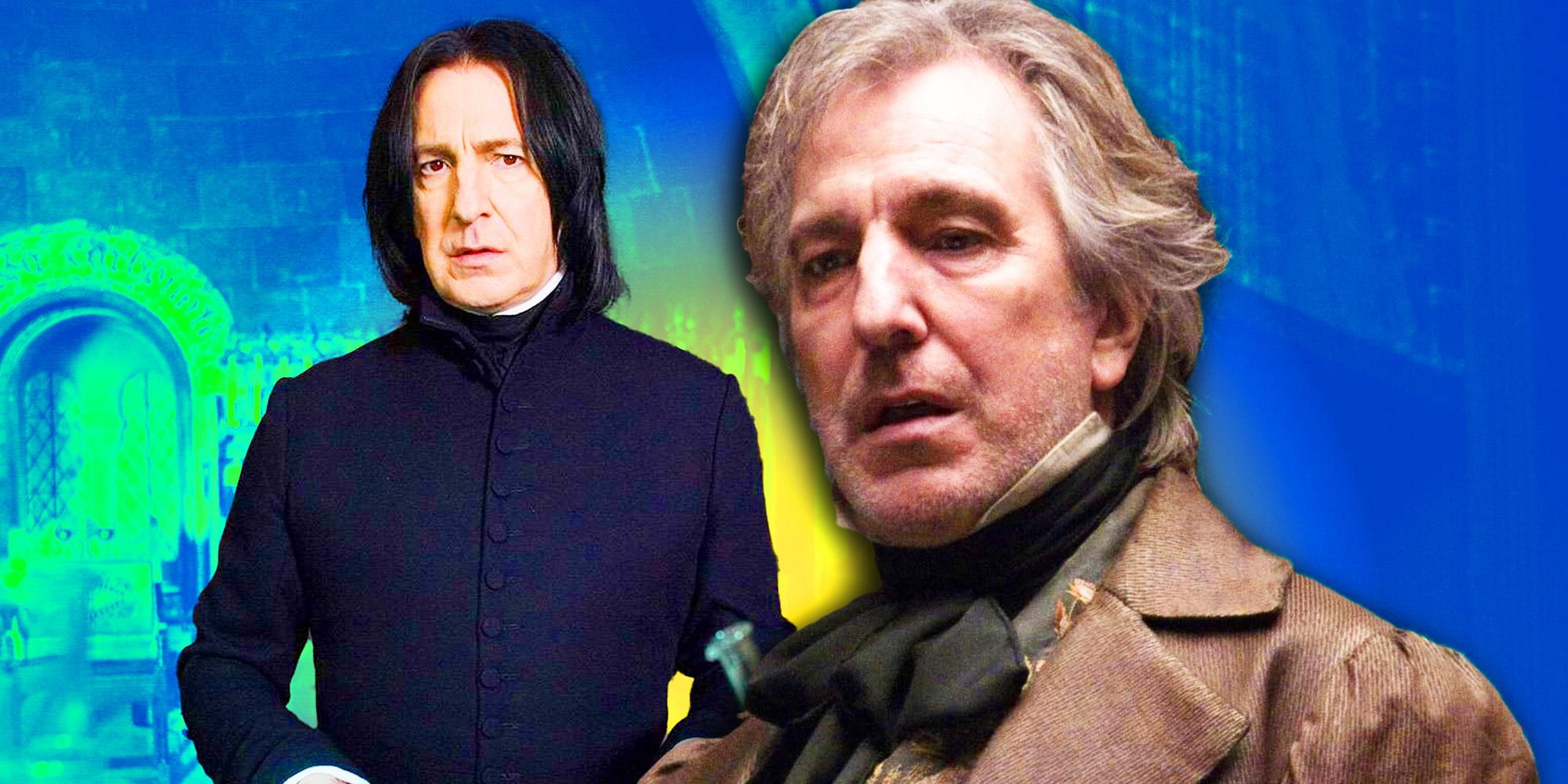
Alan Rickman was a classically trained stage actor whose theatrical career spanned four decades, marked by his definitive portrayal of the Vicomte de Valmont in Les Liaisons Dangereuses and extensive work with the Royal Shakespeare Company. While globally recognized for film, his stage legacy includes Tony-nominated performances in Private Lives and Seminar.
As we look back from 2026, ten years after his passing, Alan Rickman’s contributions to the stage remain a cornerstone of modern theatrical study. While his cinematic roles in the Harry Potter series and Die Hard brought him international stardom, Rickman famously considered the theater his "first love" and his "true home." His career was not merely a series of performances but a masterclass in vocal precision, physical presence, and the psychological depth of the "anti-hero." To understand "Alan Rickman plays" is to understand the evolution of British contemporary acting from the late 1970s through the early 2010s.
The Formative Years: RADA and the Royal Shakespeare Company
Alan Rickman’s journey into professional theater began later than many of his peers. After a successful stint as a graphic designer, he transitioned to the Royal Academy of Dramatic Art (RADA), where he trained from 1972 to 1974. This foundation provided him with the classical techniques that would later define his iconic voice and deliberate pacing.
Upon graduating, Rickman spent several years in repertory theater before joining the Royal Shakespeare Company (RSC) in 1978. His early work at the RSC was characterized by a diverse range of roles that tested his versatility. During the 1978 season, he appeared in productions of The Tempest (as Ferdinand) and Love's Labour's Lost (as Boyet). These roles allowed him to hone the distinctive "Rickman drawl"—a result of his natural baritone combined with a slight speech impediment involving a tight jaw, which he turned into a unique stylistic asset.
In the early 1980s, Rickman’s stage presence began to garner significant critical attention. His performance as Achilles in Troilus and Cressida (1985) was noted for its brooding intensity, a precursor to the complex villains and morally ambiguous characters he would later inhabit on screen. During this period, he also worked with the Royal Court Theatre, a venue known for its commitment to new writing, which aligned with Rickman’s lifelong passion for contemporary drama.
The Breakthrough: Les Liaisons Dangereuses
If one production defines Alan Rickman’s theatrical legacy, it is Christopher Hampton’s adaptation of Les Liaisons Dangereuses. Opening at the RSC’s The Other Place in Stratford-upon-Avon in 1985, Rickman originated the role of the Vicomte de Valmont.
The play was a sensation, eventually moving to the West End and then to Broadway in 1987. Rickman’s Valmont was a revelation; he portrayed the character not as a cartoonish libertine but as a weary, intellectual predator whose primary weapon was his voice. The performance earned him a Tony Award nomination for Best Actor in a Play and a Drama Desk Award.
The success of Les Liaisons Dangereuses was a double-edged sword. While it cemented his status as a leading man, it also led to his casting in Die Hard (1988), as producers in Hollywood were captivated by his stage performance. However, Rickman resisted the pull of Hollywood stardom to return frequently to the stage, ensuring that his career remained balanced between the intimacy of the theater and the scale of cinema.
Master of the Modern Revival: Private Lives and John Gabriel Borkman
In the 2000s, Rickman demonstrated his mastery of the "revival"—taking classic plays and reimagining them for a contemporary audience. Two productions stand out as essential entries in his theatrical filmography.
Private Lives (2001-2002)
Reunited with director Howard Davies and co-star Lindsay Duncan, Rickman took on the role of Elyot Chase in Noël Coward's Private Lives. The production was a monumental hit at the Albery Theatre in London before transferring to the Richard Rodgers Theatre on Broadway. Rickman’s interpretation was noted for its lack of typical "Cowardesque" clipped delivery; instead, he brought a darker, more cynical, and profoundly romantic edge to the role. This performance earned him his second Tony Award nomination and a Variety Club Award.
John Gabriel Borkman (2010-2011)
Toward the end of his career, Rickman tackled the heavy, psychological dramas of Henrik Ibsen. In a production at Dublin’s Abbey Theatre, which later moved to the Brooklyn Academy of Music (BAM), he played the title role in John Gabriel Borkman. Starring alongside Fiona Shaw and Lindsay Duncan, Rickman portrayed a disgraced financier living in self-imposed exile. Critics praised his ability to convey a sense of "frozen power," capturing the character’s internal desolation with minimal physical movement—a hallmark of his late-stage style.
Contemporary Voices: Seminar and New Writing
Rickman’s final appearance on the Broadway stage was in Theresa Rebeck’s Seminar (2011). Playing Leonard, a caustic and brilliant writing professor, Rickman utilized his legendary wit and intimidating presence to command the stage. Unlike the classical revivals he had recently performed, Seminar allowed him to engage with modern dialogue and the dynamics of a younger ensemble cast.
His commitment to new writing extended beyond his own acting. Throughout his career, Rickman was a vocal advocate for living playwrights. He frequently performed in "rehearsed readings" and smaller workshop productions, often without fanfare, simply to support the development of the craft. His involvement in Seminar was seen as a major boost for contemporary American drama, proving that a star of his magnitude could still find value in the "off-beat" and the new.
Behind the Lens: Alan Rickman as a Stage Director
While widely celebrated for his acting, Rickman’s contributions as a stage director were equally significant, characterized by a meticulous attention to detail and a deep empathy for his performers.
- The Winter Guest (1995): Rickman directed this play by Sharman Macdonald at the West Yorkshire Playhouse and later at the Almeida Theatre. The production, which featured Phyllida Law and Sian Thomas, was so successful that Rickman eventually adapted and directed it as a feature film in 1997.
- My Name Is Rachel Corrie (2005): Perhaps his most influential directorial work, this play was edited from the journals and emails of Rachel Corrie, an American activist. Rickman co-edited the script with journalist Katharine Viner. The production at the Royal Court Theatre was both a critical success and a subject of intense political debate. Rickman’s direction was praised for its restraint and for allowing the words of the subject to take center stage.
- Creditors (2008): Rickman directed a revival of August Strindberg's Creditors at the Donmar Warehouse. The production was noted for its sharp, clinical tension and later transferred to BAM in New York, further establishing Rickman as a director with a keen eye for psychological warfare.
Major Stage Productions of Alan Rickman
The following table summarizes the key theatrical milestones of Alan Rickman’s career, highlighting the diversity of his roles and the prestigious venues where he performed.
| Year | Play Title | Role | Venue/Location |
|---|---|---|---|
| 1978 | The Tempest | Ferdinand | Royal Shakespeare Company |
| 1980 | Commitments | Hugh | Bush Theatre, London |
| 1985 | Troilus and Cressida | Achilles | Royal Shakespeare Company |
| 1985 | Les Liaisons Dangereuses | Le Vicomte de Valmont | RSC / West End / Broadway |
| 1991 | Tango at the End of Winter | Kiyogen | Piccadilly Theatre, London |
| 1992 | Hamlet | Hamlet | Riverside Studios / UK Tour |
| 1998 | Antony and Cleopatra | Mark Antony | Royal National Theatre |
| 2001 | Private Lives | Elyot Chase | Albery Theatre / Broadway |
| 2010 | John Gabriel Borkman | John Gabriel Borkman | Abbey Theatre / BAM |
| 2011 | Seminar | Leonard | Golden Theatre, Broadway |
The "Rickman Technique" on Stage
To analyze an Alan Rickman play is to analyze his specific technical approach to the craft. Rickman was often associated with minimalism. He understood that on stage, a single, deliberate movement could be more evocative than a frantic sequence of gestures.
His use of silence was particularly notable. Rickman was unafraid to let a beat land, forcing the audience to wait for his response. This created a sense of unpredictability and danger, especially in his more antagonistic roles. Furthermore, his vocal training at RADA allowed him to project without shouting, maintaining a conversational intimacy even in large venues like the National Theatre’s Olivier Stage.
In interviews, Rickman often spoke about the "physicality of the voice." He believed that the way a character spoke was a direct reflection of their physical state and their secrets. This philosophy is evident in his performance in Antony and Cleopatra (1998), where his Mark Antony was portrayed as a man physically and vocally weary of war and politics, a departure from the more bombastic interpretations of the past.
Legacy and Archival Access in 2026
As of 2026, students and fans of Alan Rickman have several avenues to explore his theatrical work. While the ephemeral nature of theater means most of his performances live on only in memory, several initiatives have preserved his legacy.
- The V&A Theatre & Performance Archives: The Victoria and Albert Museum in London holds extensive records, including prompt scripts, costume designs, and filmed recordings (for archival purposes) of his RSC and Royal Court performances.
- National Theatre Live (NT Live): While many of his major roles predated the widespread cinema broadcast era, archival footage of his work at the National Theatre is occasionally screened for educational purposes.
- The Alan Rickman Letters: Published posthumously (notably Madly, Deeply: The Diaries of Alan Rickman), his writings provide an unparalleled look into his preparation for roles like Elyot Chase and his directorial thought processes for My Name Is Rachel Corrie.
Frequently Asked Questions
Did Alan Rickman ever win a Tony Award?
While Alan Rickman was nominated for two Tony Awards for Best Actor in a Play (Les Liaisons Dangereuses in 1987 and Private Lives in 2002), he never won the award. However, he won several other prestigious accolades, including a BAFTA, an Emmy, and a Screen Actors Guild Award for his film and television work, and an Olivier Award nomination for his stage performances.
Where can I watch recordings of Alan Rickman's plays?
Stage plays are rarely filmed for commercial release due to rights and union regulations. However, you can view archival recordings for research purposes at the V&A Theatre & Performance Archives in London or the New York Public Library for the Performing Arts at Lincoln Center. Some clips and televised adaptations, such as the 1982 BBC production of The Barchester Chronicles, showcase his early stage-trained style.
What was Alan Rickman's last stage role?
Alan Rickman's final stage role was as Leonard in the Broadway production of Seminar by Theresa Rebeck. The play ran from late 2011 into early 2012 at the Golden Theatre. He chose not to extend his contract, passing the role to Jeff Goldblum, but his performance was widely considered the definitive version of the character.
Did Alan Rickman perform in any Shakespeare plays?
Yes, Rickman had a long history with Shakespeare, primarily through the Royal Shakespeare Company. His notable roles included Ferdinand in The Tempest, Boyet in Love's Labour's Lost, Achilles in Troilus and Cressida, and the title role in Hamlet (directed by Robert Sturua). He also played Mark Antony in Antony and Cleopatra at the National Theatre in 1998, starring opposite Helen Mirren.
Was Alan Rickman ever a member of the Royal Shakespeare Company?
Alan Rickman was a prominent member of the Royal Shakespeare Company (RSC) during the late 1970s and mid-1980s. His time there was instrumental in developing his classical technique and led directly to his breakout role in Les Liaisons Dangereuses, which was an RSC production.
Final Recommendation for Students and Fans
To truly appreciate the depth of Alan Rickman's artistry, one should look beyond his filmography and study his directorial work and his diaries. For those in London, a visit to the National Theatre Archive or the V&A offers a chance to see the meticulous notes and stage designs he influenced. For others, reading Madly, Deeply: The Diaries of Alan Rickman provides the best insight into the mind of a man who viewed the stage as a sacred space for truth-telling. His career serves as a reminder that the most powerful tool an actor possesses is not their fame, but their discipline and their voice.