An advance directive for healthcare form is a legally binding document that allows you to state your medical preferences ahead of time and appoint a trusted person to make decisions if you become unable to communicate. It typically combines a living will and a durable power of attorney for healthcare, ensuring your personal values guide your treatment during serious medical emergencies or end-of-life care.
Planning for future medical contingencies is one of the most responsible steps an individual can take to protect their autonomy and relieve loved ones from the burden of making agonizing choices during a crisis. Medical emergencies can happen unexpectedly at any stage of life, rendering a person temporarily or permanently incapable of speaking with their medical team. Without clear documentation, families often find themselves divided over what treatments their loved one would have wanted, leading to prolonged emotional distress and, in some cases, protracted legal disputes. Understanding the structure, function, and execution of an advance directive for healthcare form ensures that your voice remains central to your care even when you cannot speak for yourself.
What Is an Advance Directive for Healthcare?
An advance directive for healthcare is not a single standardized document across the globe, but rather a legal framework of instruments designed to protect a patient's right to self-determination. At its core, the document addresses a specific scenario: incapacitation. When a physician determines that a patient lacks the cognitive capacity to make or communicate healthcare decisions, the provisions of the advance directive go into effect.
The primary component of this framework is the living will, which dictates specific medical interventions you do or do not want under terminal conditions, persistent vegetative states, or end-of-life scenarios. Common provisions address mechanical ventilation, artificial nutrition and hydration (tube feeding), cardiopulmonary resuscitation (CPR), and palliative pain management.
The second major component is the healthcare proxy, medical power of attorney, or durable power of attorney for healthcare. Unlike the living will—which relies on pre-written instructions that cannot anticipate every possible clinical nuance—the healthcare proxy appoints a surrogate decision-maker. This trusted agent steps into your shoes to interpret your values, converse with medical specialists, and authorize or decline treatments as real-time clinical circumstances unfold.
Core Components of the Form
While statutory requirements vary by jurisdiction, most comprehensive advance directive forms share a standardized structural architecture. Recognizing these components helps individuals complete the paperwork accurately without inadvertently creating legal loopholes or contradictory instructions.
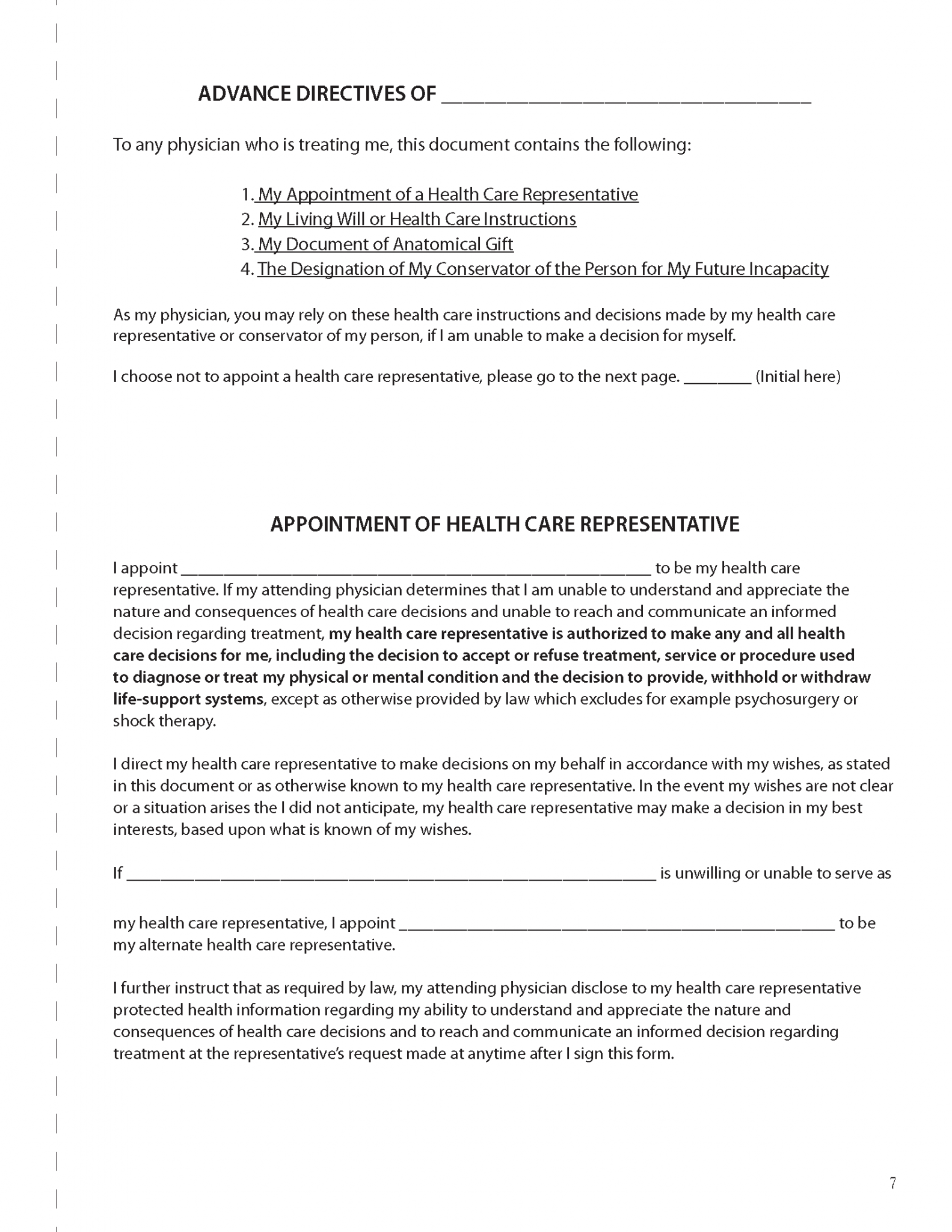
1. The Healthcare Proxy (Designation of Agent)
This section names your primary surrogate and typically includes provisions for one or more alternate agents in case your primary choice is unavailable, unwilling, or unable to serve. The agent's authority is strictly limited to medical decisions and activates only when a physician certifies that you are incapacitated.
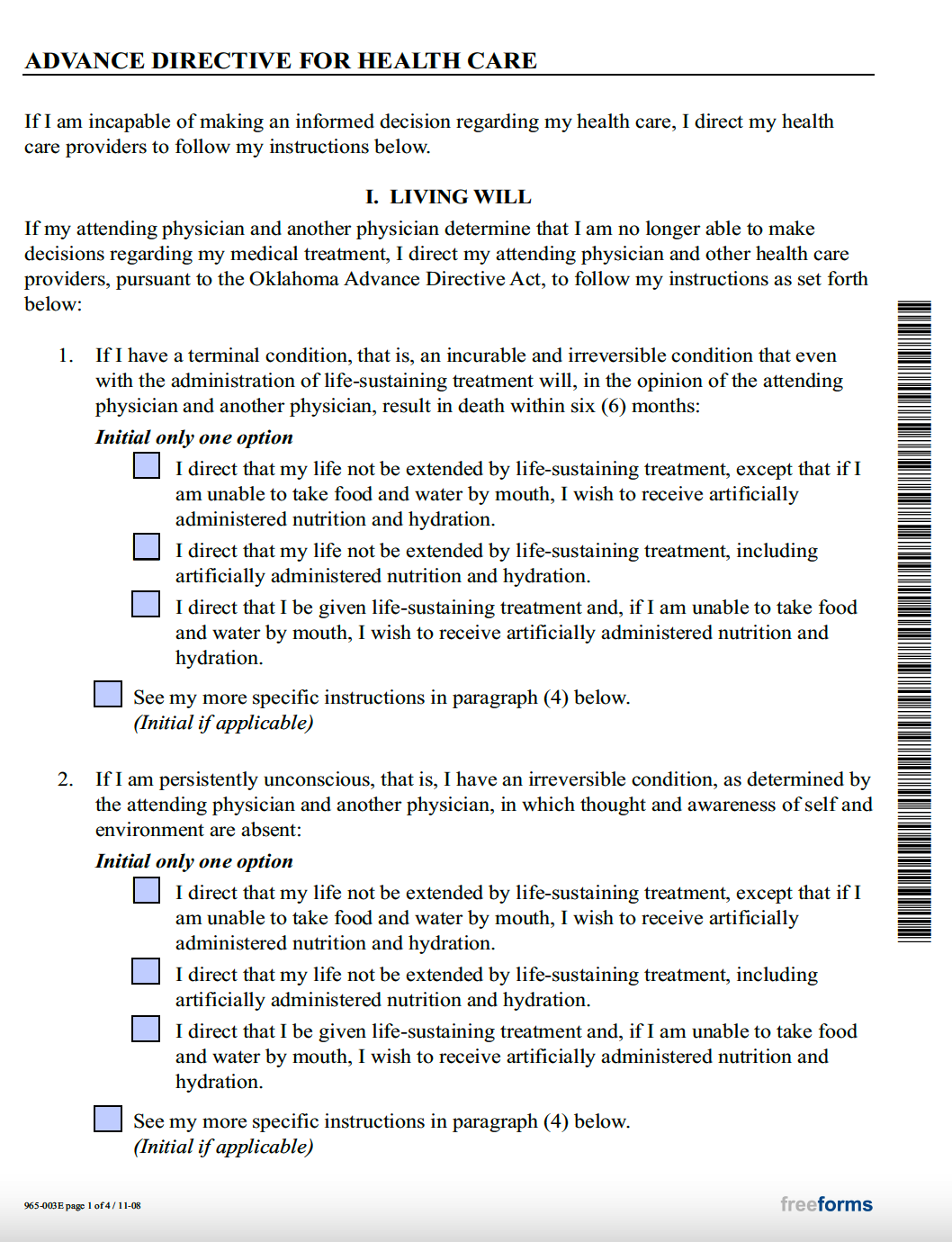
2. Treatment Preferences (Living Will Instructions)
This portion outlines your personal stance on life-sustaining treatments. Forms usually present distinct scenarios—such as a terminal illness with no hope of recovery versus a permanent coma—and allow you to check boxes or write specific instructions regarding:
- Cardiopulmonary resuscitation (CPR)
- Ventilator support
- Dialysis
- Antibiotics and artificial nutrition/hydration
- Pain alleviation measures, even if they unintentionally hasten the dying process
3. Organ and Tissue Donation
Many jurisdictions incorporate organ donation preferences directly into the healthcare directive form, allowing you to specify whether you wish to donate organs for transplantation, research, or education upon your death.
4. Selection of Primary Physician
Some forms allow you to designate a preferred primary care physician or medical team to consult with your healthcare agent, providing an added layer of continuity in care management.
Comparison of Advance Directive Components
| Component | Primary Function | Activation Trigger | Flexibility in Unforeseen Scenarios |
|---|---|---|---|
| Living Will | Outlines specific medical interventions desired or rejected. | Terminal illness, persistent vegetative state, or end-of-life incapacity. | Low; limited strictly to the scenarios and instructions written in advance. |
| Healthcare Proxy | Appoints a surrogate decision-maker to speak on your behalf. | Any temporary or permanent medical incapacity certified by a physician. | High; the agent can adapt to complex, evolving clinical developments. |
| Organ Donation | Specifies wishes regarding post-mortem tissue and organ allocation. | Pronouncement of death or clinical brain death criteria met. | Absolute; designates specific or general donation intentions legally. |
Prerequisites and Legal Requirements for Validity
Simply filling out a downloaded form and tucking it into a filing cabinet does not guarantee its legal efficacy. States and countries enforce strict procedural safeguards to prevent fraud, coercion, or the execution of documents by individuals who lack the required mental capacity.
Mental Capacity
The person executing the document (the "principal") must be of sound mind and legal age (typically 18 years or older) at the time of signing. If a person executes a directive after the onset of severe dementia or cognitive impairment that impairs their understanding of the document's consequences, the form can be legally contested and invalidated.
Witness and Notarization Rules
Jurisdictional laws dictate how an advance directive must be witnessed. Most regions require the signature of two adult witnesses who must observe the principal signing the document. To avoid conflicts of interest, statutory rules frequently disqualify certain individuals from serving as witnesses, including:
- The designated healthcare agent or alternate agent.
- Attending medical providers or employees of the healthcare facility where the principal is receiving care.
- Individuals who stand to inherit from the principal's estate under a will or state intestacy laws.
Depending on local statutes, forms may also require formal notarization by a licensed notary public. Adhering strictly to these witnessing and notarization mandates is essential for ensuring out-of-state or cross-border validity during emergency travel.
Step-by-Step Guide to Completing Your Directive
Completing an advance directive requires thoughtful reflection, transparent family discussions, and careful attention to procedural details. Rushing through the process or treating it as a purely administrative chore can result in documents that fail to reflect your true wishes.
- Reflect on Your Values and Goals: Before looking at paperwork, consider what quality of life means to you. Are there conditions under which you would consider continued existence unacceptable? How do your religious, philosophical, or personal beliefs inform your view of medical intervention?
- Select Your Healthcare Agent: Choose someone who is emotionally resilient, capable of advocating assertively in high-stress medical environments, and fully aligned with your personal values. Have an in-depth conversation with them to ensure they are willing to accept this heavy responsibility.
- Obtain the Official State Form: While national templates exist, healthcare facilities and courts prefer forms tailored to your specific state or regional jurisdiction. You can download official forms from state health department websites, aging services agencies, or legal aid organizations.
- Complete the Document Accurately: Fill out all identification fields clearly. Answer the treatment preference sections thoughtfully, avoiding vague language that leaves room for misinterpretation by clinical staff.
- Execute with Proper Formalities: Sign and date the document in the physical presence of the required witnesses and, if mandated, a notary public. Ensure all witness signatures and attestations are correctly completed.
- Distribute and Register Copies: Give signed copies to your primary care physician, your designated healthcare agent, and trusted family members. Keep the original in an accessible location at home—never in a locked safe deposit box that family members cannot open during an immediate emergency.
Common Mistakes and How to Avoid Them
Even with the best intentions, individuals frequently make avoidable errors when drafting their healthcare directives. Recognizing these pitfalls helps ensure your document performs as intended when it matters most.
- Appointing an Agent Who Refuses the Role: Choosing a spouse, child, or friend without asking them first can lead to a crisis if that person freezes or declines to act when called upon. Always secure verbal consent beforehand.
- Creating Contradictory Instructions: Writing "do everything possible to save my life" in one section while checking "refuse mechanical ventilation" in another creates ambiguity. Clinicians may default to aggressive care if instructions are internally inconsistent.
- Failing to Update the Document: Life circumstances change. Divorce, the death of an agent, estrangement, or a shift in personal health status necessitate reviewing and re-executing your directive every few years.
- Hiding the Document: A legally flawless advance directive provides zero benefit if emergency medical technicians or hospital staff cannot locate it. Digital registries, wallet-sized notification cards, and accessible home storage solve this issue.
Integrating Your Directive with Clinical Practice
Once your advance directive is legally executed, integrating it into your medical record is the crucial final step. Hospitals cannot honor a document they do not know exists.
Provide your primary care physician with a signed copy to be scanned directly into your electronic health record (EHR). If you are admitted to a hospital for surgery or planned treatment, bring a physical copy with you during intake and inform the admissions staff that an advance directive is in place.
For individuals with advanced chronic illnesses, pairing an advance directive with a POLST (Physician Orders for Life-Sustaining Treatment) or MOLST (Medical Orders for Life-Sustaining Treatment) form is highly effective. While an advance directive is a legal planning document for future incapacity, a POLST translates those preferences into actionable medical orders signed by a clinician, which emergency personnel are legally mandated to follow immediately in the field.
Frequently Asked Questions
Can I change or revoke my advance directive after it is signed?
Yes. You retain the absolute right to revoke or amend your advance directive at any time, provided you possess the mental capacity to do so. You can revoke a form by writing a formal statement of revocation, destroying all physical copies, or executing a new directive that explicitly supersedes the previous one. Always notify your physician and agent of any changes.
Does an advance directive expire over time?
In most jurisdictions, advance directives do not have a statutory expiration date; they remain legally valid indefinitely unless you explicitly revoke or amend them. However, some healthcare institutions or legal advisors recommend reviewing and re-signing your forms every five to ten years to demonstrate that your wishes reflect your enduring, long-term intent.
What happens if I do not have an advance directive and become incapacitated?
If you suffer incapacitation without an advance directive, state laws establish a default surrogate hierarchy—typically starting with a spouse, followed by adult children, parents, and siblings—to make medical decisions. If family members disagree on your care, or if no family member is available, the court may need to appoint a legal guardian, which can delay urgent medical treatment and cause significant emotional friction.
Does my advance directive apply if I travel to another state?
Most states honor out-of-state advance directives through principles of interstate legal recognition, provided the document was validly executed where it was signed. However, statutory requirements vary, and some hospitals may be unfamiliar with foreign templates. If you split your time between different states, executing forms that comply with the laws of each state is a prudent protective measure.
Can my healthcare agent override my written living will?
Generally, a healthcare agent is expected to follow the clear, explicit instructions laid out in your living will. However, if clinical circumstances arise that were entirely unforeseen in the written document, the agent is empowered to make decisions based on your known values and the best available medical advice, acting in your ultimate best interest.
Next Actions for Securing Your Healthcare Wishes
To transform this knowledge into practical protection, begin by scheduling a conversation with your intended healthcare agent this week. Discuss your personal values regarding medical intervention, terminal care, and quality of life. Once aligned, download your state-compliant advance directive form, complete the sections carefully, and arrange for proper witnessing and notarization. Finally, deliver copies to your physician and agent, and keep an accessible copy in your home so your voice remains protected under any circumstance.