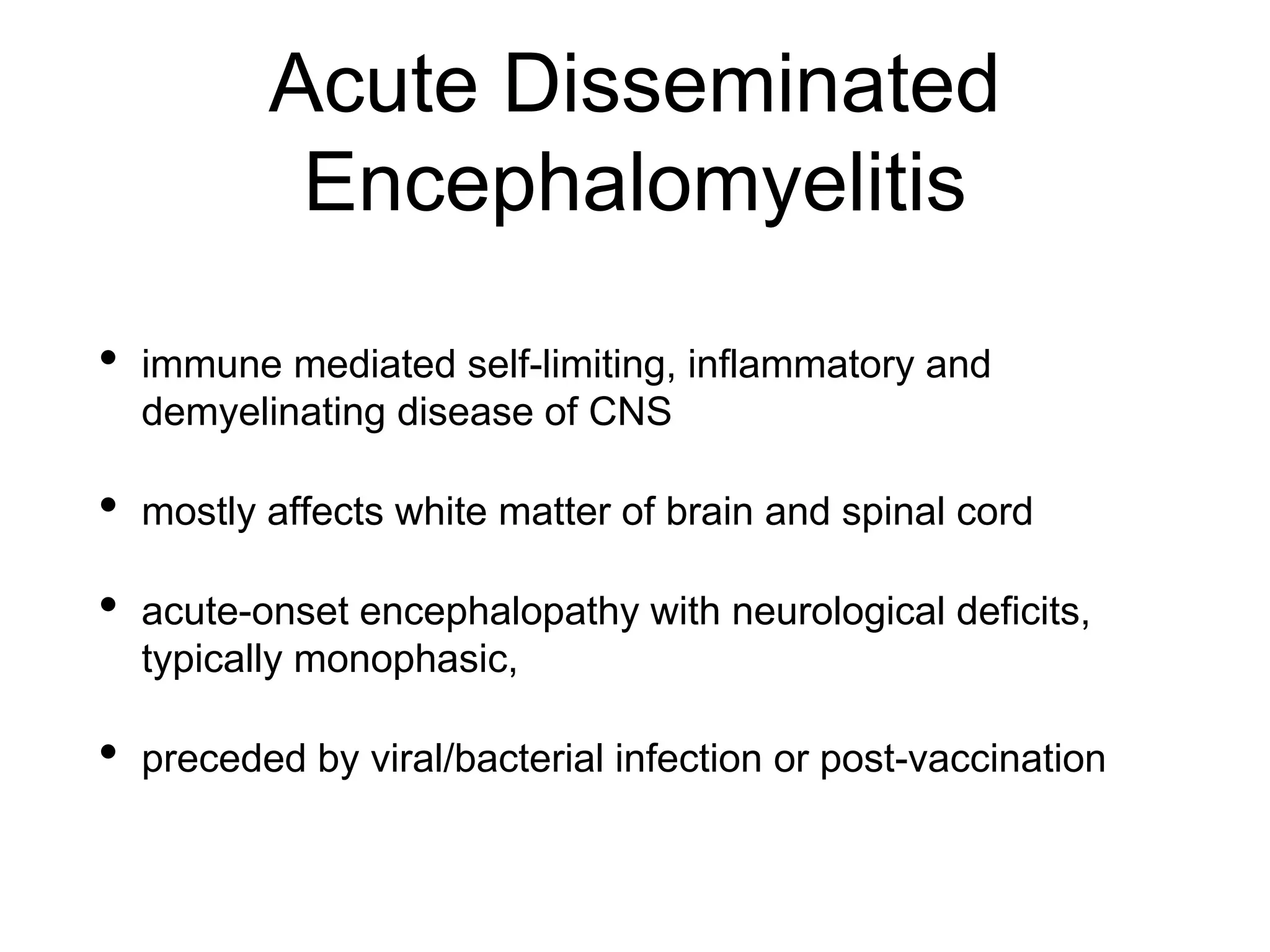
An acute disseminated encephalomyelitis warrior is an individual navigating the recovery and long-term management of ADEM, a rare autoimmune attack on the central nervous system. This journey involves overcoming sudden neurological deficits through intensive medical treatment, multi-disciplinary rehabilitation, and persistent advocacy for specialized care to manage potential cognitive, physical, and emotional lasting effects.
Acute Disseminated Encephalomyelitis (ADEM) is a rare but intense inflammatory condition that affects the myelin sheath—the protective coating surrounding nerve fibers in the brain and spinal cord. Often appearing suddenly following a viral or bacterial infection, or less commonly after a vaccination, ADEM is frequently described as a "one-time" (monophasic) occurrence. However, for the person experiencing it, the label "warrior" is well-earned. The transition from a healthy individual to one facing total paralysis, vision loss, or altered consciousness happens in days, requiring a level of resilience that few other medical conditions demand.
As of 2026, medical understanding of ADEM has evolved, particularly in how we differentiate it from other demyelinating diseases like Multiple Sclerosis (MS) and Neuromyelitis Optica Spectrum Disorder (NMOSD). For the ADEM warrior, understanding these nuances is the first step in a successful recovery.
The Anatomy of an ADEM Attack: Why It Happens
ADEM is fundamentally a case of biological "mistaken identity." The immune system, while attempting to fight off a common pathogen—such as the flu, a cold, or a gastrointestinal bug—accidentally identifies the proteins in the myelin of the central nervous system as foreign invaders. This leads to widespread inflammation across the white matter of the brain and spinal cord.
Unlike MS, which is typically a chronic, relapsing-remitting condition, ADEM is characterized by a "monophasic" event. This means the inflammation happens in a single, widespread episode. However, the sheer scale of this episode is what makes the recovery so grueling. The inflammation can cause "demyelination," where the insulation on the nerves is stripped away, slowing or stopping the transmission of electrical signals. This results in the rapid onset of symptoms that can mirror a stroke or a severe traumatic brain injury.
The Role of MOG Antibodies
In recent years, the identification of Myelin Oligodendrocyte Glycoprotein (MOG) antibodies has changed the landscape for ADEM warriors. Many individuals who experience a severe ADEM-like attack are found to have MOG-IgG antibodies in their blood. This condition, known as MOGAD (MOG Antibody-Associated Disease), can sometimes lead to recurrent attacks. In 2026, testing for MOG antibodies is a standard prerequisite for any ADEM diagnosis to determine if the patient is truly monophasic or if they require long-term immunosuppression to prevent future flares.
Clinical Presentation: Recognizing the Warrior’s Struggle
The onset of ADEM is notoriously rapid. Within hours or days of the initial neurological symptom, a patient may lose the ability to walk, speak clearly, or maintain consciousness. This is why early recognition is critical.
- Encephalopathy: This is the hallmark of ADEM that distinguishes it from many other demyelinating disorders. It refers to an altered mental state, which may manifest as extreme irritability, confusion, or even coma.
- Motor Deficits: Sudden weakness on one or both sides of the body, loss of coordination (ataxia), or difficulty swallowing.
- Vision Changes: Inflammation of the optic nerve (optic neuritis) can cause blurred vision or total temporary blindness in one or both eyes.
- Sensory Alterations: Numbness, tingling, or a "burning" sensation across different dermatomes of the body.
- Seizures: Especially in pediatric ADEM warriors, seizures can occur during the acute inflammatory phase.
Because ADEM predominantly affects children—though adult cases are often more severe—the "warrior" spirit is frequently seen in young patients who must relearn basic motor skills while their brains are still developing.
Diagnostic Procedures and Verification
To be classified as an ADEM warrior, a patient must undergo a rigorous diagnostic process. There is no single "ADEM test," so doctors use a "diagnosis of exclusion" combined with specific imaging.
- Magnetic Resonance Imaging (MRI): This is the most vital tool. A brain MRI will typically show large, poorly defined, "fluffy" lesions in the white matter. These lesions appear on T2-weighted and FLAIR sequences. A key diagnostic feature is that these lesions usually appear to be the "same age," meaning they all occurred during this single attack.
- Lumbar Puncture (Spinal Tap): Doctors examine the cerebrospinal fluid (CSF). In ADEM warriors, the CSF often shows an increased white blood cell count (pleocytosis) and elevated protein levels, but notably lacks the "oligoclonal bands" typically found in MS patients.
- Blood Panels: Beyond MOG-antibody testing, clinicians look for markers of recent infection or other autoimmune markers to rule out systemic lupus or other vasculitides.
Treatment Protocols: The First Line of Defense
Once the diagnosis is confirmed, the medical team initiates aggressive treatment to "calm" the immune system. For an ADEM warrior, the first few weeks of treatment are often a blur of high-dose medications and monitoring.
Corticosteroids
The first line of defense is usually high-dose intravenous methylprednisolone (Solu-Medrol). Administered over 3 to 5 days, these "steroid pulses" work to reduce inflammation rapidly. Following the IV treatment, patients are often placed on an oral prednisone taper that can last several weeks to prevent a "rebound" of inflammation.
Intravenous Immunoglobulin (IVIG)
If steroids are not sufficiently effective, or if the patient has contraindications to steroids, IVIG is the next step. This involves infusing healthy antibodies from donors into the patient's bloodstream. These healthy antibodies help neutralize the "rogue" antibodies causing the attack.
Plasmapheresis (PLEX)
In severe cases where the patient is not responding to steroids or IVIG, Plasmapheresis (Plasma Exchange) is utilized. This is essentially a blood-filtering process where the liquid part of the blood (plasma) is separated from the blood cells and replaced with a substitute. This physically removes the circulating inflammatory proteins and antibodies from the body.
Comparing ADEM with Similar Conditions
It is common for patients to be misdiagnosed initially. The following table highlights the key differences as understood in 2026.
| Feature | ADEM | Multiple Sclerosis (MS) | NMOSD |
|---|---|---|---|
| Typical Onset | Rapid (days) | Variable (weeks/months) | Rapid (days) |
| Encephalopathy | Common (Hallmark) | Rare | Rare |
| Occurrence | Usually Monophasic | Chronic/Relapsing | Relapsing |
| MRI Findings | Large, diffuse, "fluffy" lesions | Small, "Dawson's fingers" | Long spinal cord lesions |
| Antibody Marker | Often MOG-IgG positive | Usually negative | AQP4-IgG positive |
| Typical Age | Children (mostly) | Young Adults (20-40) | Adults (mostly) |
The Road to Recovery: Rehabilitation and Beyond
The acute hospital stay is only the beginning for the ADEM warrior. Once the inflammation is suppressed, the focus shifts to "neuroplasticity"—the brain's ability to reorganize itself by forming new neural connections.
Physical and Occupational Therapy
ADEM warriors often face significant muscle weakness or "spasticity" (stiffness). Physical therapy (PT) focuses on gross motor skills like walking and balance. Occupational therapy (OT) helps the warrior regain independence in "activities of daily living" (ADLs), such as dressing, eating, and using a computer.
Cognitive Rehabilitation
Because ADEM affects the brain, many warriors experience "brain fog," memory issues, or difficulty with executive functions (planning and organizing). Cognitive-behavioral interventions and speech-language pathology (SLP) are essential for those returning to school or work.
The Psychological Impact
Being an ADEM warrior is as much a mental battle as a physical one. The trauma of a sudden, life-threatening illness can lead to Post-Traumatic Stress Disorder (PTSD) in both the patient and their caregivers. Support groups and specialized counseling are vital for processing the "before and after" of an ADEM diagnosis.
Long-term Outlook and Monitoring in 2026
By 2026, the long-term prognosis for ADEM warriors is generally positive, with approximately 70-90% of patients making a full or near-full recovery. However, "recovery" is a relative term. Many warriors live with "invisible" symptoms such as chronic fatigue, mild cognitive delays, or occasional numbness.
Long-term monitoring involves:
- Follow-up MRIs: Usually performed 3 to 6 months after the initial attack to ensure the lesions are shrinking and that no new lesions have appeared (which would suggest a shift toward an MS diagnosis).
- Repeat MOG Testing: If a warrior tested positive for MOG antibodies during the acute phase, they may need periodic testing to see if the antibodies remain in the system, which influences the decision to stay on long-term immunotherapy.
Frequently Asked Questions
Can you get ADEM twice?
While ADEM is typically monophasic, a small percentage of people experience a second attack, usually within a few months of the first. This is called Multiphasic Disseminated Encephalomyelitis (MDEM). If attacks continue beyond that, doctors often re-evaluate the diagnosis to see if it is actually MOGAD or MS.
Is ADEM contagious?
No, ADEM is not contagious. While it often follows a viral infection like the flu or measles, the neurological attack itself is an internal immune system malfunction. You cannot "catch" ADEM from another person.
How long does recovery take for an ADEM warrior?
Recovery varies wildly. Some warriors return to normal activities within a month, while others may require 6 to 12 months of intensive rehabilitation. In some cases, improvements can continue for up to two years as the brain continues to heal.
Are there lasting effects of ADEM?
Many warriors experience a complete recovery, but some may deal with lasting "deficits." These can include minor balance issues, specialized learning disabilities in children, or persistent fatigue. Early intervention with rehabilitation is the best way to minimize these effects.
Is ADEM a form of Multiple Sclerosis?
No, ADEM is a distinct condition. While both involve demyelination, ADEM is usually a one-time event triggered by an infection, whereas MS is a lifelong autoimmune disease where the body continues to attack the nervous system over many years.
Practical Recommendations for ADEM Warriors
If you or a loved one is navigating this journey, the most important action is to ensure a multi-disciplinary approach to care. This should include a neurologist specializing in neuro-immunology, a physical medicine and rehabilitation (PM&R) doctor, and a mental health professional.
Next Steps:
- Request a MOG-antibody test if it wasn't performed during the initial hospitalization.
- Keep a detailed medical log, including the timeline of the initial infection, the onset of neurological symptoms, and the specific medications used.
- Prioritize rest. The brain requires an immense amount of energy to repair myelin. Pushing too hard, too fast can lead to significant setbacks in the early months of recovery.
- Connect with a community. Organizations like the Siegel Rare Neuroimmune Association (SRNA) provide resources and connections to other ADEM warriors, which can be invaluable for navigating the unique challenges of a rare disease.