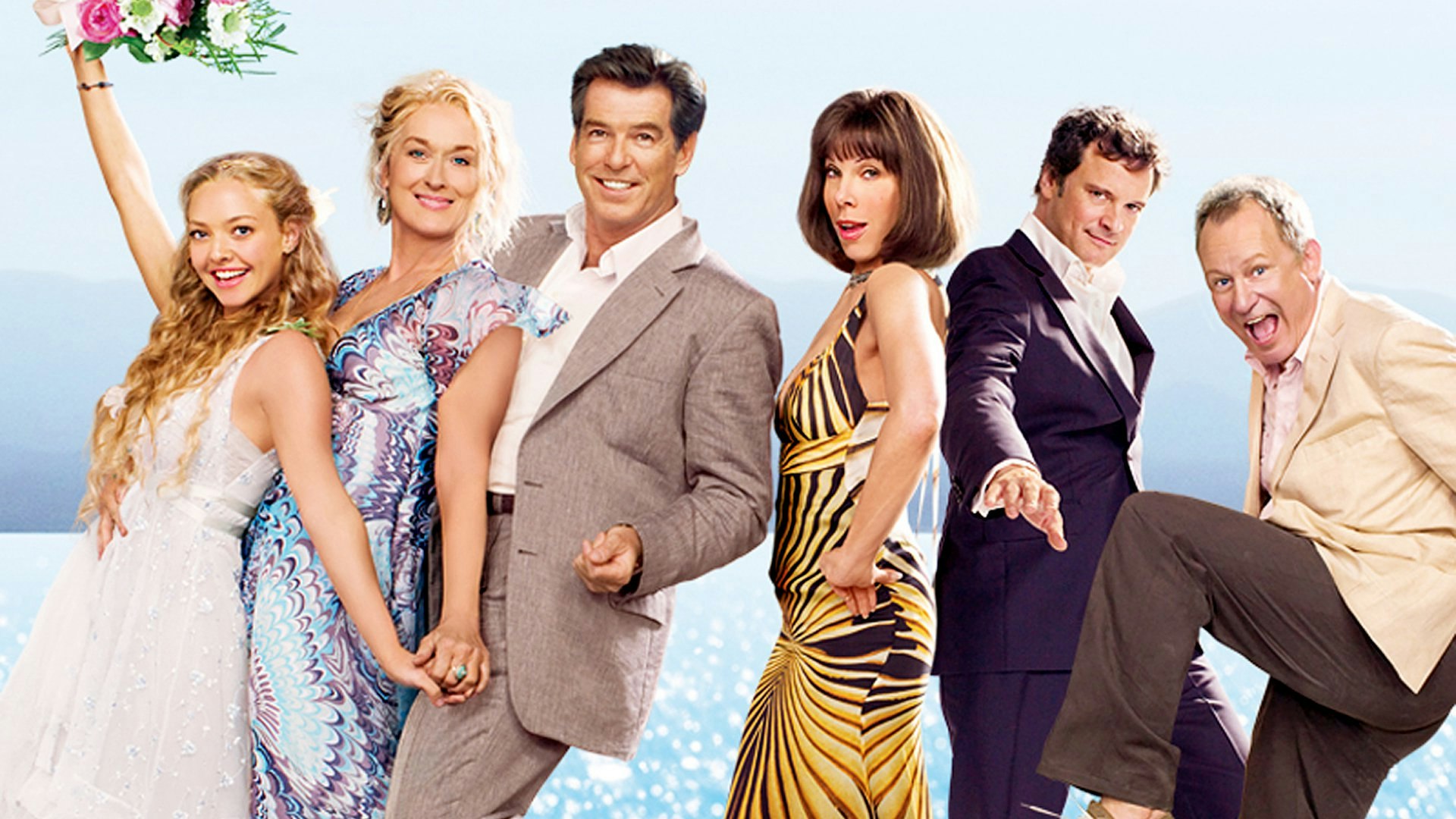
The feature films Mamma Mia! (2008) and Mamma Mia! Here We Go Again (2018) feature an extraordinary ensemble of actresses led by Meryl Streep, Amanda Seyfried, Christine Baranski, Julie Walters, Lily James, and Cher. These performers brought the music of ABBA to life, portraying characters connected by family, romance, and enduring female friendship across two generations.
The Core Female Leads of Mamma Mia! (2008)
When director Phyllida Lloyd and screenwriter Catherine Johnson adapted the smash-hit stage musical Mamma Mia! for the silver screen in 2008, casting the central female roles required actors who could balance high-energy musical comedy with raw emotional vulnerability. The narrative centers on Donna Sheridan, an independent single mother running a rustic hotel on the fictional Greek island of Kalokairi, and her 20-year-old daughter, Sophie, who secretly invites three men from her mother's past to her wedding in hopes of identifying her birth father.
- Ruby Sheridan (Cher)
- Donna Sheridan (Meryl Streep / Young: Lily James)
- Sophie Sheridan (Amanda Seyfried)
- Donna Sheridan (Meryl Streep / Young: Lily James)
Meryl Streep as Donna Sheridan
Meryl Streep’s casting as Donna Sheridan transformed public perceptions of jukebox musical adaptations. Prior to Mamma Mia!, Streep was primarily celebrated for her intense dramatic performances in films such as Sophie's Choice and The Iron Lady. However, her background included vocal training at Yale and early theatrical work.
Streep infused Donna Sheridan with a frantic, deeply affectionate energy. As a mother facing the emotional weight of watching her daughter grow up, Streep grounded the film's absurd premise in recognizable parent-child dynamics. Her musical performances remain central highlights of the film:
- "The Winner Takes It All": Recorded with original ABBA member Benny Andersson, Streep famously delivered this iconic ballad on a cliffside overlooking the Aegean Sea in just a few takes. Her vocal delivery emphasizes heartbreak and unresolved pride rather than sheer technical perfection.
- "Slipping Through My Fingers": Performed alongside Amanda Seyfried as Donna helps Sophie prepare for her wedding, this scene highlights Streep’s ability to convey grief and maternal love simultaneously through quiet vocal phrasing.
- "Mamma Mia": Showcases Streep’s physical comedy, including backflips into a goat barn, proving her willingness to embrace slapstick musical theater staging.
Streep’s involvement elevated the project from a nostalgic pop musical to a major commercial powerhouse, generating over $610 million worldwide during its theatrical run.
Amanda Seyfried as Sophie Sheridan
Amanda Seyfried was cast as Sophie Sheridan following a massive international talent search. Before Mamma Mia!, Seyfried was best known for her role in Mean Girls (2004) and the television drama Big Love. Mamma Mia! served as her global breakout film as a leading actress.
Seyfried brought formal classical vocal training to the role. Having studied opera as a teenager, her sweet, crystal-clear soprano provided a perfect counterweight to the raspier, rock-infused tones of the older cast members.
- Narrative Function: Sophie drives the entire plot by discovering her mother’s teenage diary and mailing wedding invitations to Sam Carmichael (Pierce Brosnan), Harry Bright (Colin Firth), and Bill Anderson (Stellan Skarsgård).
- Key Performances: Seyfried opens the film with a haunting rendition of "I Have a Dream" and anchors major chorus numbers like "Honey, Honey" and "Lay All Your Love on Me."
Seyfried’s earnest portrayal gave the audience an emotional proxy, balancing the heightened camp of the adult storylines with a genuine quest for identity and self-discovery.
- Donna's Circle:
- Christine Baranski (Tanya Leigh)
- Meryl Streep (Donna Sheridan)
- Julie Walters (Rosie Mulligan)
Christine Baranski as Tanya Chesham-Leigh
Christine Baranski plays Tanya, one of Donna’s two lifelong best friends and a former co-member of their 1970s girl group, Donna and the Dynamos. Tanya is a wealthy, multi-time divorcee who maintains a glamorous, impeccably groomed exterior regardless of the rugged island conditions.
Baranski, a decorated Broadway veteran and two-time Tony Award winner, brought precise comic timing, sophisticated poise, and commanding vocals to the production.
- "Does Your Mother Know": Baranski’s standout sequence occurs on the beach, where she fends off the playful advances of Pepper (Philip Michael), a younger beach boy. The performance combines athletic choreography, sharp verbal jabs, and vocal belt technique.
- Group Harmonies: Alongside Julie Walters and Meryl Streep, Baranski provides the high belt harmonies for the trio’s signature numbers, including "Super Trouper" and "Dancing Queen."
Julie Walters as Rosie Mulligan
Dame Julie Walters portrays Rosie Mulligan, the second member of the Dynamos. Rosie is an unmarried, fun-loving author of cookbooks who contrasts sharply with Tanya’s high-maintenance glamour and Donna’s chaotic work ethic.
Walters, known for her acclaimed dramatic and comedic work in Educating Rita, Billy Elliot, and the Harry Potter series, provided much of the film’s physical humor. Her portrayal of Rosie emphasizes warmth, unpretentious fun, and uninhibited enthusiasm.
- "Take a Chance on Me": Walters’ centerpiece musical number involves pursuing Bill Anderson (Stellan Skarsgård) around a Greek chapel dinner table. The scene relies heavily on slapstick body language, climbing over furniture, and vocal improvisations.
- Ensemble Chemistry: The natural rapport between Walters, Baranski, and Streep formed the emotional core of the adult dynamic in the film, creating a convincing depiction of female friendships that have endured for decades.
Supporting Actresses: Ashley Lilley and Rachel McDowall
Rounding out the original 2008 female cast were Scottish actress Ashley Lilley (playing Ali) and English actress Rachel McDowall (playing Lisa). As Sophie’s loyal best friends and bridesmaids, they serve as the sounding board for Sophie’s secret plot during the early acts of the film, participating in key vocal harmonies during "Honey, Honey" and "Gimme! Gimme! Gimme! (A Man After Midnight)."
The Expanded Female Ensemble in Mamma Mia! Here We Go Again (2018)
A decade after the success of the first film, director Ol Parker returned to the franchise with Mamma Mia! Here We Go Again. Serving as both a sequel and a prequel, the 2018 film split its narrative between Sophie opening the renovated Hotel Bella Donna in the present day and Donna’s youth in 1979 as she graduates from university, travels across Europe, and navigates the romances that led to Sophie's birth.
To execute this dual timeline, the production cast younger counterparts for the core adult characters while bringing on music icon Cher to expand the family lineage.
- 1979 Timeline:
- Lily James (Young Donna)
- Jessica Keenan Wynn (Tan)
- Alexa Davies (Young Ros)
- Present Timeline:
- Meryl Streep (Donna)
- Christine Baranski (Tan)
- Julie Walters (Rosie)
- Amanda Seyfried (Sophie)
- Cher (Ruby Sheridan)
Lily James as Young Donna Sheridan
Replacing or matching Meryl Streep’s energy in a prequel role was one of the major casting challenges of the sequel. British actress Lily James was cast as the young Donna Sheridan, capturing Donna's adventurous spirit, optimism, and heart.
James spent weeks studying Streep’s mannerisms, laughs, and physical movement patterns from the 2008 film to create seamless continuity between the two eras.
- Vocal Delivery: James possesses a warm, belt-heavy vocal timbre suited for classic pop-rock. Her performances of "When I Kissed the Teacher," "I Wonder (Departure)," and the title track "Mamma Mia" gave the prequel storyline high narrative momentum.
- Dramatic Core: James anchored the emotional arc of the 1979 sequence, showcasing Donna's heartbreak during her separations from Young Sam (Jeremy Irvine), Young Bill (Josh Dylan), and Young Harry (Hugh Skinner), leading up to the solitary birth of Sophie.
Cher as Ruby Sheridan
One of the major casting additions to the 2018 sequel was iconic singer and actress Cher, who played Ruby Sheridan, Donna’s estranged mother and Sophie’s grandmother. Despite being only three years older than Meryl Streep in real life, Cher’s legendary status made her a fitting choice for the glamorous, globe-trotting lounge singer matriarch.
Cher’s appearance in the third act of the film provided a major pop-culture moment:
- "Fernando": Performed as a duet opposite Andy García (who played hotel manager Fernando Cienfuegos), Cher delivered a theatrical version of the 1976 hit, accompanied by fireworks over the island hotel.
- "Super Trouper" Finale: Cher led the full ensemble in the curtain-call performance, bringing together both generations of the cast.
Cher’s involvement with the film was so impactful that it led her to release a full ABBA cover album, Dancing Queen, in September 2018, which debuted at number three on the Billboard 200 chart.
Jessica Keenan Wynn as Young Tanya
Jessica Keenan Wynn was cast as the younger version of Christine Baranski’s character, Tanya. Wynn—a Broadway performer known for her role as Heather Chandler in Heathers: The Musical—delivered a precise impression of Baranski’s vocal cadence, dry humor, and posture.
Wynn’s performance in numbers like "Angel Eyes" and "I Wonder (Departure)" preserved the dynamic of the Dynamos, showing how Tanya's protective, glamorous personality had been present since her university days.
Alexa Davies as Young Rosie
Welsh actress Alexa Davies took on the role of young Rosie Mulligan, originally played by Julie Walters. Davies captured Walters’ quirky physical comedy and subtle vulnerability, detailing Rosie's long-standing, unrequited crush on Bill Anderson during their youth.
Davies' comedic delivery in numbers such as "I Have a Dream" ( graduation scene) and "Angel Eyes" established the origins of the lifelong sisterhood between the three women.
Comparative Matrix: Actresses, Roles, and Musical Numbers
The table below breaks down the primary actresses across both feature films, detailing their respective roles, character timelines, and primary vocal features within the franchise.
| Actress | Character Name | Film Appearance(s) | Character Timeline / Role | Primary Musical Highlights |
|---|---|---|---|---|
| Meryl Streep | Donna Sheridan | Mamma Mia! (2008)Here We Go Again (2018) | Hotel owner, former lead singer of the Dynamos; mother to Sophie. | "The Winner Takes It All," "Slipping Through My Fingers," "Mamma Mia," "My Love, My Life" |
| Amanda Seyfried | Sophie Sheridan | Mamma Mia! (2008)Here We Go Again (2018) | Donna’s daughter; bride-to-be (Film 1); hotel restorer/mother (Film 2). | "I Have a Dream," "Honey, Honey," "Lay All Your Love on Me," "One of Us" |
| Christine Baranski | Tanya Chesham-Leigh | Mamma Mia! (2008)Here We Go Again (2018) | Wealthy multi-divorcee; original member of Donna and the Dynamos. | "Does Your Mother Know," "Super Trouper," "Angel Eyes" |
| Julie Walters | Rosie Mulligan | Mamma Mia! (2008)Here We Go Again (2018) | Unmarried author; fun-loving original member of Donna and the Dynamos. | "Take a Chance on Me," "Dancing Queen," "Angel Eyes" |
| Lily James | Young Donna Sheridan | Here We Go Again (2018) | Donna in 1979; Oxford graduate exploring Europe and finding independence. | "When I Kissed the Teacher," "Mamma Mia," "The Name of the Game," "Andante, Andante" |
| Cher | Ruby Sheridan | Here We Go Again (2018) | Donna’s mother; famous Las Vegas lounge singer; Sophie's grandmother. | "Fernando," "Super Trouper" |
| Jessica Keenan Wynn | Young Tanya | Here We Go Again (2018) | Tanya in 1979; high-fashion student and member of the young Dynamos. | "When I Kissed the Teacher," "Angel Eyes" |
| Alexa Davies | Young Rosie | Here We Go Again (2018) | Rosie in 1979; awkward, sweet student and member of the young Dynamos. | "When I Kissed the Teacher," "I Wonder (Departure)" |
| Ashley Lilley | Ali | Mamma Mia! (2008) | Sophie’s supportive friend and bridesmaid. | "Honey, Honey," "Gimme! Gimme! Gimme!" |
| Rachel McDowall | Lisa | Mamma Mia! (2008) | Sophie’s loyal friend and bridesmaid. | "Honey, Honey," "Gimme! Gimme! Gimme!" |
Behind the Scenes: Vocal Recording, Training, and Musicality
Translating ABBA’s legendary disco-pop catalog into a cinematic format required rigorous vocal preparation. ABBA’s original compositions—written by Benny Andersson and Björn Ulvaeus—are notorious within the music industry for their complex vocal arrangements, wide ranges, and driving rhythm structures.
- Cast Vocal Rehearsals
- Abbey Road Studios Recording (with Benny Andersson & Björn Ulvaeus)
- On-Set Synchronization / Live Filming
- Final Sound Mix & Vocal Layering
Recording at Abbey Road Studios
Before principal photography commenced on both films, the actresses traveled to London to record their vocal tracks at the historic Abbey Road Studios.
- Producer Oversight: Benny Andersson directly supervised the vocal recording sessions. His presence ensured that while the actors brought theatrical interpretations to the songs, the harmonic integrity of ABBA’s pop arrangements remained intact.
- Vocal Layering: To achieve the iconic "wall of sound" pop vocal style ABBA perfected in the 1970s, the actresses layered their vocals multiple times. Christine Baranski and Julie Walters spent days in recording booths tracking harmony lines for massive ensemble numbers like "Dancing Queen" and "Voulez-Vous."
Live Performance vs. Studio Tracks
While standard film musicals rely entirely on lip-syncing to pre-recorded studio tracks, director Phyllida Lloyd encouraged live vocal moments on set during the 2008 film to preserve emotional authenticity.
- Meryl Streep's Cliffside Solo: During the filming of "The Winner Takes It All," Streep used a playback track for reference, but much of her live, raw vocal output on the day of filming was mixed into the final edit to capture her natural breath control and physical exertion up the stone stairs.
- Amanda Seyfried's Acoustic Numbers: Seyfried recorded live acoustic renditions of portions of "I Have a Dream," allowing her performance to sound intimate rather than overly engineered.
Cultural Impact and Legacy of the Female Cast
The Mamma Mia! film franchise occupies a unique space in modern film history. It stands as one of the most commercially successful female-led movie musical franchises of all time, generating over $1 billion collectively across both releases.
Subverting Hollywood Age Norms
When Mamma Mia! debuted in 2008, it was rare for a studio film driven by three women over the age of 50 (Streep, Baranski, and Walters) to dominate the global box office. The film rejected traditional Hollywood tropes by presenting women in middle age as vibrant, joyful, sexually active, and deeply connected to one another through friendship rather than rivalry.
- Female Lead Empowerment
- Intergenerational Bond (Donna / Sophie / Ruby)
- Over-50 Female Focus (Donna & The Dynamos)
Intergenerational Appeal
The narrative framework established by the ensemble of actresses built a bridge between different generations of viewers:
- Mother-Daughter Dynamics: The emotional core rests entirely on the unconditional, if complex, relationship between Donna and Sophie. The sequel deepened this bond by contrasting Donna’s past pregnancy with Sophie’s present-day journey into motherhood.
- Female Solidarity: The enduring popularity of Donna and the Dynamos highlights lifelong female camaraderie. Neither film relies on a male savior narrative; instead, the male characters orbit the central emotional network forged by the female leads.
Frequently Asked Questions
Did the actresses actually sing their own songs in Mamma Mia?
Yes, all the leading actresses in both Mamma Mia! (2008) and Mamma Mia! Here We Go Again (2018) performed their own vocals. The actors recorded their tracks at Abbey Road Studios in London under the direction of original ABBA members Benny Andersson and Björn Ulvaeus prior to filming, with certain emotional sequences recorded live on set.
Who played the younger versions of the Dynamos in Mamma Mia 2?
In Mamma Mia! Here We Go Again (2018), the young counterparts of Donna and the Dynamos were played by:
- Lily James as Young Donna Sheridan (originally Meryl Streep)
- Jessica Keenan Wynn as Young Tanya Chesham-Leigh (originally Christine Baranski)
- Alexa Davies as Young Rosie Mulligan (originally Julie Walters)
Why was Meryl Streep barely in Mamma Mia! Here We Go Again?
Meryl Streep’s limited appearance in the 2018 sequel was a creative choice by the filmmakers to drive the emotional narrative. The script reveals that Donna passed away a year prior to the events of the sequel, leaving Sophie to honor her memory by opening the hotel. However, Streep returned for a pivotal cameo at the end of the film, singing "My Love, My Life" as a spirit alongside Amanda Seyfried and joining the full cast for the "Super Trouper" finale.
Are Amanda Seyfried and Lily James related in real life?
No, Amanda Seyfried and Lily James are not related, though genealogical researchers at Ancestry.com noted in 2018 that the two actresses are distant ninth cousins twice removed through a shared English lineage. In the film franchise, Seyfried plays Donna’s daughter (Sophie), while James plays the younger version of Donna.
What songs did Cher sing in Mamma Mia! Here We Go Again?
Cher performed two major songs in the 2018 film:
- "Fernando" — A duet with actor Andy García (playing hotel manager Fernando Cienfuegos).
- "Super Trouper" — The grand finale musical sequence featuring the entire primary and flashback cast.
Essential Takeaways for Film and Theater Enthusiasts
If you are exploring the Mamma Mia! film franchise, keep these key points in mind to appreciate the vocal and dramatic craft of the female cast:
- Watch for Vocal Adaptations: Notice how Amanda Seyfried’s classical soprano style contrasts with Meryl Streep’s theatrical rock delivery and Lily James’ pop belting, reflecting each character's age, personality, and background.
- Observe Physical Continuity: Pay close attention to Lily James, Jessica Keenan Wynn, and Alexa Davies in Here We Go Again. Their performances incorporate specific physical quirks, posture choices, and vocal cadences directly adapted from Streep, Baranski, and Walters.
- Appreciate the ABBA Arrangements: The cast tracks were arranged by Benny Andersson to maintain the famous vocal layering of the original 1970s ABBA tracks while tailoring key transposition to suit each actress's natural vocal range.