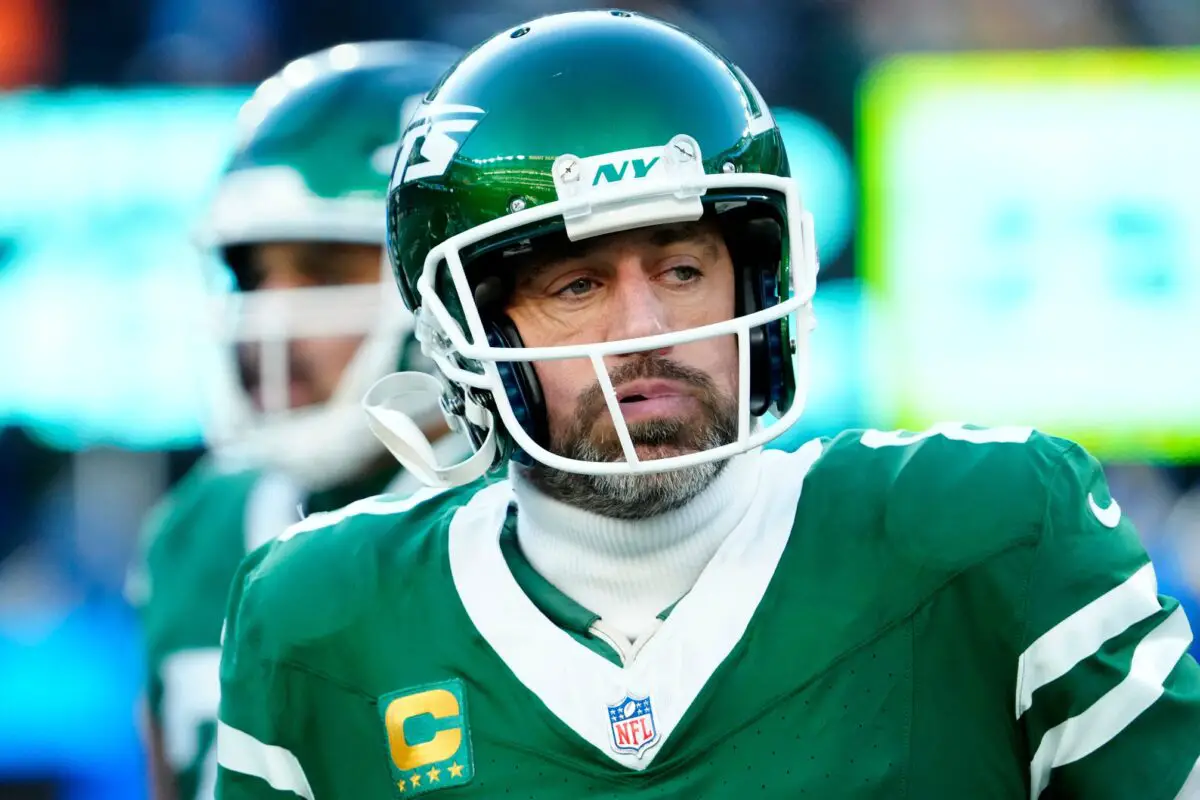
In 2024, Aaron Rodgers earned a total cash compensation of $37.5 million from the New York Jets. This figure comprised his fully guaranteed $35 million base salary and a $2.5 million roster bonus, marking a significant milestone in the veteran quarterback’s professional career as he navigated the second year of his tenure with the franchise following his trade from the Green Bay Packers.
Understanding the Structure of the 2024 NFL Contract
To comprehend the specific financial mechanisms behind Aaron Rodgers’ 2024 earnings, one must look at the restructured deal finalized in the summer of 2023. When Rodgers transitioned to the New York Jets, he accepted a significant pay cut from the salary he was originally slated to receive under his previous Green Bay contract. This move was not merely a gesture of goodwill; it was a calculated tactical decision to provide the Jets with the necessary salary cap flexibility to build a roster capable of competing for a Super Bowl.
The 2024 compensation package was structured as a "guaranteed" model. In the context of NFL contracts, guaranteed money protects the athlete from injury or standard performance-based releases. By ensuring his base salary of $35 million, the Jets signaled their total commitment to Rodgers as their primary signal-caller for the season. The $2.5 million roster bonus is an additional incentive structure that often serves to balance the cash flow between the organization and the player throughout the league calendar.
Salary Cap Impact vs. Cash Compensation
It is vital for readers to distinguish between "cash compensation" and "salary cap impact." While Rodgers received $37.5 million in cash during the 2024 calendar year, his impact on the New York Jets' salary cap—the internal accounting limit established by the NFL—differed.
The salary cap is a fluid, multi-year projection. Through the use of signing bonuses that are "prorated" (spread out) over the life of a contract, teams can artificially lower the cap hit in a given year. In 2024, the Jets utilized this accounting strategy to maintain a competitive squad. While Rodgers walked away with his full $37.5 million, the amount charged against the Jets’ team spending limit was lower due to the amortization of previous signing bonuses. This distinction is the primary reason why high-earning quarterbacks like Rodgers often appear to have "cheaper" deals relative to their actual cash intake.
Comparative Analysis of Veteran Quarterback Contracts
The 2024 financial landscape for NFL quarterbacks saw an unprecedented surge in market rates. To understand where Rodgers’ $37.5 million sat in the hierarchy of the league, we can look at the market benchmarks for top-tier veteran starters.
| Quarterback Tier | Typical 2024 Salary Range | Characteristics |
|---|---|---|
| Elite/Top-Market | $50M - $60M+ | Recent extensions, top-draft picks |
| Veteran/Structured | $35M - $45M | Restructured deals, team-friendly caps |
| Bridge/Transition | $15M - $30M | Short-term deals, younger starters |
| Backup/Developmental | $2M - $10M | Rookie scale or veteran minimums |
By opting for a $37.5 million package, Rodgers positioned himself in the "Veteran/Structured" tier. This allowed the team to allocate millions toward defensive support and offensive line depth—critical areas of concern for the Jets throughout 2024. This strategic "hometown discount" is a hallmark of players who have already achieved financial security and are prioritizing the accumulation of championships over maximum individual salary.
The Role of Performance Bonuses and Incentives
Beyond the fixed $37.5 million, NFL contracts often include "Likely To Be Earned" (LTBE) and "Not Likely To Be Earned" (NLTBE) incentives. For 2024, the primary focus of the agreement between the Jets and Rodgers was the simplification of the structure to ensure stability.
Incentives are typically tied to statistical achievements (such as passing yards or completion percentage) or team success (reaching the playoffs or winning the Super Bowl). By keeping the base salary high and minimizing the reliance on complex, performance-based triggers, the organization provided Rodgers with financial certainty. This stability allows the quarterback to focus entirely on game-day performance rather than negotiating contract clauses mid-season.
Financial Considerations and Tax Implications
For an athlete of Aaron Rodgers' stature, compensation is rarely a simple deposit into a checking account. Professional football players face complex tax scenarios, as they are subject to "jock taxes"—state income taxes levied in every jurisdiction where they play a game.
Because the New York Jets play their home games in New Jersey and represent the New York market, and because the team travels across the United States, Rodgers’ net income after taxes is significantly lower than his gross $37.5 million. Advisors for high-net-worth individuals typically structure these earnings through various entities to manage the tax burden, maximize investment potential, and handle charitable contributions. Readers should note that while the $37.5 million figure is the public-facing contract value, the "take-home" pay is subjected to federal, state, and local taxation across multiple jurisdictions.
Impact on New York Jets Roster Construction
The decision by Aaron Rodgers to accept a contract that provided the team with flexibility directly influenced the 2024 roster. With the salary cap space saved, the Jets were able to pursue free agents and retain key defensive players who were hitting the open market.
This creates a cycle of value:
- The Quarterback's Concession: Reducing the immediate cash demand against the cap.
- The Front Office Execution: Using the freed-up capital to sign impact talent.
- The Collective Gain: A more competitive team environment that increases the probability of playoff advancement.
For fans and analysts, the $37.5 million figure is effectively the "entry fee" for the organization to keep their primary leader under center. The success of this financial strategy is measured not in dollars, but in the number of wins attributed to the improved surrounding talent that was only possible because of the structural changes in Rodgers' contract.
Frequently Asked Questions
1. Was Aaron Rodgers' 2024 salary guaranteed? Yes, the $35 million base salary for the 2024 season was fully guaranteed, providing Rodgers with financial security regardless of on-field performance or potential injury.
2. How did Rodgers' 2024 pay compare to his time with the Packers? The 2024 salary with the Jets was significantly lower than the market rate he commanded during his final years in Green Bay. The restructure was specifically designed to facilitate the move to New York and assist with team-building efforts.
3. Does the $37.5 million include endorsement income? No, the $37.5 million figure strictly refers to the cash compensation paid by the New York Jets under his NFL contract. It does not include earnings from private business ventures, media appearances, or commercial endorsements.
4. Can the Jets change this contract amount in the future? NFL contracts can be amended, extended, or restructured at any time if both the team and the player agree. Future adjustments would depend on the team’s salary cap needs and the quarterback’s intent to continue his playing career.
5. What happens to the money if a player retires? If a player retires, they forfeit any remaining unearned salary. However, any "signing bonus" money that has already been paid but not yet "amortized" (charged against the cap) must be dealt with via "dead money" accounting, which is a standard procedure in NFL salary cap management.
Next Steps and Recommendations
For those tracking NFL contracts, the most reliable source for verified financial data is the NFL Players Association (NFLPA) public cap report or reputable database platforms that aggregate league-sanctioned contract filings. When evaluating the financial health of an NFL team, look beyond the headline numbers and examine the "dead cap" and "cap hits," as these numbers offer a more accurate depiction of a team's actual financial agility.
If you are a student of sports economics, consider analyzing the interplay between player age and contract length. As athletes approach the end of their careers, contracts often pivot toward one-year guarantees or performance-heavy structures, reflecting the changing risk profiles for both the player and the organization.