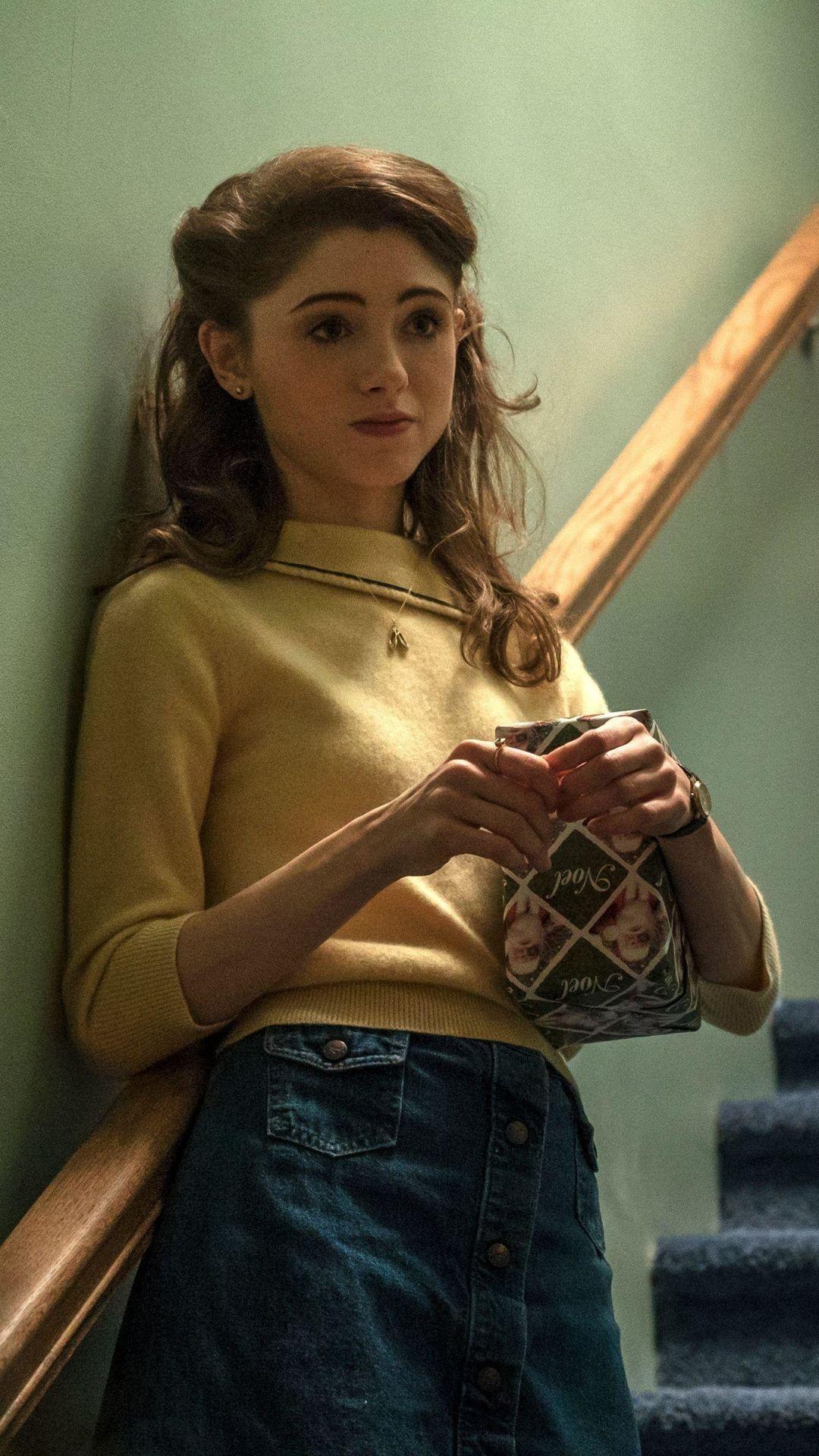
The character evolution of Nancy Wheeler across five years of narrative time within the Stranger Things universe maps a transformative journey from a conformist high school student to a resilient investigative journalist. Played by Natalia Dyer, Nancy anchors much of the series' supernatural and human stakes, balancing romantic entanglements with a relentless pursuit of the truth behind Hawkins, Indiana.
When evaluating the trajectory of Nancy Wheeler, audiences and critics alike examine how her character breaks away from traditional horror tropes. Rather than serving merely as a victim or a background romantic interest, Nancy develops distinct investigative skills, handles firearms with lethal precision, and confronts the systemic corruption of her hometown. This detailed analysis explores her narrative milestones, thematic shifts, psychological resilience, relationships, and enduring impact on contemporary television culture.
The Genesis of an Investigator: Seasons 1 and 2
At the outset of the series, Nancy Wheeler exists comfortably within the social hierarchy of Hawkins High School. She dates Steve Harrington, studies diligently, and tries to fit into the expected suburban mold of the early 1980s. However, the disappearance of her best friend, Barbara Holland, serves as the catalyst that shatters her complacency.
The investigation into Barb's disappearance forces Nancy to look past the official police narrative. When she discovers the Upside Down through a tree portal, her worldview shifts permanently.
- Breaking the Mold: Unlike characters who remain in denial, Nancy accepts the bizarre reality of the supernatural immediately.
- The Hunt for Accountability: Her frustration with local authorities failing to find Barb drives her toward independent investigation, laying the groundwork for her future career ambitions.
- Complex Alliances: Her relationship with Jonathan Byers begins as a shared trauma response and mission of accountability, eventually evolving into a deeply collaborative partnership rooted in shared danger.
By the end of the second season, Nancy and Jonathan execute a dangerous plan to expose the Hawkins National Laboratory by leaking classified information to a conspiracy theorist, Murray Bauman. This action marks her official entry into investigative journalism and her refusal to remain a passive observer of institutional cover-ups.
Professional Ambition and the Gender Politics of Hawkins: Season 3
Entering the summer of 1985, Nancy encounters a different kind of monster: institutional sexism in the workplace. Securing a summer internship at The Hawkins Post, she quickly realizes that her male colleagues view her as a coffee-fetching assistant rather than a peer with journalistic talent.
Despite being mocked and dismissed by the veteran reporters—who routinely mock her pitches about rabid rats and missing fertilizer—Nancy refuses to back down. She pursues the story independently, discovering the early stages of the Mind Flayer's infiltration through the Flayed citizens of Hawkins.
| Phase | Primary Setting | Core Objective / Conflict |
|---|---|---|
| Seasons 1 & 2 | Hawkins High / Woods | Finding Barb and exposing the Lab |
| Season 3 | The Hawkins Post | Battling workplace sexism and Flayed rats |
| Seasons 4 & 5 | Hawkins / Upside Down | Uncovering Vecna's origins and fighting |
This professional struggle highlights a core component of Nancy's character arc over the five-year span: her persistent competence in the face of institutional disbelief. Whether confronting misogynistic newsroom editors or skeptical military officials, she relies on empirical evidence and tenacity. Her reporting at The Hawkins Post proves vital to understanding the localized biological contagion orchestrated by the Mind Flayer.
Confronting Trauma and the Psychology of Vecna: Season 4
Season 4 deepens Nancy's character by anchoring her arc in profound survivor's guilt, specifically regarding the deaths of Barbara Holland and her brother's friend, Eddie Munson (by extension of the broader chaos), but most acutely her enduring trauma over Barb. When Vecna targets her in the haunted dimension of the Creel House, he uses her deepest regrets as a weapon.
During her trance, Nancy is forced to witness the night Barb died, confronting her own feelings of complicity—specifically that she was distracted by Steve while Barb was taken. This psychological confrontation expands her depth beyond a standard action hero. She is haunted, analytical, and ultimately determined to dismantle the threat at its source.
- The Visionary Clue: Through Vecna's mind-meld, Nancy becomes the primary conduit for understanding the villain's past as Henry Creel, connecting the supernatural occurrences in Hawkins directly to the Creel family murders of 1959.
- Tactical Leadership: Alongside the older teenage cohort, Nancy takes on a leadership role in organizing the assault on the Creel House, famously arming herself with a sawed-off shotgun.
- The Triangle Resolution: Her romantic life reaches a point of friction as she navigates feelings for both Jonathan and Steve, though the immediate existential threat of the Upside Down consistently supersedes personal resolution.
The Final Chapter and Legacy: Season 5 Dynamics
As the narrative reaches its culminating phase in 2026 (reflecting the real-world production timeline and internal chronology adjustments of the final season), Nancy Wheeler stands as the definitive tactical journalist of the series. Her evolution from a frightened teenager hiding in a bedroom closet to a battle-hardened strategist is complete.
In Season 5, the stakes reach their apex as the barrier between Hawkins and the Upside Down collapses entirely. Nancy’s role shifts from uncovering hidden truths to leading resistance efforts. Her capability with firearms, combined with her investigative insights into Vecna’s psychological vulnerabilities, positions her as an indispensable asset to the group's survival.
Furthermore, her relationship choices mature. Rather than falling neatly into a conventional romantic conclusion, her arc emphasizes independence, agency, and professional identity. She represents the archetype of the investigator who refuses to unsee the horrors of the world, choosing instead to bring them into the light.
Comparative Analysis of Nancy Wheeler's Evolution
To fully appreciate the five-year span of Nancy's development, it is helpful to contrast her early iterations with her mature state across key operational categories.
- Information Gathering: Started by sneaking into government-restricted areas out of personal desperation; evolves into applying rigorous journalistic techniques, interviewing witnesses, and connecting historical municipal records.
- Combat Readiness: Began by awkwardly fumbling with a pistol in Season 1; matures into confidently handling heavy weaponry, shotguns, and improvised tactical gear in hostile environments.
- Interpersonal Dynamics: Initially defined by teenage social strata and high school relationships; transforms into mutual respect with peers who treat her as an equal commander and tactical strategist.
Frequently Asked Questions
What major career path does Nancy Wheeler pursue?
Nancy pursues investigative journalism. Starting as an intern at The Hawkins Post, she demonstrates a persistent drive to uncover institutional corruption, hidden government experiments, and supernatural conspiracies through empirical investigation and reporting.
How does Nancy's relationship with Jonathan and Steve change over five years?
Her relationship with Steve Harrington ends due to divergent paths and her realization of his initial superficiality. She forms a deep partnership with Jonathan Byers based on shared trauma and journalistic ambition, though long-distance pressures and evolving personal goals create complex emotional navigation by the final seasons.
Why is Nancy targeted by Vecna in Season 4?
Vecna targets individuals carrying heavy trauma, guilt, or hidden regrets. Nancy is deeply haunted by the death of her friend Barbara Holland, making her vulnerable to Vecna's psychological illusions until she confronts and processes that guilt.
What weapon is Nancy most associated with using in combat?
Nancy is most famously associated with handling firearms, most notably a sawed-off shotgun which she loads with rock salt and later standard ammunition to combat entities from the Upside Down.
How does Nancy overcome the sexism she faces at work?
Instead of filing formal complaints or backing down, Nancy bypasses her dismissive male colleagues by conducting independent fieldwork, following up on discarded leads, and gathering physical evidence that forces recognition of her competence.
Practical Next Steps for Viewers and Analysts
For those analyzing the thematic structure of Stranger Things or tracking character development arcs in modern serialized drama, examining Nancy Wheeler offers a clear study in subverting the "final girl" and "damsel in distress" tropes.
- Review Seasons 1 and 4 back-to-back to observe the direct visual and psychological parallels in how Nancy confronts her trauma.
- Analyze her investigative notes and bulletin boards across Seasons 2 and 3 to see how the writers use physical props to show her intellectual growth.
- Compare her leadership style with other ensemble members to evaluate how operational decisions are distributed among the teenage and adult characters.