California auto insurance requires navigating strict state minimum liability mandates, high local litigation rates, and escalating repair costs driven by modern vehicle technology. To help consumers evaluate their options, we examine five of the top auto insurers operating in the Golden State, analyzing their coverage profiles, financial stability, pricing positioning, and consumer service performance.
Purchasing auto insurance in California requires understanding both state-mandated coverage minimums and the unique market conditions that influence rates across the state. Unlike many other states, California operates under a tort system where at-fault drivers are financially responsible for injuries and property damage caused in an accident. Consequently, carrying coverage well above the state's bare minimums is critical for financial protection. Furthermore, the California Department of Insurance (CDI) regulates rate changes, making the state's insurance landscape distinct from deregulated markets.
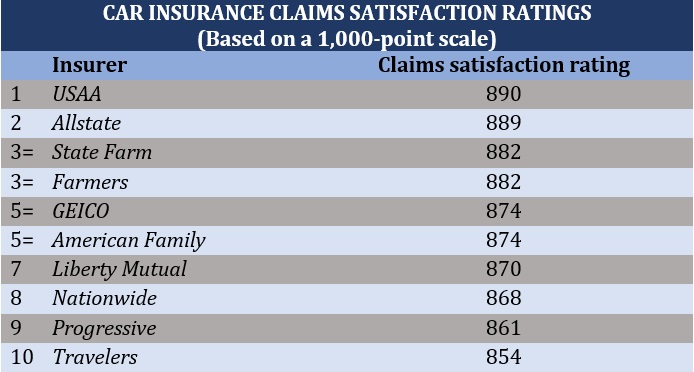
When reviewing auto insurers in California, several factors separate standard carriers from exceptional ones. These include claims satisfaction scores from independent agencies like J.D. Power, financial strength ratings from AM Best, digital tool availability, discount structures, and responsiveness during major natural disaster events or high-volume claims periods. Below is a comprehensive review of five leading auto insurance providers in California for 2026.
1. State Farm: Best for Personal Service and Comprehensive Local Agent Networks
State Farm stands as one of the largest property and casualty insurers in the United States and maintains a dominant market share in California. The company's primary operational advantage is its vast network of exclusive, captive agents who maintain physical storefronts throughout the state, from urban centers like Los Angeles and San Francisco to rural communities in the Central Valley.
Coverage Options and Perks
State Farm offers a robust suite of standard coverages—including liability, comprehensive, collision, uninsured/underinsured motorist, and medical payments. Additionally, California policyholders can opt for specialized endorsements such as:
- Emergency Road Service: Covers towing, flat tire changes, gas delivery, and locksmith services.
- Car Rental and Travel Expenses: Reimburses transportation costs while a covered vehicle is out of service due to a claim.
- Ride-Share Driver Coverage: Bridges the coverage gap for drivers working for transportation network companies like Uber or Lyft before a passenger enters the vehicle.
Pricing and Discounts
State Farm's pricing in California tends to be competitive, particularly for drivers who bundle multiple policies, such as homeowners or renters insurance with auto coverage. Key discount programs include Drive Safe & Save, a telematics program that tracks driving habits via a mobile application, good student discounts, accident-free milestones, and safety feature discounts for vehicles equipped with factory anti-theft systems or advanced driver-assistance systems (ADAS).
Customer Experience and Claims Handling
State Farm consistently scores above average in J.D. Power customer satisfaction studies for the California region. The company's mobile application allows policyholders to file claims, upload accident photos, request roadside assistance, and manage billing documents seamlessly. However, because rates depend heavily on individual agent relationships and localized risk assessments, policyholders who prefer a purely digital, hands-off experience may find the agent-centric model less streamlined than direct-to-consumer alternatives.
2. GEICO: Best for Digital-First Users and Competitive Pricing
Government Employees Insurance Company (GEICO), a subsidiary of Berkshire Hathaway, is recognized nationwide for its direct-to-consumer business model and memorable marketing. In California, GEICO appeals strongly to budget-conscious drivers and tech-savvy consumers who prefer managing their policies entirely through a mobile device or web portal.
Coverage Options and Perks
GEICO provides all standard coverage types required under California law, alongside mechanical breakdown insurance (MBI), which acts as an extended warranty for new or leased vehicles under 15,000 miles and less than 15 months old. This endorsement covers repairs to most mechanical and electrical parts, excluding standard maintenance items like brake pads and wiper blades.
Pricing and Discounts
As a direct writer that does not rely on independent or captive agents, GEICO frequently undercuts traditional agency-based carriers on baseline pricing. California drivers can access numerous discount opportunities, including:
- Affinity Discounts: Special rates for federal, state, and local government employees, military personnel, and members of various professional organizations or university alumni associations.
- Safety Equipment Discounts: Reductions for airbags, anti-lock brakes, and daytime running lights.
- Good Driver Discounts: Aligned with California Proposition 103 mandates, rewarding drivers with clean driving records over consecutive years.
Customer Experience and Claims Handling
GEICO's digital infrastructure is among the most advanced in the industry. The mobile app enables real-time claims tracking, digital ID card access, and quick premium payment processing. While automated phone trees and chatbot assistants handle routine inquiries efficiently, policyholders seeking face-to-face advisory services will not find local brick-and-mortar offices, which can complicate complex liability disputes or customized policy structuring.
3. Progressive: Best for High-Risk Drivers and Specialized Vehicle Coverages
Progressive holds a prominent position in the California auto insurance market, known for its willingness to insure drivers with complex risk profiles, including those with past tickets, DUIs, or lapses in coverage. Progressive also stands out for its transparent pricing tools and broad spectrum of insured vehicle types.
Coverage Options and Perks
Beyond standard auto insurance, Progressive excels in multi-vehicle and niche recreational policies. California residents can bundle auto insurance with coverage for motorcycles, RVs, boats, and classic cars. Unique policy features include:
- Name Your Price® Tool: Allows prospective buyers to input a target budget and see coverage combinations that fit that specific financial threshold.
- Custom Parts and Equipment Value (CPE): Covers aftermarket stereo systems, custom wheels, and specialized paint up to a specified limit.
- Loan/Lease Payoff (Gap Insurance): Pays the difference between the actual cash value of a totaled vehicle and the remaining balance on an auto loan or lease.
Pricing and Discounts
Progressive's pricing reflects its tiered risk-acceptance model. While drivers with clean records benefit from competitive rates, drivers with moving violations or accidents will often find Progressive more willing to offer coverage than standard-market-only carriers, albeit at a higher premium. The Snapshot program uses a plug-in device or mobile app to monitor driving behavior—speed, braking, and phone usage—potentially yielding significant discounts for safe motorists, though poor driving habits can occasionally trigger a rate increase upon renewal.
Customer Experience and Claims Handling
Progressive provides an intuitive online dashboard and mobile app for policy management. The company's network of authorized repair shops streamlines the claims process through guaranteed repair programs, where workmanship is backed by a lifetime guarantee for as long as the customer owns the vehicle. Customer service ratings tend to vary more widely than State Farm or GEICO, primarily because Progressive insures a broader spectrum of high-risk policyholders who may experience more frequent claims interactions.
4. USAA: Best for Military Members, Veterans, and Their Families
United Services Automobile Association (USAA) consistently ranks at or near the top of customer satisfaction and loyalty surveys nationwide. Available exclusively to active-duty military personnel, veterans, and their eligible family members, USAA delivers exceptional value, low rates, and specialized customer care tailored to the unique lifestyle of military families.
Coverage Options and Perks
USAA provides comprehensive protection that meets or exceeds California's financial responsibility laws. Notable perks include:
- Deployment Discounts: Up to a 60% discount on vehicles stored during military deployments.
- On-Base Storage Savings: Reduced rates for vehicles kept on secure military installations.
- Accident Forgiveness: Available to eligible drivers who remain accident-free for a specified number of years, preventing rate hikes after a first at-fault accident.
Pricing and Discounts
Because USAA operates as a reciprocal interinsurance exchange owned by its members, profits are returned to policyholders through subscriber savings accounts and competitive baseline pricing. California members can take advantage of bundling discounts, safe driver rewards, low annual mileage discounts, and multi-vehicle policies.
Customer Experience and Claims Handling
USAA's customer service infrastructure is widely regarded as industry-leading. Claims representatives are trained to understand the complexities of military relocations, deployments, and family transitions. The mobile application and online portal offer comprehensive self-service capabilities, allowing users to handle claims, roadside assistance requests, and policy adjustments without friction. The primary limitation is eligibility: civilians without a direct family connection to the military cannot purchase coverage.
5. Mercury Insurance: Best for Local California Expertise and Flexible Payment Plans
Headquartered in Los Angeles, Mercury Insurance is a regional carrier with deep roots in the California market. Founded specifically to serve California drivers, Mercury understands the nuances of local roadways, regional litigation trends, and state-specific insurance regulations better than many national mega-carriers.
Coverage Options and Perks
Mercury offers standard liability, collision, and comprehensive coverages alongside useful regional endorsements. These include rideshare protection, roadside assistance, and extended replacement cost coverage for newer vehicles. Mercury is also recognized for offering comprehensive coverage options for high-value vehicles and custom automobiles.
Pricing and Discounts
Mercury positions itself as a budget-friendly alternative to national giants, often undercutting major brands on base rates for California drivers. The company relies on a hybrid model of independent agents and direct sales. Available discounts include:
- Anti-Theft Device Discounts: Significant savings for vehicles equipped with approved tracking and recovery systems, which helps mitigate high vehicle theft rates in certain California metropolitan areas.
- E-Pay and Paperless Discounts: Reduced premiums for customers who manage billing electronically.
- Good Driver and Good Student Reductions: Fully compliant with California Proposition 103 rating structures.
Customer Experience and Claims Handling
Mercury's use of independent agents gives consumers access to personalized advice and local advocacy if a claim is contested. While its digital tools have improved significantly, the user interface on mobile apps and web portals may feel slightly less polished than those of GEICO or Progressive. Customer reviews for claims handling are generally favorable, though satisfaction can depend heavily on the specific independent agent handling the local account.
Comparison of Top California Auto Insurers
| Insurer | Primary Advantage | Best Suited For | Key Limitation |
|---|---|---|---|
| State Farm | Extensive local agent network | Drivers wanting face-to-face advisory service | Agent availability varies by zip code |
| GEICO | Digital tools and low base rates | Tech-savvy, budget-conscious drivers | No physical storefronts for in-person support |
| Progressive | Flexible risk tolerance and vehicle bundling | High-risk drivers and multi-vehicle households | Rates can spike for poor driving telemetry |
| USAA | Exceptional customer service and military perks | Military members, veterans, and eligible families | Strictly restricted eligibility criteria |
| Mercury Insurance | Deep California market expertise | Drivers seeking regional customization and low rates | Digital app interface is less advanced than rivals |
Understanding California Auto Insurance Requirements
Navigating auto insurance in California requires adherence to specific legal mandates set forth by the state legislature and the California Department of Insurance. Operating a motor vehicle without proof of financial responsibility can result in steep fines, vehicle impoundment, and license suspension.
Mandatory Liability Minimums
As of January 1, 2025, California increased its mandatory minimum liability insurance limits under Senate Bill 1107. Drivers must carry at least:
- $30,000 for injury or death of one person per accident.
- $60,000 for total injury or death liability per accident.
- $15,000 for property damage liability per accident.
While these figures represent the absolute legal minimum required to register a vehicle, insurance experts strongly recommend purchasing higher limits (such as 100/300/100) to protect personal assets from litigation in severe collisions.
Proposition 103 and Rate Regulation
Passed by voters in 1988, Proposition 103 dictates how auto insurance rates are calculated and approved in California. Under Prop 103, insurers cannot base rates primarily on credit scores or ZIP codes in a discriminatory manner. Instead, the law mandates that rates must be determined primarily by three mandatory factors:
- The driver's driving safety record (accidents and violations).
- The number of miles driven annually by the insured vehicle.
- The number of years of driving experience the insured driver possesses.
Secondary factors, such as vehicle type and optional coverages, are permitted only if they have a proven statistical correlation to risk and receive explicit approval from the Insurance Commissioner.
Frequently Asked Questions
What are the mandatory auto insurance requirements in California?
California law requires all drivers to carry minimum liability coverage of $30,000 for injury or death of one person, $60,000 for total injuries per accident, and $15,000 for property damage. Drivers must carry physical proof of this insurance in their vehicle at all times and present it upon law enforcement request.
Can my credit score affect my auto insurance rate in California?
No. Under California Proposition 103, auto insurers are legally prohibited from using credit scores or credit-based insurance scores as a factor in determining premiums or eligibility for coverage. Rates must be based primarily on driving record, annual mileage, and years of driving experience.
Which auto insurer is cheapest in California?
Insurance premiums depend heavily on individual risk profiles, including location, vehicle make and model, driving history, and coverage limits. Direct writers like GEICO and regional carriers like Mercury often provide competitive baseline rates for drivers with clean records, while State Farm and Progressive offer robust bundling discounts that may lower total household insurance costs.
What should I do immediately after a car accident in California?
First, ensure safety by moving out of traffic if possible and checking for injuries. Call 911 if there are injuries or significant property damage. Exchange insurance and contact information with the other driver, take photos of the vehicles and accident scene, and notify your insurance company as soon as possible to initiate the claims process.
Is gap insurance worth purchasing in California?
Gap insurance covers the difference between what your car is worth (its actual cash value) and what you still owe on your auto loan or lease if the vehicle is totaled or stolen. If you purchased a new vehicle with a small down payment or a long loan term, gap insurance is highly recommended because new cars depreciate rapidly the moment they leave the dealership lot.
Conclusion and Next Actions
Selecting the best auto insurance policy in California requires balancing your budget against your exposure to financial risk. Drivers seeking localized support should explore State Farm or Mercury Insurance, while tech-oriented motorists prioritizing self-service will find GEICO or Progressive well-suited to their needs. Military families should prioritize USAA for its unmatched member benefits. Before making a final decision, obtain personalized quotes from at least three different carriers, review your coverage limits against California's statutory minimums, and verify that all applicable good driver and bundling discounts have been applied to your quote.