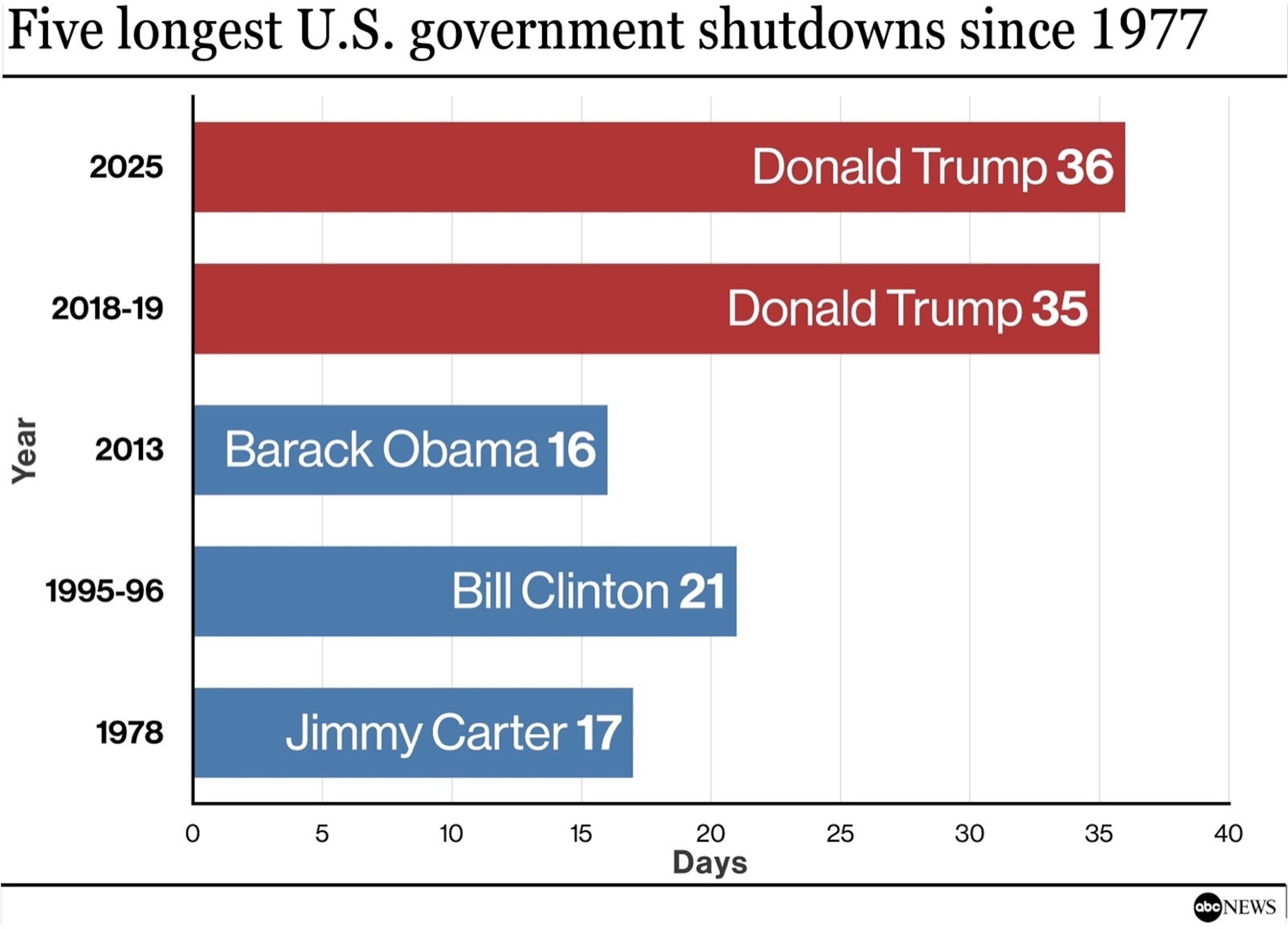
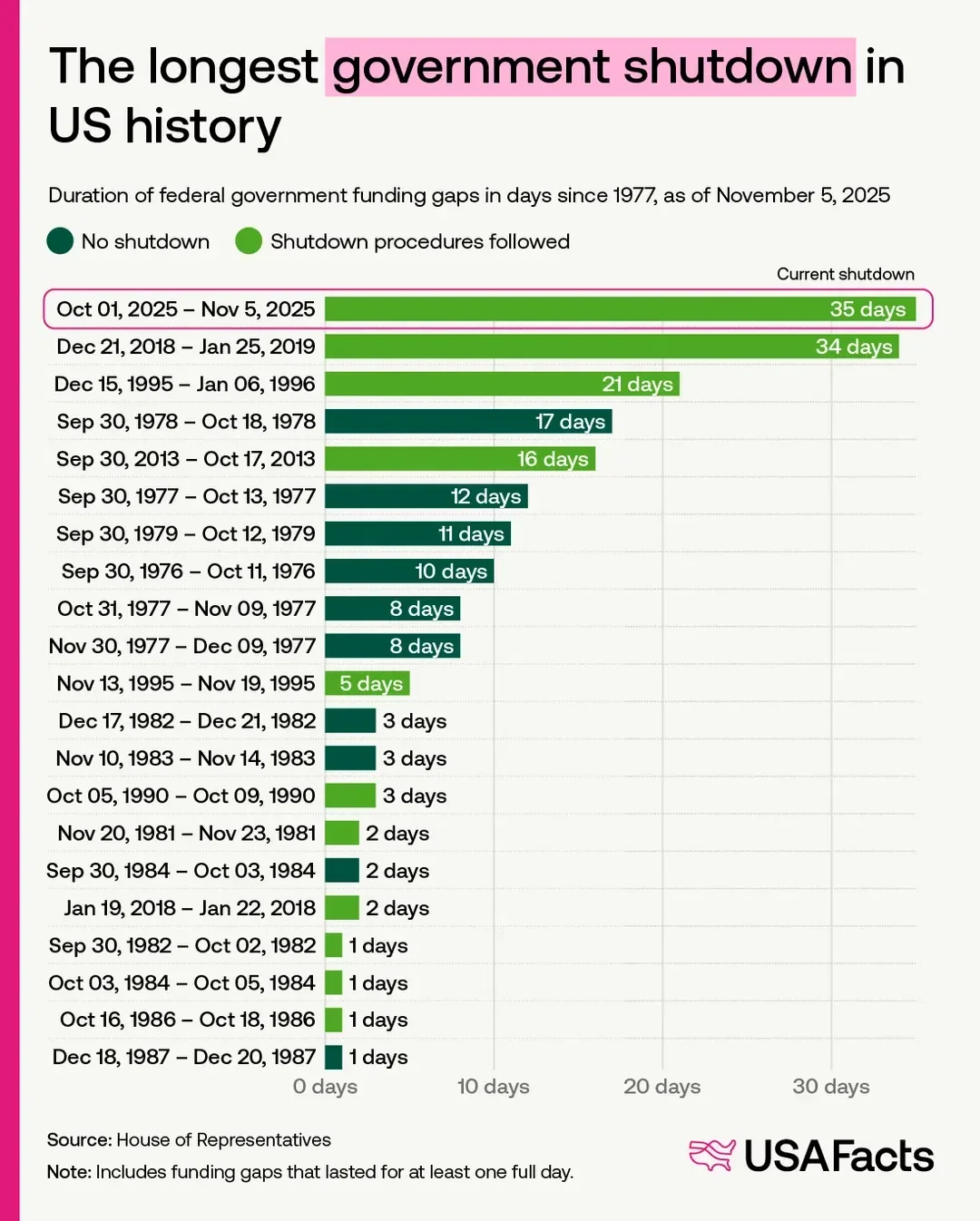
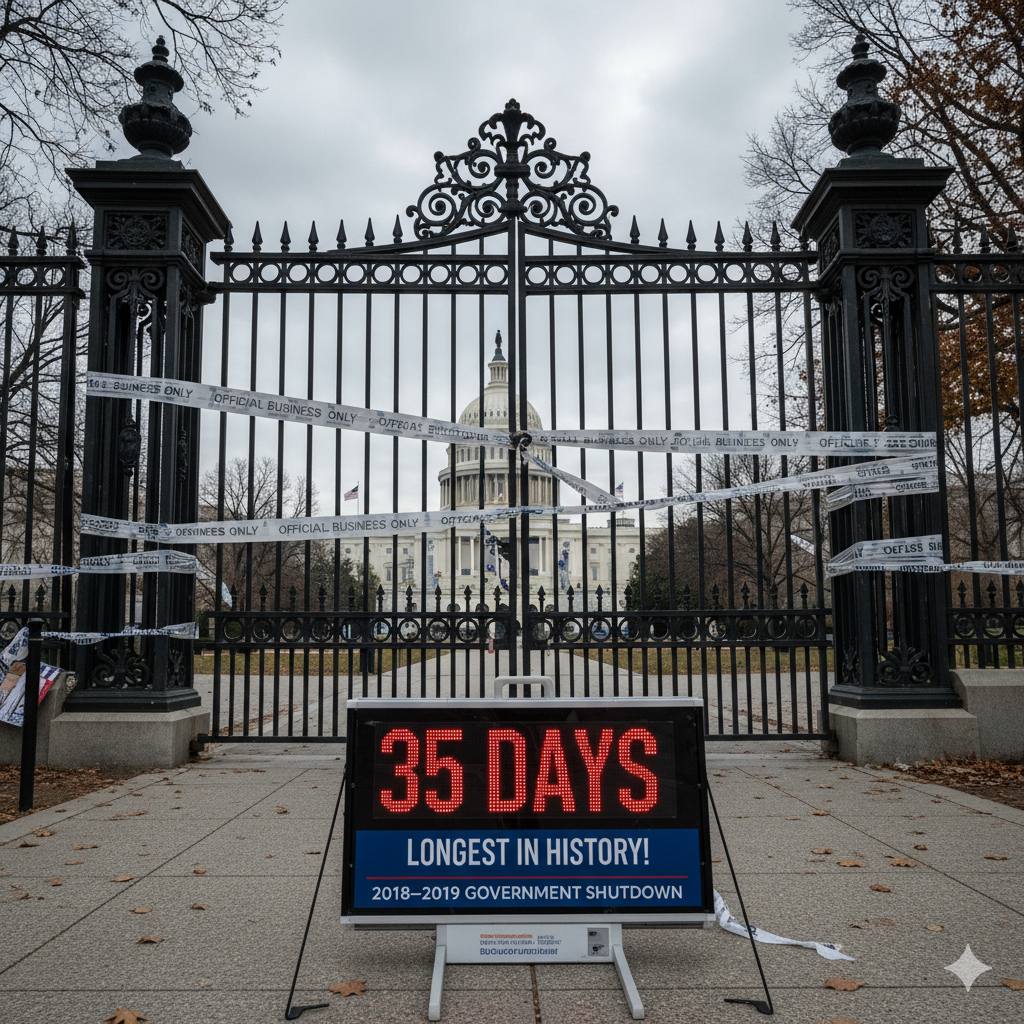
The 35-day U.S. government shutdown, spanning from December 22, 2018, to January 25, 2019, was the longest funding gap in American history. It originated from a deep-seated legislative impasse regarding $5.7 billion in requested funding for a U.S.-Mexico border wall, leaving approximately 800,000 federal employees without pay for over a month.
Understanding the Origins of the 2018–2019 Shutdown
To understand the 35-day timeline, one must first look at the political climate of late 2018. The United States was in a transition period following the 2018 midterm elections. While the Republican Party still held the majority in both the House and the Senate until January 3, 2019, the incoming Democratic majority in the House created a "lame duck" session defined by high-stakes negotiations.
The central point of contention was President Donald Trump’s demand for $5.7 billion to construct a physical wall along the Southern border. Congressional Democrats, led by then-House Minority Leader Nancy Pelosi and Senate Minority Leader Chuck Schumer, remained steadfast in their opposition, offering instead roughly $1.3 billion for general border security measures excluding a wall.
Under the Antideficiency Act, federal agencies cannot spend money or enter into obligations without an appropriation from Congress. When the existing funding for roughly 25% of the federal government expired at midnight on December 21, 2018, those agencies were forced to cease all non-essential operations. This partial shutdown affected nine executive departments, including Homeland Security, Justice, State, and Treasury.
Phase 1: The December Deadlock (Dec 11 – Dec 31, 2018)
The timeline effectively began before the actual expiration of funds, during a televised Oval Office meeting on December 11, 2018. President Trump, Nancy Pelosi, and Chuck Schumer engaged in a rare public debate. During this meeting, the President famously stated he would be "proud to shut down the government for border security," a quote that would define the early media narrative.
The Initial Lapse
By mid-December, a bipartisan agreement seemed possible when the Senate passed a "clean" continuing resolution (CR) to fund the government through February 2019 without wall money. However, after facing significant pressure from conservative commentators and House Republicans, President Trump announced he would not sign any bill that did not include wall funding. On December 20, the House passed a version of the bill including the $5.7 billion. This bill lacked the 60 votes required to pass the Senate, leading to the official shutdown at 12:01 a.m. on Saturday, December 22.
The First Week of Uncertainty
The first week was marked by a lack of communication between the White House and Congressional leaders. Most federal employees were already scheduled for holiday leave, which slightly blunted the immediate operational impact. However, the closure of Smithsonian museums and the suspension of various Department of the Interior services began to draw public attention. By December 27, the shutdown had officially lasted six days, with no negotiations scheduled.
Phase 2: The New Congress and Heightened Tension (Jan 1 – Jan 10, 2019)
The start of 2019 brought a fundamental shift in the legislative landscape. On January 3, the 116th Congress was sworn in, and Nancy Pelosi was elected Speaker of the House. This transition officially placed the "power of the purse" in the hands of the Democratic Party, which immediatey passed a package of bills to reopen the government without wall funding.
The Standoff Solidifies
President Trump and Republican Senate Majority Leader Mitch McConnell maintained that the Senate would not vote on any bill the President would not sign. This created a circular logic of inaction. On January 8, President Trump delivered his first televised address from the Oval Office to the nation, framing the border situation as a "humanitarian and security crisis." Democrats provided a televised rebuttal, arguing that the government should be reopened before negotiations on border security continued.
The Walkout
On January 9, a pivotal meeting at the White House ended abruptly. When Speaker Pelosi once again refused to provide wall funding in exchange for ending the shutdown, President Trump reportedly said "bye-bye" and walked out of the room. This event signaled that the shutdown would likely continue into a record-breaking duration, as neither side showed signs of wavering.
Phase 3: Breaking Records and Real-World Impact (Jan 11 – Jan 20, 2019)
On January 12, 2019, the shutdown reached its 22nd day, officially becoming the longest government shutdown in U.S. history, surpassing the 21-day shutdown of 1995–1996.
The Paycheck Crisis
January 11 marked the first day that 800,000 federal workers missed their first full paycheck. This included roughly 420,000 "excepted" employees (such as TSA agents, FBI agents, and Coast Guard members) who were required to work without pay, and 380,000 "furloughed" employees who were legally barred from working. The financial strain led to widespread reports of federal workers visiting food banks and applying for unemployment benefits.
The Impact on Critical Services
As the shutdown entered its third and fourth weeks, the strain on the system became systemic:
- Aviation: TSA agents began calling in sick at increasing rates (referred to as "sick-outs") due to financial hardship, leading to long lines at major airports.
- National Parks: Without staff to manage waste and safety, many national parks faced sanitation issues, with volunteers and state governments stepping in to provide basic services.
- IRS: The shutdown coincided with the start of the tax filing season, creating significant anxiety regarding the processing of tax refunds.
- FDA: Routine food safety inspections were curtailed, raising public health concerns.
Phase 4: The Breaking Point and Resolution (Jan 21 – Jan 25, 2019)
The final week of the shutdown saw the pressure shift from political posturing to genuine national security and economic concerns. The "State of the Union" controversy added a layer of personal friction, as Speaker Pelosi effectively "disinvited" President Trump from delivering the address in the House Chamber until the government was reopened, citing security concerns.
The LaGuardia Incident
The literal breaking point occurred on the morning of Friday, January 25, 2019. Due to a shortage of air traffic controllers (who were working without pay), the Federal Aviation Administration (FAA) was forced to implement a ground stop at LaGuardia Airport in New York. Delays rippled across the East Coast, affecting Newark Liberty and Philadelphia International Airports. This disruption to the nation’s commercial aviation infrastructure served as a catalyst for immediate political action.
The Three-Week Agreement
Later that afternoon, President Trump announced that an agreement had been reached to reopen the government for three weeks—until February 15—via a continuing resolution. Crucially, the bill did not include the $5.7 billion for the wall. The Senate and House passed the measure by voice vote that evening, and the President signed it into law, ending the 35-day impasse.
Chronological Summary of Key Events
The following table outlines the critical milestones of the 35-day shutdown.
| Date | Event | Significant Outcome |
|---|---|---|
| Dec 21, 2018 | Funding Expires | Senate fails to pass House-approved wall funding; shutdown begins. |
| Dec 22, 2018 | Day 1 | Nine federal departments and several agencies cease non-essential operations. |
| Jan 3, 2019 | New Congress | Democrats take control of the House; Nancy Pelosi becomes Speaker. |
| Jan 8, 2019 | National Address | President Trump makes his case for wall funding to the public. |
| Jan 11, 2019 | First Missed Pay | 800,000 federal employees miss their first paycheck of the shutdown. |
| Jan 12, 2019 | Record Set | At 22 days, this becomes the longest U.S. government shutdown ever. |
| Jan 16, 2019 | SOTU Postponed | Pelosi suggests Trump delay the State of the Union address. |
| Jan 25, 2019 | Resolution | FAA ground stops and worker pressure lead to a 3-week funding deal. |
Economic and Social Consequences
The Congressional Budget Office (CBO) later released an analysis detailing the economic toll of the 35-day shutdown. According to the CBO, the shutdown delayed approximately $18 billion in federal spending and reduced the real Gross Domestic Product (GDP) by roughly $11 billion.
While much of this was recovered once the government reopened and employees received back pay, the CBO estimated that $3 billion—roughly 0.02% of the annual GDP—was permanently lost. This loss stemmed from the fact that furloughed workers could not perform their duties, and private-sector entities dependent on government services (such as contractors and tourism-related businesses near national parks) lost revenue that could never be recouped.
Impact on Federal Contractors
Unlike federal employees, who were eventually guaranteed back pay by the Government Employee Fair Treatment Act of 2019, thousands of federal contractors had no such protection. For many janitorial, security, and administrative contractors, the 35-day gap resulted in a total loss of income for that period, highlighting a significant vulnerability in the federal workforce structure.
Legislative Aftermath and the National Emergency
The reopening of the government on January 25 was only a temporary reprieve. The three-week window was intended to allow a bipartisan committee to negotiate a border security deal. When that deadline approached in mid-February 2019, Congress passed a bill providing roughly $1.375 billion for border fencing—far less than the $5.7 billion requested.
To secure the remaining funds, President Trump signed the funding bill to avoid a second shutdown but simultaneously declared a national emergency on the southern border. This allowed the administration to divert funds from other accounts, such as military construction, toward wall building. This move triggered a series of legal challenges regarding the separation of powers and the executive's authority to bypass congressional spending decisions, which continued through the end of his term.
Frequently Asked Questions
How many federal employees were affected by the 2019 shutdown?
Approximately 800,000 federal employees were directly affected. This group was split between roughly 420,000 "excepted" employees who worked without pay and 380,000 furloughed employees who were prohibited from working until the government reopened.
Did federal workers get paid for the 35 days?
Yes. On January 16, 2019, President Trump signed the Government Employee Fair Treatment Act of 2019. This law requires that all federal employees affected by the shutdown receive back pay for the duration of the funding lapse, regardless of whether they were furloughed or excepted.
What was the specific cause of the 35-day shutdown?
The primary cause was a disagreement over $5.7 billion in funding for a physical wall along the U.S.-Mexico border. The Republican-led White House insisted on its inclusion, while the Democratic-led House of Representatives refused, leading to a legislative stalemate.
Which government agencies remained open during the shutdown?
Only agencies that had already secured full-year appropriations were unaffected. This included the Department of Defense, the Department of Veterans Affairs, and the Department of Energy. Roughly 75% of the government was already funded; the 35-day shutdown affected the remaining 25%.
How did the shutdown finally end?
The shutdown ended when President Trump signed a short-term continuing resolution on January 25, 2019. The decision was influenced by mounting public pressure, significant flight delays caused by air traffic controller shortages, and the increasing financial desperation of the federal workforce.
What was the total economic cost of the shutdown?
According to the Congressional Budget Office, the shutdown cost the U.S. economy approximately $11 billion. While $8 billion was eventually recovered through back pay and resumed spending, roughly $3 billion was a permanent loss to the U.S. GDP.
Final Recommendation for Future Planning
As of 2026, the 35-day shutdown of 2018–2019 remains a foundational case study in constitutional law and federal emergency management. For individuals or businesses relying on federal services, the primary lesson from this event is the importance of maintaining a "contingency reserve."
If you are a federal contractor or a business located in a region heavily dependent on federal tourism or payroll, it is advisable to maintain a minimum 60-day liquid cash reserve to weather potential funding gaps. History has shown that while back pay is typically guaranteed for direct federal employees, the secondary economic effects on contractors and local economies are often permanent. Organizations should regularly review the "Shutdown Contingency Plans" published by federal agencies on the White House Office of Management and Budget (OMB) website to understand which specific services are likely to be deemed non-essential in future scenarios.