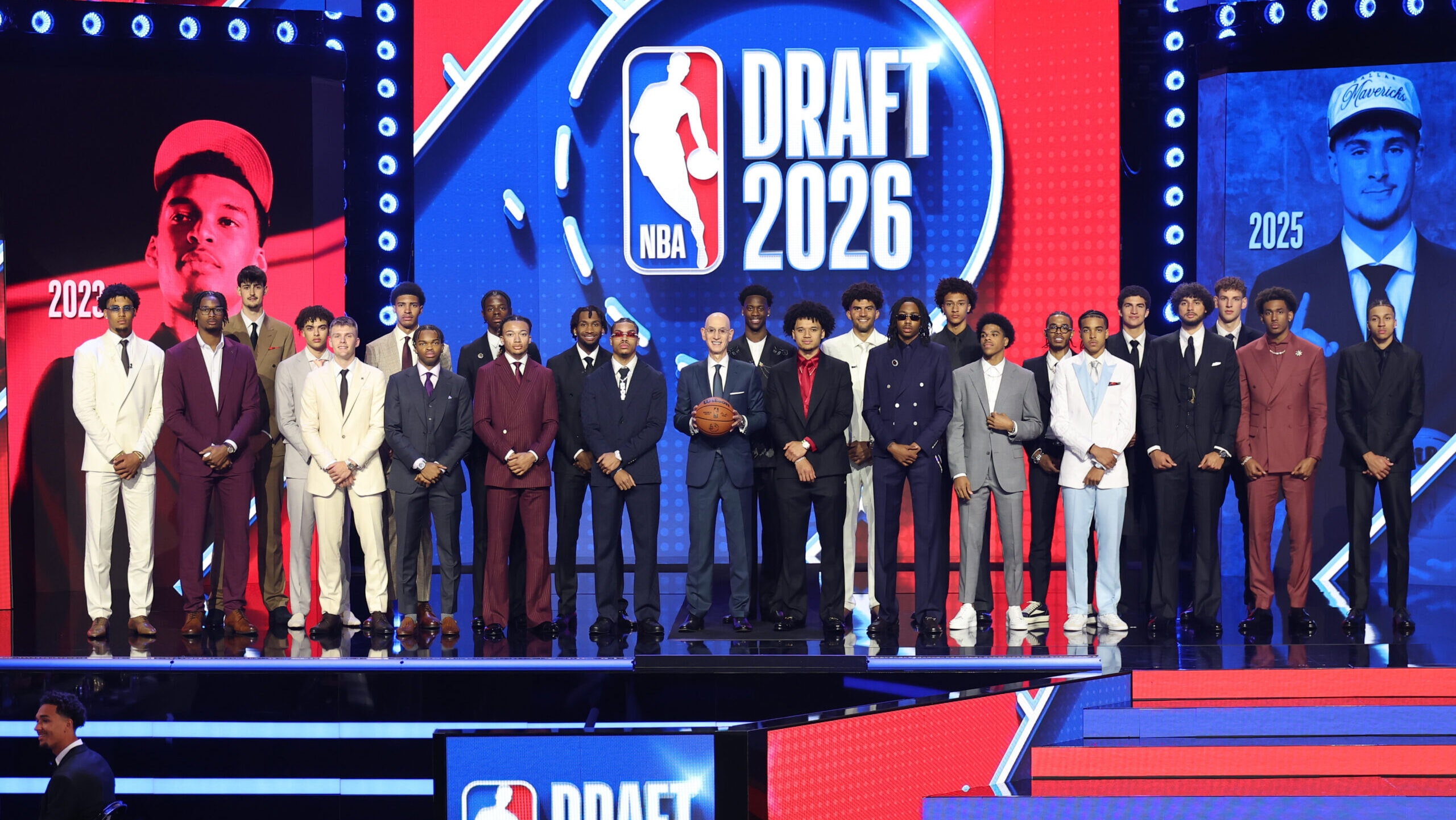
The 2026 NFL Draft wide receiver class offers an intriguing mix of dynamic vertical playmakers, explosive run-after-catch weapons, and polished route technicians entering their primary eligibility window. Scouting evaluations focus heavily on yards per route run, target share dominance, athletic testing thresholds, and press-man separation metrics to project immediate impact at the professional level.
The Landscape of the 2026 Wide Receiver Draft Class
Evaluating wide receiver prospects requires balancing raw athletic traits against refined football skills and college production profiles. As NFL offenses increasingly rely on 11-personnel (one running back, one tight end, three wide receivers), pre-snap motion, and positionless alignment flexibility, the demand for versatile wideouts who can win across all three levels of the field remains at an all-time high.
The prospective 2026 wide receiver draft pool consists primarily of players who entered college during the 2023 recruiting cycle and completed three mandatory seasons out of high school. This class stands out for its high-end speed and slot-to-outside elasticity, though evaluators closely monitor how individual prospects refine their releases off the line of scrimmage and expand their route trees during their final college campaigns.
Modern front offices no longer evaluate receivers based solely on traditional box-score metrics such as total yards or catch counts. Instead, advanced analytical frameworks isolate player performance from team context, examining efficiency rates against specific coverages, success against press technique, and win rates on contested targets. Understanding these analytical benchmarks is critical for evaluating the prospective 2026 receiver rankings.
Core Scouting Metrics and Analytical Benchmarks
To accurately tier wide receiver prospects, talent evaluators utilize a blend of film-based scouting and quantitative performance indicators. Understanding these metrics provides context for why certain receivers command first-round grades while others carry developmental labels.
- Wide Receiver Evaluation Metrics
- Efficiency
- YPRR
- Separation %
- Win vs. Press
- Production
- Dominance %
- Target Share
- Breakout Age
- Physicality
- RAS / Speed
- Catch Radius
- Contested %
- Efficiency
Yards Per Route Run (YPRR)
Yards Per Route Run isolates a receiver's per-play efficiency regardless of how often their team passes the ball. It is widely considered the single most predictive college efficiency metric for future NFL success.
- Elite Threshold: > 3.00 YPRR (indicates a dominant primary target who creates immediate separation).
- Above-Average Threshold: 2.25 – 2.99 YPRR (solid starter capability within a high-volume passing offense).
- Sub-Optimal Threshold: < 2.00 YPRR (often flags difficulty creating consistent separation or heavy reliance on manufactured touches).
Dominator Rating and Target Share
A prospect's Dominator Rating measures the percentage of their team's total passing yards and receiving touchdowns that the individual player accounted for. Target share measures the proportion of team pass attempts directed to the player when on the field.
- Breakout Threshold: A target share exceeding 20% or a Dominator Rating above 30% prior to age 21 serves as a strong indicator of early-career NFL readiness.
- Contextual Adjustments: High-volume target share in low-powered passing attacks must be normalized against lower target share within elite, talent-stacked college receiving corps.
Separation Rate and Contested Catch Win Percentage
- Separation vs. Single Man Coverage: Evaluates a receiver's ability to create at least two yards of distance from a defensive back at the point of the pass arriving.
- Contested Catch Rate: Measures success on targets where a defender is within arm's reach at the catch point. While high contested catch rates demonstrate strong hand-eye coordination and body control, an excessively high volume of contested targets can signal an inability to create natural separation.
Prospect Tier Breakdown for the 2026 WR Class
The 2026 wide receiver group can be categorized into distinct functional tiers based on play style, athletic profile, and projected draft capital.
Tier 1: Blue-Chip Boundaries and Dominant Alpha Receivers
Tier 1 prospects possess the size, speed, and technical release packages required to line up as primary "X" receivers. These players face opposing cornerbacks' best coverage and consistently command top defensive attention.
- Archetype Characteristics: Standing 6-foot-1 or taller with sub-4.45 speed, exceptional catch radiuses, and proven success against press-man coverage.
- Notable Names to Watch: High-profile targets like Zachariah Branch (USC), Carnell Tate (Ohio State), and Eugene Wilson III (Florida) lead early prospective watchlists. Branch brings explosive open-field speed and dynamic return capability, Tate offers polished boundary route-running and elite hands, while Wilson showcases elite short-area quickness and yards-after-catch creation.
- Evaluation Focus: Demonstrating a complete route tree (including hard-breaking dig, curl, and out routes) rather than relying exclusively on vertical go-routes or manufactured screens.
Tier 2: High-Volume Slot Operators and Dynamic Flankers
Tier 2 prospects excel in space. Operating primarily out of the slot or as move "Z" receivers, these players leverage pre-snap motion to dodge aggressive press coverage at the line of scrimmage.
- Archetype Characteristics: Elite acceleration, tight lateral agility, sharp plant-and-drive mechanics, and high YAC (Yards After Catch) output.
- Notable Names to Watch: Playmakers such as Kevin Concepcion (NC State), Makai Lemon (USC), and Eric Singleton Jr. (Georgia Tech) highlight this group. Concepcion offers multi-alignment versatility, Lemon brings competitive toughness and route deception, and Singleton provides blistering top-end speed that uncovers defense roofs.
- Evaluation Focus: Ability to process zone coverage mid-route, settle in open voids, and protect the football when working through high-traffic middle-field zones.
Tier 3: Developmental Traits and Vertical Specialists
Tier 3 contains prospects with raw physical tools—such as height, length, or track-level speed—who require further technical refinement in their footwork and route stems.
- Archetype Characteristics: Elite physical measurables (e.g., 6-foot-3+ frames or sub-4.35 40-yard dash times) paired with incomplete college production or unrefined release mechanics.
- Notable Names to Watch: Unique physical specimens like Nyck Harbor (South Carolina) represent high-upside projects. Harbor possesses world-class sprinter speed in an oversized frame, making his development curve one of the most closely monitored trajectories in college football.
- Evaluation Focus: Developing fluid sink at the top of route breaks, improving hand discipline to avoid body-catching, and increasing functional play strength against physical cornerbacks.
Comprehensive 2026 WR Draft Prospect Comparison Matrix
The following matrix synthesizes physical profiles, primary alignments, technical strengths, and developmental priorities for prospective leaders in the 2026 class.
| Prospect Name | College | Primary Alignment | Projected Height / Weight | Key Technical Strength | Primary Area for Growth | Estimated Draft Tier |
|---|---|---|---|---|---|---|
| Zachariah Branch | USC | Slot / Flanker | 5'10" / 175 lbs | Explosive YAC & open-field twitch | Beating physical press coverage at line | Day 1 (Round 1) |
| Carnell Tate | Ohio State | Boundary X | 6'2" / 195 lbs | Boundary footwork & catch radius | Dynamic top-end breakaway gear | Day 1 (Round 1) |
| Eugene Wilson III | Florida | Slot / Motion Z | 5 me'10" / 180 lbs | Acceleration & instant change of direction | High-traffic contested catch win rate | Day 1 - Early Day 2 |
| Kevin Concepcion | NC State | Versatile / Move | 5'11" / 187 lbs | Pre-snap motion versatility & spatial awareness | Expanding vertical downfield route tree | Day 1 - Early Day 2 |
| Makai Lemon | USC | Slot / Flanker | 5'11" / 190 lbs | Route sharpness & tough hands | Top-end pure straight-line speed | Day 2 (Rounds 2-3) |
| Eric Singleton Jr. | Georgia Tech | Flanker / Vertical | 5'11" / 175 lbs | Deep threat speed & cushion eating | Sinking hips on hard-stop break routes | Day 2 (Rounds 2-3) |
| Nyck Harbor | South Carolina | Boundary X | 6'5" / 240 lbs | Rare size-to-speed ratio | Route stem fluidity & snap out of breaks | Developmental / Day 2 |
Positional Archetypes and Receiver Roles in Modern Offenses
Evaluating wide receivers requires evaluating how their specific skill sets align with functional offensive roles in the NFL. Front offices grade prospects not just on general talent, but on how effectively their traits translate to distinct receiver positions.
- Receiver Positional Roles
- "X" Receiver
- Boundary alignment
- Beats press-man
- High catch radius
- "Z" Receiver
- Off-line alignment
- Pre-snap motion
- YAC & deep threat
- Slot / Move
- Inside alignment
- Option route specialist
- Operates in space
- "X" Receiver
The "X" Receiver (Split End)
The X receiver lines up directly on the line of scrimmage on the weak side of the formation. Because they cannot use pre-snap motion to escape coverage, X receivers must possess superior release packages to stack defensive backs off the line.
- Key Traits: Physical strength, long arms, hand-fight release techniques, and high-point contested catch ability.
- Scouting Priority: Evaluators watch game film against aggressive, physical press cornerbacks to ensure the prospect does not get routed out of bounds or delayed getting into their stem.
The "Z" Receiver (Flanker)
The Z receiver lines up off the line of scrimmage, allowing the offense to pre-snap motion them across formations to identify coverages or earn free releases.
- Key Traits: Deep speed, smooth acceleration, route deception, and open-field ball-carrier vision.
- Scouting Priority: Ability to track deep passes over the shoulder without decelerating or telegraphing the ball's arrival to defensive backs.
The Slot Receiver (F / Move)
Operating from inside alignments between the offensive tackle and the outside receiver, slot operators exploit middle-of-the-field voids created by linebackers and safeties.
- Key Traits: Short-area quickness, sudden change of direction, spatial intelligence to find soft spots in zone coverage, and toughness over the middle.
- Scouting Priority: Efficiency on option routes—reading safety caps and linebacker leverage to break inward or outward based on coverage structure.
Critical Evaluation Pitfalls and Red Flags
Draft evaluation errors frequently stem from over-indexing on raw physical metrics or misinterpreting college production. Front offices avoid several common traps when compiling receiver rankings:
- Overvaluing Track Speed Over Football Speed: A sub-4.30 40-yard dash is impressive, but if a player decelerates significantly when catching, tracking the ball, or running routes in pads, their functional playing speed is lower.
- Scheme Inflation and Gimmick Touch Reliance: High yardage totals built primarily on touch-passes, wide receiver screens, and jet sweeps can mask a prospect's inability to run actual route trees against man coverage.
- Body-Catching Tendencies: Receivers who let the football hit their chest frame rather than attacking it with extended hands experience higher drop rates and elevated interception rates when facing tight NFL closing windows.
- Poor Release Footwork against Jam Technique: Inability to clear a cornerback's hands at the line of scrimmage disrupts timing routes (such as quick slants and rhythm hitches), derailing designed passing plays.
Actionable Strategy for NFL Draft Analysts and Dynasty Managers
As the 2026 draft process unfolds, analysts and dynasty fantasy managers should execute a systematic process to track prospect movement:
- Monitor Age-Adjusted Production: Prioritize receivers who achieve high target shares as 19- or 20-year-olds over older fifth-year super-seniors whose production may stem from physical maturation advantages over younger collegiate defenders.
- Track Transfer Portal Trajectories: Observe how receivers adapt to new offensive schemes, play callers, and quarterback talent when transferring between programs. Consistent production across multiple schemes highlights high football IQ and fast skill adaptability.
- Analyze Separation Data over Raw Yardage: Utilize verified tracking data (such as zebra or telemetry stats where available) to isolate separation rates against single coverage rather than judging prospects purely on raw receiving totals.
- Watch Senior Bowl and All-Star Practices: Pay close attention to one-on-one competitive drills during pre-draft all-star events. These drills isolate release mechanics and route-running against high-end defensive back competition without scheme assistance.
Frequently Asked Questions
What makes the 2026 WR draft class unique compared to prior classes?
The 2026 wide receiver class stands out for its high density of dynamic, position-flexible playmakers who excel in pre-snap motion schemes. Unlike classes dominated purely by traditional boundary-only receivers, the 2026 group features a strong mix of elite YAC slot weapons and high-ceiling athletic developmental prospects.
Why is Yards Per Route Run (YPRR) preferred over total receiving yards?
Total receiving yards can be distorted by how often a college team throws the ball or how many snaps a receiver plays. YPRR measures a player's efficiency every single time they run a route, providing a clearer picture of their ability to earn targets and generate production relative to their opportunities.
How does breakout age impact a wide receiver's draft evaluation?
Breakout age measures the age at which a receiver first achieves a 20% or higher target share or Dominator Rating in college. Receivers who break out at age 18 or 19 historically hit high-end NFL production thresholds at a significantly higher rate than players who do not break out until age 21 or 22.
What is the difference between an 'X' receiver and a 'Z' receiver?
An 'X' receiver lines up directly on the line of scrimmage without motion assistance and must physically defeat press-man coverage. A 'Z' receiver lines up off the line of scrimmage, allowing offenses to use pre-snap motion to grant them clean releases and leverage advantages against defenders.
Can a receiver with sub-par 40-yard dash times still be ranked in Tier 1?
Yes. Elite route mechanics, sudden micro-burst, high spatial intelligence, and superior hands can compensate for average straight-line 40-yard dash times. Receivers who create separation through route precision and win contested catches frequently excel in the NFL despite lacking track-level top-end speed.
Final Recommendation & Next Steps
When evaluating the 2026 WR draft rankings, avoid relying on single-season volume stats or raw 40-yard dash metrics alone. Build a balanced evaluation framework that weights yards per route run, press-man release techniques, age-adjusted target shares, and alignment versatility.
To stay ahead of the consensus draft board, audit weekly film clips focusing specifically on route-stem breaks and line-of-scrimmage releases, monitor junior-year target share trends, and cross-reference physical traits against verified NFL Scouting Combine and Pro Day measurements as the 2026 draft cycle moves forward.