The 2025 midsize SUV market was defined by the long-awaited debut of the sixth-generation Toyota 4Runner, a significant mid-cycle refresh for the Ford Explorer, and the widespread standardization of hybrid powertrains. Manufacturers prioritized "rugged-lite" off-road trims and integrated Google-based infotainment systems to satisfy the evolving demands of tech-forward family buyers.
The 2025 model year represents a pivotal moment in the automotive landscape. As we look back from 2026, it is clear that 2025 was the year the midsize segment bridged the gap between traditional internal combustion reliability and the inevitable shift toward electrification. Whether you are currently shopping for a certified pre-owned 2025 model or evaluating the remaining new stock, understanding the nuances of that year’s releases is essential for making an informed investment.
The Resurgence of the Rugged Off-Roader
Perhaps the most significant headline of the 2025 model year was the total overhaul of the Toyota 4Runner. After 15 years on the market with the fifth-generation platform, the 2025 4Runner moved to the TNGA-F global body-on-frame platform. This transition was not merely cosmetic; it aligned the 4Runner with the Tacoma, Tundra, and Land Cruiser, providing a more rigid chassis and a modern powertrain.
The replacement of the aging 4.0L V6 with the i-FORCE 2.4L turbocharged four-cylinder engine marked a major shift. In its standard form, this engine produced 278 horsepower, but the highlights focused on the i-FORCE MAX hybrid variant, which delivered 326 horsepower and a massive 465 lb-ft of torque. This move addressed the two primary criticisms of previous models: sluggish acceleration and poor fuel economy. Toyota also introduced the Trailhunter trim, a factory-developed overland rig featuring ARB equipment and Old Man Emu shocks, signaling a direct challenge to the aftermarket-heavy Jeep Wrangler and Ford Bronco segments.
Concurrently, Honda updated its midsize offerings with a focus on the "TrailSport" branding. While the 2025 Honda Pilot remained largely consistent with its 2023 redesign, the focus shifted toward the upcoming 2026 Passport, which saw its final development stages and teasers in late 2025. These developments highlighted a broader industry trend: the "ruggedization" of the family hauler. Buyers in 2025 were no longer content with a vehicle that merely looked like an SUV; they demanded genuine mechanical upgrades like skid plates, all-terrain tires, and sophisticated torque-vectoring all-wheel-drive systems.
The 2025 Ford Explorer Refresh: A Digital Overhaul
As one of the best-selling nameplates in the segment, the 2025 Ford Explorer received a mid-cycle refresh that prioritized the interior experience. For years, the Explorer had been criticized for an aging cabin and a vertical infotainment screen that felt like an afterthought. The 2025 update resolved this with the introduction of the Ford Digital Experience.
This system, powered by a 13.2-inch touchscreen, integrated Google Maps, Google Assistant, and the Google Play store directly into the vehicle’s native software. This allowed drivers to use their favorite apps natively without relying solely on a smartphone connection. Furthermore, Ford streamlined the trim lineup, focusing on the Active, ST-Line, ST, and Platinum tiers.
Mechanically, the 2025 Explorer maintained its 2.3L EcoBoost and 3.0L V6 options, but it significantly expanded the availability of BlueCruise, Ford’s hands-free highway driving technology. By 2025, BlueCruise 1.2 and 1.3 updates improved lane-change assist and in-lane repositioning, making the Explorer one of the most technologically advanced long-distance cruisers in the midsize category. According to Ford’s official newsroom, these updates were designed to lower the "barrier to entry" for semi-autonomous driving features in the family segment.
Hybrid Dominance and the Efficiency Benchmark
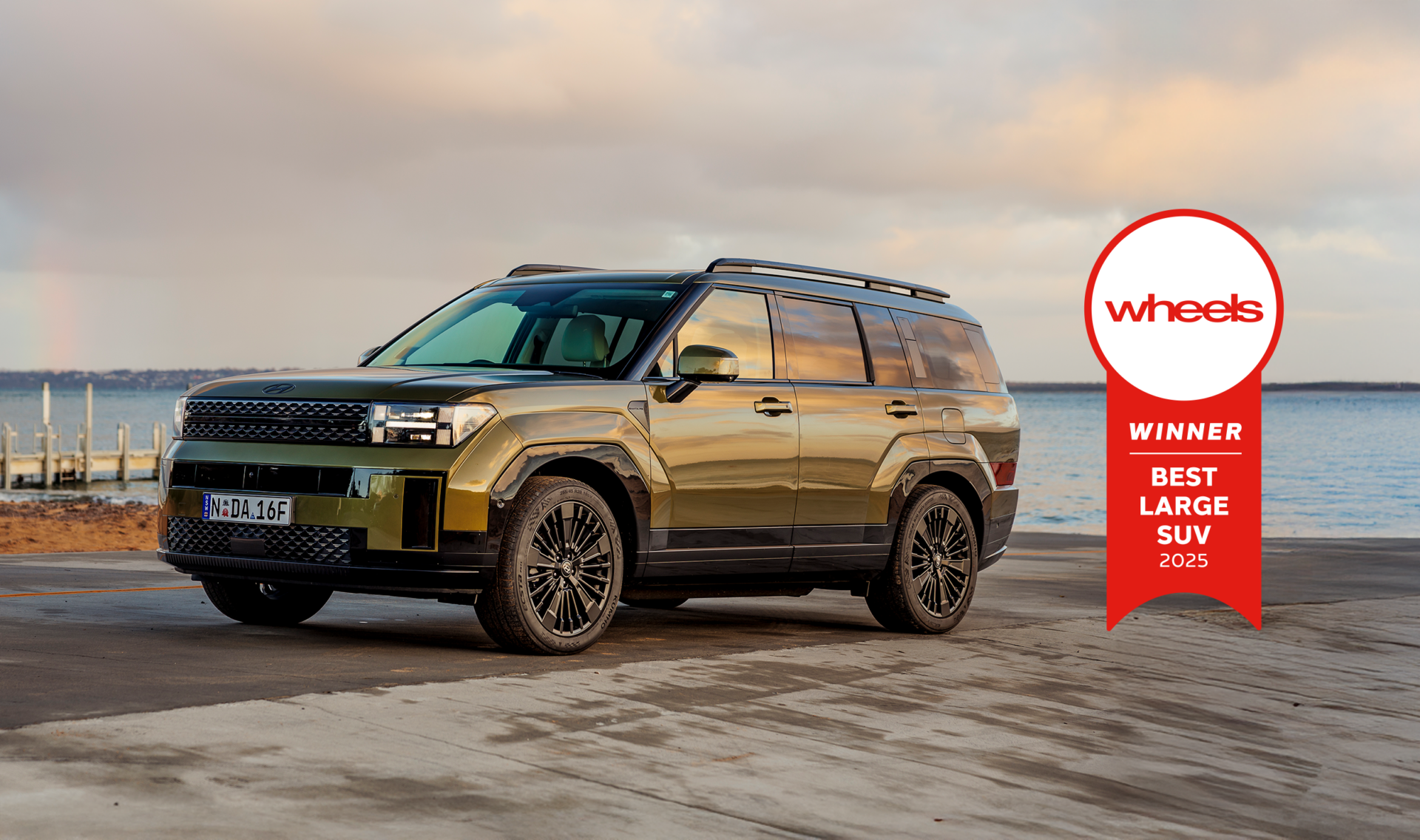
The 2025 model year solidified the hybrid as the default choice for the midsize segment rather than a niche alternative. The Hyundai Santa Fe, which entered its first full year of sales for the "boxy" redesign, showcased a standard three-row layout that leaned heavily on its 1.6L Turbo Hybrid powertrain. This system achieved an EPA-estimated 34-36 MPG combined, a figure that was unheard of for a vehicle of its size just five years prior.
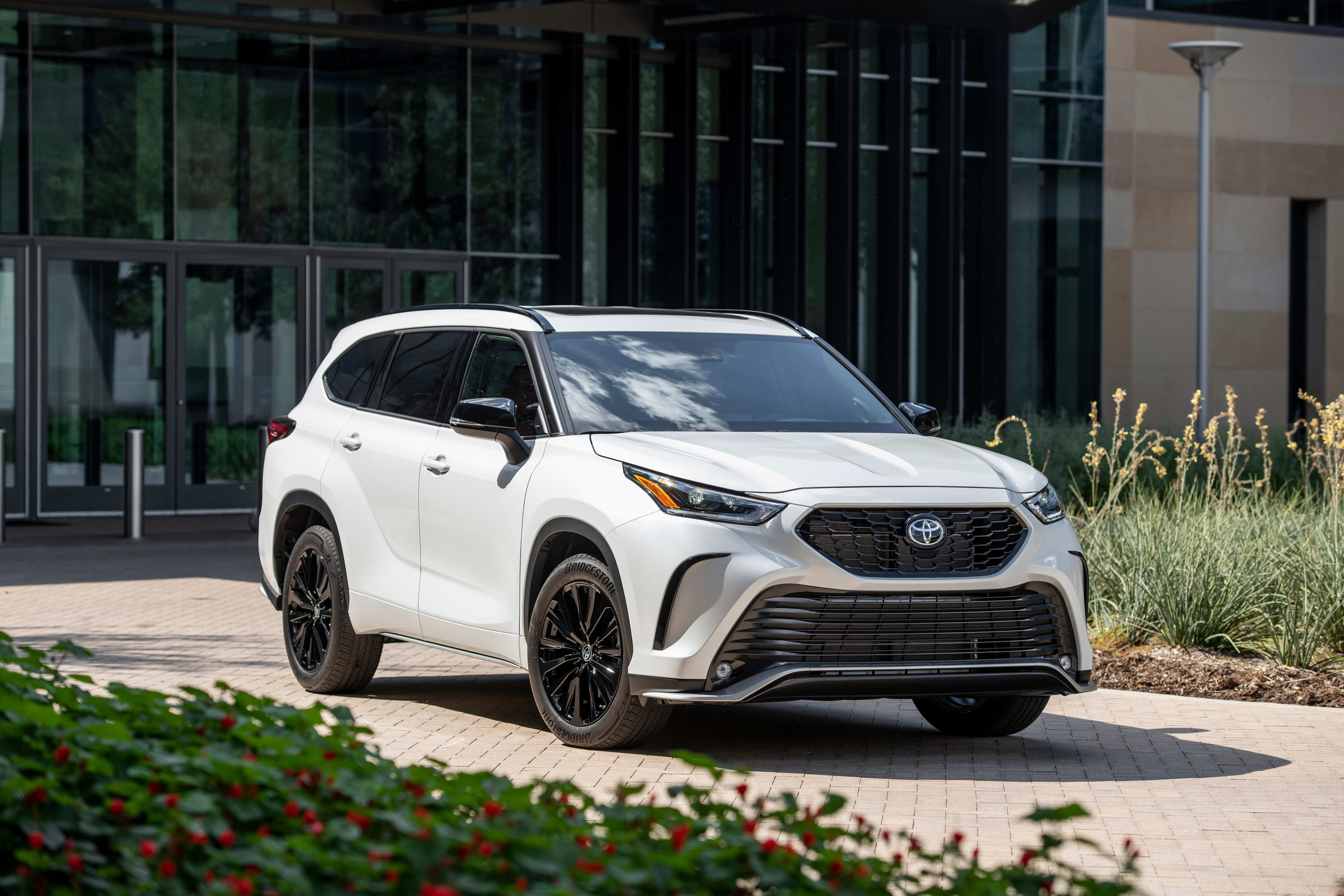
Toyota’s Grand Highlander also remained a dominant force in 2025. By offering three distinct powertrains—a standard gas engine, an efficiency-focused hybrid, and the performance-oriented Hybrid MAX—Toyota effectively captured three different buyer personas within a single model. The Hybrid MAX, in particular, proved that electrification could be used to enhance towing capacity and 0-60 MPH times, not just fuel savings.
For those looking at European entries, the 2025 Volkswagen Atlas and Atlas Cross Sport continued to rely on the 2.0L turbocharged engine introduced in 2024, emphasizing that even without a hybrid, downsizing and turbocharging were the keys to meeting 2025 emissions standards. However, the lack of a dedicated hybrid option in the Atlas began to show in sales comparisons against the Highlander and the refreshed 2025 Kia Sorento, which saw a surge in popularity for its PHEV (Plug-in Hybrid Electric Vehicle) variant.
Comparing Top 2025 Midsize SUVs
Choosing between these models requires balancing towing needs, passenger capacity, and fuel efficiency. The following table highlights the core specifications of the standout 2025 models.
| Model | Primary Powertrain | Max Horsepower | Max Towing (lbs) | Notable 2025 Feature |
|---|---|---|---|---|
| Toyota 4Runner | 2.4L Turbo / Hybrid | 326 hp | 6,000 | All-new TNGA-F Platform |
| Ford Explorer | 2.3L / 3.0L EcoBoost | 400 hp | 5,000 | Ford Digital Experience (Google) |
| Honda Pilot | 3.5L V6 | 285 hp | 5,000 | Removable 2nd-row middle seat |
| Hyundai Santa Fe | 2.5L Turbo / 1.6L Hybrid | 277 hp | 4,500 | Radical boxy redesign / Dual wireless charging |
| Mazda CX-90 | 3.3L Inline-6 / PHEV | 340 hp | 5,000 | Longitudinal RWD-biased platform |
| Kia Telluride | 3.8L V6 | 291 hp | 5,500 | X-Pro off-road enhancements |
Technology, Safety, and Driver Assistance Trends
In 2025, safety technology moved beyond simple "warning" systems to "active intervention" systems. The Insurance Institute for Highway Safety (IIHS) updated its side-impact and pedestrian detection testing protocols in late 2024, forcing 2025 models to include more robust structural reinforcements and improved night-vision sensors.
Software-Defined Vehicles
Most 2025 midsize SUVs transitioned to Software-Defined Vehicle (SDV) architectures. This means the vehicle’s hardware is built to be improved over time via Over-the-Air (OTA) updates. For example, the 2025 Jeep Grand Cherokee received several OTA updates throughout the year that refined the power delivery of its 4xe plug-in hybrid system, improving the transition between electric and gas modes.
Advanced Driver Assistance Systems (ADAS)
By 2025, Level 2 autonomy became a standard expectation in the mid-trim levels ($45,000–$55,000 range).
- Toyota Safety Sense 3.0: Featured improved proactive driving assist, which subtly slows the vehicle into curves.
- Honda Sensing: Enhanced the wide-angle camera and radar to better detect cyclists and pedestrians in urban environments.
- Hyundai/Kia Highway Driving Assist 2 (HDA 2): Integrated lane-change assist functionality that mimics human driving patterns more closely.
Interior Versatility: The "Third-Row" Arms Race
The midsize SUV segment is split into two-row "lifestyle" SUVs (like the Ford Edge or Honda Passport) and three-row "family" SUVs. In 2025, the boundary blurred as more two-row vehicles grew in size to accommodate occasional-use third rows.
The Mazda CX-90 serves as a prime example of this 2025 philosophy. Mazda aimed for the "premium" segment, competing with Volvo and BMW rather than just Toyota and Honda. The interior utilized Nappa leather, maple wood trim, and Japanese textile stitching. However, while the front two rows were luxurious, the third row remained tight, highlighting the compromise between exterior styling (the long hood of the Inline-6) and interior volume.
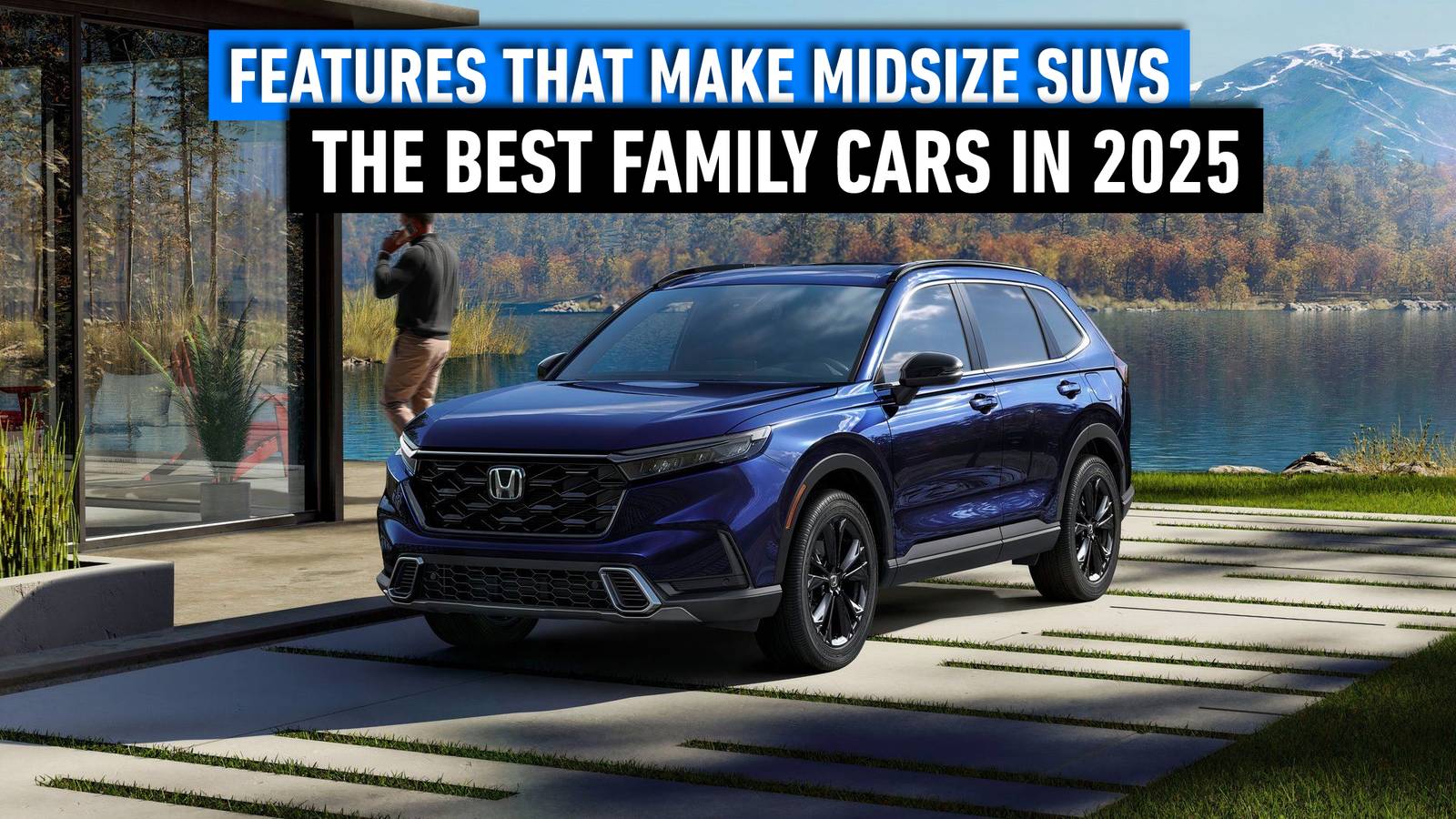
Conversely, the Honda Pilot remained the king of versatility. Its eighth-seat stowage system—where the middle seat of the second row can be removed and stored in the trunk floor—was a highlight that competitors struggled to match. This feature allowed families to switch between a captain’s chair layout and a full bench configuration without leaving hardware in their garage.
Evaluating the Cost of Ownership in 2025
The average transaction price for a midsize SUV in 2025 hovered between $48,000 and $55,000. While the initial sticker price was high, several factors in 2025 influenced the long-term cost of ownership:
- Fuel Costs: The shift toward hybrids saved the average owner approximately $600–$900 per year in fuel, assuming 15,000 miles of driving at $3.50/gallon.
- Maintenance: Turbocharged engines, while efficient, have higher long-term maintenance requirements than the naturally aspirated V6s of the past. Buyers in 2025 were encouraged to follow strict oil-change intervals to preserve turbo seals.
- Insurance: With the proliferation of expensive sensors (Lidar, Radar, and Cameras) in bumpers and windshields, minor collisions in 2025 became significantly more expensive to repair, leading to a 5-10% rise in insurance premiums for vehicles equipped with advanced ADAS.
For specific safety ratings and recall information regarding these 2025 models, the National Highway Traffic Safety Administration (NHTSA) provides a searchable database that is updated as new field data is collected.
FAQs
Which 2025 midsize SUV has the best towing capacity?
The 2025 Toyota 4Runner and the Dodge Durango (specifically the SRT and Tow N Go packages) led the segment. The 4Runner offered a respectable 6,000 lbs, but for those needing maximum utility, the Durango remained the heavy-hitter with up to 8,700 lbs of capacity. However, for most "family" three-row SUVs like the Pilot or Explorer, 5,000 lbs remained the standard benchmark.
Is a hybrid better than a traditional gas engine for a 2025 SUV?
In 2025, the "better" choice depends on your driving habits. If your commute involves heavy stop-and-go traffic, the hybrid variants from Toyota and Hyundai offer significantly better ROI. If your primary use case is highway cruising and heavy towing, the traditional turbocharged gas engines (like Ford’s 3.0L EcoBoost) provide more consistent torque and less complexity under heavy loads.
Did any midsize SUVs get discontinued in 2025?
2025 saw the formal end of the Ford Edge in North America as the company shifted production focus toward electric vehicles and the refreshed Explorer. Similarly, the Subaru Ascent entered a period of speculation, though it remained in the lineup with minor updates while Subaru focused on its collaboration with Toyota for future electrified models.
Which 2025 SUV has the best infotainment system?
The Ford Explorer and Chevrolet Traverse took the lead in 2025 by adopting Google Built-in. This native integration is generally faster and more reliable than mirroring a phone. However, users who value physical buttons often preferred the 2025 Honda Pilot, which maintained a balanced mix of touch controls and tactile knobs for volume and climate.
How does the 2025 Toyota 4Runner compare to the 2025 Land Cruiser?
Both vehicles share the same TNGA-F platform and i-FORCE MAX hybrid powertrain. The primary difference is intent: the Land Cruiser is a dedicated five-passenger SUV with a focus on global heritage and comfort, whereas the 4Runner offers a three-row option and a more "rugged" styling aimed at the North American enthusiast market.
Final Recommendation
If you are looking for a vehicle that balances modern technology with long-term resale value, the 2025 Toyota 4Runner or Toyota Grand Highlander are the standout choices from that model year. Their transition to hybrid power and modern platforms ensures they will remain relevant well into the late 2020s. For those prioritizing family tech and interior comfort, the 2025 Ford Explorer remains the top recommendation due to its superior infotainment and driver-assistance suite.
Before purchasing any 2025 model, always verify the service history, especially for the first-year 4Runner and Santa Fe models, as "first-year" redesigns often receive early technical service bulletins (TSBs) to address minor software or assembly refinements.