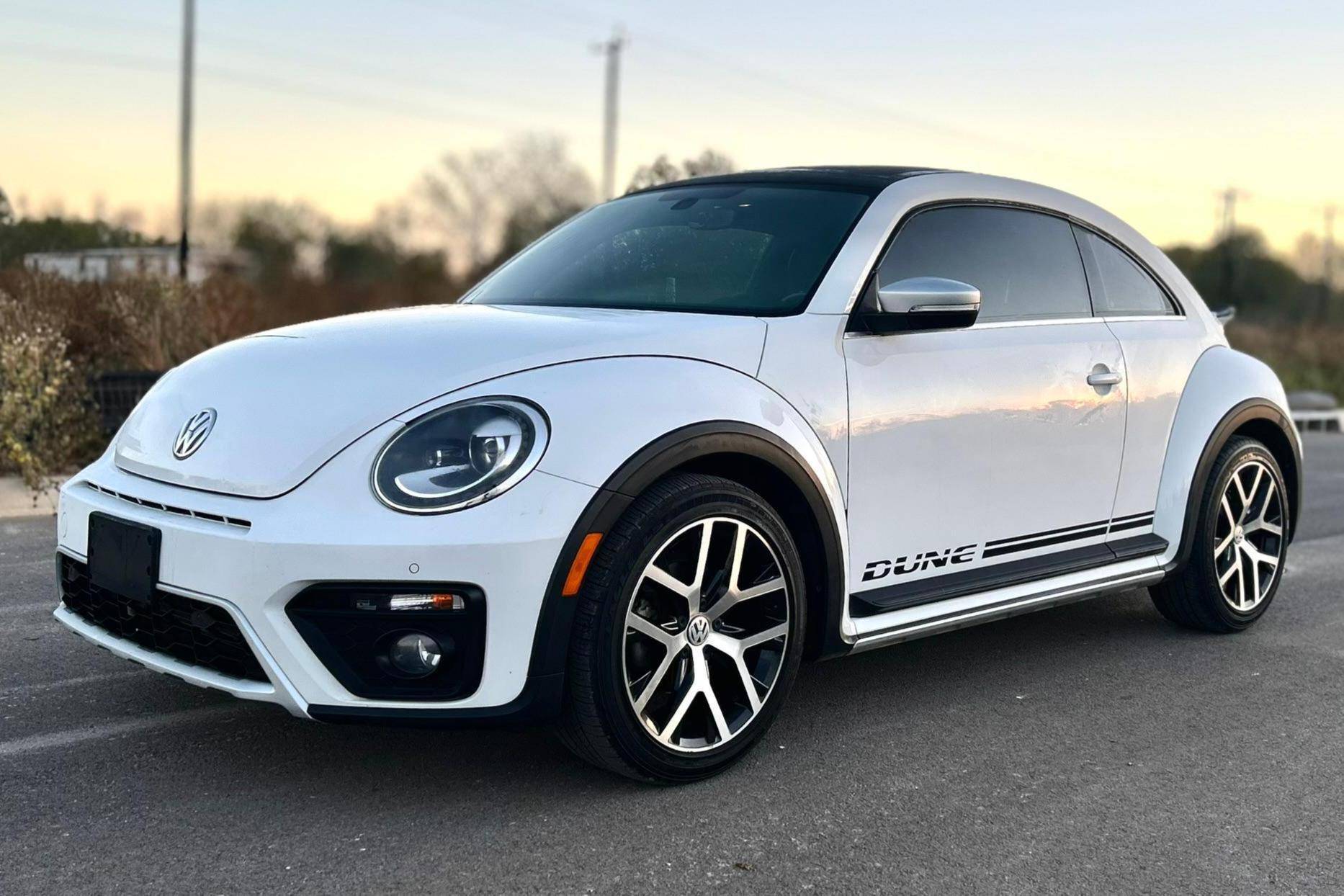
The 2018 Volkswagen Beetle Dune serves as a rugged, stylistically distinct iteration of the iconic Beetle platform, blending classic retro aesthetics with a slightly raised suspension, widened track, and aggressive body cladding. Designed as a limited-edition homage to 1960s Baja California "Baja Bug" culture, it offers a unique ownership experience for those seeking a practical, modern compact car with a sense of off-road-inspired flair.
Historical Context and Positioning
The Beetle Dune first appeared as a concept vehicle at the 2000 Los Angeles Auto Show, but it did not reach mass production until the later years of the A5 generation. By 2018, the Beetle was deep into its final production cycle, making the Dune a swan-song model that emphasized character over the standard Beetle’s more demure personality.
It was positioned in the lineup to attract buyers who found the standard Beetle too conventional but wanted the reliability and creature comforts of a modern Volkswagen. Because the 2018 model year falls late in the vehicle’s life cycle, it benefits from years of refinement on the PQ35 platform, which it shares with several other global Volkswagen Group products. Understanding this is critical for prospective buyers, as parts compatibility is generally high, making long-term maintenance manageable despite the model's specialized exterior features.
Exterior Design and Off-Road Aesthetic
The defining characteristic of the 2018 Volkswagen Beetle Dune is its external transformation. Unlike the standard Beetle, the Dune features a ride height increased by approximately 0.4 inches (10 millimeters). While this does not make it a dedicated trail vehicle, it provides a slightly more commanding view of the road and improved clearance for light debris.
The design cues are deliberate:
- Body Cladding: Black plastic trim surrounds the wheel arches and extends along the side skirts, mimicking the utility-focused look of crossover vehicles.
- Track Width: The track is 0.6 inches wider than the standard Beetle, which provides a more planted, aggressive stance.
- Front and Rear Fascias: The Dune features a unique bumper design with a honeycomb-style central air intake and a silver-colored underbody protector.
- Rear Spoiler: A large, elevated rear spoiler is standard, serving both an aesthetic purpose and a functional one by providing downforce at highway speeds.
Interior Features and Ergonomics
Inside the 2018 Beetle Dune, the retro theme continues with high-quality interior appointments. The dashboard is finished in a specific "Sandstorm Yellow" matte color that matches the exterior accents of the yellow-paint variants.
The seats feature exclusive upholstery with contrasting stitching that ties into the exterior color palette. Despite the quirky design, the ergonomics remain quintessentially Volkswagen—logical, accessible, and functional. The MIB II infotainment system is a major highlight, featuring a 6.3-inch capacitive touchscreen, Apple CarPlay, and Android Auto integration.
One practical consideration for potential owners is the rear-seat headroom. Due to the sloping roofline of the Beetle silhouette, rear-seat legroom and headroom remain better suited for children or short trips rather than long-distance travel with adults. However, the hatchback configuration offers a reasonable cargo capacity of 15.4 cubic feet, which increases significantly when the 50/50 split rear seats are folded down.
Technical Specifications and Performance
The 2018 Beetle Dune is powered by a 2.0-liter turbocharged four-cylinder TSI engine. This engine is highly regarded for its balance of power and efficiency, delivering 174 horsepower and 184 lb-ft of torque.
Powertrain Summary
| Specification | Detail |
|---|---|
| Engine Type | 2.0L Turbocharged TSI I4 |
| Transmission | 6-speed Automatic (DSG) |
| Horsepower | 174 hp @ 4,400 rpm |
| Torque | 184 lb-ft @ 1,600 rpm |
| Drive Layout | Front-Wheel Drive (FWD) |
| Curb Weight | Approx. 3,100 lbs |
The engine is paired with a six-speed automatic transmission. It is important to note that the Dune is exclusively front-wheel drive (FWD). While the aggressive exterior suggests all-wheel-drive capability, the vehicle is strictly intended for paved road use or well-maintained dirt paths. The suspension is tuned slightly firmer than the base Beetle to account for the wider track, resulting in handling that feels more responsive, though slightly less compliant on rough surfaces.
Maintenance and Long-Term Reliability
For owners and prospective buyers in 2026, the primary concern regarding the 2018 Beetle Dune is the longevity of the turbocharged engine and the DSG transmission. The 2.0L TSI engine used in this model year is generally reliable, provided that the manufacturer's oil change intervals are strictly observed. Using high-quality synthetic oil is non-negotiable, as the turbocharger is heat-sensitive.
Maintenance tasks for the 2018 model:
- Transmission Service: The six-speed DSG requires fluid and filter changes every 40,000 miles. Neglecting this service is the most common cause of premature transmission failure in late-model Volkswagens.
- Cooling System: Like many vehicles of this era, the water pump and thermostat housing are plastic components that may require inspection after 80,000 miles to prevent coolant leaks.
- Body Panels: Because the Dune uses unique bumpers and cladding, these parts can be expensive or difficult to source compared to a standard Golf or Jetta. It is recommended to maintain comprehensive insurance coverage that accounts for the value of these model-specific body components.
Comparison: Beetle Dune vs. Standard Beetle
When evaluating the Dune against the base Beetle, the decision rests on whether the buyer prioritizes value or identity. The standard Beetle was often marketed as an entry-level vehicle, whereas the Dune was sold as a higher-trim special edition.
- Style: The Dune offers a distinct visual identity that retains its value better among collectors.
- Capabilities: The marginal ride-height increase provides a minor advantage in parking lot clearance but offers no significant mechanical edge for off-roading.
- Market Availability: As a limited production run, finding a pristine, low-mileage Dune in 2026 is more difficult than finding a base model, which often translates to a higher price point for the Dune.
Frequently Asked Questions
Does the 2018 Beetle Dune have all-wheel drive? No, the 2018 Beetle Dune is front-wheel drive only. Despite its rugged styling and "Dune" branding, it was not engineered for off-road environments or low-traction surfaces like sand or mud.
What is the fuel economy of the 2018 Beetle Dune? The 2.0L TSI engine is relatively efficient, typically achieving an EPA-estimated 26 mpg in the city and 33 mpg on the highway, though real-world figures in 2026 will depend on vehicle condition and driving habits.
Is the Beetle Dune a good car for daily commuting? Yes. It features a modern interior, reliable infotainment, and comfortable front seating, making it an excellent daily driver. Its compact footprint also makes it easy to maneuver in urban environments.
Are parts for the Beetle Dune difficult to find? Mechanically, most parts are shared with the wider Volkswagen Golf platform, meaning engine and suspension components are readily available. Exterior plastic cladding and bumper components are specific to the Dune and may require ordering through a VW dealership or specialized parts suppliers.
How does the 2018 model differ from earlier versions? By 2018, the Beetle had received its final equipment updates, including the standard inclusion of the MIB II infotainment system and improved safety features compared to the 2016 or 2017 iterations.
Final Recommendation
The 2018 Volkswagen Beetle Dune is a compelling choice for enthusiasts of the brand who want a reliable modern classic. If you are considering purchasing one, prioritize a vehicle with a documented service history, particularly regarding the transmission. While it does not offer genuine off-road performance, its unique aesthetic and solid engineering make it a standout in the compact car market. Ensure you have the vehicle inspected by a technician familiar with the VAG (Volkswagen Group) platform to verify the condition of the turbocharger and DSG transmission before finalizing your purchase.