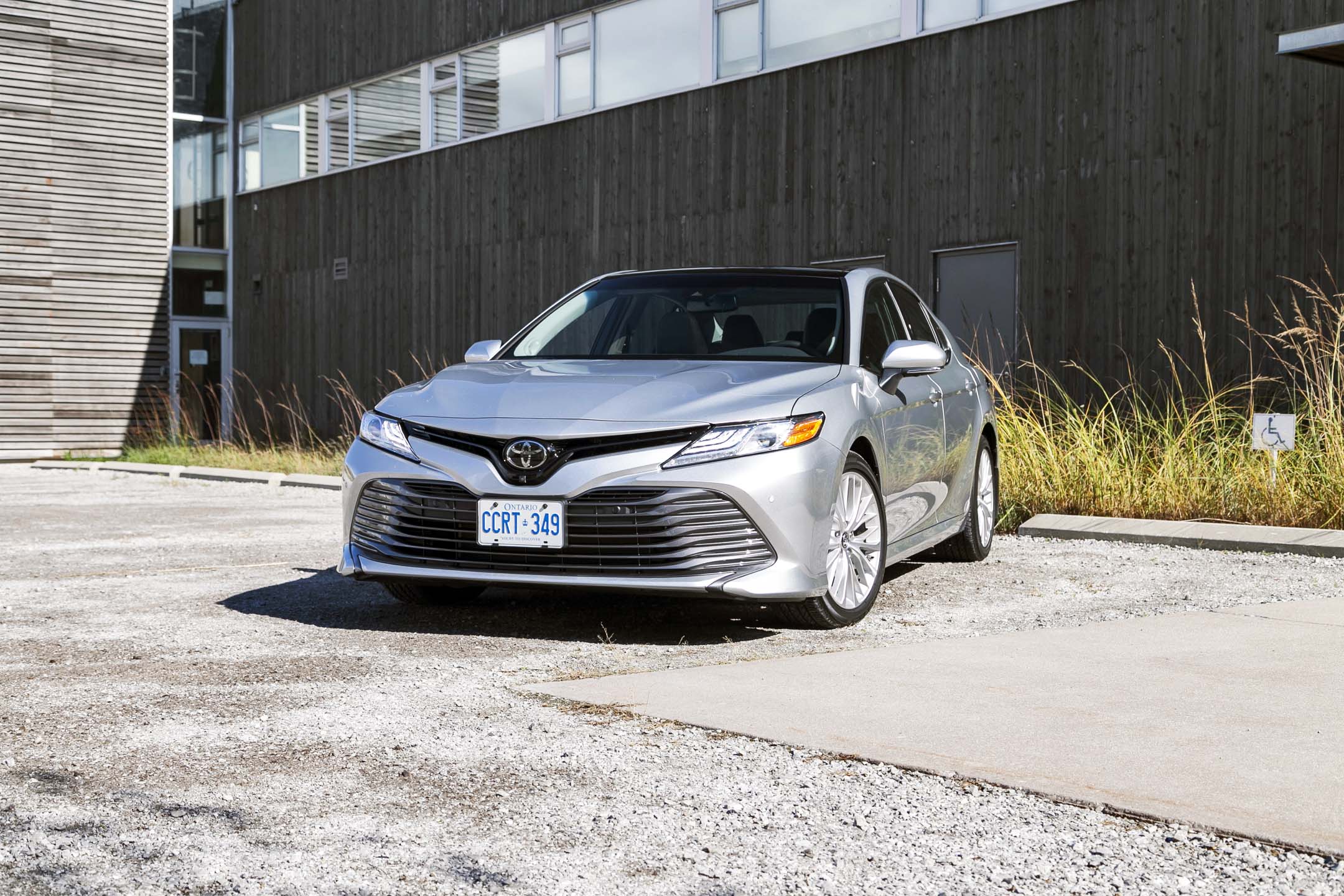
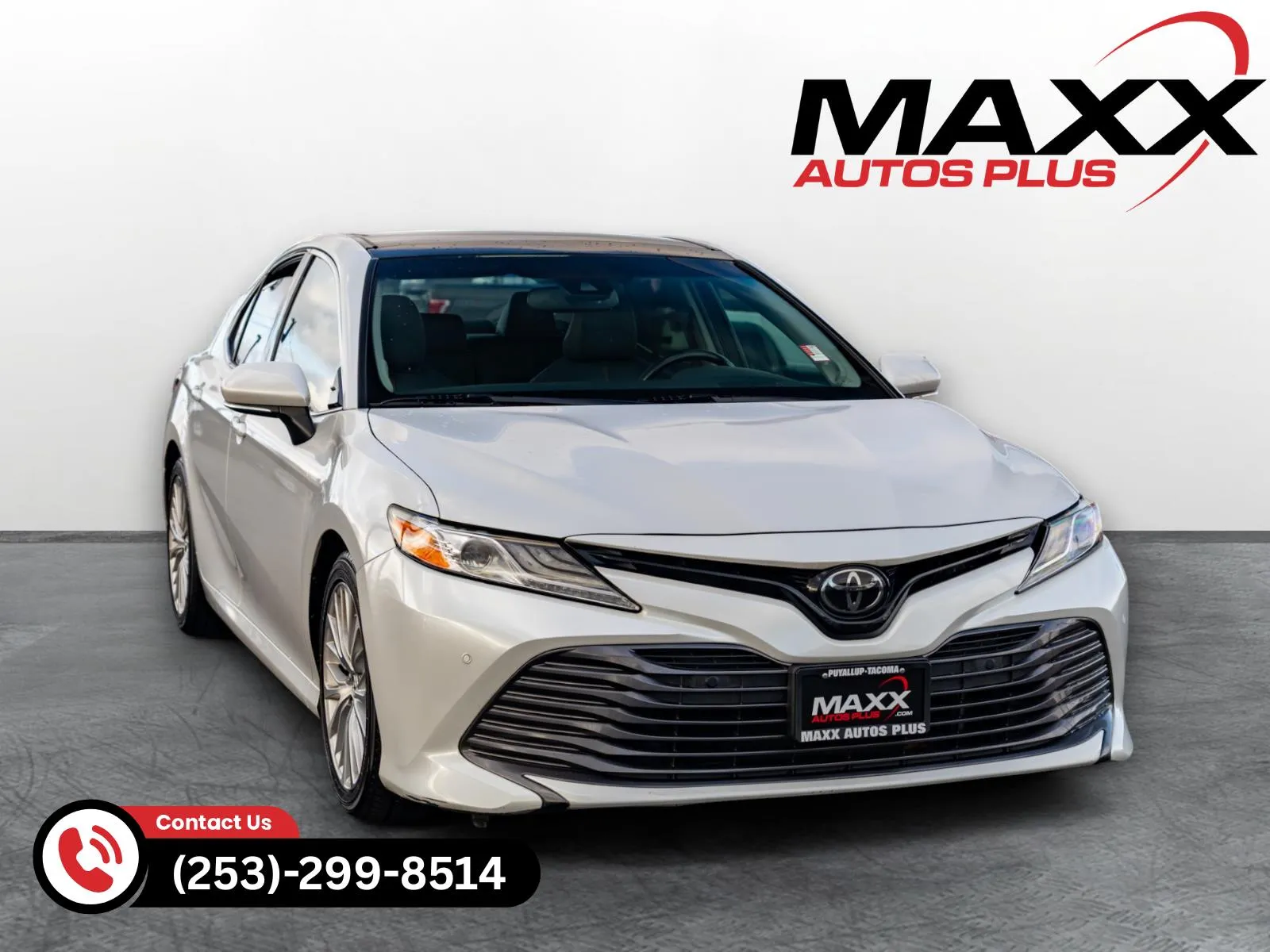
The 2018 Toyota Camry XLE horsepower varies depending on the engine configuration: the standard 2.5-liter 4-cylinder engine generates 203 horsepower, the upgraded 3.5-liter V6 engine delivers 301 horsepower, and the XLE Hybrid variant produces a combined net system output of 208 horsepower.
Understanding the 2018 Toyota Camry XLE Engine Options
When Toyota launched the eighth-generation Camry for the 2018 model year, it introduced the Toyota New Global Architecture (TNGA) platform alongside an updated family of powertrains. The XLE (Executive Luxury Edition) trim was designed to balance midsize luxury with reliable, efficient performance. Because Toyota offered three distinct engine setups under the XLE badge, performance characteristics, torque delivery, and overall driving dynamics differ significantly depending on which model is selected.
- 2018 Toyota Camry XLE Engines
- 2.5L Inline-4 (203 HP)
- 3.5L V6 (301 HP)
- 2.5L Hybrid (208 HP Net)
2.5-Liter Dynamic Force 4-Cylinder (203 HP)
The standard engine equipment for the base 2018 Toyota Camry XLE gas model is the 2.5-liter Dynamic Force naturally aspirated inline 4-cylinder engine (internal engine code A25A-FKS). This engine delivers 203 horsepower at 6,600 RPM and 184 lb-ft of torque at 5,000 RPM.
Engineering improvements in this powerplant included high-energy ignition coils, multi-hole direct fuel injectors, a higher compression ratio (13.0:1), and VVT-iE (Variable Valve Timing-intelligent Electric) on the intake camshaft. The engine achieves a thermal efficiency rating of nearly 40 percent, making it one of the most efficient non-hybrid engines in its class during its production era.
Power is delivered to the front wheels through a Direct Shift 8-speed automatic transmission. Drivers seeking a comfortable commuter car will find the 203-horsepower output ample for merging onto highways, city driving, and cruising at steady speeds.
3.5-Liter V6 Engine (301 HP)
For drivers seeking enhanced straight-line acceleration and effortless highway passing power, Toyota offered an optional 3.5-liter naturally aspirated V6 engine (internal engine code 2GR-FKS) on the XLE trim. This high-output engine generates 301 horsepower at 6,600 RPM and 267 lb-ft of torque at 4,700 RPM.
Unlike many midsize competitors that transitioned exclusively to small-displacement turbocharged 4-cylinder engines in 2018, Toyota retained a large-displacement, naturally aspirated V6. The 2GR-FKS features D-4S port and direct injection alongside VVT-iW (Variable Valve Timing-intelligent Wide), allowing the engine to cycle between the Otto cycle for peak power and the Atkinson cycle for optimal fuel efficiency under light loads.
Mated to the same 8-speed automatic transmission tuned for smoother gear changes, the 301-hp V6 turns the executive-focused XLE into a surprisingly potent highway cruiser capable of impressive mid-range torque delivery.
2.5-Liter Hybrid Powertrain (208 Net HP)
The 2018 Toyota Camry Hybrid XLE pairs an Atkinson-cycle version of the 2.5-liter 4-cylinder engine (A25A-FXS) with an electric motor system (Toyota Hybrid System II). The gasoline engine alone produces 176 horsepower and 163 lb-ft of torque. When combined with the permanent magnet electric motor, the hybrid powertrain achieves a total net system output of 208 horsepower.
Power is managed via an Electronically Controlled Continuously Variable Transmission (eCVT), which uses a planetary gearset rather than traditional belts or bands. The electric motor supplies instant low-end torque from a complete stop, making the Hybrid XLE feel punchy off the line, despite its emphasis on maximizing fuel economy.
2018 Toyota Camry XLE Performance Specifications Comparison
The table below outlines the key mechanical parameters, horsepower ratings, torque figures, and fuel economy metrics across all three 2018 Toyota Camry XLE configurations:
| Feature / Specification | 2.5L 4-Cylinder Gas | 3.5L V6 Gas | 2.5L Hybrid (THS II) |
|---|---|---|---|
| Horsepower | 203 hp @ 6,600 RPM | 301 hp @ 6,600 RPM | 208 hp (Combined System) |
| Torque | 184 lb-ft @ 5,000 RPM | 267 lb-ft @ 4,700 RPM | 163 lb-ft (Gas Engine Peak) |
| Engine Displacement | 2,487 cc (2.5L) | 3,456 cc (3.5L) | 2,487 cc (2.5L) |
| Compression Ratio | 13.0:1 | 11.8:1 | 14.0:1 |
| Fuel System | D-4S Direct & Port Injection | D-4S Direct & Port Injection | D-4S Direct & Port Injection |
| Transmission | Direct Shift 8-Speed Automatic | Direct Shift 8-Speed Automatic | eCVT (Planetary Gearset) |
| Drivetrain | Front-Wheel Drive (FWD) | Front-Wheel Drive (FWD) | Front-Wheel Drive (FWD) |
| 0-60 MPH (Approx.) | ~7.6 – 7.9 seconds | ~5.8 – 6.0 seconds | ~7.4 – 7.8 seconds |
| EPA Estimated Fuel Economy | 28 City / 39 Hwy / 32 Comb MPG | 22 City / 32 Hwy / 26 Comb MPG | 44 City / 47 Hwy / 46 Comb MPG |
| Fuel Tank Capacity | 16.0 gallons | 16.0 gallons | 13.0 gallons |
Powertrain Engineering: How Toyota Optimized Output
Achieving competitive horsepower figures without sacrificing long-term durability required several engineering innovations across the 2018 Camry lineup.
- D-4S Fuel Injection Architecture
- Direct Injector (High-Pressure Chamber)
- Port Injector (Low-Load Cleanliness)
Direct and Port Injection (D-4S)
All three engine variations utilize Toyota's D-4S dual-injection system. By combining high-pressure direct injection straight into the combustion chamber with low-pressure port injection in the intake runners, the engine control module (ECM) dynamically selects the ideal injection mode based on engine load and RPM:
- Under high engine loads (hard acceleration): Direct injection dominates, cooling the combustion charge and suppressing engine knock. This allows higher compression ratios, boosting horsepower.
- Under low-to-moderate loads (cruising): Port injection blends with direct injection to maintain optimal air-fuel mixing, improve combustion stability, and reduce intake valve carbon buildup—a common maintenance headache in direct-injection engines from other manufacturers.
Transmission Integration: Direct Shift 8-Speed vs. eCVT
Horsepower utilization depends heavily on transmission efficiency. The 8-speed Direct Shift automatic transmission used in both gas variants features a torque converter with a wide lock-up range. Lock-up occurs in almost all gears except first, minimizing mechanical energy loss and providing a direct, connected shift feel similar to a dual-clutch transmission.
For the XLE Hybrid, the eCVT eliminates conventional torque converters and shift solenoids entirely. It integrates two electric motors (MG1 and MG2) with a power split device. MG2 assists in driving the wheels and recovering energy during braking, while MG1 acts as a generator and engine starter. This setup delivers steady, linear acceleration without gear hunting.
TNGA Platform and Power Transfer
The eighth-generation Camry sits on the TNGA-K chassis, which lowered the car's center of gravity by approximately 0.8 inches compared to the 2017 model. A lower engine placement minimizes driveshaft angles and reduces front-end lift during heavy acceleration. Combined with an updated multi-link rear suspension replaceing the older dual-link setup, the 2018 XLE transfers its engine horsepower to the pavement with significantly reduced body roll and improved traction control calibration.
Real-World Performance and Driving Dynamics
While peak horsepower numbers provide a quick point of comparison, day-to-day driving feel differs across the three XLE variants.
Acceleration Metrics and Passing Power
- 2.5L 4-Cylinder: Accelerating from 0 to 60 mph takes around 7.6 to 7.9 seconds. While not sports-car territory, peak power is reached higher in the rev range (6,600 RPM), meaning downshifts under heavy throttle are smooth and predictable. Downshifting two or three gears on the 8-speed transmission occurs swiftly when merging onto fast-moving freeways.
- 3.5L V6: Sprinting from 0 to 60 mph in roughly 5.8 to 6.0 seconds, the V6 XLE provides rapid acceleration. The surge of power past 4,000 RPM is sustained, allowing the sedan to pull hard up to highway speeds. However, because all 301 horsepower routes through the front wheels, hard acceleration from a stop can trigger traction control intervention or mild torque steer if pavement conditions are slick.
- 2.5L Hybrid: Clocking 0 to 60 mph in approximately 7.4 to 7.8 seconds, the Hybrid XLE matches or slightly outperforms the base 4-cylinder in initial off-the-line responsiveness. The electric motor delivers immediate torque before the gas engine revs into its optimal power band, giving the car a punchy feel around town.
0-60 MPH Acceleration Comparison:
- 3.5L V6 Gas: 5.8s - 6.0s
- 2.5L Hybrid: 7.4s - 7.8s
- 2.5L 4-Cyl Gas: 7.6s - 7.9s
Steering, Braking, and Ride Comfort
The XLE trim prioritizes ride quality over aggressive track handling. Unlike the sport-tuned XSE trim—which features stiffer dampers, larger 19-inch wheels, and tuned anti-roll bars—the XLE relies on 17-inch or optional 18-inch alloy wheels wrapped in higher-profile tires.
- Ride Quality: Absorbs sharp road imperfections, expansion joints, and potholes with ease.
- Cabin Quietness: Features additional sound-deadening insulation behind the dashboard, acoustic noise-reducing windshield glass, and underbody fairings that dampen road noise, keeping engine sound unobtrusive during regular commuting.
- Braking Feel: The gas models use conventional hydraulic power brakes with consistent pedal pressure. The Hybrid XLE uses regenerative braking; while smooth, transition from electric regeneration to friction braking requires a brief adjustment period for drivers unfamiliar with hybrid dynamics.
Horsepower Comparison: XLE vs. Other Camry Trims and Competitors
To put the 2018 Camry XLE's horsepower ratings into context, it helps to analyze how it compares to other Camry trims from the same model year as well as key midsize sedan rivals.
XLE vs. Other 2018 Camry Trims
In 2018, Toyota offered the Camry in L, LE, SE, XLE, and XSE trims.
- L, LE, and SE Trims: Equipped with the single-exhaust 2.5L 4-cylinder engine rated at 203 horsepower and 184 lb-ft of torque.
- XLE Trim (Standard Gas): Shares the same 203 horsepower engine as the lower trims, but adds premium interior features such as leather upholstery, dual-zone automatic climate control, blind-spot monitoring, and an upgraded Entune infotainment screen.
- XSE Trim (Standard Gas): Features a dual-outlet quad-tip exhaust system, which bumps the 2.5L engine's horsepower rating slightly to 206 horsepower and 186 lb-ft of torque (a 3 hp increase over the XLE).
- XLE V6 and XSE V6 Trims: Both share the identical 301 horsepower 3.5-liter V6 engine output.
2018 Midsize Sedan Competitor Comparison
During the 2018 model year, major automakers approached midsize sedan engine design with varying strategies:
Midsize Sedan Horsepower Comparison (2018 Model Year)
| Base / Standard Engines | Upgraded / Performance Engines |
|---|---|
| Camry XLE 2.5L: 203 HP | Camry XLE 3.5L V6: 301 HP |
| Accord 1.5T: 192 HP | Accord 2.0T: 252 HP |
| Altima 2.5L: 179 HP | Altima 3.5L V6: 270 HP |
| Sonata 2.4L: 185 HP | Sonata 2.0T: 245 HP |
- Honda Accord (2018): Honda completely redesigned the Accord in 2018, dropping its V6 in favor of turbocharged 4-cylinder engines. The base 1.5-liter turbo made 192 hp, while the upgraded 2.0-liter turbo made 252 hp. While the Camry V6 outpowers the Accord 2.0T by 49 horsepower, the turbocharged Accord delivered peak torque earlier in the rev range.
- Nissan Altima (2018): The 2018 Altima offered a 2.5-liter 4-cylinder making 179 hp and an optional 3.5-liter V6 producing 270 hp. The Camry XLE surpassed the Altima in both base and upgraded V6 horsepower ratings.
- Hyundai Sonata (2018): Standard 2.4-liter models offered 185 hp, while the 2.0T turbo model pushed out 245 hp, placing both ratings below the corresponding Camry XLE gas powertrains.
Used Market Considerations and Long-Term Reliability
For prospective used car buyers evaluating a 2018 Toyota Camry XLE, engine performance must be balanced against mechanical longevity, maintenance history, and known service items.
Mechanical Reliability Assessment
The 2018 Camry's powertrains have established a strong track record for long-term durability, but each engine option presents distinct ownership characteristics:
- 2.5L 4-Cylinder (A25A-FKS):
- Strengths: Highly reliable mechanical design, chain-driven timing system, no turbocharger complexity.
- Items to Inspect: Early production models (2018) had occasional service bulletins regarding engine coolant pump operation and software updates for the 8-speed transmission to smooth out low-speed shift logic.
- 3.5L V6 (2GR-FKS):
- Strengths: Exceptional highway durability, smooth power delivery, proven crank and valvetrain components.
- Items to Inspect: Ensure front timing cover seals are free of oil seepage. Spark plug replacement requires removing the intake plenum, raising labor costs during major maintenance intervals (typically every 60,000 to 100,000 miles depending on plug specifications).
- 2.5L Hybrid (THS II):
- Strengths: Brake pads last significantly longer due to regenerative braking; low belt wear (uses electric water pump and A/C compressor).
- Items to Inspect: Check high-voltage hybrid battery health and ensure the hybrid battery cooling fan intake filter (located near the rear seats) is clean and unobstructed.
Essential Maintenance Checklist for High-Mileage Units
To preserve engine horsepower and efficiency in a 2018 Camry XLE, follow these primary maintenance practices:
- Engine Oil Changes: Perform full-synthetic oil changes every 5,000 to 10,000 miles (using 0W-16 oil specified for the 2.5L Dynamic Force engine to ensure proper VVT operation).
- Transmission Fluid Inspection: While Toyota lists fluid as "lifetime" under normal conditions, severe-service schedules recommend inspecting and draining/refilling transmission fluid between 60,000 and 90,000 miles to preserve shift quality.
- Engine Air Intake Filter: Replace every 15,000 to 30,000 miles. Restricted airflow directly hampers horsepower output and decreases fuel economy.
Frequently Asked Questions
What is the exact horsepower of a 2018 Toyota Camry XLE?
The exact horsepower depends on the engine configuration selected. The standard 2.5-liter 4-cylinder model produces 203 horsepower. The optional 3.5-liter V6 model produces 301 horsepower. The 2.5-liter Hybrid model generates a combined net output of 208 horsepower.
Does the 2018 Camry XSE have more horsepower than the XLE?
Yes, but only for the base 4-cylinder engine. The 2018 Camry XSE 4-cylinder features a dual-outlet exhaust that raises output to 206 horsepower, compared to the XLE's single-exhaust 203 horsepower. However, if you compare the V6 versions of both trims, both the XLE V6 and XSE V6 output identical 301 horsepower.
Can you add extra horsepower to a 2018 Toyota Camry XLE?
Modifications such as aftermarket cold-air intakes, high-flow cat-back exhaust systems, and performance ECU tunes can add modest horsepower gains (typically 5 to 15 hp on naturally aspirated engines). However, because Toyota's factory D-4S engines are already highly tuned for optimal air-fuel efficiency, aftermarket hardware modifications yield relatively small power gains compared to turbocharged vehicles.
Is the V6 engine worth it over the 4-cylinder on the 2018 XLE?
The 3.5L V6 engine is worth considering if you frequently drive on highways, carry full passenger loads, or enjoy rapid acceleration (0-60 mph in under 6 seconds). However, the standard 203-hp 4-cylinder offers superior fuel economy (32 mpg combined vs. 26 mpg combined for the V6) and lower routine maintenance costs.
Which 2018 Toyota Camry XLE engine is the most fuel-efficient?
The 2018 Toyota Camry XLE Hybrid is the most fuel-efficient option. It achieves an EPA-estimated rating of 44 MPG City / 47 MPG Highway / 46 MPG Combined, while still generating a responsive 208 combined system horsepower.
Does the 2018 Toyota Camry XLE 4-cylinder engine use a turbocharger?
No. The 2018 Toyota Camry XLE 2.5-liter 4-cylinder engine is naturally aspirated. It relies on a high compression ratio (13.0:1), direct and port fuel injection (D-4S), and advanced variable valve timing (VVT-iE) to generate 203 horsepower without requiring a turbocharger.
Final Recommendation: Selecting the Right Engine Variant
Choosing the ideal 2018 Toyota Camry XLE engine configuration depends on your primary driving needs:
- Choose the Standard 2.5L 4-Cylinder (203 HP) if your goal is low cost of ownership, easy maintenance, and excellent highway fuel economy (up to 39 mpg) for daily commuting.
- Choose the 3.5L V6 (301 HP) if you value high-performance highway passing power, classic V6 smoothness, and sub-6-second acceleration times, and do not mind a modest trade-off in fuel economy.
- Choose the 2.5L Hybrid (208 Net HP) if you prioritize maximum fuel efficiency (46 mpg combined) and urban stop-and-go driving comfort, while still retaining instant low-speed electric motor torque.
Before purchasing a pre-owned 2018 Camry XLE, verify the vehicle's maintenance records, request an engine diagnostic scan, and test drive the vehicle across both city streets and highway ramps to evaluate transmission shift quality and throttle response.