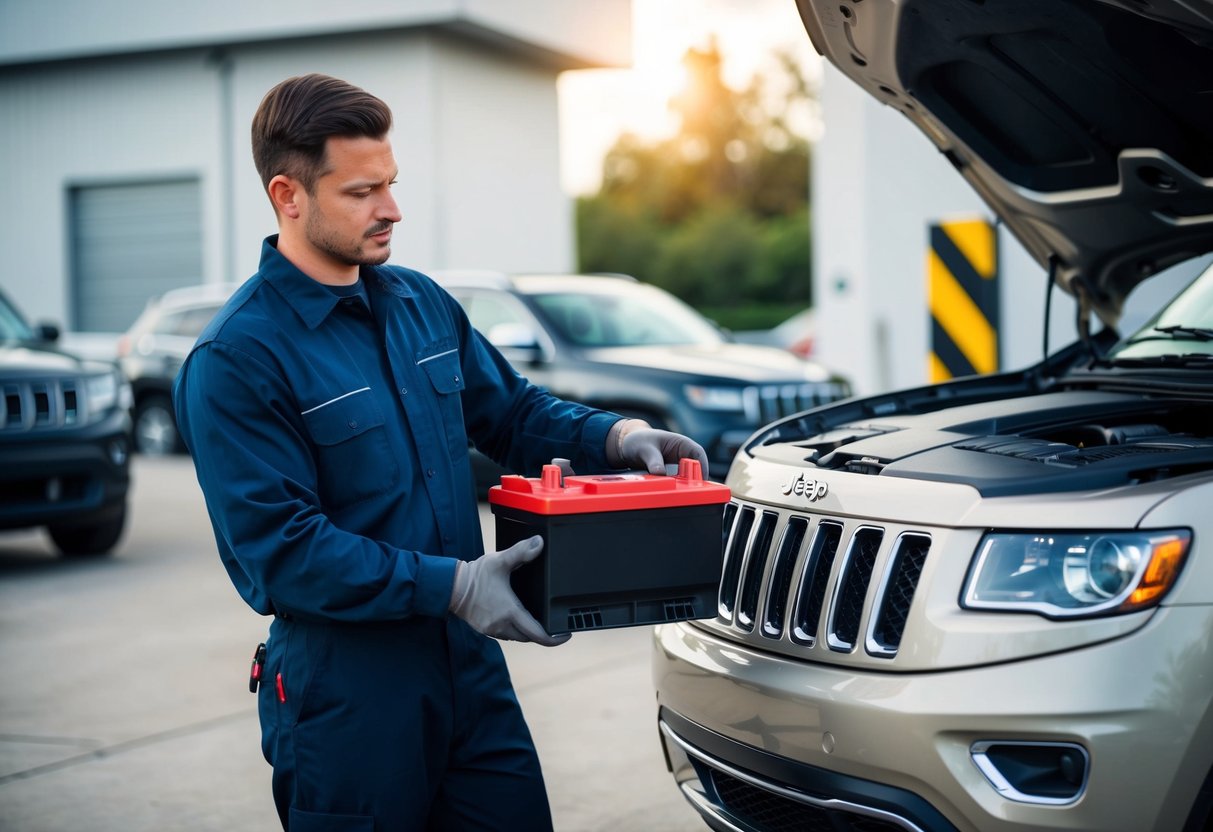
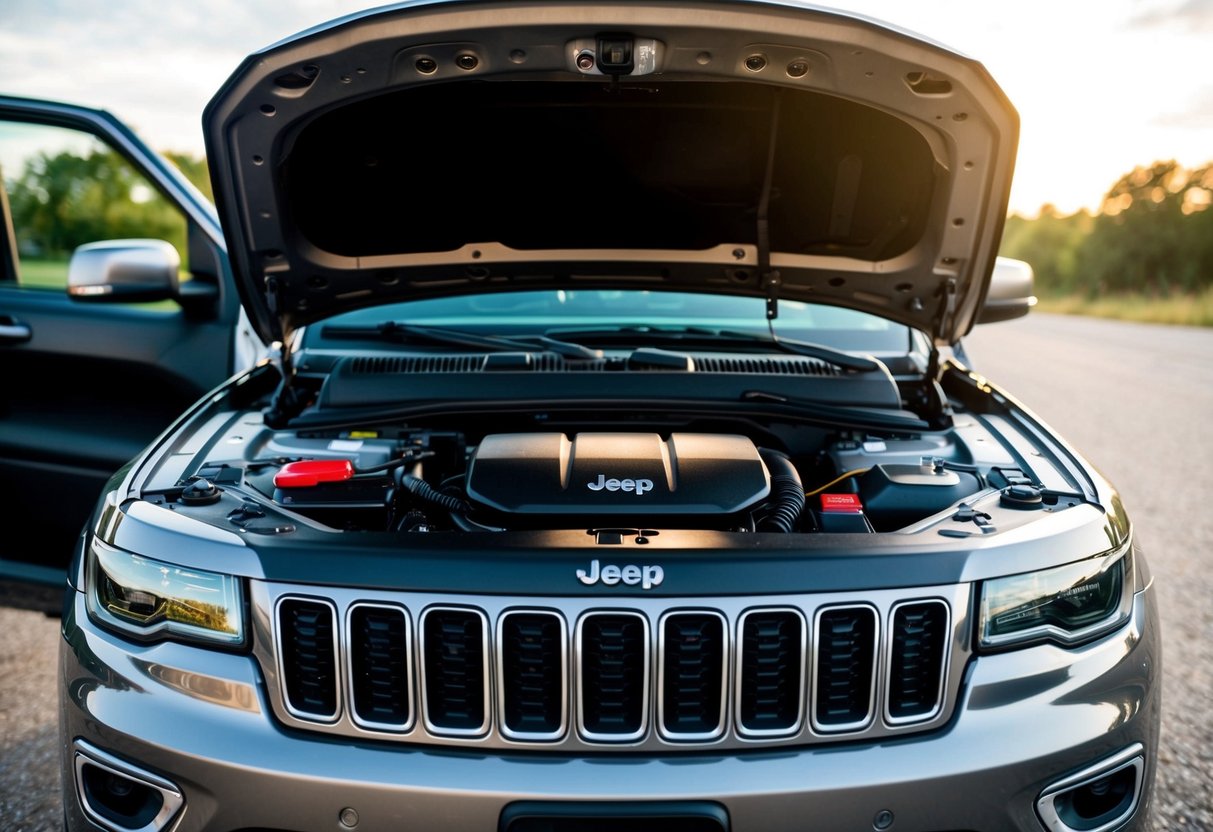
For the 2016 Jeep Grand Cherokee, selecting the correct battery requires choosing a Group 94R (H7) or Group 49 (H8) Absorbent Glass Mat (AGM) unit, depending on your engine size. Because the battery is located in a sealed compartment under the front passenger seat, using a vented AGM battery is essential for safety and optimal performance.
The 2016 Jeep Grand Cherokee (WK2 platform) remains a staple of the SUV market in 2026, prized for its blend of off-road capability and highway refinement. However, its electrical architecture is notoriously demanding. As these vehicles age into their tenth year of service, many owners are on their second or third battery replacement. This process is more complex than a standard under-the-hood swap. It involves navigating specific spatial constraints, managing the Electronic Stop-Start (ESS) system requirements, and ensuring the safety of passengers through proper ventilation.
Understanding the Specifications: Group Sizes and Chemistry
The first step in choosing a battery for your 2016 Jeep Grand Cherokee is identifying the correct Group Size. In the automotive world, the Battery Council International (BCI) assigns group numbers based on the physical dimensions and terminal orientation of the battery.
Group 94R (H7) vs. Group 49 (H8)
Most 2016 Grand Cherokees equipped with the 3.6L Pentastar V6 engine utilize the Group 94R (also known as H7) battery. This is a standard European-style sizing that fits perfectly into the under-seat tray. However, models equipped with the 5.7L HEMI V8 or the 3.0L EcoDiesel often utilize the larger Group 49 (H8) battery. The H8 is longer than the H7 and offers higher Cold Cranking Amps (CCA) and Reserve Capacity (RC), which are necessary for turning over larger displacement engines or managing the high compression of a diesel.
The Necessity of AGM Chemistry
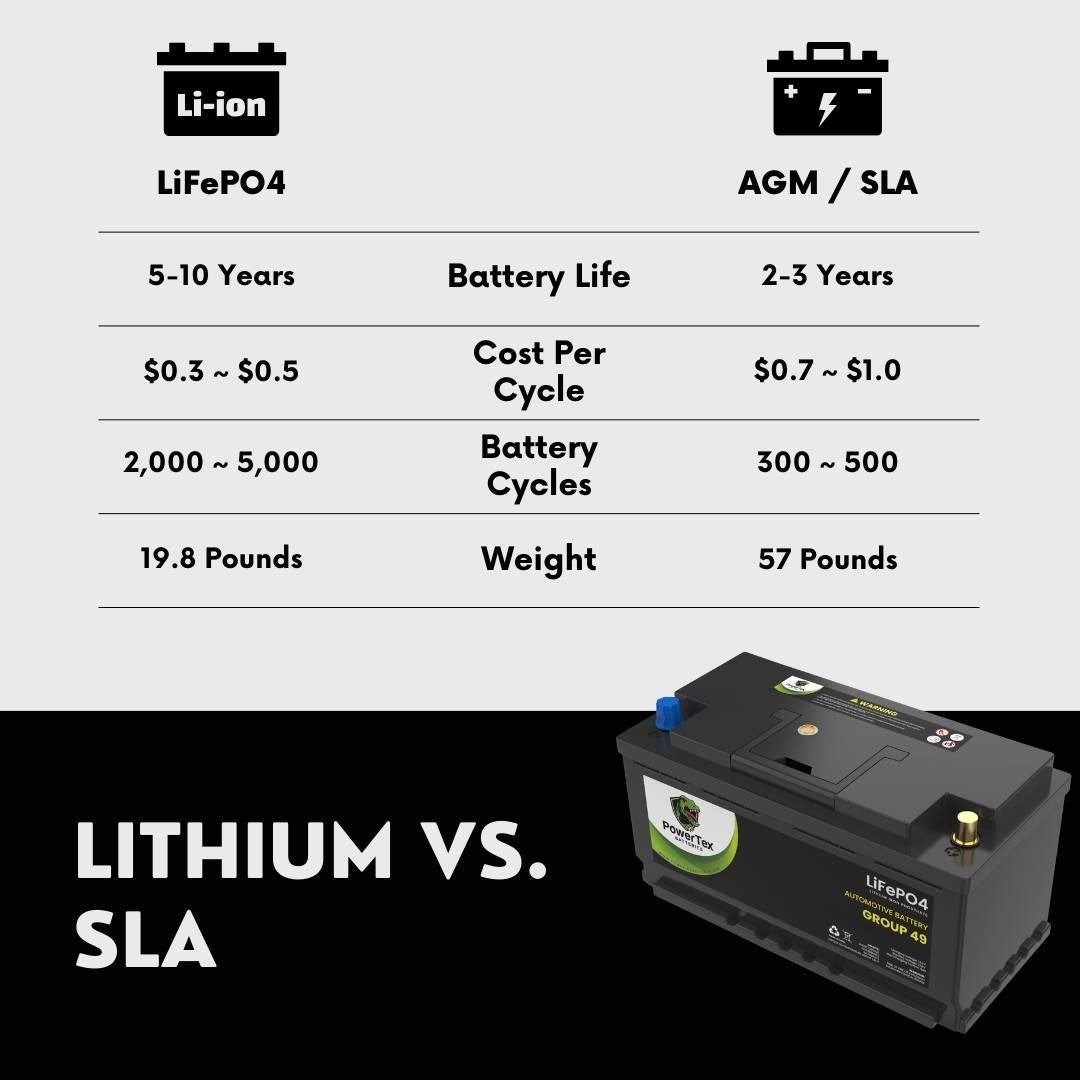
In 2016, Jeep transitioned many models to Absorbent Glass Mat (AGM) technology as the factory standard. Unlike traditional flooded lead-acid batteries, AGM batteries use a fiberglass mat to soak up the electrolyte. This design offers several advantages critical for the Grand Cherokee:
- Vibration Resistance: The internal construction is more robust, which is vital for an SUV that may see off-road use.
- Cycle Life: AGM batteries can handle the frequent "deep" discharges caused by the Stop-Start system much better than flooded batteries.
- Safety: Because they are "non-spillable" and produce less gas during charging, they are safer for installation inside the passenger cabin.
The Critical Location: Why It Matters
Unlike most vehicles where the battery is easily accessible in the engine bay, the 2016 Jeep Grand Cherokee hides its battery in a compartment under the front passenger seat. This design choice was made to protect the battery from extreme engine heat and to improve weight distribution, but it introduces several technical hurdles.
Accessing the Battery
To reach the battery, the passenger seat must be moved to its forward-most and highest position. Underneath the seat, there is a plastic cover and a section of carpet. In some cases, if the battery has never been changed, the carpet may still be intact, requiring a utility knife to cut along the factory-perforated lines to access the lid.
Weight and Ergonomics
An H7 or H8 AGM battery typically weighs between 50 and 60 pounds. Lifting this weight out of a recessed floor compartment while leaning into the cabin is a significant physical challenge. It is a common pitfall for DIYers to strain their backs or damage the plastic trim of the door sill while maneuvering the heavy unit.
Primary Pitfalls in Battery Replacement
Replacing the battery in a 2016 Grand Cherokee is not a "plug-and-play" affair. Several specific pitfalls can lead to premature battery failure or vehicle damage.
1. Neglecting the Vent Tube
Since the battery sits inside the cabin, any gas produced during the chemical reaction of charging must be directed outside the vehicle. Every 2016 Grand Cherokee is equipped with a small rubber vent tube that connects to a port on the side of the battery and exits through the floorboard.
- The Pitfall: Many aftermarket batteries come with a small plastic plug in the vent hole. If you fail to remove the plug and connect the vehicle's vent tube, hydrogen gas can accumulate in the battery compartment, posing a fire risk. Conversely, if you use a battery that doesn't support venting, you risk acid fumes entering the cabin.
2. The Auxiliary Battery Confusion
A major point of confusion for 2016 owners is the Electronic Stop-Start (ESS) system. Most 2016 models with the 3.6L V6 feature a "dual battery" setup. Alongside the large main battery sits a much smaller Auxiliary Battery (typically a Group 400CL or similar).
- The Pitfall: If your ESS system stops working or you get a "Service Stop/Start" message, it is often the auxiliary battery that has failed. However, because they are wired in parallel, a failing auxiliary battery will eventually "drag down" the main battery, leading to a total electrical failure. Experts recommend replacing both batteries at the same time to ensure the longevity of the new units.
3. Ignoring the Intelligent Battery Sensor (IBS)
The negative terminal of the 2016 Grand Cherokee is equipped with an Intelligent Battery Sensor (IBS). This sensor monitors the state of charge, current, and temperature, communicating this data to the vehicle’s Engine Control Module (ECM).
- The Pitfall: If the IBS is handled roughly during replacement, it can be damaged, leading to charging system errors. Furthermore, the vehicle needs a period of sleep (usually 4-8 hours) after a battery change to "re-learn" the new battery's capacity. If the vehicle is driven immediately under heavy load, the charging profile may not be optimized for the new battery.
Comparison of 2026 Battery Options
When shopping for a replacement in 2026, several brands stand out for their reliability in the WK2 platform. The following table compares the top-tier options for the 2016 Jeep Grand Cherokee.
| Battery Model | Group Size | CCA (Cold Cranking Amps) | Warranty | Best For |
|---|---|---|---|---|
| Odyssey Performance 94R-850 | 94R (H7) | 850 | 4 Years | Off-roading and high-vibration use |
| DieHard Platinum AGM | 94R or 49 | 800 / 900 | 3 Years | General reliability and availability |
| Optima YellowTop H7 | 94R (H7) | 880 | 3 Years | Vehicles with high-draw accessories (winches/audio) |
| Mopar OEM AGM | 94R or 49 | 700 / 800 | 2 Years | Maintaining factory original specifications |
| ACDelco Gold B24R | 94R (H7) | 800 | 3 Years | Budget-conscious but reliable performance |
Step-by-Step Replacement Procedures
If you choose to replace the battery yourself, following a specific sequence is vital to avoid short-circuiting the system or damaging the onboard electronics.
Prerequisites and Tools
- 10mm socket or wrench (for terminals).
- 13mm socket with a long extension (for the battery hold-down bolt).
- Utility knife (if the carpet is uncut).
- Memory saver (optional, but recommended to keep radio presets).
The Replacement Sequence
- Preparation: Move the passenger seat all the way forward and tilt it up. Open the battery compartment.
- Disconnecting: Always disconnect the Negative (-) terminal first. This prevents accidental sparks if your wrench touches the vehicle's metal frame while loosening the positive terminal.
- Removing the Hold-down: Use the 13mm socket and extension to remove the bracket at the base of the battery.
- Disconnecting the Vent Tube: Gently pull the small elbow connector out of the side of the battery.
- Lifting: Carefully lift the battery out. This is a two-handed job due to the angle.
- Cleaning: Inspect the tray for any signs of corrosion or debris. Use a wire brush on the terminal connectors if they appear oxidized.
- Installation: Place the new battery in the tray. Reconnect the vent tube immediately so you don't forget it.
- Connecting: Connect the Positive (+) terminal first, then the Negative (-) terminal.
- Securing: Tighten the hold-down bracket. If the battery can move at all, it will fail prematurely due to vibration.
Cost Considerations in 2026
In 2026, the price of high-quality AGM batteries has stabilized, but they remain more expensive than traditional flooded batteries. Owners should expect to pay between $230 and $360 for a premium Group 94R or Group 49 AGM battery.
If your Jeep requires the auxiliary battery as well, expect an additional $100 to $150. While it may be tempting to save money by purchasing a standard flooded battery, the labor and potential for damage make it a poor long-term investment. Most professional shops will charge between $75 and $150 in labor for the installation, given the complexity of the location and the ESS system reset requirements.
Troubleshooting Common Post-Installation Issues
Even with a successful physical installation, you may encounter electronic "hiccups."
Remote Start Not Working
If your battery was low for an extended period, the Jeep’s computer may have disabled the remote start to conserve power. Usually, driving the vehicle for 20-30 minutes and cycling the ignition will restore this function.
"Service Stop/Start" Message
This is the most common issue. If you replaced only the main battery and not the auxiliary, the system may still detect a voltage drop and disable the ESS. If you replaced both and the message persists, you may need a technician to clear the "stored codes" in the Powertrain Control Module (PCM).
Window Auto-Up/Down Failure
Sometimes the power windows lose their "pinch-to-zoom" or auto-up memory after a battery disconnect. To reset, hold the window switch in the "up" position for 5 seconds after the window has closed, then hold it in the "down" position for 5 seconds after it has opened.
FAQs
Q: Can I use a regular lead-acid battery instead of an AGM? A: It is highly discouraged. The 2016 Jeep Grand Cherokee’s charging system is programmed specifically for the charging profile of an AGM battery. A standard lead-acid battery will likely overheat or fail prematurely, and it lacks the spill-proof safety required for under-seat placement.
Q: My Jeep doesn't have an auxiliary battery. Why? A: Not all 2016 models have the ESS system. The 5.7L V8 and some early-build 3.6L models did not include the Stop-Start feature. If your dashboard does not have an "A" with a circular arrow button, you likely have a single-battery system.
Q: How long should a battery last in a 2016 Grand Cherokee? A: In a moderate climate, a high-quality AGM battery should last between 4 and 6 years. However, in extreme heat (which ironically can still affect the battery despite being inside) or if the vehicle is frequently used for short trips where the ESS is constantly cycling, that lifespan can drop to 3 years.
Q: Does the battery need to be "registered" with a scan tool? A: Unlike some German luxury vehicles, the 2016 Jeep Grand Cherokee does not strictly require a "registration" via a computer. However, the Intelligent Battery Sensor (IBS) must be allowed to recalibrate by letting the vehicle sit undisturbed for several hours.
Q: What happens if I don't connect the vent tube? A: During the charging process, a battery can release small amounts of hydrogen gas. Without the vent tube, this gas stays inside the battery compartment and the passenger cabin. While the risk of an explosion is low, the gas is corrosive and can lead to long-term health issues or damage to the vehicle's interior electronics.
Final Recommendation
When maintaining a 2016 Jeep Grand Cherokee in 2026, the best approach is to be proactive rather than reactive. If your vehicle is showing signs of slow cranking or the Stop-Start system is frequently "unavailable," it is time to replace the battery.
Always prioritize a high-quality Group 94R or Group 49 AGM battery from a reputable brand like Odyssey or DieHard. If your vehicle has the ESS system, replace both the main and auxiliary batteries simultaneously to avoid a "domino effect" of electrical failures. Finally, ensure the vent tube is properly seated to maintain the safety of your vehicle's cabin environment. This investment will ensure your Grand Cherokee remains a reliable daily driver or weekend adventurer for years to come.