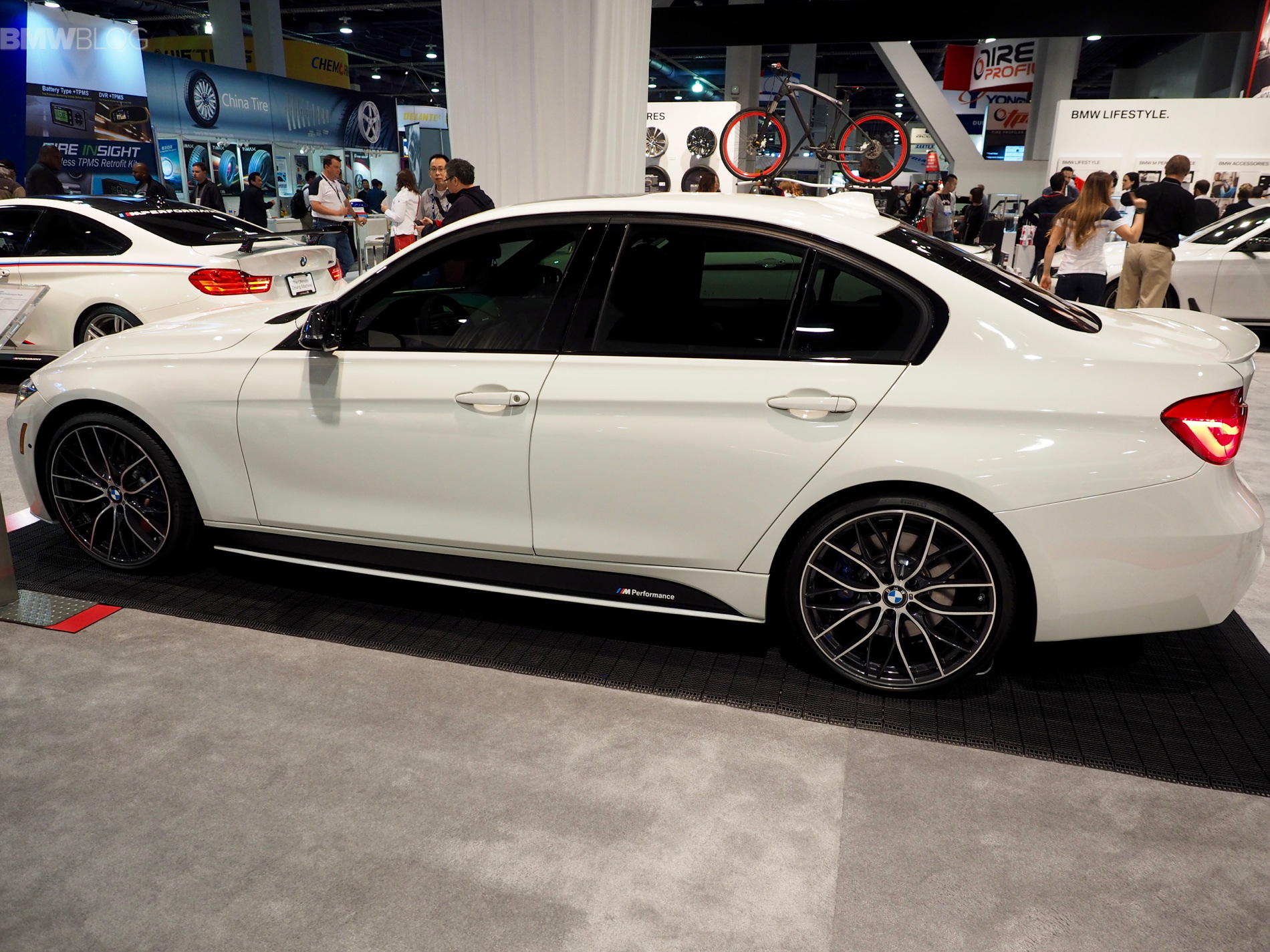
The 2016 BMW 340i officially produces 320 horsepower and 330 lb-ft of torque from its 3.0-liter B58 inline-six engine. However, extensive real-world dyno testing suggests these figures are significantly underrated, with stock vehicles often delivering nearly 330 horsepower at the wheels, implying a true crank output closer to 370–380 horsepower.
The Genesis of the B58: More Than Just a Name Change
The 2016 model year marked a pivotal transition for the BMW 3 Series (F30 generation). This was the year of the "Life Cycle Impulse" (LCI), BMW’s terminology for a mid-cycle refresh. While the exterior changes were subtle—revised LED lighting and minor trim updates—the mechanical soul of the car underwent a radical transformation. The 340i replaced the 335i, and with it, the legendary N55 engine was retired in favor of the all-new B58.
The B58 was not merely an evolution of the N55; it was a clean-sheet design part of BMW’s modular engine family. To understand the performance debate, one must understand the architecture of this engine. The B58 moved to a closed-deck design, which provides significantly more structural rigidity than the open-deck N55. This allows for higher cylinder pressures and more aggressive turbocharging, laying the groundwork for the power discrepancies often discussed by enthusiasts.
Additionally, the B58 integrated the intercooler into the intake manifold, utilizing a water-to-air cooling system rather than the traditional air-to-air setup found in previous iterations. This change resulted in much shorter intake paths and more consistent intake air temperatures (IATs), directly contributing to the engine's ability to maintain high power output even under thermal stress.
The Performance Debate: Factory Ratings vs. Reality
The "debate" surrounding the 2016 340i typically centers on one specific claim: BMW lied about the numbers. In the automotive world, "lying" usually refers to overstating performance, but BMW has a long-standing reputation for doing the opposite.
The Dyno Evidence
When the 340i first hit the streets, independent tuners and enthusiasts immediately placed stock units on chassis dynamometers (dynos). A chassis dyno measures power at the wheels (whp), which is always lower than the manufacturer’s crank horsepower (bhp) due to "drivetrain loss"—the energy consumed by the transmission, driveshaft, and differential (typically 12–15%).
Data from sources like Burger Motorsports and various Bimmerpost community members consistently showed the 340i producing between 320 and 335 whp in bone-stock configuration. If we calculate for a standard 12% drivetrain loss, a car producing 330 whp is actually generating approximately 375 horsepower at the crank. This 55-horsepower discrepancy is the catalyst for the performance debate that persists even now, in 2026.
Why BMW Underrates Their Engines
There are several prevailing theories as to why BMW marketed the 340i at 320 hp:
- Model Hierarchy Protection: At the time, the F80 M3 was rated at 425 hp. If BMW had marketed the 340i at its true 375+ hp, the gap between the standard 3 Series and the flagship M3 would have shrunk to less than 50 hp, potentially cannibalizing M3 sales.
- Consistency Across Environments: BMW rates its engines to ensure they meet the advertised figures even in "worst-case" scenarios, such as high altitudes or extreme heat.
- Insurance and Taxation: In certain global markets, vehicle insurance premiums and taxes are scaled based on advertised horsepower. Lower ratings can make a vehicle more accessible to a broader consumer base.
Real-World Performance Metrics
The 340i was offered in both Rear-Wheel Drive (RWD) and xDrive (All-Wheel Drive) configurations, paired with either a 6-speed manual or the ubiquitous ZF 8-speed automatic (8HP50). These choices significantly impacted the car's performance profile.
Acceleration and Speed
In 2016, the 340i xDrive with the 8-speed automatic was a category leader. BMW officially quoted a 0–60 mph time of 4.6 seconds, but testers frequently clocked the car at 4.4 seconds.
| Metric | Official BMW Figure | Real-World Tested (Stock) |
|---|---|---|
| 0–60 MPH (xDrive) | 4.6 Seconds | 4.4 Seconds |
| 0–60 MPH (RWD) | 4.8 Seconds | 4.6 Seconds |
| 1/4 Mile Time | 13.3 Seconds | 12.8 - 12.9 Seconds |
| Top Speed | 155 MPH (Limited) | 155 MPH (Limited) |
The quarter-mile performance is particularly telling. Dipping into the 12-second range for a non-M luxury sedan was an impressive feat in 2016, further cementing the theory that the B58 was punching well above its advertised weight class.
The B58’s Tuning Potential: Fueling the Fire
The performance debate isn't just about stock numbers; it's about what the engine is capable of with minimal intervention. Because the B58 was built with a closed-deck block and a forged steel crankshaft, it possessed immense "headroom."
Stage 1 and Beyond
In the years following its release, the aftermarket community discovered that a simple ECU reflash (often referred to as Stage 1) could propel the 340i to over 400 whp and 420 lb-ft of torque without any physical hardware changes. This is almost unheard of for most naturally aspirated or even moderately turbocharged engines.
By 2026, the B58 has become the gold standard for the "tuner" community, often being compared to the legendary Toyota 2JZ-GTE. The debate often shifts from "how much power does it have stock?" to "how much power can it handle?" Generally, the stock internals of the 2016 B58 are considered safe up to approximately 600–700 whp, provided the fuel system (specifically the high-pressure fuel pump) is upgraded.
Comparison: 340i (B58) vs. 335i (N55)
To appreciate why the 340i caused such a stir, one must compare it to its predecessor. While the 335i was a beloved enthusiast car, the N55 engine had reached its reliable limit.
- Turbocharging: The N55 used a single twin-scroll turbocharger, but the B58 featured a 6% larger turbine wheel and a 20% increase in boost pressure from the factory.
- Cooling: The shift from an air-to-air intercooler (N55) to a water-to-air intercooler (B58) meant the 340i was far less prone to "heat soak"—a condition where repeated hard acceleration causes the engine to pull timing and reduce power.
- Torque Delivery: The B58 reaches peak torque at just 1,380 RPM, whereas the N55 peaked slightly later. This gives the 340i a more "effortless" feel in daily driving.
Common Myths in the Performance Debate
As with any highly discussed vehicle, several myths have surfaced over the years regarding the 2016 340i.
Myth 1: The "M Performance Power Kit" (MPPK) is standard
Many people believe the higher dyno numbers come from cars equipped with the optional MPPK. While the MPPK did add roughly 20 hp and 30 lb-ft of torque (on automatic models), even the "base" 340i without this kit consistently out-performed its factory ratings.
Myth 2: The 2016 model is slower than later B58 versions
Technically, later versions of the B58 (found in the M340i or the Toyota Supra) feature the "B58TU1" (Technical Update 1), which includes a different head design and a higher-pressure fuel system. However, for most street applications, the 2016 "Gen 1" B58 remains competitive, especially once the secondary "performance debate"—tuning—enters the equation.
Maintenance and Reliability in 2026
Ten years after its debut, the 2016 BMW 340i has proven to be one of the most reliable modern BMWs. However, when debating performance, reliability under stress is a key factor.
- Coolant Loss: Some early B58 engines experienced minor coolant loss due to a faulty expansion tank cap or natural evaporation in the complex air-to-water cooling circuit.
- PCV Valve: The PCV (Positive Crankcase Ventilation) diaphragm can fail, leading to a high-pitched whistling sound and smoke from the exhaust. Fortunately, by 2026, aftermarket solutions exist that allow owners to replace just the diaphragm rather than the entire valve cover.
- Oil Filter Housing: Like many BMWs, the oil filter housing remains a potential leak point over long periods, though it is less frequent than on the older N55 engines.
Technical Specifications Comparison Table
This table compares the 2016 340i against its most relevant contemporaries of the time.
| Feature | 2016 BMW 340i | 2015 BMW 335i | 2016 Audi S4 | 2016 Mercedes C450 AMG |
|---|---|---|---|---|
| Engine Type | 3.0L I6 Turbo (B58) | 3.0L I6 Turbo (N55) | 3.0L V6 Supercharged | 3.0L V6 Twin-Turbo |
| Advertised HP | 320 hp | 300 hp | 333 hp | 362 hp |
| Advertised Torque | 330 lb-ft | 300 lb-ft | 325 lb-ft | 384 lb-ft |
| Estimated Crank HP | 370 - 380 hp | 315 - 325 hp | 340 - 350 hp | 365 - 375 hp |
| Block Construction | Closed-Deck | Open-Deck | Open-Deck | Open-Deck |
| Cooling Setup | Water-to-Air | Air-to-Air | Water-to-Air | Water-to-Air |
Expert Perspective: Why the Debate Matters
The debate over the 340i's power figures isn't just about "bragging rights." It represents a shift in how manufacturers approach the "sports sedan" segment. By providing a car that was significantly over-engineered for its price point, BMW secured the 3 Series' legacy during a time when competitors like Audi and Mercedes were closing the performance gap.
For a buyer in 2026, the 2016 340i represents a "sweet spot." It is modern enough to have a refined infotainment system and safety features, but mechanical enough to offer a pure driving experience. The fact that it effectively delivers "M-lite" performance for the price of a standard sedan makes it one of the most sought-after used BMWs on the market.
Frequently Asked Questions
Is the 2016 BMW 340i faster than an M3?
In stock form, no. While the 340i is underrated, the F80 M3 (S55 engine) is also underrated and features a much more aggressive suspension and cooling setup. However, with a Stage 1 or Stage 2 tune, a 340i can easily keep pace with or even out-accelerate a stock M3 in a straight line.
What is the difference between the B58 in the 2016 340i and the newer M340i?
The 2016 340i uses the first-generation B58. The M340i (G20 generation) uses the B58TU1, which has a higher-pressure fuel system (350 bar vs 200 bar), a one-piece timing chain, and a slightly different turbocharger integrated into the manifold. The newer version is rated at 382 hp from the factory.
Does the 2016 BMW 340i have a manual transmission option?
Yes, the 2016 340i was one of the last iterations where the 6-speed manual was widely available across both RWD and xDrive platforms. This makes it highly desirable for enthusiasts who prefer a traditional three-pedal setup over the ZF 8-speed automatic.
How can I verify the power figures of my specific 340i?
The only way to verify the power is to take the vehicle to a reputable performance shop with a chassis dynamometer. Be sure to use a "Dynojet" for the most comparable industry-standard numbers, and ensure the shop accounts for ambient temperature and humidity (SAE correction).
Is the B58 in the 340i the same as the one in the Toyota Supra?
Yes and no. The A90 Toyota Supra uses the B58 engine, but it is the updated "TU" version similar to the one found in the M340i and Z4 M40i. The 2016 340i engine is the "Gen 1" version, which lacks some of the fuel system upgrades of the Supra's engine but shares the same fundamental block and architecture.
Final Recommendation for Enthusiasts
If you are considering a 2016 BMW 340i, ignore the 320 hp sticker. Treat this car as a 370+ hp performance machine. When shopping, prioritize vehicles with a documented service history, specifically focusing on oil changes and cooling system inspections. Because these cars are so easily tuned, it is vital to verify if a previous owner has modified the ECU. While the B58 is robust, a car that has spent 50,000 miles on an aggressive "Stage 2" tune will have experienced more wear than a stock example.
For the best balance of performance and daily usability, look for an xDrive model with the Track Handling Package, which includes the M Sport brakes and Adaptive M Suspension, allowing you to fully utilize the engine's hidden power.