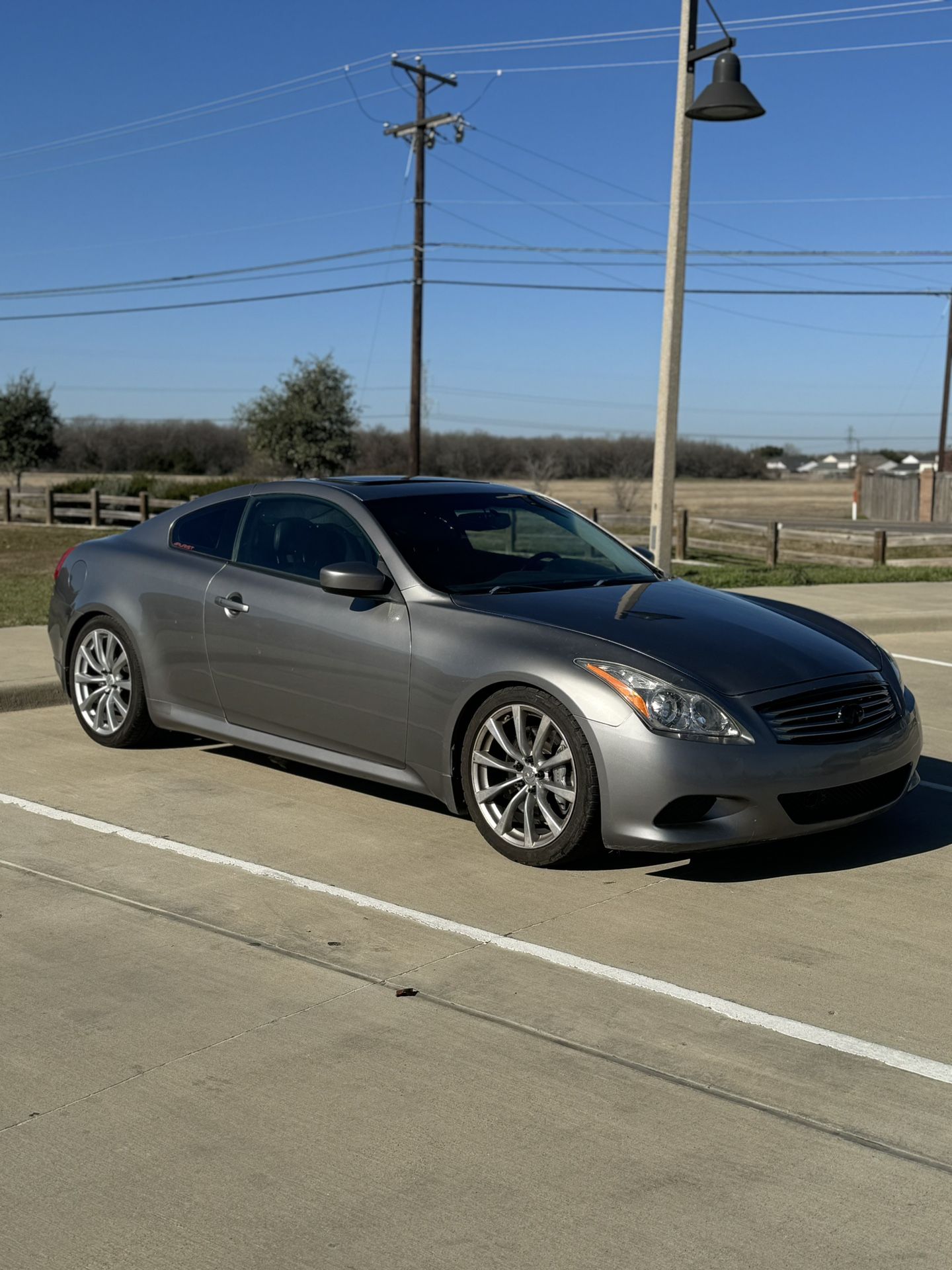
The 2008 Infiniti G37 Sport is a rear-wheel-drive luxury performance coupe powered by a 3.7-liter V6 engine producing 330 horsepower, pairing athletic handling and a driver-focused cockpit with everyday refinement.
Introduction and Subject Identity
When Infiniti introduced the G37 Coupe for the 2008 model year, it succeeded the highly regarded G35 Coupe, raising the bar for Japanese luxury performance vehicles. Built on Nissan’s advanced Front Mid-ship (FM) platform, the 2008 Infiniti G37 Sport was designed to challenge established European benchmarks like the BMW 335i and Audi A5. By combining a high-revving naturally aspirated engine, a finely tuned chassis, and a sharply sculpted exterior, the G37 Sport carved out a distinct identity in the mid-2000s sports coupe market. Disambiguating it from standard luxury trims, the Sport model brought specific mechanical upgrades—such as stiffer suspension tuning, larger brakes, and an exclusive viscous limited-slip differential—making it a favorite among driving enthusiasts who appreciated mechanical purity before the widespread adoption of turbocharging.
Powertrain and Engineering Architecture
At the heart of the 2008 Infiniti G37 Sport is the legendary VQ37VHR engine. Displacing 3.7 liters, this aluminum-block V6 introduced Nissan’s Variable Valve Event and Lift (VVEL) technology, which combined hydraulically controlled variable valve timing with electronically controlled valve lift on the intake side. This system optimized both volumetric efficiency and fuel combustion across a broad RPM band, yielding a peak output of 330 horsepower at 7,000 rpm and 270 lb-ft of torque at 5,200 rpm.
The engine’s high 7,500 rpm redline gave the coupe an aggressive, free-breathing character that rewarded drivers who explored the upper reaches of the tachometer. Power was routed to the rear wheels through either a 6-speed manual transmission—a favorite for purists—or a 5-speed automatic transmission featuring magnesium paddle shifters and downshift rev-matching. The manual transmission featured close-ratio gearing that kept the V6 squarely in its power band, though the clutch pedal and shifter action carried a heavier, mechanical feel that suited the car's aggressive posture.
Chassis and Suspension Dynamics
The FM platform positioned the engine entirely behind the front axle centerline, achieving a favorable front-to-rear weight distribution that enhanced turn-in agility and directional stability. The Sport trim featured independent double-wishbone front suspension and a multi-link rear suspension, complemented by stiffer spring rates, firmer dampers, and thicker stabilizer bars compared to the base Journey model.
This hardware configuration reduced body roll during hard cornering while maintaining sufficient compliance for daily commuting. Steering was handled by a vehicle-speed-sensitive rack-and-pinion setup. While hydraulic power steering in era-appropriate performance cars sometimes faced criticism for lack of feel, the G37 Sport offered heavy, communicative weight feedback that allowed drivers to place the car precisely on apexes.
Exterior Design and Aerodynamics
The styling of the 2008 G37 Coupe evolved from the sleek lines of the G35, featuring tighter overhangs, a lower stance, and more aggressive proportions. The Sport package introduced a unique front fascia with integrated fog lights, deeper side sills, and a subtle rear decklid spoiler.
The profile was defined by a sweeping roofline, a high beltline, and standard 19-inch split 7-spoke aluminum-alloy wheels wrapped in staggered performance tires (225/45R19 front and 245/40R19 rear). These wider rear tires not only improved mechanical grip under acceleration but also filled the wheel wells for a planted, muscular stance.
Aerodynamic considerations included an underbody air management system and careful attention to lift coefficients, helping the coupe remain stable at highway speeds. High-intensity discharge (HID) bi-xenon headlights with an adaptive front lighting system (AFS) swiveled in the direction of turns, improving night-time visibility on twisting roads.
Interior Craftsmanship and Technology
Inside the cabin, the 2008 Infiniti G37 Sport balanced driver-centric ergonomics with luxury materials. The instrument panel featured an aluminum finish inspired by traditional Japanese Washi paper, providing a distinct visual texture that set it apart from standard wood or carbon-fiber trims.
The cockpit was anchored by unique sport-bolstered front seats upholstered in leather, featuring power-adjustable thigh extensions and torso bolsters that secured the driver during aggressive cornering. Aluminum pedals and a leather-wrapped steering wheel completed the sporting ambiance.
| Feature Category | 2008 Infiniti G37 Sport Specification |
|---|---|
| Engine Type | 3.7L V6 (VQ37VHR) with VVEL |
| Horsepower | 330 hp @ 7,000 RPM |
| Torque | 270 lb-ft @ 5,200 RPM |
| Transmission | 6-Speed Manual / 5-Speed Automatic with Paddles |
| Drivetrain | Front-Midship, Rear-Wheel Drive (RWD) |
| Front Suspension | Independent Double-Wishbone |
| Rear Suspension | Multi-Link |
| Braking System | 4-Piston Front / 2-Piston Rear Sport Brakes |
| Wheels & Tires | 19-inch Staggered Alloy Wheels |
Technology offerings for 2008 included a standard push-button ignition, automatic climate control, and a six-speaker audio system with an in-dash 6-disc CD changer and MP3 playback capability. Upgraded models featured the Bose Studio Surround sound system with 11 speakers, XM Satellite Radio, and a hard-drive-based navigation system with real-time traffic updates and a touchscreen interface. While infotainment interfaces from this era have been superseded by modern smartphone integration, the physical button layout remained intuitive and reliable.
Braking and Safety Equipment
Stopping power was a primary differentiator for the Sport trim. Infiniti equipped the car with larger ventilated disc brakes featuring 4-piston opposed aluminum calipers up front and 2-piston opposed calipers in the rear, clamped down on 14-inch front and 13.8-inch rear rotors. These brakes delivered strong initial bite and resistance to brake fade during spirited driving sessions.
Active safety systems included Vehicle Dynamic Control (VDC) and Traction Control System (TCS), alongside an Anti-lock Braking System (ABS) with Electronic Brake force Distribution (EBD) and Brake Assist. Passive safety equipment comprised dual-stage front supplemental air bags, front seat-mounted side-impact air bags, and roof-mounted curtain side-impact air bags designed to protect occupants in both front and rear outboard seating positions.
Performance Comparisons and Market Context
In comparative reviews of its era, the 2008 Infiniti G37 Sport was frequently measured against the BMW 335i Coupe. While the twin-turbocharged BMW offered a broader torque curve lower in the RPM range, the naturally aspirated Infiniti countered with a higher redline, sharper throttle response, and a reputation for mechanical durability.
The G37's chassis felt tauter than luxury cruisers like the Lexus IS 350, though ride quality was firmer, occasionally transmitting sharp impacts over broken pavement. Against American muscle coupes like the Ford Mustang GT, the G37 Sport offered superior interior materials, tighter assembly tolerances, and more sophisticated suspension dynamics, appealing to buyers transitioning away from entry-level European luxury cars.
Ownership Considerations and Maintenance
Evaluating the 2008 Infiniti G37 Sport requires attention to several known mechanical characteristics. Early production models of the VQ37VHR engine are occasionally associated with gallery gasket wear—specifically the oil galley gaskets behind the timing cover, which can degrade over time and lead to oil pressure drops. Prospective buyers and current owners should verify oil pressure readings if engine ticking or low oil pressure warnings occur.
Additionally, the concentric slave cylinder (CSC) in manual transmission models is prone to failure over high mileage, often requiring transmission removal for replacement. Suspension bushings, particularly the front compliance bushings, tend to wear out around 80,000 to 100,000 miles, manifesting as vagueness in steering response or uneven front tire wear. Premium fuel (91 octane or higher) is strictly required to prevent engine knock and maintain rated power output.
Frequently Asked Questions
What is the main difference between the G37 Journey and the G37 Sport?
The Sport trim adds performance-focused hardware that is not available on the base or Journey models. This includes larger 14-inch front and 13.8-inch rear brakes with multi-piston calipers, a viscous limited-slip differential, stiffer sport-tuned suspension, 19-inch staggered wheels, sport seats with adjustable thigh and torso bolsters, and aluminum pedal trim.
Is the 2008 Infiniti G37 Sport reliable?
The G37 Sport is generally considered a reliable performance car, largely due to the robust engineering of its VQ37VHR engine and FM platform. However, because these cars are frequently driven hard, maintenance history is critical. Routine checks should include inspecting the oil galley gaskets, cooling system hoses, transmission mounts, and front suspension control arm bushings.
What kind of fuel economy does the G37 Sport achieve?
According to historical EPA estimates, the manual transmission model achieves approximately 17 mpg in city driving and 25 mpg on the highway, while the automatic version rates around 17 mpg city and 26 mpg highway. Real-world fuel economy varies based on driving style, as the high-revving nature of the engine encourages spirited acceleration.
Can the manual transmission be difficult to drive in traffic?
The 6-speed manual transmission features a heavier clutch pedal and distinct engagement point compared to standard commuter cars. While manageable in daily driving, stop-and-go traffic can cause driver fatigue. Drivers seeking a more relaxed commute often prefer the 5-speed automatic equipped with paddle shifters.
Does the G37 Sport have a spacious back seat?
Like most coupes in its class, the rear seating area of the G37 is constrained by the sloping roofline and compact wheelbase. Legroom and headroom are limited, making the rear seats best suited for children, short trips, or luggage storage rather than accommodating adult passengers comfortably on long journeys.
Practical Recommendation
For enthusiasts seeking an engaging, rear-wheel-drive luxury coupe with a high-revving V6 and sharp handling, the 2008 Infiniti G37 Sport remains a compelling option. Prioritize examples with comprehensive service records, verified clean titles, and documented maintenance of critical wear items like suspension bushings and cooling components. Inspect the front subframe and steering rack for leaks, and ensure that modifications—such as aftermarket exhaust systems or suspension drops—were installed professionally to preserve the structural integrity of the chassis.