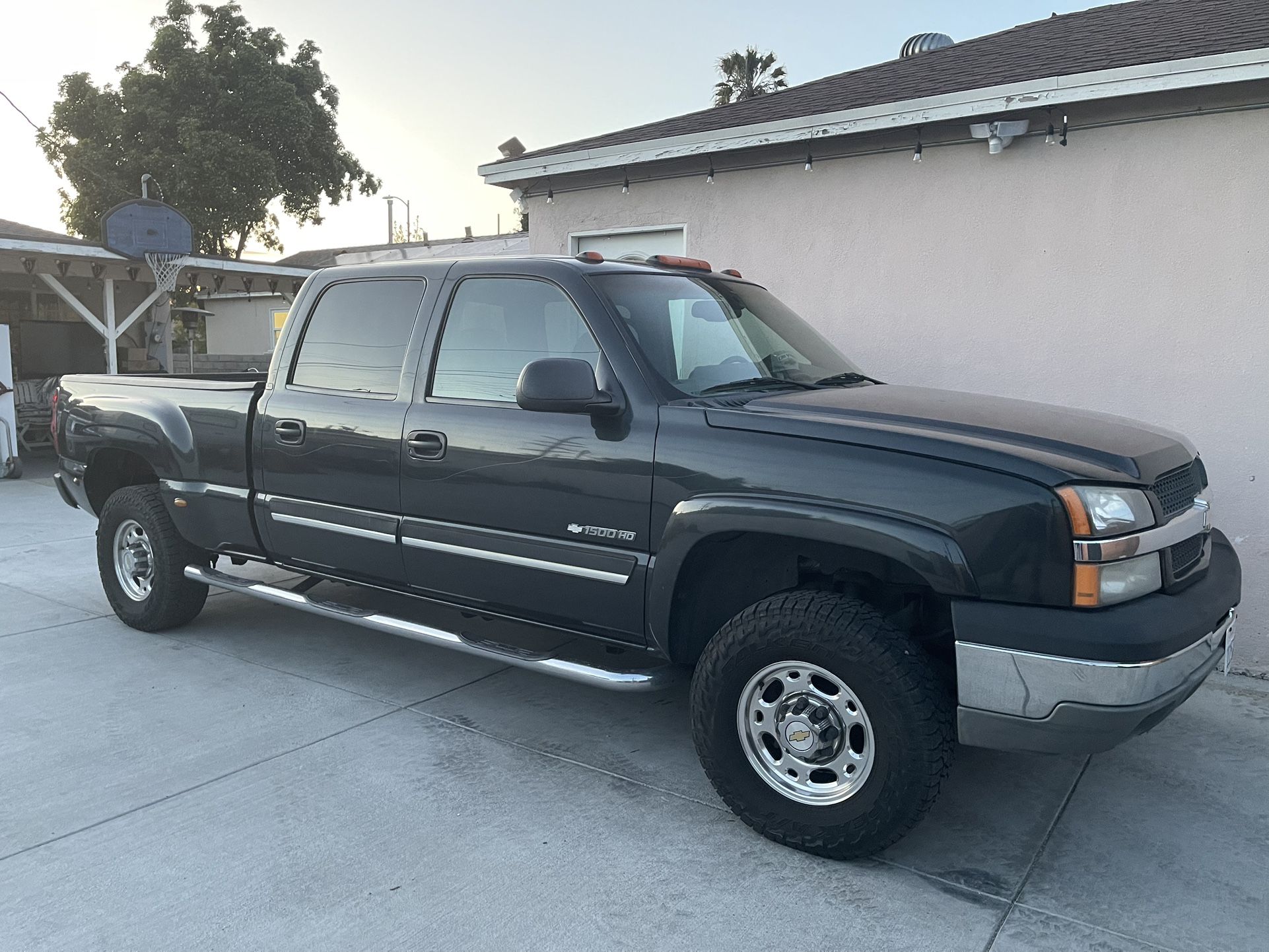
The 2003 Chevy Silverado Quadrasteer represents a pinnacle of early 2000s automotive engineering, combining traditional American full-size truck utility with groundbreaking four-wheel steering technology developed by Delphi. This rare option package dramatically reduced turning radius, improved high-speed stability, and transformed towing dynamics, making it a sought-after collectible today for enthusiasts who appreciate Detroit's bold mechanical innovations.
Understanding the Quadrasteer Phenomenon
At the turn of the millennium, full-size pickup trucks were growing larger, heavier, and harder to maneuver in tight urban environments, parking lots, and job sites. General Motors sought to solve this dilemma by introducing Quadrasteer, an electronically controlled four-wheel steering system. Developed in collaboration with Delphi Automotive, the system was designed to give a massive extended-cab or crew-cab pickup the nimble turning characteristics of a compact car while retaining the heavy-duty payload and towing capacities expected of a traditional truck.
The 2003 model year marked a significant expansion for Quadrasteer. While it debuted as a limited offering on the exclusive 2002 GMC Sierra Denali, General Motors made the technology more widely available for 2003, integrating it into select half-ton and three-quarter-ton Chevrolet Silverado and GMC Sierra models. Despite its engineering brilliance, the option carried a hefty upfront price tag, often adding several thousand dollars to the sticker price. Consequently, consumer uptake was modest, cementing the 2003 Chevy Silverado Quadrasteer’s status as an elusive, highly specialized piece of automotive history.
How Quadrasteer Works: Mechanical and Electronic Integration
To appreciate why enthusiasts hunt for these trucks today, one must examine the sophisticated hardware hidden beneath the sheet metal. Unlike conventional front-steer systems, Quadrasteer utilizes a heavy-duty Dana rear axle equipped with an integrated electric motor, a planetary gearset, and sophisticated position sensors.
| Vehicle Speed | Rear Wheel Action | Primary Benefit |
|---|---|---|
| Low (0 - 20 mph) | Counter-phase (Opposite front) | Dramatically reduced turning radius |
| High (20+ mph) | In-phase (Same as front) | Enhanced lane-change stability & tracking |
The system operates in distinct phases depending on vehicle speed, monitored continuously by an onboard computer module:
- Low-Speed Maneuvering (0 to 20 mph): The rear wheels turn in the opposite direction of the front wheels by up to 15 degrees. This counter-phase steering chops the turning circle of an extended-cab truck down from roughly 46 feet to a remarkable 37.4 feet, allowing drivers to execute U-turns and parallel park with sports-car-like agility.
- High-Speed Stability (Above 20 mph): As vehicle speed increases, the rear wheels transition to turn in the same direction as the front wheels (in-phase steering). This subtle adjustment eliminates the traditional "tail wag" sensation when changing lanes on the highway, making trailer towing remarkably stable and reducing driver fatigue over long distances.
- Trailer Towing Mode: Drivers can engage a specialized tow/haul calibration that optimizes rear-wheel response specifically for trailing loads, ensuring the trailer tracks precisely behind the truck without cutting corners too sharply.
Distinctive Exterior Styling and Interior Appointments
Beyond the unique steering mechanics, a 2003 Chevy Silverado equipped with Quadrasteer is instantly recognizable by its physical silhouette. To accommodate the wider rear steering axle and the sweeping motion of the rear wheels, General Motors engineered unique, muscular composite rear fender flares. These flares added approximately four inches of total width to the rear track, giving the truck an aggressive, wide-body stance that set it apart from standard half-ton Silverados on the highway.
Inside the cabin, these trucks typically benefited from high-end trim configurations. Most Quadrasteer packages were paired with LT trim levels, featuring plush leather seating, dual-zone climate control, premium audio systems, and steering wheel controls. Drivers were greeted by a specialized overhead console or dashboard cluster switch allowing manual control over the steering modes, including a dedicated indicator panel to display the current operational status of the rear axle.
Practical Performance, Payload, and Towing Realities
When evaluating a 2003 Chevy Silverado Quadrasteer for modern use or collection, understanding its capability limits is vital. Built primarily on the robust GMT800 platform, these trucks share the legendary durability of their contemporaries, yet they introduce specific capability trade-offs due to the unique rear axle assembly.
Towing and Hauling Dynamics
The heavy-duty Dana 60-derived rear axle used in half-ton Quadrasteer models altered payload capacity slightly compared to a standard solid-axle truck. While towing stability is universally praised by owners—particularly when pulling enclosed cargo trailers, boats, or campers—the maximum payload rating is marginally lower due to the added weight of the electric motor and steering linkage on the rear axle.
Fuel Economy and Powertrain
Under the hood, most half-ton 2003 Silverado Quadrasteer models feature the iron-block 5.3-liter Vortec V8 engine mated to the reliable 4L60E 4-speed automatic transmission. Fuel economy remains typical for a heavy, four-wheel-drive full-size truck of this era, hovering in the 12 to 15 mpg range depending on driving habits, gear ratios (usually 3.73 or 4.10), and whether the truck is outfitted with four-wheel drive.
Maintenance Considerations and Common Troubleshooting
Owning a vintage Detroit vehicle with cutting-edge 2000s electronics requires proactive maintenance, particularly regarding the Quadrasteer system. While the mechanical components are remarkably rugged, electronic sensors and steering actuators demand specialized knowledge.
- Sensor Calibration: The system relies heavily on wheel speed sensors and steering angle position sensors. If a sensor fails or the battery drops voltage significantly, the truck may default to a "Service Quadrasteer" mode, locking the rear wheels straight ahead for safety.
- Part Availability: Because Delphi produced these systems in limited quantities, specific electronic control modules, steering position sensors, and specialized rear axle components can be difficult to source new. Enthusiasts rely heavily on specialized salvage yards, dedicated online forums, and enthusiast networks for replacement parts.
- Chassis Lubrication: The rear steering mechanism features grease fittings and linkage joints that require regular inspection and lubrication during routine oil changes to prevent premature wear.
Why the Quadrasteer Silverado is a Hidden Gem Today
In the collector and enthusiast market, the 2003 Chevy Silverado Quadrasteer has transitioned from a misunderstood dealer-lot orphan into a prized modern classic. Several factors drive its growing appeal:
- Rarity: Production numbers were a fraction of standard Silverado output, ensuring exclusivity at car shows and truck meetups.
- Engineering Curiosity: Automotive historians and DIY mechanics admire the sheer ambition of putting four-wheel steering on a mass-market American pickup years before modern luxury brands popularized digital rear steering.
- Real-World Utility: Unlike fragile exotic cars, a well-maintained GMT800 Silverado with Quadrasteer remains a fully functional, usable pickup truck that can still haul lumber, pull trailers, and navigate tight suburban driveways with ease.
Frequently Asked Questions
Can a 2003 Chevy Silverado Quadrasteer be repaired if the steering system fails?
Yes, but repairs require diagnosing specific electronic codes. Most failures stem from wheel speed sensors, wiring harness corrosion, or steering position sensors rather than catastrophic mechanical failure of the rear axle motor. When the system faults, it safely defaults to straight-ahead operation, meaning the truck remains drivable as a standard two-wheel-steer vehicle while you source parts.
How does Quadrasteer affect trailer towing performance?
Quadrasteer dramatically improves trailer towing by cutting down off-tracking. When executing tight turns, the trailer follows a path much closer to the centerline of the truck, reducing the risk of clipping curbs or obstacles. At highway speeds, the in-phase steering minimizes sway and keeps the trailer locked firmly behind the vehicle.
Are replacement parts difficult to find for the Quadrasteer rear axle?
Standard suspension, braking, and engine components are identical to any standard 2003 Silverado and widely available. However, Quadrasteer-specific components—such as the rear steering motor, control module, and specialized composite fenders—are rare and often require sourcing from specialized online enthusiast groups or salvage networks.
What is the difference between 2002 and 2003 Silverado Quadrasteer models?
The system debuted on the upscale 2002 GMC Sierra Denali. For the 2003 model year, General Motors expanded the technology into broader Chevrolet Silverado and GMC Sierra trim lines, making it accessible on standard half-ton and select three-quarter-ton configurations with updated software calibrations.
Is the 2003 Silverado Quadrasteer a good investment for a collector?
While it may not command six-figure auction prices, clean, low-mileage examples of the 2003 Chevy Silverado Quadrasteer have seen a steady rise in interest among 1990s and 2000s truck enthusiasts. Its unique mechanical pedigree and high utility make it a stable, conversation-starting collectible for garage storage and weekend driving.