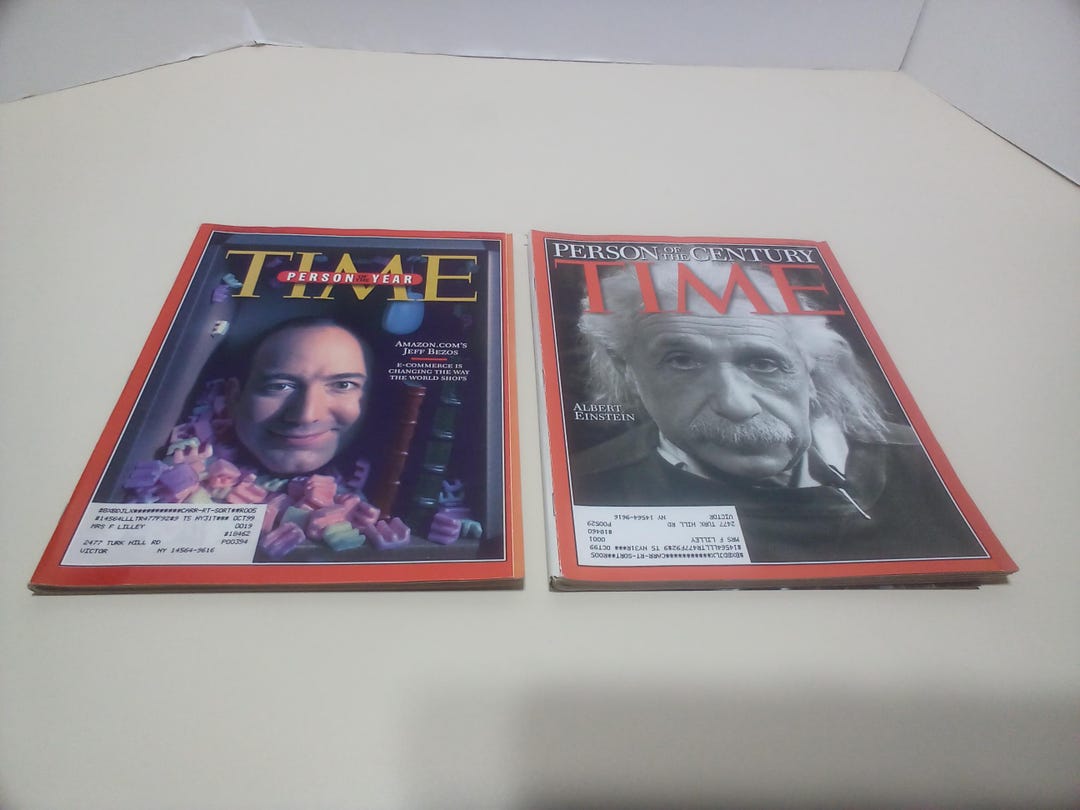
In the final issue of 1999, Albert Einstein was named Time Magazine's Person of the Century. He was chosen for personifying the era of scientific exploration and technological advancement. The runners-up were Franklin D. Roosevelt and Mahatma Gandhi, representing the century's defining struggles for democracy and human rights.
The decision to crown a "Person of the Century" was more than a mere end-of-year tradition; it was an attempt to encapsulate 100 years of unprecedented human progress, turmoil, and transformation. As we look back from the vantage point of 2026, the selection remains a cornerstone of historical analysis, reflecting how we prioritize scientific genius over political power and moral leadership.
The Philosophy Behind the Selection
Time Magazine's "Person of the Year" (originally Man of the Year) franchise has always operated on a specific, often misunderstood, criterion: the person or thing that had the greatest impact on the news and our lives, for better or worse. For the "Person of the Century" designation, the editors at Time, led by then-Managing Editor Walter Isaacson, sought to identify the individual who most embodied the spirit of the 20th century.
The debate was rigorous. The 20th century was defined by three massive themes: the rise of democracy and the defeat of totalitarianism, the struggle for civil rights and individual liberties, and the explosion of scientific and technological knowledge. Each theme had a champion. Franklin D. Roosevelt stood for the preservation of democracy; Mahatma Gandhi stood for the moral force of the individual; and Albert Einstein stood for the scientific revolution that fundamentally altered our understanding of the universe.
In 1999, the editors ultimately decided that the 20th century would be remembered primarily as a century of science and technology. While wars and political movements changed borders, science changed the very nature of human existence—from how we communicate to how we understand time and space.
Albert Einstein: The Face of the Scientific Revolution
Albert Einstein was not just a physicist; he was a cultural icon whose name became synonymous with "genius." His selection as Person of the Century was based on the premise that his work laid the foundation for the most significant technological shifts of the era.
The Miracle Year and Relativity
In 1905, often referred to as his Annus Mirabilis (Miracle Year), Einstein published four papers that revolutionized physics. These included his work on the photoelectric effect (which earned him the Nobel Prize in Physics in 1921), Brownian motion, and Special Relativity. Special Relativity introduced the world to the equation E=mc², establishing the relationship between energy and mass. This single insight paved the way for both the horrors of the atomic bomb and the promise of nuclear energy.
General Relativity, published in 1915, redefined our understanding of gravity, replacing Newton's static universe with a dynamic, warping fabric of spacetime. Even in 2026, Einstein’s theories remain the bedrock of modern astrophysics. From the synchronization of GPS satellites to the detection of gravitational waves, his century-old math continues to be proven correct by 21st-century technology.
The Humanitarian and Icon
Beyond the chalkboard, Einstein was a vocal advocate for pacifism, Zionism, and civil rights. As a Jewish scientist fleeing Nazi Germany, he personified the century’s themes of displacement and the global migration of intellect. His letter to President Franklin D. Roosevelt regarding the potential for atomic weaponry—though he later regretted his role in prompting the Manhattan Project—linked him forever to the geopolitical shifts of the Cold War era.
The Runners-Up: FDR and Mahatma Gandhi
While Einstein took the title, the two runners-up represented the massive social and political pillars of the century. The choice between these three individuals was essentially a choice between the Mind (Einstein), the State (Roosevelt), and the Spirit (Gandhi).
Franklin D. Roosevelt (The Savior of Democracy)
Franklin Delano Roosevelt was the only U.S. President elected to four terms. He led the United States through its two greatest 20th-century crises: the Great Depression and World War II.
Roosevelt’s New Deal transformed the relationship between the citizen and the state, introducing social safety nets that reshaped Western capitalism. On the global stage, his leadership was instrumental in the defeat of Fascism. Had the century been defined purely by the survival of freedom and the structure of the modern world order, FDR would have been the undisputed choice.
Mahatma Gandhi (The Moral Force)
Mohandas Karamchand Gandhi represented the power of "Satyagraha" or non-violent resistance. His role in leading India to independence from British rule inspired civil rights movements globally, from Martin Luther King Jr. in the United States to Nelson Mandela in South Africa.
Gandhi proved that the moral authority of a single individual could dismantle empires. For many, Gandhi was the "soul" of the century. However, Time’s editors felt that while Gandhi’s influence was profound, the technological transformation sparked by Einstein was more pervasive across all cultures and daily lives.
Comparing the Three Finalists
The following table outlines the core impact areas of the three primary candidates considered for the 1999 title.
| Candidate | Primary Domain | Key Achievement | Long-term Legacy (as of 2026) |
|---|---|---|---|
| Albert Einstein | Science & Technology | Theory of Relativity; E=mc² | Foundation of modern physics, GPS, and nuclear energy. |
| Franklin D. Roosevelt | Politics & Governance | New Deal; WWII Leadership | The UN, Social Security, and the modern democratic state. |
| Mahatma Gandhi | Human Rights & Morality | Non-violent Resistance | Global civil rights movements and peaceful protest methods. |
The Selection Process and Public Opinion
The process of choosing the Person of the Century was an immense journalistic undertaking. Time Magazine engaged in a year-long series of issues highlighting the "Time 100"—the most influential people of the century across various categories, including Leaders and Revolutionaries, Artists and Entertainers, Builders and Titans, Scientists and Thinkers, and Heroes and Icons.
The Role of Public Polls
In the late 1990s, the burgeoning internet allowed for public participation through online polls. This led to some unexpected results. At various points, figures like Elvis Presley and even professional wrestler Mick Foley received massive numbers of votes from passionate fanbases.
More controversially, Adolf Hitler—who was Time's 1938 Person of the Year—garnered significant votes in the public poll due to his undeniable (and catastrophic) influence on the 20th century. However, the editors clarified that the "Person of the Century" needed to represent a broader, more positive legacy of human achievement or a fundamental shift in human thought, rather than just the notoriety of evil.
The Editorial Debate
Walter Isaacson recounted that the debate often came down to Einstein versus Roosevelt. The argument for Einstein was that a thousand years from now, people will still remember the discovery of relativity and the quantum nature of light, whereas the political nuances of the 1930s and 40s might fade into general historical knowledge. Einstein represented the "Information Age" and the "Atomic Age" simultaneously.
Notable Omissions and Honorable Mentions
While the focus was on the top three, several other figures were considered essential to the 20th-century narrative:
- Winston Churchill: Often cited as the man who saved Western civilization during the darkest days of 1940. He was named Person of the Half-Century in 1950.
- Martin Luther King Jr.: A moral giant who transformed the American social landscape and became a global symbol for equality.
- Pope John Paul II: Recognized for his role in the fall of Communism in Eastern Europe.
- Mao Zedong: Representing the massive shift in China and the impact of Communism on billions of people.
The 2026 Perspective: Does Einstein Still Hold Up?
Looking back from 2026, the choice of Einstein appears even more prescient. We are currently living in an era where artificial intelligence, quantum computing, and space exploration are at the forefront of human endeavor. All of these fields are direct descendants of the "Einsteinian" revolution.
Quantum computing, for instance, relies on principles of quantum mechanics that Einstein helped articulate (even if he was famously skeptical of "spooky action at a distance"). Our continued exploration of the cosmos, including the colonization of Mars and the search for exoplanets, is guided by the gravitational mathematics he established over a century ago.
Furthermore, the "Person of the Century" issue set a standard for how media outlets handle historical retrospectives. It was a moment where print media still held the power to define a global narrative, creating a definitive record of who we were as a species at the turn of the millennium.
Frequently Asked Questions
Who was the 1999 Time Magazine Person of the Century?
Albert Einstein was the official selection. He was featured on the cover of the December 31, 1999, issue. Time chose him because he was the preeminent scientist in a century dominated by science.
Who were the finalists for Person of the Century?
The two runners-up (finalists) were Franklin D. Roosevelt and Mahatma Gandhi. Roosevelt represented the political triumphs of democracy, while Gandhi represented the moral power of non-violence.
Why wasn't Adolf Hitler chosen as Person of the Century?
Although Time's "Person of the Year" is defined by influence (whether good or bad), the editors felt that the Person of the Century should represent a more enduring, positive contribution to the human story. While Hitler's influence was immense and horrific, the editors chose to focus on the triumphs of the human mind and spirit.
Did Time Magazine have a Person of the Century poll?
Yes, there was an online poll that allowed the public to vote. While figures like Elvis Presley and Albert Einstein were popular, the poll was not the final deciding factor. The editors of Time made the ultimate decision based on their own criteria and historical analysis.
Has Time ever named a "Person of the Millennium"?
No. Time focused specifically on the "Person of the Century" for the 20th century. While there has been much speculation about who would be the Person of the Millennium (with candidates like Johannes Gutenberg or Isaac Newton), Time has not officially awarded such a title.
Who wrote the main essay for the Einstein issue?
The primary essay for the Person of the Century issue was written by Walter Isaacson, who was the managing editor of Time at the time and later went on to write a definitive biography of Albert Einstein.
Recommended Further Reading and Next Actions
To truly understand the impact of the 1999 selection, readers should explore the original Time archives or read Walter Isaacson’s biography, Einstein: His Life and Universe.
If you are interested in historical retrospectives, a productive next action is to compare Time’s 1999 Person of the Century with their annual "Person of the Year" selections from 2000 to 2025. This comparison reveals a shift in influence from individual scientists and statesmen to collective movements, technological platforms (like "You" in 2006), and the architects of the digital age.
For educators and students, analyzing the "Time 100" list from the 1999 special issue remains an excellent exercise in historiography—the study of how history is written and how we decide which figures are "important" enough to be remembered by future generations.