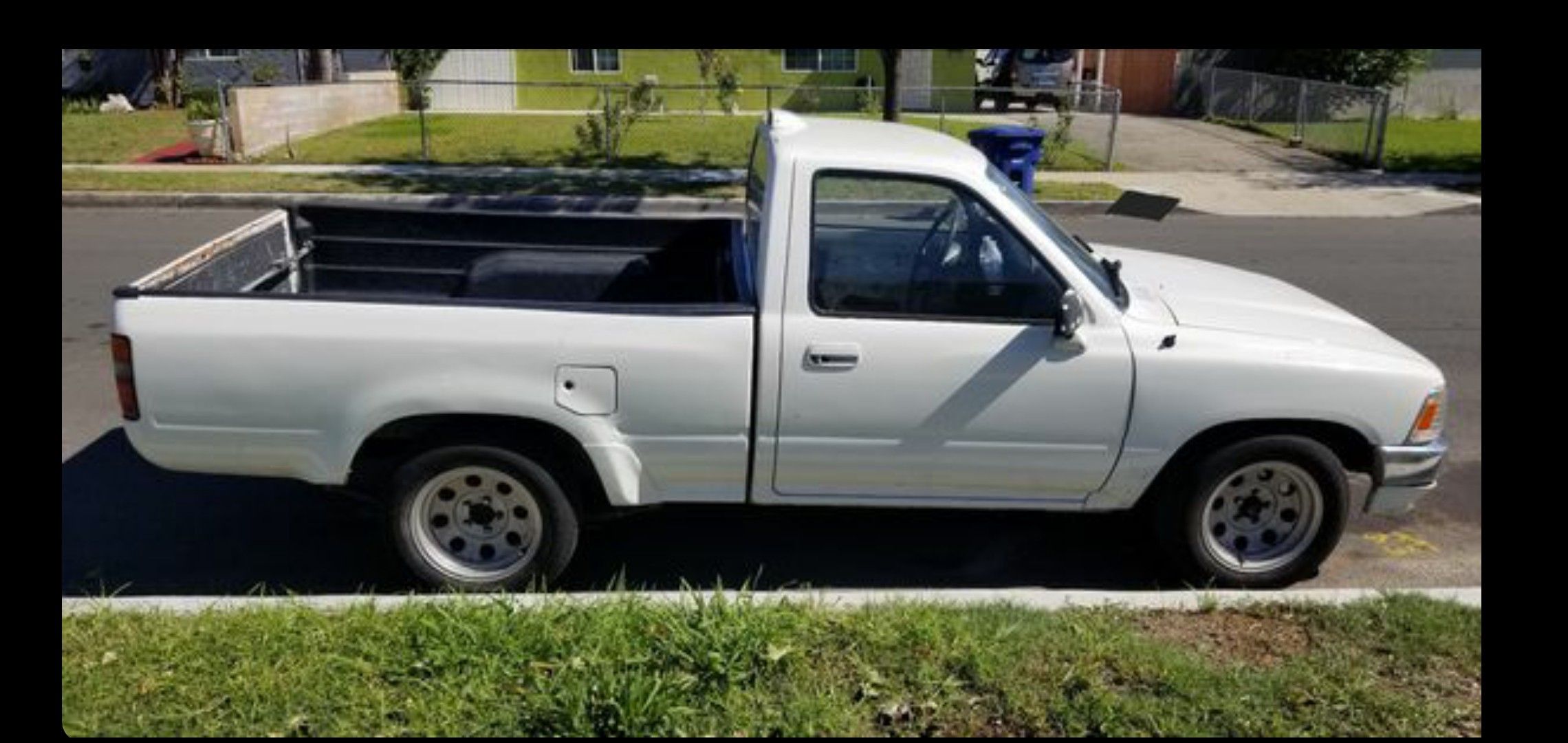
The 1995 Toyota Pickup remains one of the most reliable and sought-after compact trucks ever produced. As the final model year before the North American transition to the Tacoma, it represents the pinnacle of Toyota’s "overbuilt" era, offering legendary 22R-E engine durability, a rugged fully boxed frame, and unmatched off-road capability.
In the automotive world of 2026, few vehicles have maintained their reputation—and their resale value—as tenaciously as the 1995 Toyota Pickup. Known globally as the Hilux but sold simply as the "Toyota Pickup" in the United States, this vehicle was the last of its kind. It was a utilitarian tool built with a philosophy of mechanical simplicity and extreme margin for error. As we look back from 2026, this truck has transitioned from a common job-site fixture to a bona fide classic, cherished by off-road enthusiasts and collectors alike.
The Historical Context: The End of the N100 Generation
The 1995 model year was a transitional period for Toyota. While the first-generation Tacoma was introduced mid-year as a 1995.5 model, the "old" Toyota Pickup continued to be sold. This distinction is vital for buyers and enthusiasts to understand. The 1995 Pickup (the N100 series) was based on a global platform designed for the rigors of international markets, where roads were often optional.
Unlike the Tacoma that followed, which was designed specifically for the North American market with a greater emphasis on ride comfort and cabin width, the 1995 Pickup was a narrow-body, stiffly sprung workhorse. It featured a fully boxed frame from front to back, a design choice that provided immense structural rigidity but also created a notorious trap for moisture and debris in salt-belt states.
Engine Options: Choosing Between Longevity and Power
When reviewing the 1995 Toyota Pickup, the discussion inevitably centers on the two primary powerplants offered. Both engines have distinct personalities, maintenance requirements, and reputations within the community.
The 2.4L 22R-E Inline-Four
The 22R-E is arguably one of the most famous engines in automotive history. By 1995, it featured electronic fuel injection (hence the "E") and produced roughly 112 horsepower and 142 lb-ft of torque. While these numbers seem meager by 2026 standards, the 22R-E’s value lies in its torque curve and its mechanical resilience.
The engine utilizes a cast-iron block and an aluminum head. Its primary weakness is the plastic timing chain guides. Over 100,000 to 150,000 miles, the chain can wear through these plastic guides and eventually eat into the timing cover, leading to coolant and oil mixing. Expert owners often replace these with metal-backed guides, effectively making the engine capable of 300,000 to 400,000 miles with basic oil changes.
The 3.0L 3VZ-E V6
The 3.0L V6 was Toyota’s attempt to provide more "grunt" for towing and highway passing. Producing 150 horsepower and 180 lb-ft of torque, it provided a noticeable step up from the four-cylinder, but it came with a checkered reputation. Often nicknamed the "3-point-slow," it offered fuel economy similar to a full-sized V8 with performance that many felt didn't justify the extra complexity.
The most significant issue with the 3VZ-E is the head gasket failure, specifically on the number six cylinder. This was largely due to a design flaw in the exhaust crossover pipe, which trapped excessive heat near the rear of the engine. While many of these were fixed under recall or through subsequent enthusiast repairs with multi-layer steel (MLS) gaskets, it remains a critical point of inspection for any buyer in 2026.
1995 Toyota Pickup Technical Specifications
The following table outlines the core specifications for the two primary configurations found on the used market today.
| Feature | 2.4L I4 (22R-E) | 3.0L V6 (3VZ-E) |
|---|---|---|
| Horsepower | 112 hp @ 4,600 RPM | 150 hp @ 4,800 RPM |
| Torque | 142 lb-ft @ 3,400 RPM | 180 lb-ft @ 3,400 RPM |
| Transmission | 5-Speed Manual / 4-Speed Auto | 5-Speed Manual / 4-Speed Auto |
| Drive Type | RWD or 4WD | RWD or 4WD |
| Fuel Economy (Approx) | 18 City / 22 Highway | 14 City / 18 Highway |
| Payload Capacity | ~1,400 - 1,600 lbs | ~1,500 - 1,800 lbs |
| Towing Capacity | 3,500 lbs | 5,000 lbs |
| Chassis Construction | Fully Boxed Steel | Fully Boxed Steel |
Drivetrain and Off-Road Capability
One reason the 1995 Toyota Pickup remains relevant in 2026 is its prowess as a platform for off-roading. The 4WD models utilized a robust independent front suspension (IFS) with torsion bars and a solid rear axle with leaf springs. While the earlier 1985 models are prized for having a solid front axle, the 1995 IFS is surprisingly capable and offers much better on-road handling.
The 4WD system usually features a manual transfer case. In the SR5 trims and some DX models, you might find "Automatic Disconnecting Differential" (ADD), which allowed for shifting into 4WD on the fly. However, many purists prefer the manual locking hubs (usually made by Aisin) found on base models, as they are virtually indestructible and ensure the front CV axles aren't spinning when not in use, saving on fuel and wear.
The gear ratios in these trucks were often aggressive (frequently 4.10 or 4.30 to 1), which helped the small engines turn larger tires. This gearing, combined with a narrow track width, makes the 1995 Pickup a "mountain goat" on tight trails where modern, wide-body trucks like the Tundra or even the modern Tacoma would struggle.
Interior and Ergonomics: A Study in Utility
Stepping into a 1995 Toyota Pickup in 2026 is a lesson in minimalism. The dashboard is a single piece of high-quality plastic that, remarkably, resists cracking even after decades of sun exposure. The controls are tactile and logical; there are no touchscreens, no menu-diving, and no complex electronics to fail.
The seating position is unique and often described as "sitting on the floor with your legs out straight." This was a byproduct of the high floor pan designed to provide maximum ground clearance. While the Regular Cab is notoriously cramped for anyone over six feet tall, the Xtracab (extended cab) model offers much-needed seat recline and a small "jump seat" area for storage or very small passengers.
Trim Levels
- Standard/Base: The ultimate "stripper" truck. Often came with a vinyl bench seat, no power steering, and manual windows.
- DX (Deluxe): Added cloth upholstery, power steering, and occasionally air conditioning.
- SR5 (Sport Rally 5-Speed): The top-tier trim. Included a full gauge cluster (with tachometer and oil pressure), upgraded seats with adjustable lumbar support, chrome trim, and often the V6 engine.
The 2026 Buying Guide: What to Look For
Purchasing a 1995 Toyota Pickup today requires a different strategy than it did ten or twenty years ago. These are now 31-year-old vehicles. You are no longer looking for "used car" problems; you are looking for "vintage car" preservation.
1. Frame Rust (The Dealbreaker)
The most critical inspection point is the frame, specifically near the rear leaf spring hangers and where the frame curves over the rear axle. Because the frame is fully boxed, it can rust from the inside out. Tap the frame with a small hammer; a sharp "clink" is good, while a dull "thud" or the sound of crunching flakes indicates internal rot. If the frame is compromised, the vehicle is essentially parts-grade unless you are prepared for a total frame-off restoration.
2. The 22R-E "Chirp"
When the engine is idling, listen for a metallic rattling or chirping sound coming from the front of the engine. This is the tell-tale sign of a loose timing chain. If caught early, it’s a standard maintenance item. If ignored, it will destroy the engine.
3. Steering Slop
These trucks use a recirculating ball steering box rather than a rack-and-pinion system. Over time, the idler arm and the steering box itself can develop play. While some play is normal for the era, excessive "dead zone" in the steering wheel usually requires replacing the idler arm or tightening the steering box adjustment screw.
4. Maintenance History
In 2026, a 1995 Toyota Pickup with a documented service history is worth a significant premium. Look for evidence of cooling system flushes (critical for the V6) and valve adjustments (required every 30,000 to 60,000 miles for the 22R-E).
Why the 1995 Model is Better Than the Early Tacoma
While the 1995.5 Tacoma brought more power (via the 2.7L 3RZ-FE and 3.4L 5VZ-FE engines) and better safety features (like airbags), the pre-Tacoma "Pickup" is often preferred by traditionalists for several reasons:
- The Fully Boxed Frame: The first-generation Tacomas moved to a C-channel frame under the bed, which was more prone to flexing and eventually became the subject of a massive rust recall. The 1995 Pickup frame, if kept clean, is significantly more rigid.
- Simplistic Aesthetics: The N100 body style is considered by many to be the peak of Japanese truck design—clean lines, no unnecessary bulk, and a classic "Toyota" tailgate.
- Mechanical Connection: The 1995 Pickup feels more mechanical. The steering is heavier, the shifts are more deliberate, and the connection to the road is more visceral.
Frequently Asked Questions
What is the average gas mileage for a 1995 Toyota Pickup?
Expect roughly 18-22 MPG for the four-cylinder 2WD models and 15-18 MPG for the 4WD V6 models. These trucks were built before fuel efficiency became a primary engineering constraint for pickups, and their aerodynamic profile is similar to a brick.
Is the 1995 Toyota Pickup a good daily driver in 2026?
It depends on your commute. For short trips and city driving, its small footprint makes it excellent. However, it lacks modern safety features like side-impact airbags, anti-lock brakes (on many models), and modern crash-deformation zones. On the highway, it is loud and tends to wander at speeds above 75 MPH.
How much should I pay for a 1995 Toyota Pickup in 2026?
Prices have surged. A high-mileage (over 250k) 4WD model with some rust might still fetch $5,000 to $8,000. Clean, rust-free examples with under 150,000 miles can easily command $15,000 to $25,000 at enthusiast auctions, as they are now considered collector items.
Can I swap a newer engine into a 1995 Pickup?
Yes. One of the most popular modifications is the "3.4 swap," where the 5VZ-FE engine from a later Tacoma or 4Runner is installed into the 1995 Pickup. It bolts up to the existing motor mounts and transmission if the truck originally had the 3.0L V6, providing modern reliability and a significant power boost.
Did the 1995 Toyota Pickup have airbags?
The "Pickup" (N100) did not generally come with airbags in the United States. The 1995.5 Tacoma was the model that introduced driver-side airbags to the Toyota compact truck line. This is a key safety consideration for buyers.
Final Recommendation: A Tool or a Treasure?
The 1995 Toyota Pickup is a rare example of a vehicle that fulfills two roles simultaneously. For the technician or hobbyist, it is an exceptionally easy vehicle to maintain, with a vast aftermarket of parts and a wealth of community knowledge. For the collector, it is a piece of history that marks the end of an era when Toyota prioritizes durability over all other metrics.
If you find a 1995 Toyota Pickup with a clean frame and the 22R-E engine, it is one of the safest financial investments you can make in the used vehicle market. It is a truck that will likely outlast its modern counterparts, provided you treat it with the mechanical respect its 30-plus-year-old components deserve. Whether you intend to use it as a weekend trail rig or a reliable workhorse, the 1995 Pickup remains the gold standard of the compact truck world.