George Orwell, born Eric Arthur Blair, is the preeminent political novelist of the 20th century. By 1986, his legacy had shifted from speculative fiction to a cultural benchmark, as society moved past the literal calendar year of 1984. This overview explores his biography, major literary contributions, and the enduring relevance of his critiques of totalitarianism.
The Identity of George Orwell: From Eric Blair to Literary Icon
To understand the works of George Orwell, one must first understand the man behind the pseudonym, Eric Arthur Blair. Born in 1903 in Motihari, India, Blair was the son of a minor colonial official. His upbringing in the "lower-upper-middle class," as he famously described it, instilled in him an acute sensitivity to social hierarchy and the mechanics of power.
His education at Eton College was foundational, not just for the academic rigor but for the exposure to the British establishment. However, rather than following the traditional path to Oxford or Cambridge, Blair joined the Indian Imperial Police in Burma in 1922. It was here that the seeds of his anti-imperialism were sown. Witnessing the grim realities of colonial rule firsthand led to a profound sense of guilt and a rejection of the authority he was tasked to uphold.
By the time he returned to Europe in 1927, he had resolved to become a writer and to live among the marginalized. This period of "going native" in his own culture resulted in his first major work, Down and Out in Paris and London (1933), and the adoption of the pen name George Orwell—a name chosen to represent a deep-rooted Englishness (George for the patron saint, Orwell for a favorite river).
The Catalyst of the 1930s: Poverty and Imperialism
The 1930s were the crucible in which Orwell’s political identity was forged. His early works were largely documentary or semi-autobiographical, focusing on the plight of the poor and the failures of the British Empire.
In 1936, the Left Book Club commissioned Orwell to investigate the living conditions of the working class in the industrial north of England. The resulting book, The Road to Wigan Pier, is a masterpiece of social reportage. It did more than just list statistics; it provided a visceral account of coal mining, slum housing, and malnutrition. Crucially, the second half of the book was a provocative essay on socialism, where Orwell criticized the "cranks" and middle-class intellectuals who he felt were alienating the very workers they claimed to represent.
This period also saw the publication of his colonial novel, Burmese Days (1934), and the suburban satire Keep the Aspidistra Flying (1936). Each work expanded his exploration of how economic and social structures trap the individual. By 1986, these middle-period works were being re-examined by scholars as essential precursors to his later, more famous political allegories.
The Spanish Civil War and the Shift to Political Allegory
If the early 1930s were about social observation, 1936 was the year of political action. Orwell traveled to Spain to report on the Spanish Civil War, but he quickly joined the POUM (Workers' Party of Marxist Unification) militia to fight against Francisco Franco’s fascist forces.
His experience in Spain changed everything. He was gravely wounded (shot through the neck) and, more importantly, witnessed the betrayal of the Spanish revolution by Soviet-backed communist factions. This experience is documented in Homage to Catalonia (1938). It was the turning point where Orwell’s primary enemy shifted from "the establishment" to totalitarianism in all its forms, whether from the right or the left.
From 1938 until his death in 1950, Orwell’s writing was almost entirely dedicated to the defense of "democratic socialism" and the exposure of the lies inherent in authoritarian regimes. He realized that the greatest threat to humanity was not just physical oppression, but the destruction of objective truth.
Major Literary Contributions and Their Significance
Orwell is best known for two works that have become synonymous with political cautionary tales. These books were ubiquitous by 1986, often used as textbooks to explain the dangers of the Cold War era.
Animal Farm (1945)
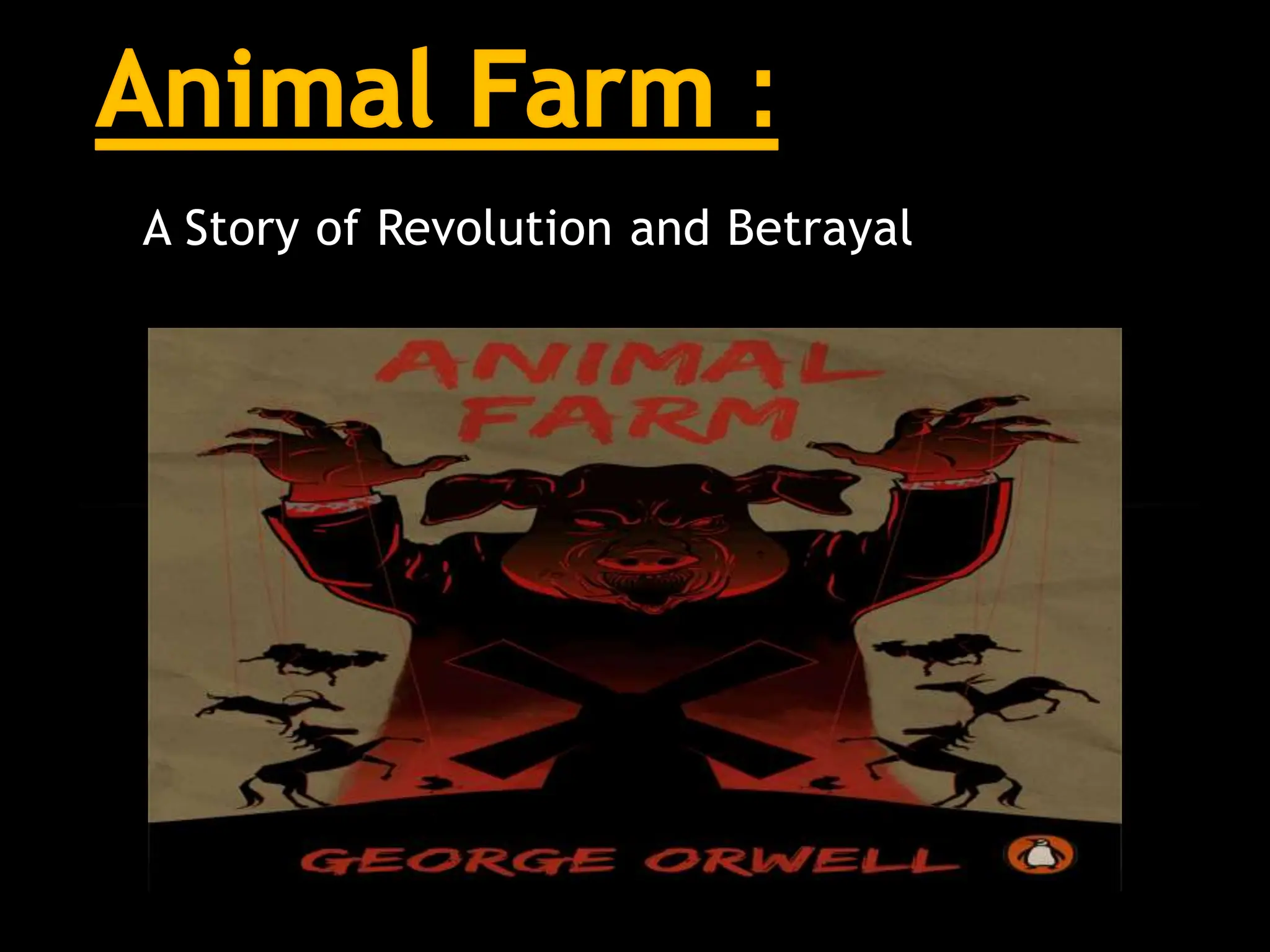
Initially rejected by several publishers who feared offending the Soviet Union (a British ally at the end of WWII), Animal Farm is a devastating satire of the Russian Revolution and the rise of Stalinism. By using the form of a "fairy story," Orwell made complex political betrayals accessible. The transformation of the pigs from revolutionaries into the very masters they overthrew remains one of the most potent metaphors for the corruption of power.
Nineteen Eighty-Four (1949)
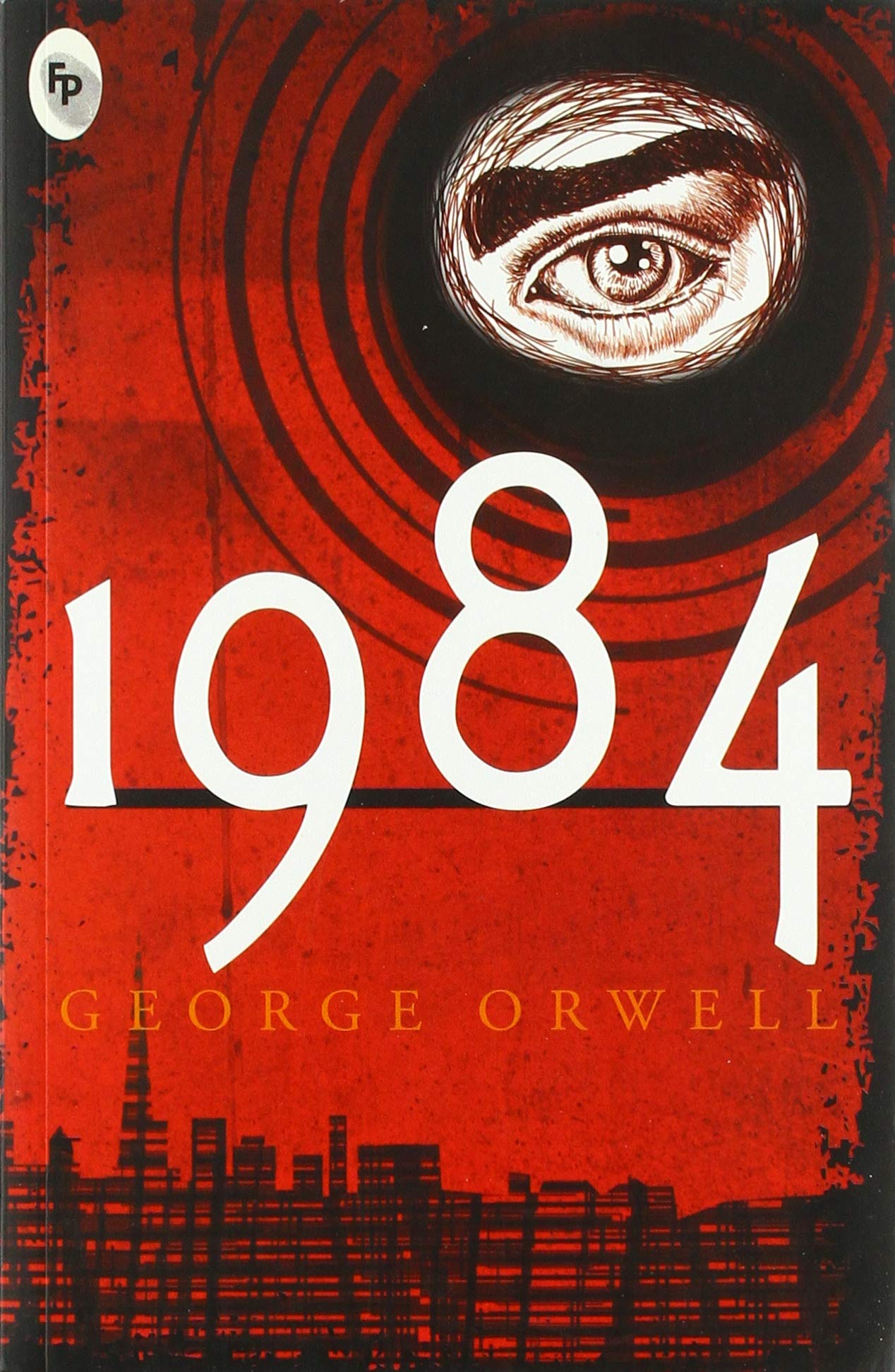
Published just months before his death from tuberculosis, Nineteen Eighty-Four is Orwell’s final, harrowing vision of a world where the state exerts total control over the individual. This novel introduced concepts that remain part of our daily vocabulary:
- Big Brother: The omnipresent, god-like leader of the Party.
- Newspeak: A controlled language designed to limit the freedom of thought.
- Doublethink: The ability to hold two contradictory beliefs in one's mind simultaneously and accept both of them.
- Thoughtcrime: The act of having unorthodox thoughts that contradict the Party.
The Post-1984 Phenomenon: Orwell’s Legacy in 1986
In 1986, the cultural world was in a unique position regarding George Orwell. For decades, the year 1984 had been a looming deadline for a dystopian future. Once that year actually passed without the literal arrival of "Airstrip One," many critics and journalists used 1986 as a vantage point to assess how much of Orwell's vision had actually come true.
During this period, the focus shifted from Orwell as a "prophet" to Orwell as a "prose stylist." The 1986 landscape saw the continued publication and refinement of his collected essays and journalism. Scholars like Peter Davison were heavily involved in the massive undertaking of archiving Orwell’s complete works, a project that gained significant momentum in the mid-80s.
Furthermore, 1986 was a year of reflection on the Radford film adaptation of 1984 (released in late 1984), which had brought the visual grit of Orwell’s London to a new generation. The mid-80s also saw Orwell's work used extensively in the burgeoning field of media studies to analyze propaganda and political language during the Reagan-Thatcher era.
Essential Themes in Orwell’s Writing
To truly provide an overview of George Orwell, one must analyze the recurring themes that bind his essays and novels together.
1. The Corruption of Language
Orwell believed that if the language we use is dishonest, our thoughts will be dishonest as well. In his essay "Politics and the English Language," he argued that political speech is largely the "defense of the indefensible." By 1986, this theme was more relevant than ever as television news and political advertising began to dominate public discourse.
2. The Importance of Objective Truth
In the world of Nineteen Eighty-Four, the Party’s final command is to reject the evidence of your eyes and ears. Orwell was terrified of a world where history could be rewritten daily. He advocated for a "liberal" view of truth—the idea that facts exist independently of our desire for them to be true.
3. The Decency of the "Common Man"
Despite his bleak outlook on political structures, Orwell had a deep, almost romanticized faith in the "proles" or the working class. He believed that the innate moral sense and "decency" of ordinary people were the only real safeguards against tyranny.
A Comparative Guide to George Orwell’s Major Works
The following table summarizes the key publications that define Orwell’s career, categorized by their primary focus and the era in which they were written.
| Work Title | Publication Year | Genre | Primary Theme |
|---|---|---|---|
| Down and Out in Paris and London | 1933 | Memoir/Reportage | Poverty and social exclusion. |
| Burmese Days | 1934 | Novel | The corrosive nature of Imperialism. |
| Keep the Aspidistra Flying | 1936 | Novel | The struggle against money-worship. |
| The Road to Wigan Pier | 1937 | Non-fiction | British working-class life and Socialism. |
| Homage to Catalonia | 1938 | Memoir | The reality of war and political betrayal. |
| Animal Farm | 1945 | Political Fable | The failure of revolutions and Stalinism. |
| Nineteen Eighty-Four | 1949 | Dystopian Fiction | Totalitarianism, surveillance, and language. |
The Enduring Influence of "Orwellian" Concepts
The term "Orwellian" is often misused to describe anything the speaker finds inconvenient or authoritarian. However, in its technical sense, it refers to the specific methods of control Orwell identified. As of 1986, the Cold War provided a perfect backdrop for these concepts.
The Soviet Bloc was frequently cited as the living embodiment of Orwell's Oceania, yet Orwell himself was careful to point out that the seeds of totalitarianism exist in every society. His critique of the "BBC mentality" and the tendency of intellectuals to fall for fashionable dogmas was directed at the West as much as the East. This balanced critique is why his work survived the fall of the Berlin Wall and remains a staple of political science today.
Frequently Asked Questions
Why is 1986 significant for George Orwell’s legacy?
By 1986, the "1984" calendar hype had subsided, allowing for a more serious academic and literary reassessment of his entire body of work. It marked a period where his essays and social reportage began to be valued as highly as his famous novels.
What does "Newspeak" actually mean?
Newspeak is a fictional language in Nineteen Eighty-Four designed by the state to diminish the range of thought. If there is no word for "freedom," the concept of freedom becomes unthinkable. It serves as a warning about how the simplification of language can lead to the simplification of thought.
Was George Orwell a Socialist?
Yes, Orwell identified as a Democratic Socialist. He believed in economic equality and the collective ownership of resources, but he was a fierce critic of any form of socialism that involved a centralized, authoritarian state or the suppression of individual liberties.
What were Orwell's views on the media?
Orwell was a journalist himself and wrote hundreds of reviews and columns. He was wary of the "press barons" and the way news could be shaped to suit the interests of the powerful. He advocated for a press that was independent of both the government and large corporate interests.
Which of Orwell’s books should I read first?
For those interested in political allegory, Animal Farm is the most accessible. For a deep dive into political philosophy and dystopian fiction, Nineteen Eighty-Four is essential. However, for a look at the "real" Orwell, The Road to Wigan Pier or his collected essays offer the best insight into his character.
Final Recommendation
For readers and researchers looking to understand George Orwell in the context of 1986 and beyond, the best next action is to move beyond the two famous novels. While Animal Farm and Nineteen Eighty-Four provide the framework for his political warnings, his essays—such as "Looking Back on the Spanish War" and "Notes on Nationalism"—provide the intellectual depth required to navigate modern political discourse.
Those seeking the most accurate version of his texts should look for the Peter Davison editions, which restored many of the edits and censorship found in earlier printings. Understanding Orwell requires recognizing him not as a prophet of doom, but as a champion of clarity, truth, and the "common decency" that he believed would eventually outlast any tyrant.