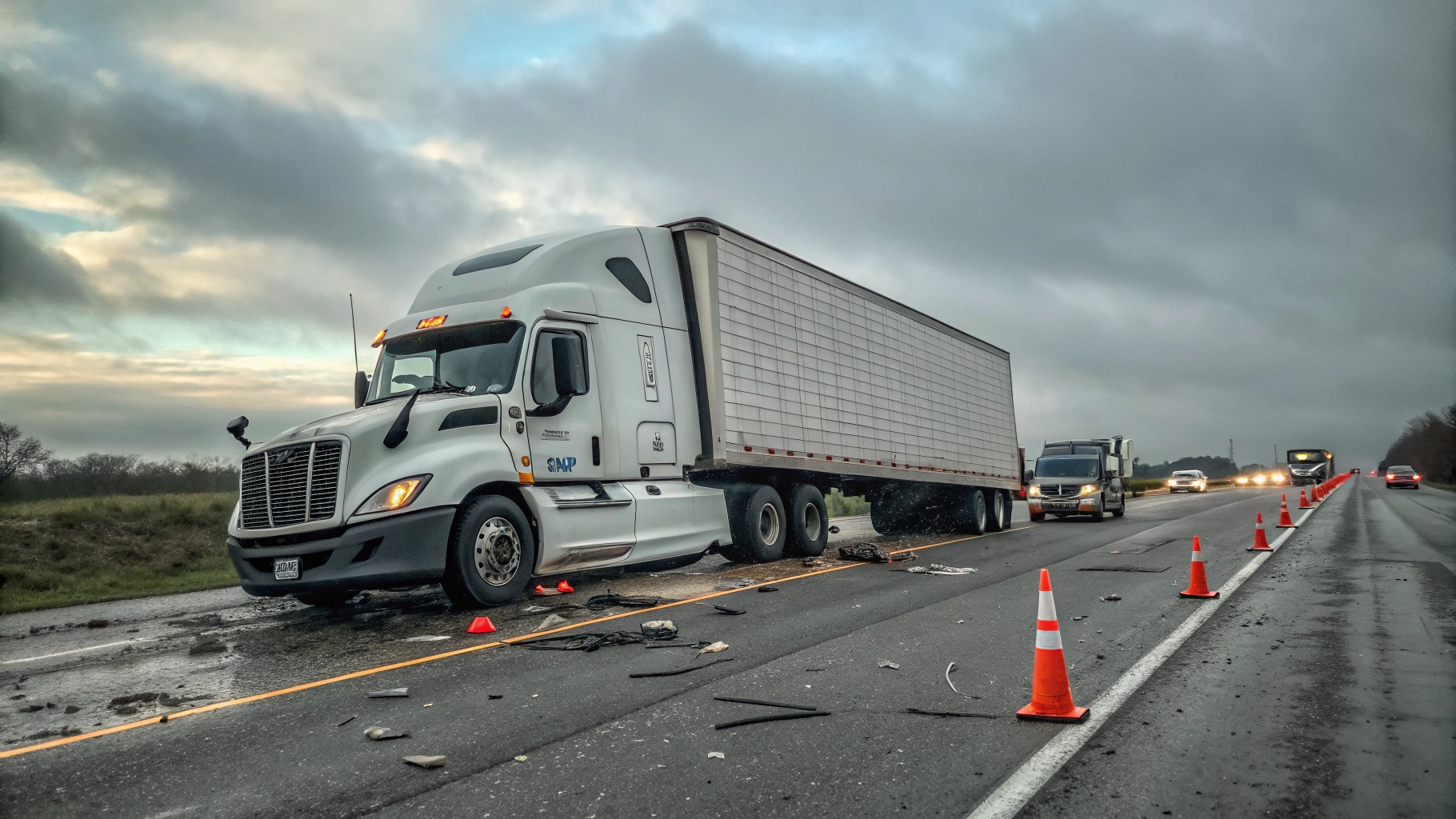
When a collision involves a commercial semi-truck along major regional corridors like Interstate 20, Interstate 525, or U.S. Route 1 in Augusta, Georgia, the physical, financial, and emotional toll can be overwhelming. Securing specialized legal representation is critical because commercial trucking litigation differs vastly from standard passenger vehicle wrecks, involving complex federal regulations, multiple potentially liable parties, and aggressive corporate defense teams.
Understanding the Complexity of Commercial Trucking Collisions in Augusta
Collisions involving commercial motor vehicles—often referred to as 18-wheelers, semi-trucks, or tractor-trailers—are rarely simple car accidents. Due to the sheer size and weight of these vehicles, which can weigh up to 80,000 pounds when fully loaded, the resulting damage and injuries are frequently catastrophic or fatal. When a crash happens in and around Augusta, victims and their families face an intricate web of state and federal laws that govern the commercial transportation industry.
Unlike a typical two-car fender-bender where liability usually rests solely on one driver, a commercial trucking accident can implicate an entire corporate structure. Liability might extend to the driver, the trucking company, the cargo loader, the maintenance provider, or even the manufacturer of defective truck parts. Navigating this multi-layered environment requires an 18 wheeler accident lawyer in Augusta who understands local court systems, such as the Richmond County Superior Court, and possesses the resources to take on large motor carriers and their insurers.
Furthermore, commercial trucking is heavily regulated by the Federal Motor Carrier Safety Administration (FMCSA). These regulations dictate everything from how many consecutive hours a driver can stay behind the wheel to mandatory maintenance schedules and weight limits. Proving that a trucking company or its driver violated these regulations is often the cornerstone of securing fair compensation, yet obtaining the necessary evidence requires immediate and decisive legal action.
Key Federal and State Regulations Governing Commercial Motor Vehicles
To build a compelling liability claim, legal counsel must evaluate how well the trucking company and driver complied with both federal safety standards and Georgia state law. The FMCSA sets rigorous standards that apply to interstate commerce, while state agencies enforce similar rules for intrastate operations.
Hours of Service (HOS) Compliance
Driver fatigue is a leading cause of commercial vehicle crashes. Federal Hours of Service regulations limit the number of daily and weekly driving hours permitted for property-carrying commercial drivers. An experienced attorney will immediately subpoena electronic logging devices (ELDs), dispatch records, and fuel receipts to determine if the driver violated mandatory rest breaks before the collision in Augusta.
Vehicle Maintenance and Inspection Records
Federal law mandates that motor carriers systematically inspect, repair, and maintain all vehicles under their control. Brake failures, worn tires, and steering malfunctions can often be traced back to neglected maintenance schedules. Legal teams look closely at Driver Vehicle Inspection Reports (DVIRs) to uncover whether known mechanical defects were ignored.
Driver Qualification and Training
Trucking companies are legally required to vet their drivers thoroughly. This process includes checking commercial driver's licenses (CDLs), reviewing motor vehicle records (MVRs), conducting drug and alcohol testing, and verifying medical certifications. Hiring an unqualified or improperly trained driver can expose the motor carrier to direct liability for negligent hiring, training, or retention.
| Regulatory Area | Governing Body | Key Records Examined | Purpose in a Lawsuit |
|---|---|---|---|
| Hours of Service | FMCSA | ELD logs, GPS data, fuel receipts | Prove driver fatigue or schedule pressure |
| Maintenance | FMCSA / DOT | DVIRs, repair invoices, inspection logs | Identify mechanical failures and negligence |
| Driver Qualifications | FMCSA | MVRs, drug test results, medical cards | Expose negligent hiring or driver impairment |
| Cargo Securement | FMCSA / State Laws | Loading manifests, scale tickets | Determine if shifting cargo caused a rollover or jackknife |
Immediate Steps to Take After an 18-Wheeler Crash in Augusta
The moments following a commercial truck collision are chaotic, but the actions taken during this critical window significantly impact the outcome of any future legal claim. Preserving evidence and protecting your legal rights requires a methodical approach.
- Seek Immediate Medical Attention: Your health is the absolute priority. Even if you believe your injuries are minor, adrenaline can mask severe internal trauma. Comprehensive medical records established immediately after the crash create a vital link between the accident and your injuries.
- Report the Incident: Ensure that local law enforcement, such as the Augusta Police Department or the Richmond County Sheriff's Office, responds to the scene. Request a copy of the official accident report, as it contains essential preliminary details about the collision.
- Document the Scene Safely: If you are physically able and it is safe to do so, take photographs and videos of the vehicles, skid marks, road conditions, traffic signs, and visible injuries. Capture the Department of Transportation (DOT) number and company name printed on the side of the semi-truck.
- Gather Witness Information: Collect names, phone numbers, and statements from any independent witnesses who observed the sequence of events leading up to the crash.
- Avoid Giving Recorded Statements: Insurance adjusters and representatives from the trucking company often arrive at the scene or call very quickly. Refrain from signing documents or providing recorded statements without legal representation present, as these statements can be used to minimize your claim.
Determining Liability and Identifying Responsible Parties
One of the defining characteristics of commercial truck litigation is the multiplicity of defendants. In Augusta truck accident claims, liability rarely rests on a single individual. Uncovering every source of insurance coverage requires investigating all entities involved in the commercial transport chain.
The Truck Driver
The driver may be held personally liable if negligence can be proven—such as distracted driving, speeding, driving under the influence of drugs or alcohol, or violating safety regulations. However, commercial drivers often carry lower personal policy limits, making corporate asset recovery essential.
The Motor Carrier (Trucking Company)
Under the legal doctrine of respondeat superior, employers are generally responsible for the negligent acts of their employees committed within the scope of employment. Furthermore, trucking companies can be held directly liable for their own negligence, such as pushing drivers to violate hours-of-service rules to meet tight delivery deadlines.
Cargo Shippers and Loaders
Improperly loaded or unsecured cargo can shift during transit, causing a semi-truck to jackknife, tip over, or lose control. If a third-party loading facility failed to distribute weight evenly or secure freight according to federal standards, they share liability for the resulting crash.
Parts Manufacturers and Maintenance Shops
If a mechanical failure caused the accident—such as defective braking systems, faulty steering components, or tire blowouts—the manufacturer of the defective part or the third-party mechanic who performed subpar repairs may be held accountable under product liability or professional negligence laws.
The Importance of Prompt Evidence Preservation
Time is of the essence in 18-wheeler accident cases. Unlike passenger cars, commercial trucks and the companies operating them are governed by strict data retention policies, but critical evidence can disappear rapidly if not legally secured.
Trucking companies and their insurers frequently deploy rapid-response investigation teams to accident scenes within hours of a crash. Their goal is often to mitigate corporate liability rather than uncover the full truth. To level the playing field, your legal counsel must issue formal spoliation letters—legal demands that prohibit the destruction or alteration of evidence.
Key evidence that must be preserved immediately includes:
- Black Box Data: Powertrain Control Modules (PCMs) and Event Data Recorders (EDRs) record vehicle speed, braking application, throttle position, and engine status in the seconds leading up to impact.
- Electronic Logging Device (ELD) Data: Digital records tracking hours of service and driving patterns.
- Dashcam Footage: Forward-facing and cab-facing video recordings from the truck.
- Maintenance and Repair Files: Historical logs detailing the mechanical upkeep of the tractor and trailer.
- Driver Qualification Files: Background checks, drug testing histories, and employment applications.
Compensation Available in Georgia Trucking Injury Claims
Victims of commercial truck accidents in Augusta may be entitled to recover comprehensive financial compensation for their losses. Georgia law categorizes damages into economic and non-economic losses, designed to restore the injured party to the position they would have been in had the accident not occurred.
Economic Damages
Economic damages compensate for quantifiable financial losses resulting directly from the collision. These include:
- Past and future medical expenses, including surgeries, rehabilitation, physical therapy, and medication.
- Lost wages resulting from missed work during recovery.
- Loss of earning capacity if long-term or permanent disabilities prevent you from returning to your previous occupation.
- Property damage costs for repairing or replacing your vehicle and personal belongings.
Non-Economic Damages
Non-economic damages address the subjective, human toll of the accident. These include:
- Physical pain and suffering.
- Emotional distress, anxiety, and depression.
- Loss of consortium or companionship.
- Permanent disfigurement or physical impairment.
In cases involving egregious misconduct—such as driving under the influence, extreme recklessness, or intentional falsification of safety logs—punitive damages may also be pursued under Georgia law to punish the wrongdoer and deter similar conduct.
Frequently Asked Questions
How long do I have to file a truck accident lawsuit in Georgia?
Under Georgia's statute of limitations (O.C.G.A. § 9-3-33), you generally have two years from the date of the accident to file a personal injury lawsuit. Failing to file within this window typically bars you from recovering compensation. However, shorter notice periods may apply if a government entity is involved, making prompt consultation with an attorney essential.
Why should I hire a specialized truck accident lawyer instead of a general personal injury attorney?
Commercial trucking litigation involves complex federal regulations (FMCSA), multiple corporate defendants, and extensive digital and paper documentation. Specialized attorneys possess the resources, technical knowledge, and industry experts required to challenge major trucking companies and their corporate legal defense teams effectively.
What should I do if the trucking company's insurance adjuster offers me a quick settlement?
Initial settlement offers from insurance adjusters are almost always designed to minimize the company's financial payout rather than cover your true long-term needs. Accepting a quick offer before your medical treatment is complete means you cannot seek additional funds if your injuries require future surgeries or extended care. Always consult an attorney before signing any release agreements.
How are 18-wheeler accident lawyers usually compensated?
Most reputable 18-wheeler accident lawyers work on a contingency fee basis. This means you pay no upfront or out-of-pocket costs; instead, the attorney's fee is an agreed-upon percentage of the financial recovery they successfully secure for you through a settlement or court verdict. If there is no recovery, you owe no attorney fees.
What kinds of experts do attorneys use in truck accident cases?
Trucking litigation often relies on multidisciplinary experts to reconstruct the crash and prove liability. Common experts include accident reconstructionists, trucking industry safety compliance specialists, medical professionals, and economic analysts who calculate the long-term financial impact of lost earning capacity and ongoing medical care.
Next Actions and Finding the Right Legal Support
If you or a loved one has been injured in a collision with a commercial semi-truck in Augusta, taking immediate and informed action is your best protection. Consult with a qualified 18 wheeler accident lawyer in Augusta as soon as possible to ensure that time-sensitive evidence is preserved through formal spoliation letters and independent investigation. Focus your energy on medical recovery while experienced legal counsel navigates the complex regulatory environment, confronts corporate insurers, and pursues the full compensation you deserve.