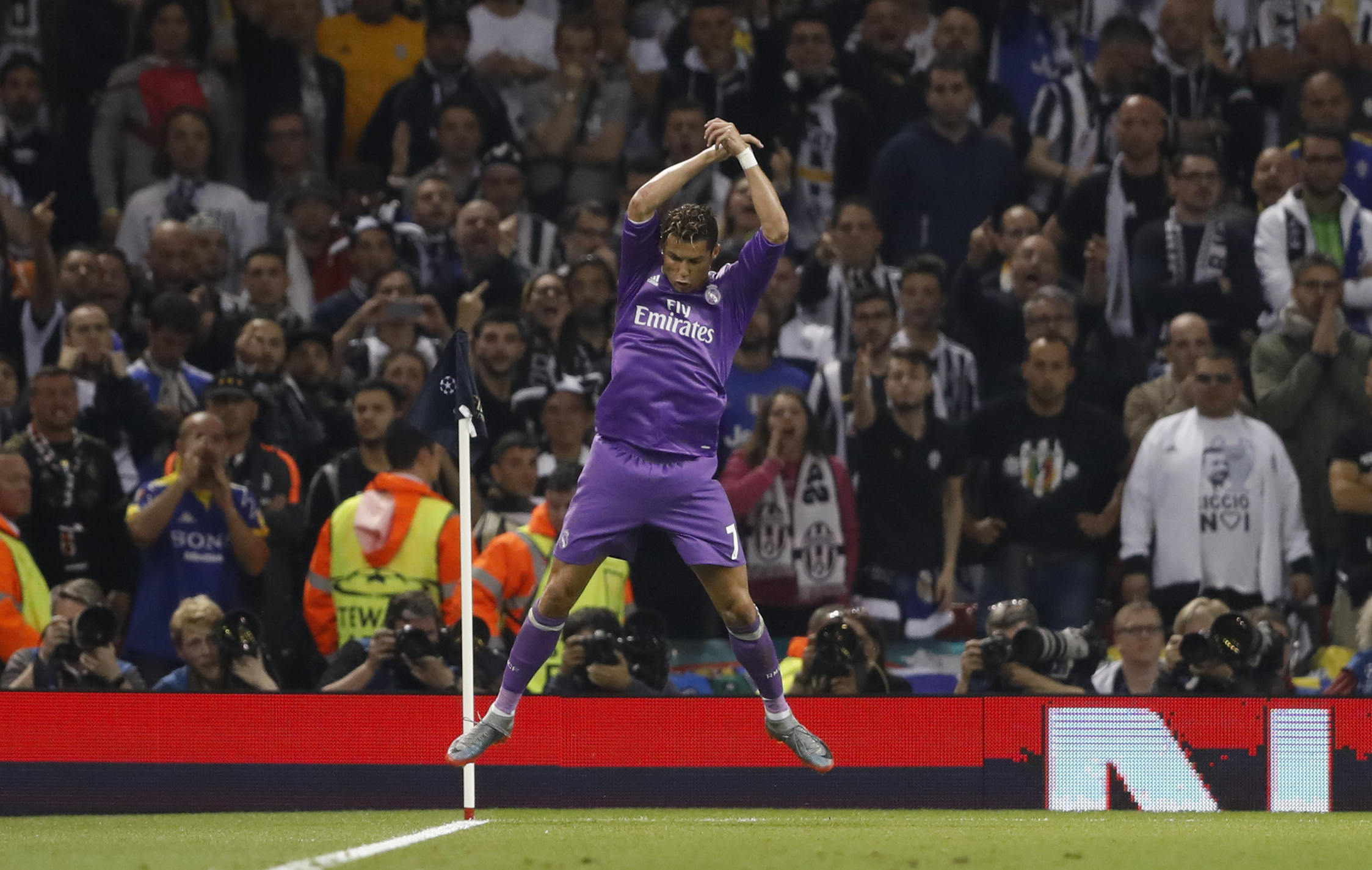
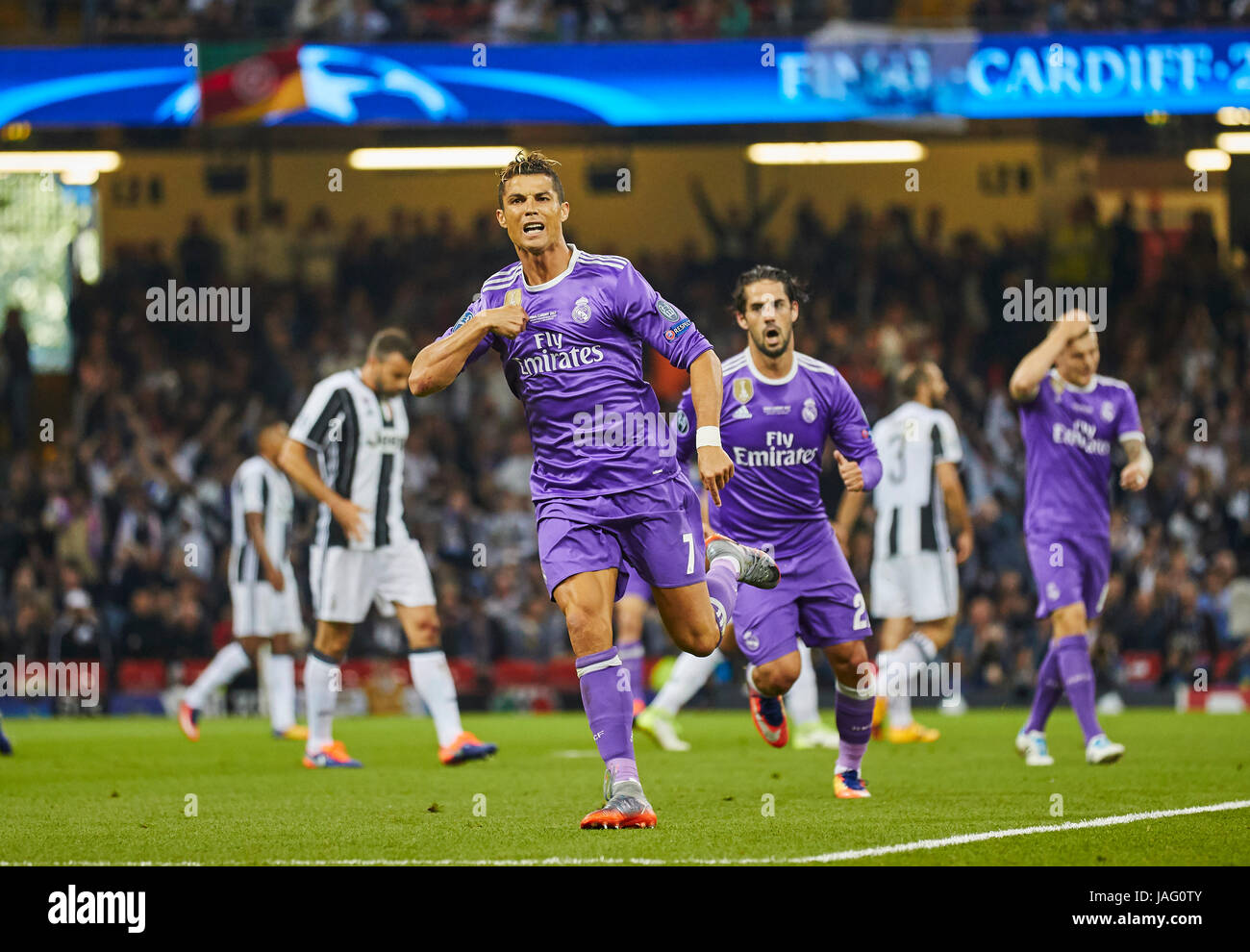
The 2017 UEFA Champions League final, contested between Real Madrid and Juventus on June 3, 2017, at the Millennium Stadium in Cardiff, stands as a defining moment in modern football history. Real Madrid secured a 4-1 victory to become the first team to retain the title in the Champions League era, cementing the legacy of Zinedine Zidane’s managerial tenure through clinical attacking efficiency against one of the most storied defenses in the sport.
Context and Path to Cardiff
Heading into the 2017 final, the narrative was framed as a battle between two distinct philosophies: Real Madrid’s "Galáctico" attacking fluidity and Juventus’s legendary "BBC" defensive core (Barzagli, Bonucci, and Chiellini). Real Madrid arrived in Wales seeking their 12th European title, while Juventus, managed by Massimiliano Allegri, were desperate to exorcise the ghosts of their 2015 final defeat and secure a treble after domestic dominance in Italy.
Real Madrid’s route to the final had been characterized by resilience and the prolific scoring form of Cristiano Ronaldo, who had reached historic milestones in the knockout stages against Bayern Munich and Atlético Madrid. Juventus, conversely, entered the match with an aura of invincibility, having conceded only three goals throughout the entire tournament. The anticipation centered on whether Juventus’s disciplined, tactical low block could neutralize the world’s most potent attack.
Tactical Setup and First-Half Dynamics
Zinedine Zidane deployed a 4-3-1-2 formation, with Isco operating in the "number 10" role behind the strike partnership of Karim Benzema and Cristiano Ronaldo. This setup was designed to overload the central areas, pulling Juventus’s defenders out of their disciplined defensive structure.
Juventus utilized a flexible 3-4-2-1 formation that transitioned into a 4-4-2 when defending. Early in the match, the strategy appeared effective. Juventus dominated the opening 20 minutes, pressing high and forcing Real Madrid into uncharacteristic errors. Keylor Navas, the Real Madrid goalkeeper, was forced into an early, acrobatic save from a Miralem Pjanić strike, signaling Juventus's intent to control the tempo.
However, Real Madrid’s efficiency was clinical. In the 20th minute, following a rapid transition, Cristiano Ronaldo played a precise one-two with Dani Carvajal before slotting the ball into the bottom corner. Despite the setback, Juventus responded quickly. Mario Mandžukić equalized with an extraordinary overhead kick in the 27th minute—a goal widely considered one of the greatest in Champions League history. The first half ended 1-1, with the tactical stalemate perfectly poised.
Second-Half Dominance: The Breaking Point
The second half highlighted the discrepancy in squad depth and tactical flexibility. Real Madrid began to dominate the midfield battle. Casemiro’s defensive presence allowed Toni Kroos and Luka Modrić to dictate the game’s rhythm, effectively starving the Juventus forwards of possession.
The turning point occurred in the 61st minute when Casemiro’s long-range effort took a deflection off Sami Khedira, looping past Gianluigi Buffon. The goal visibly deflated the Juventus side, who had relied on their psychological resolve to maintain structure. Only three minutes later, in the 64th minute, Cristiano Ronaldo struck again, ghosting past the Juventus defense to convert a cross from Luka Modrić. This 3-1 lead forced Juventus to abandon their disciplined shape in pursuit of a miracle, leaving them vulnerable to counter-attacks.
Statistical Breakdown of the Performance
The statistics reflect a game of two halves, where Real Madrid’s efficiency outweighed Juventus’s volume of play.
| Metric | Real Madrid | Juventus |
|---|---|---|
| Possession | 46% | 54% |
| Shots | 18 | 11 |
| Shots on Target | 5 | 4 |
| Corners | 1 | 1 |
| Fouls Committed | 10 | 23 |
| Yellow Cards | 4 | 5 |
The disparity in fouls committed—23 for Juventus compared to 10 for Real Madrid—serves as an indicator of how frequently Juventus was forced to disrupt play to halt Madrid's momentum. The late substitution of Juan Cuadrado, who was later sent off for a second yellow card, underscored the frustration experienced by the Italian side as the match slipped away. Marco Asensio provided the final flourish in the 90th minute, capping a 4-1 victory that reflected a masterclass in opportunistic football.
The Significance of the Result
For Real Madrid, the victory was more than a trophy; it was a verification of their status as the preeminent force in world football. By successfully defending the Champions League title—a feat that had not been achieved since AC Milan in 1990—they proved that the structural imbalance often attributed to their attack-heavy formation could be overcome by individual brilliance and collective belief.
For Juventus, the result left an enduring mark. Despite possessing a squad capable of competing at the highest level, the failure to secure the trophy continued a cycle of heartbreak in European finals. The match demonstrated the difficulty of maintaining a defensive-first approach against a team capable of constant rotation and high-speed transition.
Legacy and Historical Context
In the years following 2017, the final has been studied as a case study in high-stakes tactical management. Zidane’s ability to maximize the output of his aging squad while integrating younger talent like Isco and Asensio became the blueprint for his successful run of three consecutive titles. The match remains the benchmark for "Big Game" performances, where the pressure of the occasion is mitigated by a team's comfort in their defined roles.
Frequently Asked Questions
Who scored the winning goal in the 2017 Champions League final? While Cristiano Ronaldo scored two goals, the goal that effectively secured the result was Casemiro’s strike in the 61st minute, which gave Real Madrid a 2-1 lead. It was the critical turning point that caused Juventus to lose their structural discipline.
How did Juventus's defense perform in this match? Juventus’s defense had been statistically dominant throughout the 2016–2017 campaign. In the final, however, they conceded four goals. The movement of Real Madrid’s front line and the precision of their transition play caused the "BBC" defense to become disjointed, particularly in the second half.
Why was the 2017 final considered a historic milestone? It was a historic milestone because Real Madrid became the first team to win back-to-back Champions League titles since the competition changed its format in 1992. This established a new standard for sustained excellence in the modern era of the sport.
What was the key tactical adjustment by Zinedine Zidane? Zidane’s decision to prioritize Isco in a free-roaming role allowed Madrid to find gaps between the midfield and the defensive lines of Juventus. By keeping the pitch wide and utilizing the fullbacks, Madrid successfully stretched a Juventus defense that was accustomed to playing through the center.
Was the 2017 final the last for Gianluigi Buffon? No, it was not his last match, but it was a significant moment in his pursuit of the Champions League trophy. Buffon remains one of the most decorated goalkeepers in history, though the Champions League title remained the one accolade that eluded him throughout his illustrious career.
Recommendation for Further Research
To gain a deeper understanding of the match, it is recommended to review the full post-match tactical breakdown published by UEFA, which provides positional heat maps and pass completion data for both teams. For those interested in the psychological aspects of the game, analyses of the half-time adjustments made by both managers provide significant insight into how high-level professional football matches are decided during the final 45 minutes of play.