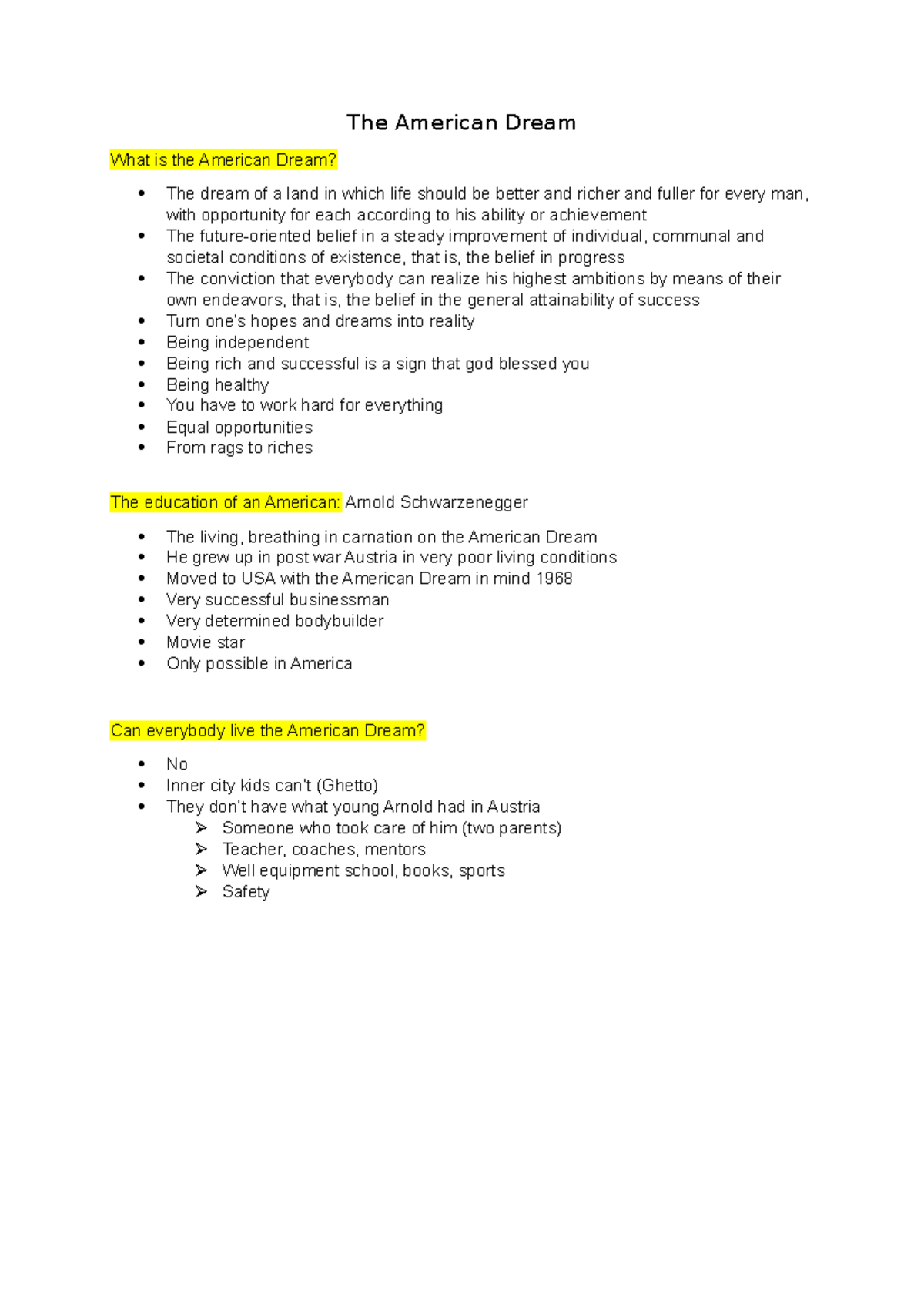
The most profound insight into the American Dream in 2026 is that it has evolved from a collective standard of material ownership—specifically the "white picket fence" model—into an individualized pursuit of time-sovereignty and economic resilience. Modern success is no longer defined by the accumulation of fixed assets, but by the ability to remain adaptable and autonomous in a globalized, technology-driven economy.
The Historical Foundation of the American Dream
To understand the 2026 perspective, one must look back to the origin of the phrase. Coined by James Truslow Adams in his 1931 book, The Epic of America, the "American Dream" was never intended to be a purely financial metric. Adams described it as a "social order in which each man and each woman shall be able to attain to the fullest stature of which they are innately capable."
For decades, particularly in the post-WWII era, this philosophical ideal became tethered to specific economic markers: homeownership, a stable 40-year career with a single employer, and a predictable upward trajectory for one's children. However, as we navigate 2026, the insight that resonates most is that these markers were merely proxies for security, not the dream itself. As the economic landscape shifted toward the gig economy, remote work, and increased automation, the proxies changed, while the underlying desire for self-actualization remained.
The 2026 Shift: From Ownership to Optionality
The single most significant insight for any individual analyzing the American Dream today is the shift from ownership to optionality. In previous generations, owning a home was the primary vehicle for wealth creation and a symbol of "arrival." In the current 2026 economy, high interest rates and a transformed housing market have led many to realize that mobility—the ability to move where opportunity exists—is often more valuable than home equity.
The Impact of the "Remote Revolution"
The decentralization of work, which accelerated in the early 2020s and solidified by 2026, has fundamentally decoupled "the good life" from specific geographic hubs. One no longer needs to live in an expensive coastal city to access high-tier wages. This has led to a "New Regionalism," where success is defined by the quality of one's environment and the lower cost of living, rather than the prestige of a zip code.
Financial Resilience as the New Foundation
With the rise of artificial intelligence and the shifting nature of the labor market, the insight into the American Dream now emphasizes human capital over physical assets. Education is no longer a one-time event (the four-year degree) but a continuous process of "upskilling." The dream in 2026 is the ability to remain "un-outsourceable" through creativity, emotional intelligence, and technical adaptability.
Comparing the Traditional and Modern American Dream
The following table illustrates the divergence between the legacy interpretation of the American Dream and the current 2026 reality.
| Feature | Legacy Dream (1950s–1990s) | Modern Dream (2026) |
|---|---|---|
| Primary Goal | Stability and Accumulation | Autonomy and Flexibility |
| Success Metric | Homeownership and Net Worth | Time-Sovereignty and Mobility |
| Career Path | Linear (One Industry/Company) | Iterative (Portfolio Careers) |
| Wealth Vehicle | Real Estate & Pensions | Diversified Portfolios & Skillsets |
| Social Status | Consumption (Luxury Goods) | Experiences and Wellness |
| Family Focus | Multi-generational Stability | Personal Fulfillment and Agility |
The Role of Economic Barriers and Social Mobility
While the "insight" highlights a shift in values, we must acknowledge the structural challenges that persist in 2026. Social mobility—the ability to move from a lower income bracket to a higher one—remains a core component of the dream, yet it faces significant headwinds.
The "Cost of Entry" Problem
The insight that the dream is becoming "intangible" is partly a response to the rising "cost of entry" for the traditional dream. With healthcare, education, and housing costs significantly higher than they were 30 years ago (relative to median income), the 2026 pursuit of the dream requires a more sophisticated understanding of personal finance and tax strategy.
Individuals who succeed in 2026 are those who focus on "The Gap"—the difference between what they earn and what they spend—rather than their gross salary. This frugality, once seen as a sign of struggling, is now viewed as a strategic tool to buy back one's time.
The Psychological Dimension: Wealth vs. Well-being
A major insight emerging in 2026 is the "de-stigmatization of unconventional paths." Whether it is the "FIRE" (Financial Independence, Retire Early) movement or the rise of "solopreneurship," Americans are increasingly prioritizing mental health and leisure over the "hustle culture" of the previous decade. The American Dream is now, for many, a dream of peace of mind.
How to Navigate the American Dream in 2026
Achieving this redefined dream requires a shift in strategy. It is no longer enough to "work hard and play by the rules" because the rules have been rewritten by technology and global economics.
- Prioritize Digital Literacy: In 2026, your ability to leverage AI and digital platforms is directly proportional to your economic freedom.
- Focus on Liquid Assets: While real estate is still valuable, having liquid investments (stocks, ETFs, bonds) allows for the mobility that the modern dream demands.
- Build a Personal Brand: In a world of automated tasks, your unique perspective and "human-centric" skills are your greatest leverage.
- Embrace Lifelong Learning: The "one-and-done" education model is obsolete. Use platforms like The U.S. Department of Education to stay informed on federal training grants and emerging educational standards.
- Understand Your Jurisdiction: Tax laws and cost-of-living vary wildly by state. Part of the 2026 insight is "geo-arbitrage"—earning in a high-value currency/market while living in a low-cost area.
Common Misconceptions about the American Dream
One of the most persistent myths is that the American Dream is "dead." Data from the U.S. Census Bureau regarding new business starts and homeownership rates (which remain resilient despite prices) suggests that the desire for the dream is as strong as ever. What has died is the uniformity of the dream.
In 2026, there is no longer a single "American Dream." There are 340 million variations of it. The insight is that you are now the architect of your own definition of success, rather than a consumer of a pre-packaged ideal sold by advertisers.
Frequently Asked Questions
Is the American Dream still achievable for the average person in 2026?
Yes, but the path is less linear than it was for previous generations. Success in 2026 requires higher levels of financial literacy and technical skill. While the "bar" for entry into the middle class has risen due to housing costs, the tools for wealth creation (fractional investing, remote work, global markets) have never been more accessible.
Does the 2026 American Dream require a college degree?
Not necessarily. While a degree remains a strong signal of persistence and foundational knowledge, many high-earning individuals in 2026 are leveraging vocational certifications, coding bootcamps, and "applied skills" that are in high demand by tech and green-energy sectors. The focus has shifted from "where you went to school" to "what you can actually do."
How has the definition of "Wealth" changed?
In 2026, wealth is increasingly measured by "The Freedom to Say No." This means having enough financial runway to decline work that is unfulfilling or to move away from a toxic environment. Traditional markers like luxury vehicles are being replaced by "wealth-signaling" through health, longevity, and flexible schedules.
Is homeownership still part of the American Dream?
For many, yes, but it is no longer the only centerpiece. In 2026, homeownership is viewed as a lifestyle choice rather than a mandatory financial milestone. Some choose "rent-vesting"—renting where they want to live while investing their capital in other assets—as a more efficient way to achieve the dream.
What role does the government play in the modern American Dream?
Government policy, particularly regarding Small Business Administration (SBA) loans and tax incentives for remote work, continues to shape the dream. In 2026, the focus has shifted toward providing a "safety net for risk-takers," ensuring that healthcare and retirement options are portable and not tied exclusively to a single employer.
Practical Recommendation: Your Next Action
If you are looking to secure your version of the American Dream in 2026, the most effective next step is to perform a Time and Asset Audit.
- Step 1: Calculate your "Runway"—how many months could you survive if your primary income vanished today?
- Step 2: Identify your "Mobility Score"—how quickly could you move or pivot your career if your local market became unfavorable?
- Step 3: Invest in one "anti-fragile" skill—a skill that becomes more valuable during times of chaos (e.g., crisis management, high-level negotiation, or specialized technical repair).
The ultimate insight of 2026 is that the American Dream is not a destination you reach; it is the agency you maintain over your own life's direction.