Selecting the 1 best foundation repair company in Dallas County requires a careful evaluation of geological conditions, engineering credentials, local structural engineering experience, and verified customer history to protect your property value against severe North Texas soil movement.
Homeowners throughout Dallas County—from the heavy clay soils of Oak Cliff and University Park to the expanding earth of Richardson, Grand Prairie, and Duncanville—frequently encounter foundation distress. Because searching for the absolute "number one" contractor can lead through a maze of marketing claims, identifying the best option depends on objective metrics rather than promotional slogans. Structural integrity, transparent pricing, transferable warranties, and independent engineering validation form the bedrock of any reputable repair provider.
This guide outlines how to evaluate foundation repair services in Dallas County, analyzes the primary repair methods utilized in the region, examines cost factors, and details the questions every property owner should ask before signing a contract.
Understanding Dallas County Soil and Foundation Challenges
Dallas County sits primarily upon Austin Chalk and the notorious Eagle Ford Shale. While Austin Chalk provides a relatively stable base for construction, Eagle Ford Shale is a highly plastic, expansive clay formation.
The Shrink-Swell Cycle of North Texas Clay
Expansive clay soils absorb moisture aggressively during wet seasons, causing them to swell and exert upward pressure on concrete slab and pier and beam foundations. During hot, dry summer months, the same soil loses moisture rapidly, shrinking and pulling away from the foundation. This creates voids beneath the structure, leading to differential settlement.
Differential settlement occurs when different parts of a structure settle at unequal rates. This geological reality causes classic structural symptoms:
- Sticking doors and windows that refuse to latch properly.
- Diagonal or stair-step cracks in exterior brickwork and mortar joints.
- Interior drywall cracks, particularly radiating from the corners of doors and windows.
- Gaps forming between baseboards and flooring or sloping interior floors.
Because these symptoms can originate from minor cosmetic settling or severe structural failure, an accurate diagnosis by a qualified professional is the mandatory first step.
Criteria for Evaluating Top-Tier Foundation Repair Companies
When property owners search for the best foundation repair company in Dallas County, they should look beyond online review counts and examine the fundamental operational standards that separate elite contractors from unreliable operators.
1. Independent Structural Engineering Reports
The most reputable foundation repair companies in Dallas County either employ licensed structural engineers or partner with independent third-party engineers. An engineer's report provides an objective, mathematically sound assessment of elevation surveys and structural framing loads. Unscrupulous contractors may recommend unnecessary piers to inflate project costs; an independent engineering seal ensures that the proposed repair plan is structurally required and precisely targeted.
2. Licensing, Insurance, and Bonding
Texas does not issue a statewide contractor's license specifically for foundation repair, which makes verifying credentials vital. Top-tier companies maintain comprehensive general liability insurance and workers' compensation coverage to protect property owners from liability in case of workplace injuries or accidental structural damage. Furthermore, checking standing with the Better Business Bureau (BBB) and verifying local municipal registrations within Dallas County cities provide crucial layers of security.
3. Comprehensive and Transferable Warranties
A foundation repair is only as good as the company standing behind it. The industry standard for premier Dallas County contractors is a lifetime, transferable warranty on steel or concrete piers. Homeowners should carefully read the fine print regarding:
- Service fees: Whether adjustments are covered at no cost for the life of the structure.
- Transferability: Whether the warranty transfers to subsequent buyers, enhancing future home resale value.
- Exclusions: Limitations regarding plumbing leaks, acts of God, or subsequent landscaping changes.
Common Foundation Repair Methods in Dallas County
Different soil profiles, foundation types, and structural budgets require distinct engineering solutions. The best foundation repair company will not rely on a "one-size-fits-all" approach, but will instead recommend the method best suited to the specific structural diagnosis.
| Repair Method | Description | Best Suited For | Typical Advantages | Primary Limitations |
|---|---|---|---|---|
| Pressed Concrete Pilings | Pre-cast concrete cylinders are driven deep into the ground beneath the foundation using hydraulic pressure until they reach load-bearing strata. | Standard residential slab-on-grade homes with moderate settlement over stable depths. | Cost-effective; proven track record in standard North Texas residential soils. | May not reach deep enough load-bearing strata if bedrock is excessively deep; prone to shifting in extreme moisture changes compared to steel. |
| Pressed Steel Piers | Galvanized or structural-grade steel segments are driven hydraulically deep into stable bedrock or load-bearing strata. | Homes experiencing severe settlement, commercial buildings, or sites with very deep clay layers. | Reaches much greater depths; superior load capacity; often backed by a stronger lifetime warranty. | Higher initial installation cost compared to standard concrete pilings. |
| Helical Piers | Steel shafts with welded helical plates (screws) are mechanically turned and drilled deep into the soil until reaching torque-verified load-bearing capacity. | New construction, light commercial structures, pier and beam homes, or water-logged soils. | Excellent uplift resistance; minimal vibration during installation; immediate load-bearing capability. | Requires specialized hydraulic equipment and precise engineering oversight. |
| Mudjacking / Polyurethane Foam Injection | High-density expanding polyurethane foam or cement slurry is pumped beneath the slab to lift sunken areas and fill voids. | Minor slab settlement, void filling, stabilizing soil beneath concrete walkways, patios, or interior floors. | Fast installation; non-invasive; cures rapidly; lightweight compared to mudjacking slurry. | Does not address deep structural pier support; ineffective for major foundation structural failures. |
Step-by-Step Process of a Professional Foundation Repair Project
Engaging a premier foundation repair company in Dallas County involves a predictable, transparent workflow designed to minimize disruption to the property while ensuring maximum structural restoration.
Step 1: Initial Consultation and Estimate
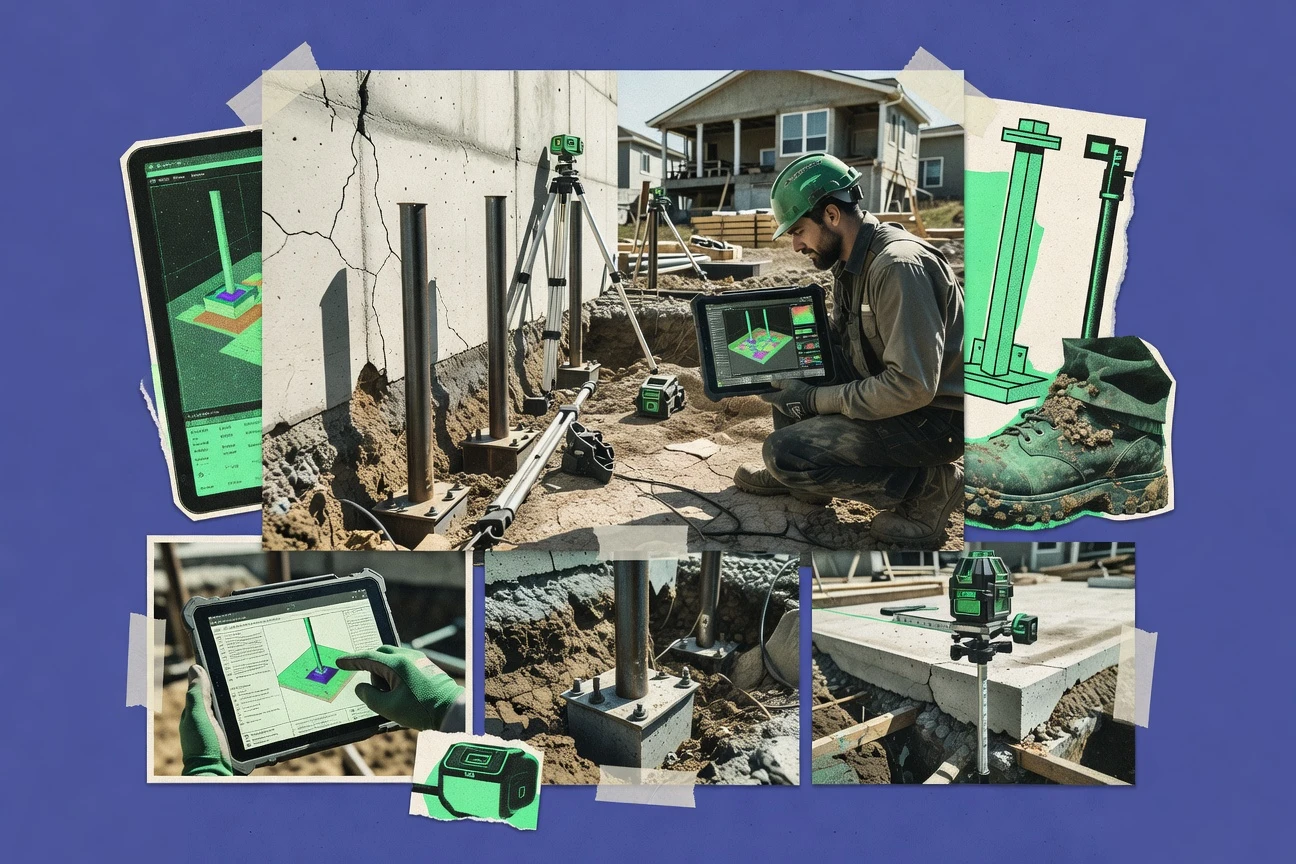
The process begins with an in-home evaluation. A qualified technician or structural consultant will walk the interior and exterior of the property, document all cosmetic and structural symptoms, and record elevation measurements using a high-precision digital water level or laser transit.
Step 2: Engineering Evaluation
For complex projects, an independent structural engineer analyzes the elevation data, assesses soil conditions, and formulates a certified repair plan specifying the exact number, placement, and type of piers required.
Step 3: Preparation and Excavation
On scheduled installation days, crews dig strategic access holes (typically 2x2 feet or larger) around the perimeter of the foundation and, if necessary, inside the home through cutouts in the concrete slab. Protective measures are taken to safeguard landscaping and interior flooring.
Step 4: Pier Installation and Lifting
Hydraulic equipment drives or presses the steel or concrete piers beneath the grade beams until they encounter refusal or target load parameters. Once the support system is secured, hydraulic jacks lift the structure incrementally toward its original elevation.
Step 5: Post-Repair Cleanup and Quality Control
Crews backfill excavation holes, compact the soil to prevent future pooling, sweep work areas, and remove debris. A final walk-through ensures that doors and windows operate correctly and that the site meets contractual specifications before final payment is rendered.
Cost Factors for Foundation Repair in Dallas County
Foundation repair pricing varies significantly based on the scope of damage, the engineering solution required, and site accessibility. In Dallas County, most residential repairs range from several thousand dollars for minor stabilization to over $15,000 for comprehensive structural lifting involving dozens of piers.
- Number of Piers Required: Pricing is typically calculated per pier. More complex settlement patterns require a higher concentration of structural supports.
- Depth to Load-Bearing Strata: In areas where clay depth is extreme, driving piers deeper requires additional materials and labor time.
- Interior vs. Exterior Work: Interior pier installations require breaking through interior flooring (carpet, tile, or wood), tunneling beneath the slab, and executing concrete patch work, which increases labor costs.
- Plumbing Integration: If a foundation failure was caused or exacerbated by a leaking under-slab sewer or water line, hydrostatic testing and plumbing leak repairs must be executed before structural lifting can safely occur.
Frequently Asked Questions
How do I know if my foundation issues are severe or just cosmetic?
Cosmetic cracks are typically hair-thin, non-progressive, and confined to drywall tape or minor brick mortar lines without displacement. Severe structural issues involve wide gaps (greater than 1/8 inch), doors and windows that jam or swing open on their own, stair-step cracks in exterior brick, and visible dipping or sloping in floors. An elevation survey by a professional can confirm whether structural movement has occurred.
Do foundation repair companies in Dallas County offer financing?
Yes. Most established foundation repair contractors partner with third-party financial institutions to offer promotional financing options, such as low-interest monthly payments or deferred interest plans for qualified homeowners, helping manage unexpected capital expenses.
Will my homeowner's insurance cover foundation repair?
Standard homeowner's insurance policies in Texas generally do not cover foundation repairs resulting from normal settling, soil expansion, or drought. However, coverage may apply if the foundation damage was directly caused by a sudden and accidental plumbing leak covered under your policy endorsements. Homeowners should consult their insurance agent and review policy declarations closely.
How long does a typical residential foundation repair take?
Most standard residential pier installations and lifts can be completed within one to three days, depending on the number of piers required and whether interior tunneling is necessary. Complex commercial or heavily damaged residential properties may require longer timelines.
Next Steps for Dallas County Homeowners
If you observe warning signs of foundation settlement in your home, delay can compound structural damage and increase repair costs. Begin by contacting multiple reputable, highly rated local contractors who utilize independent engineering reviews and offer transparent, transferable warranties. Request comprehensive written estimates, verify their local business standing in Dallas County, and ensure you understand the engineering rationale behind their proposed solution before authorizing any work.