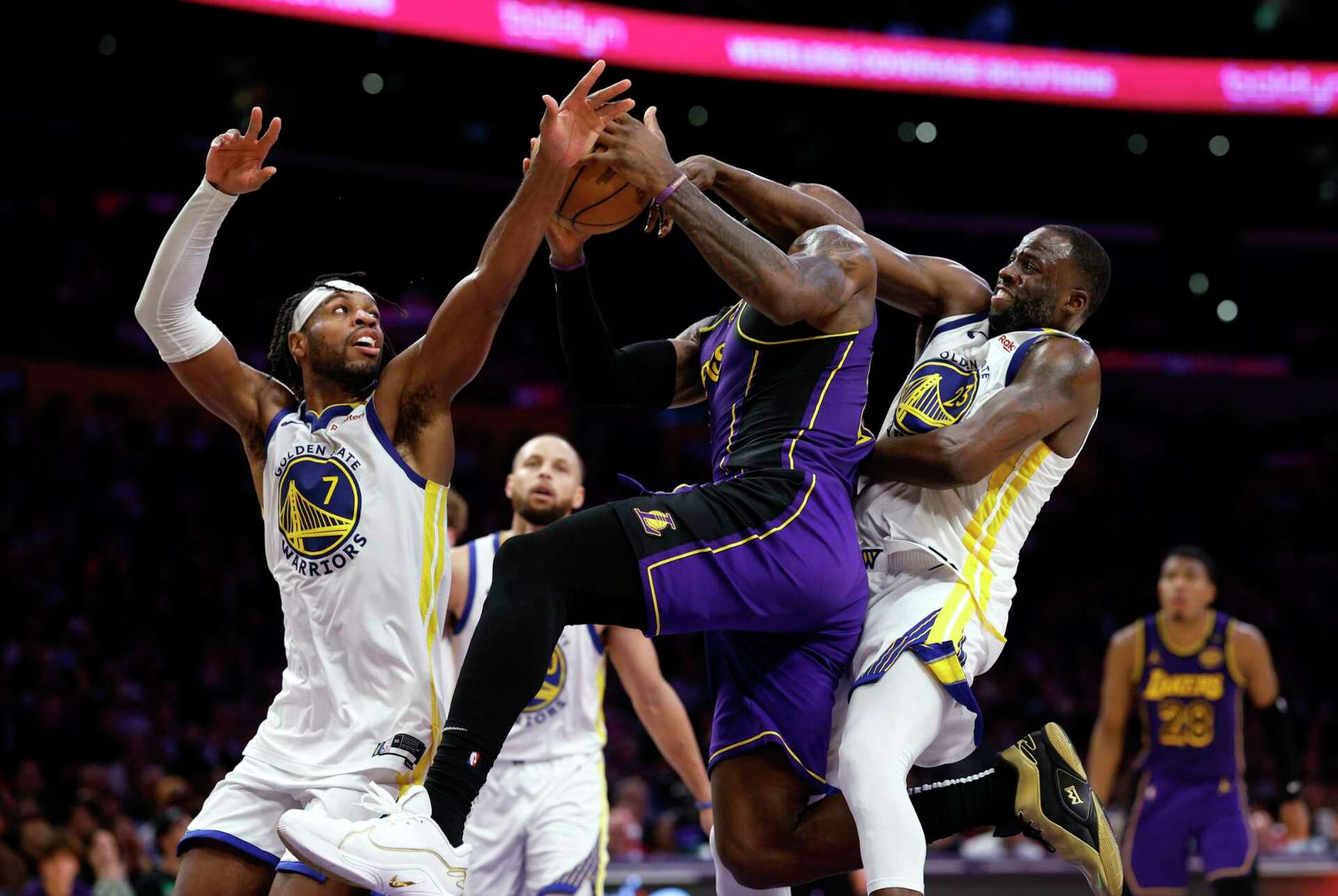
From a purely tactical perspective, LeBron James and the Golden State Warriors are an exceptional fit. James’s elite playmaking and rim pressure perfectly complement Stephen Curry’s unprecedented perimeter gravity. While the financial hurdles of the 2026 CBA and their historical rivalry present significant obstacles, their combined basketball intelligence would create a championship-caliber offensive ceiling.
The prospect of LeBron James donning a Golden State Warriors jersey has transitioned from a fever dream of NBA Twitter to a recurring point of serious analytical discussion. As we navigate the landscape of the 2025-2026 NBA season, the intersection of James’s twilight years and the Warriors’ desire to maximize the end of the Stephen Curry era creates a compelling "what if." To determine if this pairing is truly a "good fit," we must look beyond the star power and analyze the schematic synergy, the defensive compromises, the financial feasibility under the current Collective Bargaining Agreement (CBA), and the heavy weight of their shared history.
The Tactical Synergy: LeBron in the Motion Offense
The primary argument for the Warriors being a good fit for LeBron James lies in the marriage of high-level basketball IQ. Throughout his career, LeBron James has functioned as the ultimate floor general, often necessitating a "LeBron-ball" style—a heavy dose of high pick-and-rolls and drive-and-kick sequences. Conversely, Steve Kerr’s Warriors have historically prioritized a motion-heavy, read-and-react system built on constant player and ball movement.
At first glance, these styles might seem at odds. However, LeBron James is one of the most adaptable superstars in NBA history. In a Warriors jersey, James would likely assume a role similar to a "super-charged Draymond Green." In the Warriors' system, the "four-man" or "five-man" often acts as the primary hub at the top of the key or the elbow, facilitating split-cuts and back-door lobs while Stephen Curry and Klay Thompson (or their 2026 equivalents) dance through a maze of screens.
LeBron's ability to diagnose a defense in real-time would make the Warriors' "split-action" play-calling nearly impossible to guard. If a defender cheats toward Curry on a pin-down screen, James has the size and vision to immediately fire a cross-court pass to the open man or capitalize on the vacated lane for a signature rim attack. Furthermore, James has never played with a spacer as gravity-intensive as Stephen Curry. The sheer amount of room James would have to operate in the paint—historically his most efficient scoring zone—would likely result in a significant uptick in his field goal percentage, even as his athleticism naturally declines in his 23rd season.
The Gravity Effect: How Curry and James Benefit Each Other
The most terrifying prospect for the rest of the league in this scenario is the "inverse gravity" created by two of the top ten players of all time. Stephen Curry possesses "perimeter gravity," where defenders are terrified to leave him even 30 feet from the basket. LeBron James possesses "rim gravity," where his downhill momentum forces opposing defenses to collapse the paint and send multiple help defenders to the restricted area.
In 2026, even at an advanced age, LeBron James remains an elite transition threat and a powerhouse in the post. When James posts up, he forces the defense to make a choice: leave him one-on-one, which usually results in a high-percentage bucket, or send a double team. If a team doubles James while he is surrounded by Golden State’s shooters, they are essentially conceding a wide-open look to the greatest shooters in history.
Conversely, when Curry runs a pick-and-roll with James as the screener—the "Short Roll" LeBron scenario—defenses face an impossible paradox. If they trap Curry to get the ball out of his hands, James receives the ball in the middle of the floor with a 4-on-3 advantage. There is perhaps no player in the history of the sport more equipped to dissect a 4-on-3 disadvantage than LeBron James. This synergy would likely produce the most efficient half-court offense in the NBA, regardless of the supporting cast.
Defensive Considerations and the "Old Age" Tax
While the offensive fit is near-perfect, the defensive side of the ball presents legitimate concerns. By 2026, the Warriors’ core—Curry, Green, and potentially James—would all be in their late 30s or early 40s. The Warriors' defensive identity under Steve Kerr has always been built on "switching" and high-activity help defense.
LeBron James has, in recent years, transitioned into a "free safety" role on defense. He is excellent at reading passing lanes and providing weak-side rim protection, but he can no longer be expected to chase elite wings or navigate through screens for 35 minutes a night. Similarly, while Stephen Curry has become a robust defender for his size, he still requires protection against hunt-heavy offenses that target smaller guards in the pick-and-roll.
A roster featuring both James and Curry would require an elite supporting cast of "3-and-D" specialists—younger, athletic wings who can handle the primary point-of-attack (POA) duties. If the Warriors were to gut their depth to acquire James, they risk becoming a "top-heavy" team that can be exploited by the younger, more athletic rosters of the Western Conference, such as the Oklahoma City Thunder or the Minnesota Timberwolves. The defensive fit is therefore highly dependent on the Warriors' ability to retain versatile defenders like Andrew Wiggins or Jonathan Kuminga alongside LeBron.
The Financial Reality: CBA Constraints in 2026
The most significant barrier to LeBron James joining the Warriors isn't his desire or the tactical fit; it is the 2023 Collective Bargaining Agreement (CBA), which has become increasingly restrictive by 2026. The introduction of the "Second Apron" has fundamentally changed how high-spending teams like the Warriors must operate.
If the Warriors are over the second apron, they lose access to:
- The Taxpayer Mid-Level Exception (TPMLE).
- The ability to aggregate salaries in trades.
- The ability to send out cash in deals.
- The ability to sign players on the buyout market.
For LeBron James to fit onto the Warriors' books in 2026, one of three things must happen:
- A Massive Pay Cut: LeBron James would need to sign a contract significantly below his market value, perhaps even a veteran's minimum or a heavily discounted Mid-Level Exception, which seems unlikely given his career-long stance on player compensation.
- A Sign-and-Trade: This would require the Lakers' cooperation and would likely trigger a hard cap for the Warriors, severely limiting their ability to fill out the rest of the roster.
- Opting In and Trading: James could opt into a final year of a contract (if applicable) and be traded for a package of Warriors players that matches salary. Under 2026 rules, matching salaries for a player of James's caliber while avoiding the second apron is a mathematical tightrope walk.
Comparative Fit Analysis: 2026 Outlook
| Feature | LeBron on the Warriors | LeBron on the Lakers (Status Quo) | LeBron on a Young Contender (e.g., OKC) |
|---|---|---|---|
| Offensive Synergy | Elite (All-time gravity/IQ) | Moderate (Dependent on AD) | High (Veteran spacing/leadership) |
| Defensive Ceiling | Moderate (Age/Speed concerns) | High (Elite rim protection with AD) | Very High (Young legs to cover) |
| Financial Difficulty | Extreme (2nd Apron issues) | Low (Bird Rights/Stability) | Moderate (Cap space availability) |
| Championship Window | Immediate/Short-term | Moderate/Dependent on health | Long-term/Late-career pivot |
| Legacy Impact | Controversial/High-risk | Stable/Legacy building | Developmental/Mentor role |
The Legacy Question: Rivalry vs. Partnership
We cannot discuss the fit of LeBron James on the Warriors without addressing the cultural and historical weight of such a move. Between 2015 and 2018, the Warriors and LeBron James (then with the Cavaliers) met in four consecutive NBA Finals. This rivalry defined a decade of basketball.
For many fans, LeBron joining the Warriors would be viewed through the same lens as Kevin Durant’s move in 2016—a "can't beat 'em, join 'em" scenario that some believe tarnishes the competitive spirit of the league. However, by 2026, the narrative may have shifted. With both Curry and James in the final chapters of their careers, the move could be framed as two legends joining forces for one final "Last Dance," similar to the veteran-heavy teams of the past.
The fit, in this sense, is about narrative symmetry. Both players are chasing a fifth (or sixth) championship to cement their place in the GOAT (Greatest of All Time) conversation. Joining forces would likely guarantee they remain in the title hunt, whereas staying separate might see them both slowly fade out in the play-in tournament or first-round exits.
Strategic Role: The "Point-Forward" Evolution
In 2026, LeBron James is no longer the player who can carry a team through 82 games as the primary scoring option. On the Warriors, his role would be strategically tailored to his current physical profile. He would function as a secondary or even tertiary scorer behind Curry and perhaps a younger star, focusing his energy on:
- Elite Transition Facilitation: James remains one of the best outlet passers in history. The Warriors thrive on transition points.
- Post-Up Playmaking: Using his size to draw double teams and finding open shooters.
- Small-Ball Center Minutes: In "death lineups," James can play the 5, allowing the Warriors to have five playmakers and shooters on the floor at once.
This reduction in usage rate would likely extend LeBron's career even further, as he wouldn't be required to "do everything" as he often has in Cleveland or Los Angeles. The Warriors' infrastructure is perhaps the only one in the league that can offer a superstar such a high impact with a relatively manageable physical load.
Common Obstacles to Success
Even if the tactical and financial stars align, several factors could derail the fit:
- Health and Longevity: By 2026, the risk of "age-related" injuries is significant. If either Curry or James misses significant time, the aging roster would likely struggle to stay afloat in the grueling Western Conference.
- Roster Depth: As mentioned, the 2026 CBA makes it very difficult to have three max-level players and a deep bench. The Warriors could end up with "LeBron, Curry, Green, and twelve rookies," which is rarely a recipe for a championship.
- Clash of Egos: While both players have expressed mutual respect, the Warriors have been "Steph's team" for over a decade. LeBron James has been "the sun" around which every team orbits. Navigating who takes the final shot or who has the ball in their hands during crunch time would require significant ego management from Steve Kerr.
Frequently Asked Questions
Is LeBron James still an All-Star level player in 2026?
Based on his historical aging curve and performance through 2024-2025, LeBron James is projected to remain an All-Star caliber player in 2026, even if he is no longer an "All-NBA First Team" lock. His basketball IQ and size are "un-retireable" traits that allow him to remain effective even as his vertical leap and lateral quickness diminish.
How would Draymond Green and LeBron James coexist?
Draymond Green and LeBron James share a very similar basketball philosophy. While there might be some overlap in their playmaking roles, Green has historically been willing to defer to higher-level offensive engines. Green’s defensive versatility would actually be essential in covering for LeBron's defensive "off-ball" tendencies.
Could the Warriors afford LeBron without losing Jonathan Kuminga?
Under the 2026 salary cap projections, it would be extremely difficult to retain high-salary young players like Kuminga while adding LeBron James unless James takes a significant pay cut. The Warriors would likely have to choose between "winning now" with James or "bridging the future" with their younger core.
Does LeBron James have a relationship with Steve Kerr?
Yes, they have a long history of mutual respect. They worked together closely during the 2024 Olympics with Team USA, where LeBron was the primary leader on a team coached by Kerr. This experience served as a "proof of concept" for how James could fit into Kerr’s coaching style.
Would the Lakers actually trade LeBron to a division rival?
The Lakers have a history of being "player-friendly," especially with legends like Kobe Bryant and LeBron James. If James explicitly requested a trade to Golden State to finish his career, the Lakers would likely try to accommodate him, provided the return package allows them to jumpstart a rebuild.
Final Verdict: Is it a Good Fit?
The Warriors are a superb tactical fit for LeBron James, arguably the best in the NBA. The combination of James’s vision and the Warriors' spacing would solve many of the offensive stagnation issues Golden State has faced in recent years. However, the move is a high-risk financial and defensive gamble.
For the Warriors, acquiring James is a "final all-in" move. It signals the end of the "Two Timelines" approach and focuses entirely on the next 12 to 24 months. If the goal is to win one more championship before Curry and James retire, there is no better partner for either player than the other. If the goal is long-term organizational stability, the fit becomes much more questionable.
Next Steps for Evaluation:
- Monitor the 2025-2026 trade deadline for salary cap fluctuations.
- Track LeBron James’s health and "minutes played" metrics to gauge his 2026 availability.
- Observe the development of the Warriors' young core (Kuminga, Podziemski) to see if they become indispensable or trade chips.