A vehicle's kinetic energy is primarily overcome by the braking system, which converts the car's motion into thermal energy through friction. Additional forces such as aerodynamic drag, rolling resistance, powertrain braking, and road gradient also contribute to reducing and stopping a moving vehicle's momentum.
The Physics of Motion: Defining Kinetic Energy in Vehicles
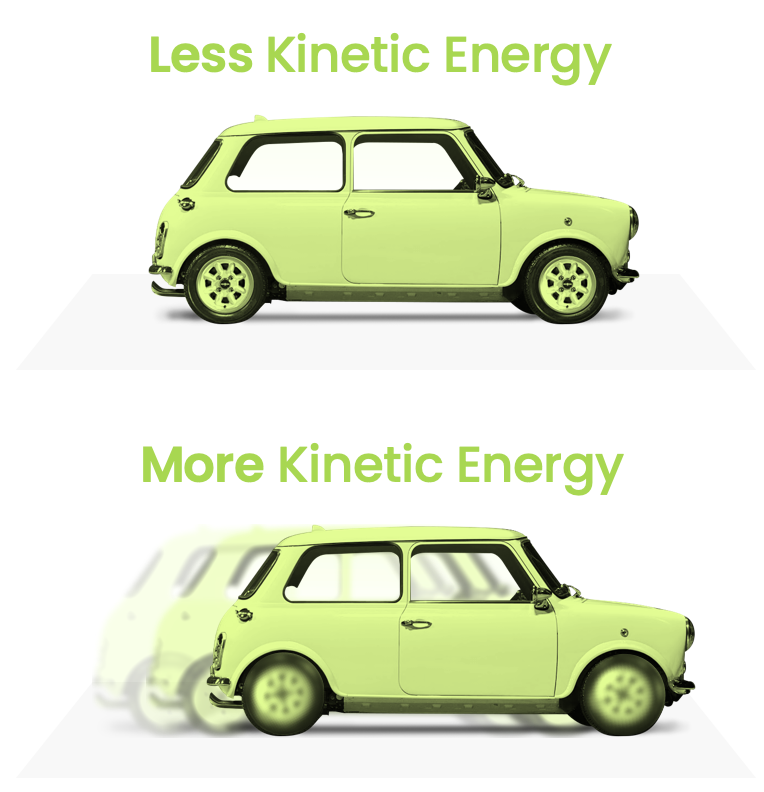
To understand how a vehicle's kinetic energy can be overcome, we must first examine the physics governing its motion. Kinetic energy is the energy possessed by an object due to its motion. In classical mechanics, it is calculated using the formula:
$$KE = \frac{1}{2}mv^2$$
Where $m$ represents the mass of the vehicle and $v$ represents its velocity.
This mathematical relationship reveals a critical concept for drivers and engineers: while kinetic energy increases linearly with the mass of the vehicle, it scales quadratically with velocity. If a car doubles its speed, its kinetic energy quadruples. Consequently, bringing a heavier vehicle to a stop requires proportionally more work, but doubling the speed requires four times the capacity to dissipate energy safely.
Overcoming this energy means changing its state. According to the law of conservation of energy, energy cannot be created or destroyed; it can only be transformed from one form to another. Therefore, stopping a car does not destroy its kinetic energy. Instead, mechanical, aerodynamic, and thermodynamic systems must capture, redirect, or transform that energy into other forms—predominantly heat.
Primary Mechanism: The Braking System and Friction
The most direct and controllable method used to stop a moving vehicle is the friction-based braking system. Modern automotive braking systems rely on hydraulics to force brake pads against rotors attached to the wheels, translating the vehicle's forward momentum into thermal energy.
Disc Brakes vs. Drum Brakes
Disc brakes feature a metal rotor that rotates with the wheel. When the driver presses the brake pedal, hydraulic pressure forces a caliper containing friction material (brake pads) to clamp down on both sides of the rotor. This high-friction interface converts the kinetic energy of the rotating wheel into heat, which then dissipates into the surrounding air.
Drum brakes operate on a similar principle of friction, but utilize curved brake shoes that press outward against the interior surface of a rotating metal cylinder (the brake drum) attached to the wheel assembly. While disc brakes generally offer superior heat dissipation and fade resistance, drum brakes remain common on the rear axles of lighter or budget-oriented vehicles due to manufacturing economy and effective self-energizing properties.
Regenerative Braking in Hybrid and Electric Vehicles
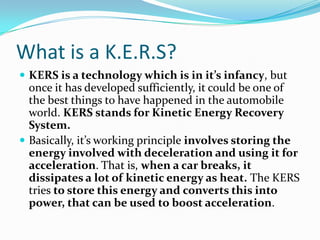
In modern hybrid and electric vehicles (EVs), kinetic energy is overcome not only through friction but also through electromagnetic induction. Regenerative braking systems use the electric drive motor as a generator. When the driver lifts off the accelerator or presses the brake pedal, the motor's resistance slows the vehicle down while generating electrical energy. This recovered energy is routed back into the high-voltage battery pack for later use. Regenerative braking significantly reduces wear on traditional friction brakes and improves overall vehicle efficiency, especially in stop-and-go urban driving.
Secondary Retardation Forces: Resistance and Drag
While brakes are designed to bring a vehicle to a complete stop, several continuous natural forces constantly act to overcome a vehicle's kinetic energy whenever the engine stops supplying power.
Aerodynamic Drag
As a vehicle moves forward, it must push through the mass of air surrounding it. Air resistance, or aerodynamic drag, increases exponentially with speed. The force of drag is determined by the vehicle's frontal area, its drag coefficient ($C_d$), air density, and the square of its velocity. While drivers often rely on brakes for rapid deceleration, aerodynamic drag naturally slows a coasting vehicle down over distance, particularly at highway speeds where air resistance accounts for the vast majority of resistive forces.
Rolling Resistance
Rolling resistance is the opposing force generated as a vehicle's tires deform against the road surface. Factors such as tire pressure, tread pattern, rubber compound, vehicle weight, and road texture influence rolling resistance. While lower rolling resistance improves fuel economy by allowing a vehicle to coast further, rolling resistance constantly works to bleed off kinetic energy whenever a vehicle is in motion without throttle input.
| Force Type | Primary Energy Conversion | Main Operational Factor | Typical Impact on Stopping |
|---|---|---|---|
| Friction Brakes | Kinetic to Thermal Energy | Hydraulic clamping pressure | Primary mechanism for rapid, controlled stops |
| Regenerative Brakes | Kinetic to Electrical Energy | Electromagnetic resistance | Recovers energy; common in hybrids and EVs |
| Aerodynamic Drag | Kinetic to Turbulence/Heat | Vehicle speed and frontal profile | Gradually slows coasting vehicles, especially at high speeds |
| Rolling Resistance | Kinetic to Heat (Tire/Road) | Tire pressure and rubber composition | Provides continuous, passive deceleration |
Powertrain Drag and Engine Braking
The internal components of an internal combustion engine (ICE) also play a significant role in overcoming kinetic energy. When a driver lifts their foot off the accelerator pedal, the throttle valve closes, restricting airflow into the engine cylinders.
This restriction creates a vacuum inside the intake manifold. As the pistons move downward during the intake stroke, they must pull against this vacuum (pumping loss). Additionally, the mechanical friction of the pistons, crankshaft, and valve train, combined with the compression of air within the cylinders, creates a retarding force known as engine braking. Selecting a lower gear multiplies this effect by forcing the engine to spin at higher revolutions per minute (RPM) for a given road speed, increasing pumping losses and mechanical resistance. Engine braking is particularly valuable during long downhill descents, as it prevents traditional friction brakes from overheating and failing due to brake fade.
Environmental and External Factors
External conditions can significantly alter how quickly a vehicle's kinetic energy can be overcome. Understanding these variables is crucial for safe vehicle operation.
Road Gradient (Slope)
Gravity is a powerful modifier of kinetic energy. When a vehicle travels uphill, gravity acts directly against its forward momentum, assisting the braking forces and causing the vehicle to decelerate rapidly even with minimal brake application. Conversely, traveling downhill means gravity adds potential energy, converting it into kinetic energy. Overcoming a vehicle's kinetic energy on a steep downgrade requires vastly more braking effort, which can quickly overwhelm standard brake pads and rotors if external retarding methods, such as engine braking or transmission lowering, are not utilized.
Road Surface Conditions and Traction
The ability of a braking system to overcome kinetic energy is ultimately limited by the friction between the tire contact patch and the road surface (traction). Even if a braking system can exert enough hydraulic pressure to lock the wheels, the vehicle will only decelerate if the tires maintain grip on the pavement.
On wet, icy, or loose gravel surfaces, the coefficient of friction drops sharply. Anti-lock braking systems (ABS) help manage this by modulating brake pressure faster than humanly possible, preventing wheel lock-up and maintaining steering control while maximizing the available traction to overcome kinetic energy safely.
Common Misconceptions Regarding Vehicle Stopping Power
Many misconceptions persist regarding how vehicles stop and how kinetic energy is managed:
- Brakes stop the car; tires stop the momentum: Brakes convert the energy of the spinning wheels into heat, but it is the friction between the tire tread and the road surface that actually changes the vehicle's momentum. If a tire loses traction, the brakes cannot stop the vehicle effectively.
- Heavier vehicles always take much longer to stop: While mass increases kinetic energy linearly, modern heavy vehicles (such as commercial trucks or performance cars with large brakes and wide tires) often feature oversized braking systems designed to handle that additional thermal load, though stopping distances still increase under adverse conditions.
- Pumping the brakes is always best: In modern vehicles equipped with ABS, pumping the brakes manually is counterproductive. Drivers should maintain firm, continuous pressure on the brake pedal and let the computer system manage hydraulic modulation.
Frequently Asked Questions
What happens to the kinetic energy when a car stops?
When a car stops, its kinetic energy is primarily converted into thermal energy (heat) via friction in the brake pads and rotors. In electric and hybrid vehicles, a portion of that kinetic energy is converted into electrical energy and stored back in the battery through regenerative braking.
Why does speed affect stopping distance more than vehicle weight?
Kinetic energy scales quadratically with velocity ($KE = \frac{1}{2}mv^2$), meaning that doubling your speed quadruples your kinetic energy. In contrast, kinetic energy increases linearly with mass. Consequently, speed has a much more dramatic impact on the amount of work required to stop a vehicle.
How does engine braking work?
Engine braking occurs when you lift your foot off the accelerator, closing the throttle valve. This creates a vacuum in the intake manifold that the engine must pull against, generating pumping losses and mechanical friction that help slow the vehicle down without relying solely on the foundation brakes.
Can air resistance stop a car completely?
No. While aerodynamic drag creates a continuous retarding force that slows a coasting vehicle down, drag approaches zero as the vehicle's velocity approaches zero. Therefore, aerodynamic forces alone cannot bring a stationary vehicle to a complete stop; friction or mechanical intervention is always required for the final deceleration.
Practical Next Actions and Safety Recommendations
To ensure your vehicle's systems can effectively manage and overcome kinetic energy in daily driving:
- Inspect Brake Components Regularly: Have brake pads, rotors, lines, and fluid checked at least once a year or according to your manufacturer's maintenance schedule.
- Monitor Tire Tread and Pressure: Ensure your tires maintain adequate tread depth and correct inflation pressures to maximize the friction contact patch needed for effective stopping.
- Utilize Engine Braking on Descents: When driving down steep mountain passes, downshift into a lower gear to let the engine assist with deceleration, protecting your foundation brakes from dangerous thermal fade.
- Maintain Safe Following Distances: Remember that higher speeds exponentially increase your stopping distance. Adjust your following distance proactively based on your speed, weather conditions, and vehicle load.