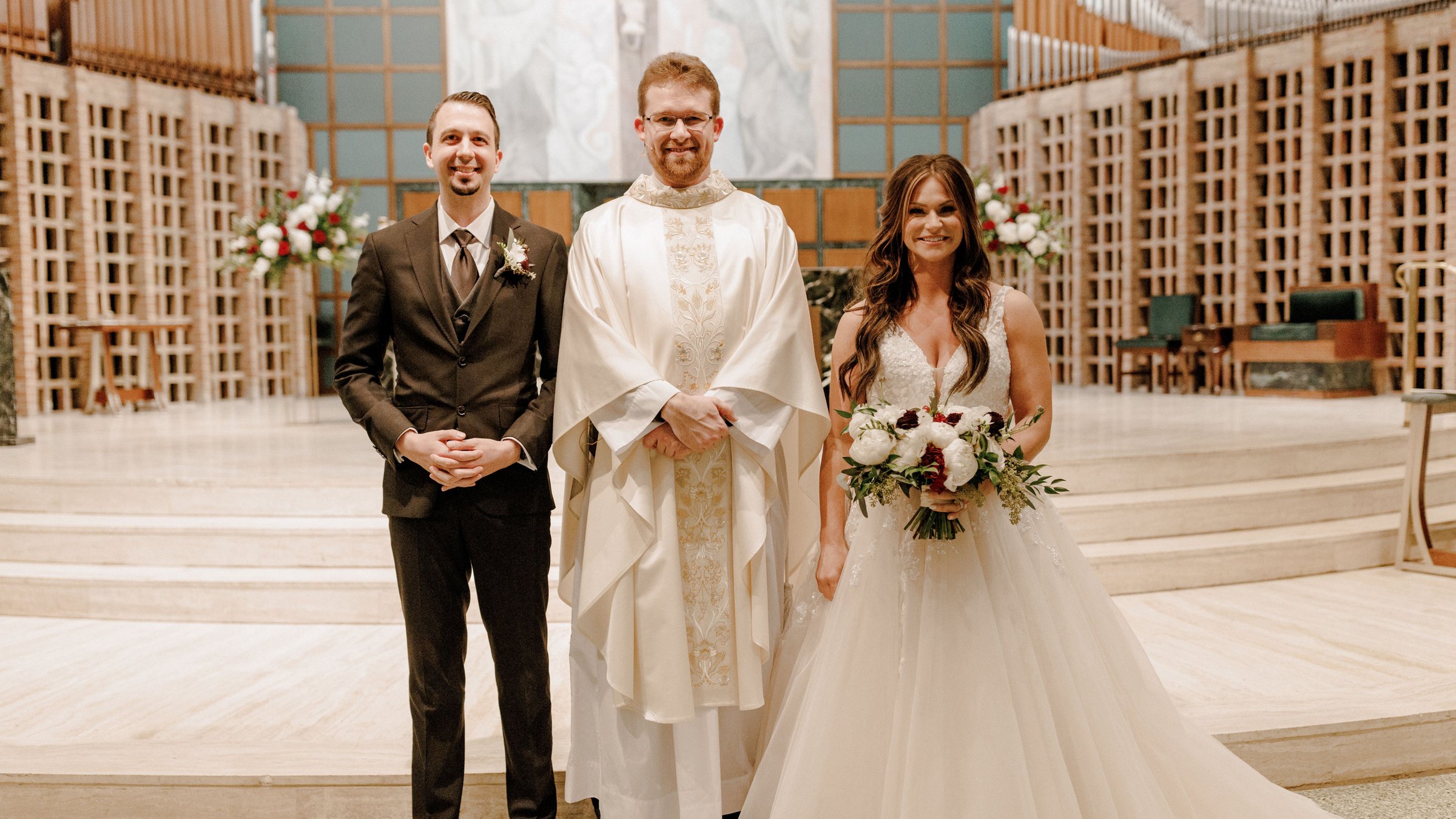
In the Roman Catholic Church, the general rule is that priests are required to maintain celibacy and are not permitted to marry. This discipline is distinct from the requirement for marriage in other Christian denominations, such as the Eastern Rite Catholic Churches or the Anglican and Orthodox traditions, where married men may be ordained or continue to live in marriage after ordination.
The question of whether priests are allowed to get married is one that touches upon deeply held theological, historical, and disciplinary foundations of the Christian faith. While the popular perception of a "priest" is often tethered to the Roman Catholic model—where mandatory celibacy is the standard—the global landscape of the priesthood is far more complex. To understand this subject, one must differentiate between the traditions of the Latin Church, the practices of Eastern Catholic Churches, and the varied norms found within other global religious organizations.
The Latin Rite: Mandatory Celibacy
In the Roman Catholic Church, specifically the Latin Rite, the law of celibacy is an ecclesiastical discipline, not a theological dogma. This distinction is crucial for understanding why the rule exists and how it might theoretically be adjusted by the Papacy.
The Latin Church maintains that priests should commit themselves entirely to the service of God and the Church, mirroring the life of Jesus Christ, who remained unmarried. This commitment is viewed as an "eschatological sign," pointing toward the reality of the Kingdom of Heaven where, according to the Gospel of Matthew, people neither marry nor are given in marriage.
Candidates for the priesthood in the Latin Rite are required to make a vow of celibacy upon their ordination as deacons, a stage that precedes the priesthood. Once ordained, a priest is legally and spiritually bound to this commitment. If a priest wishes to marry, he must first be "laicized"—a process in which he is dispensed from the obligations of his clerical state by the Holy See. Once laicized, the individual is no longer a priest in the legal sense and may pursue marriage within the Church.
Eastern Catholic Churches: A Different Tradition
It is a common misconception that all Catholic priests are celibate. The Catholic Church is comprised of several sui iuris (autonomous) churches, including the Latin Church and twenty-three Eastern Catholic Churches (such as the Ukrainian Greek Catholic Church, the Maronite Church, and the Melkite Greek Catholic Church).
In these Eastern Catholic traditions, men who are already married may be ordained to the priesthood. These men serve as parish priests and are permitted to remain married after their ordination. However, there are significant limitations:
- No Marriage After Ordination: While married men may become priests, a man who is already a priest cannot marry. If he is widowed, he generally may not remarry.
- Celibate Bishops: In almost all Eastern Catholic traditions, bishops must be celibate. If a widowed priest is chosen to become a bishop, he must typically separate from his children and adopt a life of celibacy.
This distinction highlights that the Catholic Church does not view marriage as inherently incompatible with the priesthood. Instead, it maintains two distinct streams of discipline: one favoring the traditional Latin approach of celibacy and another honoring the ancient Eastern tradition of a married priesthood.
The Anglican and Protestant Perspectives
Outside of the Catholic tradition, the rules regarding clerical marriage differ significantly. In many Protestant denominations, including the Lutheran, Methodist, and Presbyterian churches, marriage is not only permitted but often encouraged for clergy. These traditions emphasize the pastoral benefits of a family life, suggesting that a married minister can better understand the trials, joys, and complexities of family life experienced by their congregants.
The Anglican Communion (which includes the Episcopal Church) also permits priests to be married. In recent decades, special provisions have been made for former Anglican priests who convert to Roman Catholicism. Under specific "Pastoral Provision" or "Ordinariates" established by the Vatican, these men may be ordained as Catholic priests even though they are married. This serves as a rare but clear example of married men functioning as Catholic priests within the Latin Rite, though they are usually exceptions to the rule rather than the standard.
Historical Context of Celibacy
The requirement for celibacy did not appear in a vacuum. In the early centuries of the Church, there was no universal law mandating celibacy for all priests. Many early Church leaders were married men. However, the movement toward clerical celibacy grew over the centuries, driven by several factors:
- Purity and Ritual: A sense that the sacred nature of the Eucharist required a level of ritual purity that was hindered by the demands of marital intimacy.
- Inheritance and Property: By the medieval period, many dioceses struggled with the challenge of priests wanting to pass church property on to their children. Enforcing celibacy prevented the fragmentation of Church assets.
- Devotion to Ministry: The belief that a celibate priest is more mobile and entirely devoted to the needs of the faithful, without the competing obligations of supporting a spouse and children.
The First and Second Lateran Councils in the 12th century are often cited as the definitive turning points where mandatory celibacy was formally codified for the Latin Church.
Comparison of Clerical Marriage Rules
| Tradition | Status of Married Men | Can Priests Marry? |
|---|---|---|
| Roman Catholic (Latin) | Not ordained | No |
| Eastern Catholic | May be ordained | No |
| Anglican/Episcopal | May be ordained | Yes |
| Lutheran/Methodist | May be ordained | Yes |
| Eastern Orthodox | May be ordained | No |
Challenges and Current Debates
In 2026, the conversation surrounding optional celibacy remains active. Supporters of a married priesthood in the Latin Rite often point to the global shortage of priests. They argue that if the Church permitted the ordination of viri probati—married men of proven faith and character—it could alleviate the lack of sacramental access in remote regions where small communities go months without a Mass.
Opponents, however, emphasize the spiritual value of celibacy. They argue that the priest's identity is centered on being "in persona Christi" (in the person of Christ), and that the total sacrifice of family life is an essential component of that witness. Furthermore, they express concern that the introduction of a married priesthood could place an undue financial burden on parishes, which would then be required to support not just the priest, but also his family.
Practical Implications for the Laity
For the average Catholic or Christian, understanding these rules is important for navigating one's own faith life. When interacting with clergy, it is helpful to recognize the specific tradition to which that individual belongs. If you encounter a married priest, he is likely either serving in an Eastern Catholic parish, is an Anglican convert, or belongs to a denomination that does not mandate celibacy.
If a member of the laity feels a vocation to the priesthood, they must understand that, unless they join an Eastern Catholic rite or a non-Catholic tradition, the path involves a life of celibacy. This is not a barrier to emotional or social fulfillment but is understood as a redirection of those energies toward the broader community of the faithful.
Common Questions Regarding Clerical Marriage
1. Can a priest who is already married become a Catholic priest? Yes, but only under specific circumstances. Former Anglican or Lutheran clergy who convert to Catholicism can apply for a waiver to be ordained as Catholic priests while remaining married. Additionally, married men may be ordained in Eastern Catholic Churches.
2. What happens if a Catholic priest decides he wants to marry? He must undergo the process of laicization. This is a formal petition to the Vatican to be released from the promises of the priesthood. If granted, he returns to the status of a layperson and is free to marry within the Church.
3. Is the celibacy rule a teaching that can never change? No. Because it is a discipline (a law of the Church) rather than a dogma (a fundamental truth of the faith), the Pope could theoretically change the rule regarding mandatory celibacy for the Latin Rite. However, there is no indication that such a change is imminent.
4. Why do Eastern Catholic priests stay married? They follow the ancient traditions of the Eastern Churches, which maintain that the sanctity of the marital bond is compatible with the sanctity of the priesthood. They prioritize the historical precedent where the apostles were often married men.
5. Are there any other exceptions for marriage? There are no other exceptions. If a man is already a priest in the Latin Rite, he is strictly forbidden from marrying. Attempting to marry without the proper canonical dispensations results in serious canonical penalties, often including the suspension of his faculties to function as a priest.
Next Actions for the Interested Reader
If you are seeking further clarity regarding your own situation, such as discernment for the priesthood or a specific pastoral issue in your parish, the most effective step is to consult the official documentation provided by your local diocesan office. Every diocese has a Vocations Director who is trained to handle questions about the requirements for the priesthood, including the nuances of celibacy and the status of converts.
For those interested in the theological justifications or the history of this discipline, examining the Catechism of the Catholic Church or the Code of Canon Law provides a primary source look at the current legal framework. These documents outline not just the "what," but the "why" behind the Church's long-standing commitment to the celibate life for its Latin Rite clergy. Engaging with these texts ensures that your understanding is based on official doctrine rather than popular misconception.