Yes, dental implant volunteers are actively needed in 2026, primarily through dental school clinics, clinical research trials, and charitable organizations. While "volunteering" in a clinical trial may offer free treatment, being a "patient volunteer" at a dental school usually involves paying significantly reduced fees for services performed by supervised students.
The search for low-cost or free dental implants often leads patients to consider becoming a volunteer. However, the term "volunteer" in the dental industry encompasses two distinct paths: participating in clinical research or becoming a teaching case for dental students and residents. As of 2026, the demand for participants remains high due to the constant evolution of implant materials, 3D-printing technologies, and the rigorous training requirements for new dental professionals. Understanding how to navigate these opportunities requires a clear grasp of eligibility, the time commitment involved, and the specific institutions that facilitate these programs.
Understanding the Role of a Dental Implant Volunteer
To "volunteer" for a dental implant procedure generally means you are willing to receive treatment in a non-traditional environment in exchange for a lower price point or participation in medical advancement. In 2026, the landscape of dental implantology is focused heavily on digital workflows and biocompatible materials like zirconia. To advance these fields, researchers and educators need human subjects who meet specific oral health criteria.
There are three primary categories where volunteers are sought:
- Dental School Teaching Clinics: These institutions need patients so that students (undergraduate or postdoctoral residents) can gain hands-on experience.
- Clinical Research Trials: Pharmaceutical or medical device companies test new implant designs, coatings, or surgical techniques.
- Charitable and Non-Profit Programs: These are often reserved for specific populations, such as veterans, the elderly, or those living below the poverty line.
It is important to distinguish between "volunteering" and "charity." In a clinical trial, you are a research subject; in a dental school, you are a "teaching patient." In both scenarios, the standard of care is extremely high, but the process is slower and more structured than a private practice setting.
Dental Schools: The Primary Source for Patient Volunteers
Dental schools are the most consistent recruiters for implant volunteers. Every accredited dental program in 2026 requires its students to demonstrate competency in various surgical and restorative procedures before graduation. Because dental implants have become a standard of care for tooth replacement, most schools have dedicated implant departments.
How Dental School Clinics Operate
When you apply to be a patient volunteer at a dental school, you are not simply walking in for a procedure. You undergo a rigorous screening process. The school must ensure that your case is suitable for a student's current skill level. For instance, a senior dental student might handle a straightforward single-tooth replacement, while a periodontal or oral surgery resident would handle complex cases involving multiple implants or significant bone loss.
The Commission on Dental Accreditation (CODA) sets the standards for these programs, ensuring that even though a student is performing the work, the oversight provided by board-certified faculty members maintains a high level of safety. Every step—from the initial CT scan to the final crown placement—is checked and double-checked by an experienced instructor.
The Cost Savings vs. Time Commitment Balance
The primary benefit of being a dental school volunteer is the cost. In 2026, private practice dental implants can cost between $3,000 and $5,000 per tooth. Dental schools often offer these services at 40% to 60% of those rates. However, this discount is "paid for" with your time. A procedure that takes 45 minutes in a private office might take three hours at a school because the instructor must stop the student at every milestone to verify the work. Patients must be prepared for multiple long appointments and a slower overall healing timeline.
Clinical Trials and Research Studies
Clinical trials offer a different type of "volunteer" experience. These are studies designed to answer specific questions about new medical treatments. If a dental technology company has developed a new type of surface coating intended to speed up osseointegration (the process of the bone fusing to the implant), they must prove its efficacy in humans before it can be widely marketed.
Phase II and Phase III Trials
Most dental implant volunteers will be looking for Phase II or Phase III trials.
- Phase II: These trials test the treatment on a larger group of people (usually 100-300) to see if it is effective and to further evaluate its safety.
- Phase III: These involve large groups (1,000-3,000) to confirm effectiveness, monitor side effects, and compare it to commonly used treatments.
In many clinical trials, the implant and the surgery are provided at no cost to the patient. In some cases, participants are even compensated for their time and travel. You can find these opportunities by searching ClinicalTrials.gov, a database of privately and publicly funded clinical studies conducted around the world.
The Risk Factor in Research
While clinical trials are heavily regulated by Institutional Review Boards (IRB), they do carry inherent risks. You are, by definition, testing something that is not yet the "gold standard." While the risk of catastrophic failure is low due to prior laboratory and animal testing, there is a possibility that the experimental implant may not perform as well as traditional titanium versions.
Eligibility and Prerequisites for Implant Candidates
Not everyone who offers to volunteer is accepted. Dental implants require a specific physiological foundation to be successful. If you are seeking to be a volunteer in 2026, you must generally meet the following criteria:
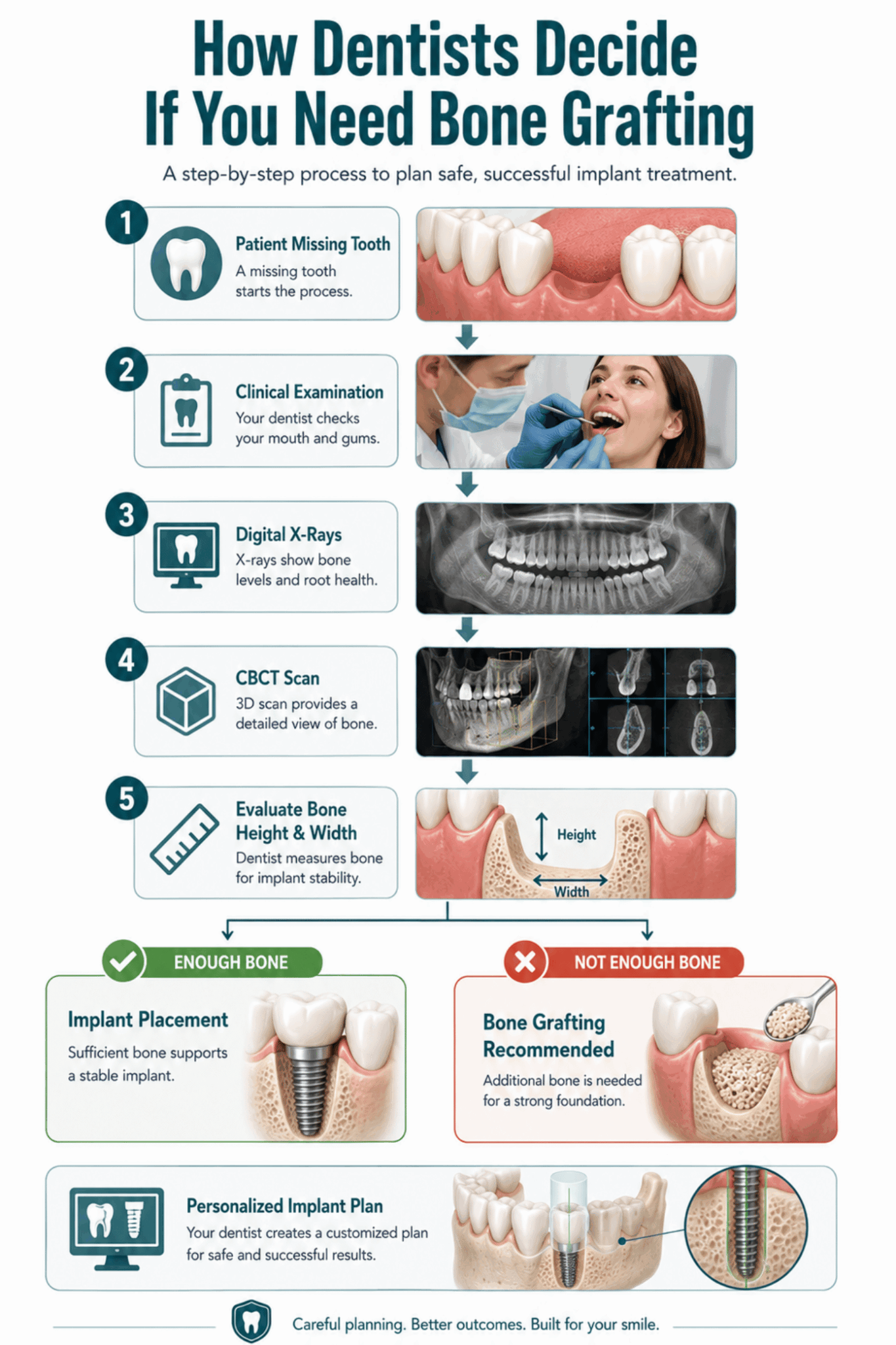
- Sufficient Bone Density: Implants need a sturdy "anchor" in the jawbone. If you have been missing teeth for a long time, the bone may have resorbed (atrophied). If there isn't enough alveolar bone, you may require a bone graft before you can be considered for an implant program.
- Good Systemic Health: Chronic conditions like uncontrolled diabetes or autoimmune disorders can hinder the healing process. Most volunteer programs will require a full medical history and may coordinate with your primary care physician.
- Non-Smoking Status: Smoking significantly increases the risk of implant failure. Many dental schools and research trials will disqualify active smokers or those who use nicotine products, as they compromise the vascularity of the gum tissue.
- Oral Hygiene Compliance: You must demonstrate a commitment to excellent oral hygiene. If a candidate shows signs of active periodontal disease (gum disease) in other areas of the mouth, they are often rejected until the disease is under control.
Step-by-Step Guide to Applying as a Volunteer
If you have decided that the trade-offs of a volunteer program are worth the savings or the contribution to science, follow these steps to secure a position.
- Identify Local Dental Schools: Use the American Dental Association (ADA) school finder to find accredited programs in your region.
- Request a "Screening Appointment": Call the dental school and specifically ask for their patient intake or screening department. Note that there is often a waiting list, sometimes spanning several months.
- Prepare Your Records: Have recent dental X-rays or records from previous dentists ready. This can speed up the screening process, though most schools will want to take their own 3D Cone Beam Computed Tomography (CBCT) scans.
- Monitor Research Databases: Regularly check the National Institute of Dental and Craniofacial Research (NIDCR) for government-funded studies. Use keywords like "dental implant," "osseointegration," or "tooth replacement."
- Evaluate the Consent Forms: If accepted into a clinical trial, read the informed consent documents carefully. These will outline exactly what is being tested, the known risks, and your right to withdraw from the study at any time.
Risks and Considerations of Volunteer Programs
While the prospect of affordable dental care is enticing, volunteering for dental implants is a medical decision that requires a "risk-benefit" analysis.
The "Long-Haul" Commitment Dental implants are not a quick fix. The process usually involves a surgical phase (placing the post), a healing phase (3 to 6 months), and a restorative phase (placing the crown). In a volunteer setting, these phases can be elongated by school breaks, student graduation cycles, or rigid trial protocols.
Supervision Limits In a dental school, while faculty are present, they are not the ones holding the drill for the entire procedure. You must be comfortable with the fact that a student—albeit a highly trained one—is performing the surgery. If you are prone to dental anxiety, the educational environment (which often involves multiple students observing) might be stressful.
Proximity and Travel Clinical trials often require frequent follow-up visits to monitor the implant's progress. If the research center is two hours away, the cost of gas and the time taken off work may offset the financial savings of the "free" implant.
Comparing Costs: Private Practice vs. Volunteer Programs
This table provides a generalized comparison of what a patient might expect in 2026 for a single-tooth dental implant.
| Feature | Private Practice | Dental School Clinic | Clinical Research Trial |
|---|---|---|---|
| Average Cost | $3,000 – $5,500 | $1,200 – $2,500 | $0 (Often free) |
| Wait Time | 1 – 2 weeks | 2 – 6 months | Highly variable |
| Appointment Length | 45 – 90 minutes | 3 – 4 hours | 1 – 2 hours |
| Provider | Experienced Dentist | Supervised Student | Research Clinician |
| Primary Benefit | Speed and Comfort | Cost Savings | Innovation / Free Care |
| Primary Drawback | High Cost | Slow Process | Strict Eligibility |
Frequently Asked Questions
Can I get free dental implants if I am a veteran?
Veterans may have access to dental implants through the VA, but eligibility is usually limited to those with service-connected dental disabilities or those who are 100% disabled. However, many non-profits like the Dental Lifeline Network specifically target veterans for donated (free) dental services, including implants, through their Donated Dental Services (DDS) program.
Are there "free" dental implant grants for low-income individuals?
There are no federal "grants" given directly to individuals for dental implants. Most "dental grant" websites found online are marketing funnels for private dentists. True financial assistance comes from non-profit organizations or state-funded programs, which are very competitive and often have long waiting lists.
What happens if a "volunteer" implant fails?
In a dental school, the school typically has a protocol for handling failures, which may involve a refund or a discounted replacement by a faculty member. In a clinical trial, the research entity usually covers the cost of complications arising directly from the study. It is vital to ask about the "failure protocol" before signing any consent forms.
Are "mini" dental implants easier to volunteer for?
Mini dental implants (MDIs) are sometimes used for stabilizing dentures. Because the surgery is less invasive, they are frequently used in dental school teaching modules. If you are a candidate for MDIs, you may find that the waiting list is shorter than it is for traditional full-sized implants.
Does insurance cover the costs if I am a volunteer?
If you are at a dental school, most will bill your insurance for the discounted rate. If you are in a clinical trial, the study sponsor usually covers all costs, and your insurance is not billed. Always clarify billing procedures during the intake process to avoid unexpected out-of-pocket expenses.
Professional Recommendation for 2026
If you are looking for dental implant volunteer opportunities in 2026, your most reliable path is to contact the nearest university-based dental school. While clinical trials offer the potential for completely free care, their eligibility requirements are so narrow that most applicants do not qualify.
Before committing, ensure you have a comprehensive exam and a clear understanding of the "total cost." Sometimes the implant itself is discounted, but the necessary extractions, bone grafts, or the final porcelain crown are billed at higher rates. Request a written treatment plan that includes all stages of the procedure to ensure the "volunteer" savings align with your actual budget.