Artificial intelligence streamlines language learning by providing hyper-personalized curricula, real-time speech analysis, and low-pressure conversational practice. By utilizing large language models and neural speech synthesis, AI identifies specific learner gaps, simulates immersive environments, and offers instant feedback, significantly reducing the time required to reach functional fluency compared to traditional methods.
The landscape of language acquisition has undergone a fundamental shift. In 2026, the integration of artificial intelligence (AI) is no longer a peripheral feature of mobile apps but the core engine of global education. Learners have moved away from static vocabulary lists toward dynamic, interactive systems that adapt to their psychological state, professional needs, and cognitive pace. This guide explores the mechanisms, benefits, and practical applications of AI in language learning, providing a roadmap for students and educators navigating this sophisticated ecosystem.
The Shift from Static Apps to Generative Tutors
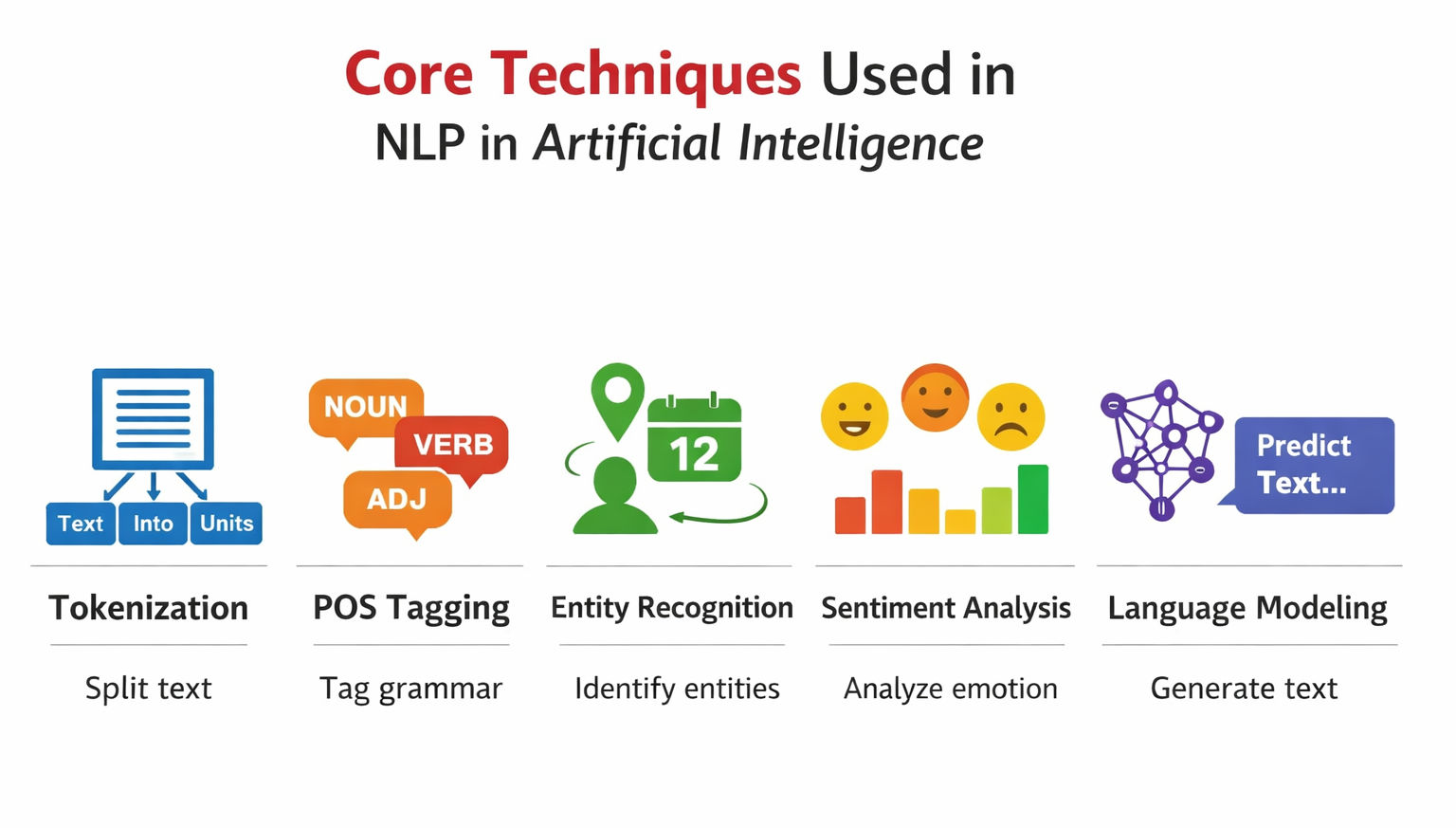
Before the mid-2020s, language learning software relied heavily on "gamified" repetition—matching words to pictures or rearranging sentence fragments. While effective for basic vocabulary, these systems lacked the ability to handle the nuance of human conversation. The arrival of sophisticated Generative AI and advanced Natural Language Processing (NLP) transformed these tools into proactive tutors.
Current systems in 2026 leverage multimodal models that can see, hear, and speak. This means a learner is no longer just typing; they are engaging in voice-to-voice roleplay where the AI assumes various personas—a demanding boss, a helpful barista, or a technical colleague. The technology does not just correct grammar; it evaluates pragmatics, helping learners understand whether their tone is appropriate for the cultural context.
Personalization through Adaptive Learning Algorithms
The primary advantage of AI is its ability to eliminate the "one size fits all" approach. Traditional classrooms must move at a median pace, often leaving struggling students behind while boring those who are more advanced. AI-driven platforms utilize Adaptive Learning Algorithms to create a custom path for every user.
These algorithms track "Interlanguage"—the unique version of a target language a student speaks as they transition from beginner to fluent. By mapping recurring errors in syntax or phonology, the AI prioritizes lessons that address those specific weaknesses. If a student consistently struggles with the subjunctive mood in Spanish, the system seamlessly weaves subjunctive practice into everyday conversational topics rather than isolating it in a boring grammar module.
Core Technologies Powering Language AI in 2026
To understand why AI is so effective, one must look at the underlying technical architecture. The synergy of several AI disciplines creates an environment that mimics—and in some ways exceeds—human-led instruction.
1. Neural Machine Translation (NMT) and Contextual Understanding
Modern NMT has evolved beyond literal translation. It now utilizes Retrieval-Augmented Generation (RAG) to pull from vast databases of colloquialisms, regional slang, and technical jargon. This ensures that when a student asks for a translation, they receive a response that is contextually accurate for 2026, not an archaic textbook version.
2. Automatic Speech Recognition (ASR)
ASR technology has reached a point where it can distinguish between a learner’s native accent and genuine mispronunciation. In 2026, AI tools provide visual feedback on mouth positioning and tongue placement by analyzing audio frequencies. This "Phoneme-level Analysis" allows students to correct their "R" or "L" sounds in languages like Japanese or English with scientific precision.
3. Sentiment and Emotion AI
Learning a language is an emotional process. AI tutors now use sentiment analysis to detect frustration or fatigue in a learner's voice. If the system detects a drop in engagement or an increase in stress-related speech patterns, it can adjust the difficulty level in real-time or switch to a more encouraging tone to maintain the student’s "Affective Filter"—a psychological concept where lower anxiety leads to better learning.
Comparative Performance: AI vs. Traditional Methods
Deciding how to allocate time and resources requires a clear understanding of what AI offers compared to traditional classroom settings or private human tutoring.
| Feature | Traditional Classroom | Private Human Tutor | Advanced AI Tutor (2026) |
|---|---|---|---|
| Availability | Scheduled (Weekly) | Scheduled (By Appointment) | Instant (24/7) |
| Cost | Medium to High | High | Low (Subscription-based) |
| Feedback Speed | Delayed (Days/Weeks) | Real-time | Instantaneous |
| Anxiety Level | High (Public speaking) | Medium (Face-to-face) | Very Low (Private/Safe) |
| Cultural Nuance | Excellent | Superior | High (Data-driven) |
| Personalization | Low (Group-focused) | High | Hyper-personalized |
| Physical Presence | Required | Optional (Online/In-person) | Digital Only |
Practical Implementation: Strategies for Success
Using AI effectively requires more than just "chatting" with a bot. To achieve C1 or C2 proficiency, learners must use these tools strategically across different stages of their journey.
Beginner Level: Establishing the Foundation
At the A1-A2 levels, the focus should be on high-frequency vocabulary and basic syntax. AI tools can generate "Simplified Input"—reading and listening materials tailored exactly to the words the student has already learned. This prevents the "Cognitive Overload" that often occurs when beginners try to consume native media like news or movies too early.
Intermediate Level: The Bridge to Fluency
The B1-B2 levels are often called the "Intermediate Plateau." Here, AI is most useful for Scenario-Based Roleplay. Learners should prompt the AI to simulate specific high-stakes environments:
- "Act as an interviewer for a project management position at a German tech firm."
- "Simulate a negotiation with a landlord in Tokyo regarding a lease agreement."
These interactions build the "muscle memory" required for spontaneous speech without the fear of making embarrassing mistakes in front of real people.
Advanced Level: Nuance and Professional Mastery
For C1-C2 learners, AI serves as a sophisticated editor and cultural consultant. It can analyze a user’s written essays or recorded speeches to suggest more "native-like" idiomatic expressions. It can also explain the subtle differences between words that are synonyms in a dictionary but have different social connotations in the target culture.
Limitations and Ethical Considerations
Despite the technological leaps of 2026, AI is not a magic wand. There are critical limitations that learners must acknowledge to avoid "AI-induced stagnation."
- The "Uncanny Valley" of Language: While AI is excellent at syntax, it can sometimes produce language that is "too perfect." Human speech is naturally messy, filled with "ums," "ahs," and intentional sentence fragments. Relying solely on AI can make a learner sound like a textbook rather than a person.
- Data Privacy: AI models require large amounts of interaction data to improve. Users must be cautious about the sensitivity of the information they share during "free-flowing" conversations with AI tutors.
- Cultural Isolation: Language is a social tool. If a student only ever speaks to an AI, they miss out on the non-verbal cues, shared history, and community aspects of a language. AI should be a supplement to, not a total replacement for, human connection.
The UNESCO guidelines on AI in education emphasize that technology should support human agency rather than replace the social fabric of learning. Learners are encouraged to use AI to build the skills necessary to eventually join real-world communities.
The Role of the Human Educator in 2026
The role of the teacher has shifted from a "dispenser of knowledge" to a "learning architect." In 2026, the best language schools use AI to handle the drudgery of grading and grammar drills, freeing up human instructors to focus on mentorship, cultural immersion, and complex debate.
Human teachers provide the accountability that AI cannot. A machine doesn't care if you skip your lesson, but a teacher or a group of peers creates a social contract that keeps students motivated over the long term. This hybrid model—AI for technical proficiency and humans for social fluency—is the gold standard for language acquisition in the current era.
Frequently Asked Questions
Can AI actually help me lose my foreign accent?
Yes, but with caveats. AI tools in 2026 use high-fidelity ASR to provide "Visual Acoustic Feedback," showing you the wave patterns of your speech compared to a native speaker. While it can help you master specific sounds (phonemes), achieving a "native" accent also involves rhythm, stress, and intonation (prosody), which are best refined through consistent listening to a variety of native speakers, not just one AI model.
Is AI language learning safe for children?
Generally, yes, provided the platforms use "Closed-Loop" AI models specifically designed for education. These models have strict filters to prevent the generation of inappropriate content and prioritize pedagogical methods over general conversation. Parents should look for platforms that comply with international data protection standards like GDPR or COPPA.
How do I know if an AI tutor is giving me correct information?
While "hallucinations" (AI making things up) have decreased significantly by 2026, they still occur. It is best to use AI tools that offer Verifiable Sources. Many advanced platforms now include a "Fact-Check" or "Grammar-Check" button that links the AI’s explanation to established linguistic databases or journals like The Modern Language Journal.
Will learning a language be obsolete because of real-time translation?
No. While translation earbuds are ubiquitous in 2026, they cannot replace the cognitive benefits of bilingualism or the deep trust built by speaking someone’s language directly. Translation technology is a utility for transactional tasks (like asking for directions); language learning is an investment in cognitive health and authentic relationship building.
What is the fastest way to learn a language using AI?
The most efficient method is the "AI-Immersion Hybrid." Spend 30 minutes a day in focused AI-driven grammar and vocabulary drills, followed by 30 minutes of "low-stakes" conversation with an AI persona. Complement this with 1-2 hours of "passive immersion" (listening to music or podcasts) and at least one weekly session with a human speaker to test your skills in a real-world social context.
Final Recommendation
To maximize your progress in 2026, treat AI as a high-intensity training partner. Do not use it as a crutch for translation; instead, use it to create a "safe space" for failure. Start by identifying a specific professional or personal goal—such as passing a B2 certification or handling a business meeting—and prompt your AI platform to build a curriculum centered entirely on that objective. By combining the relentless patience of AI with the social goals of human interaction, you can reach fluency in roughly half the time required by traditional methods alone.