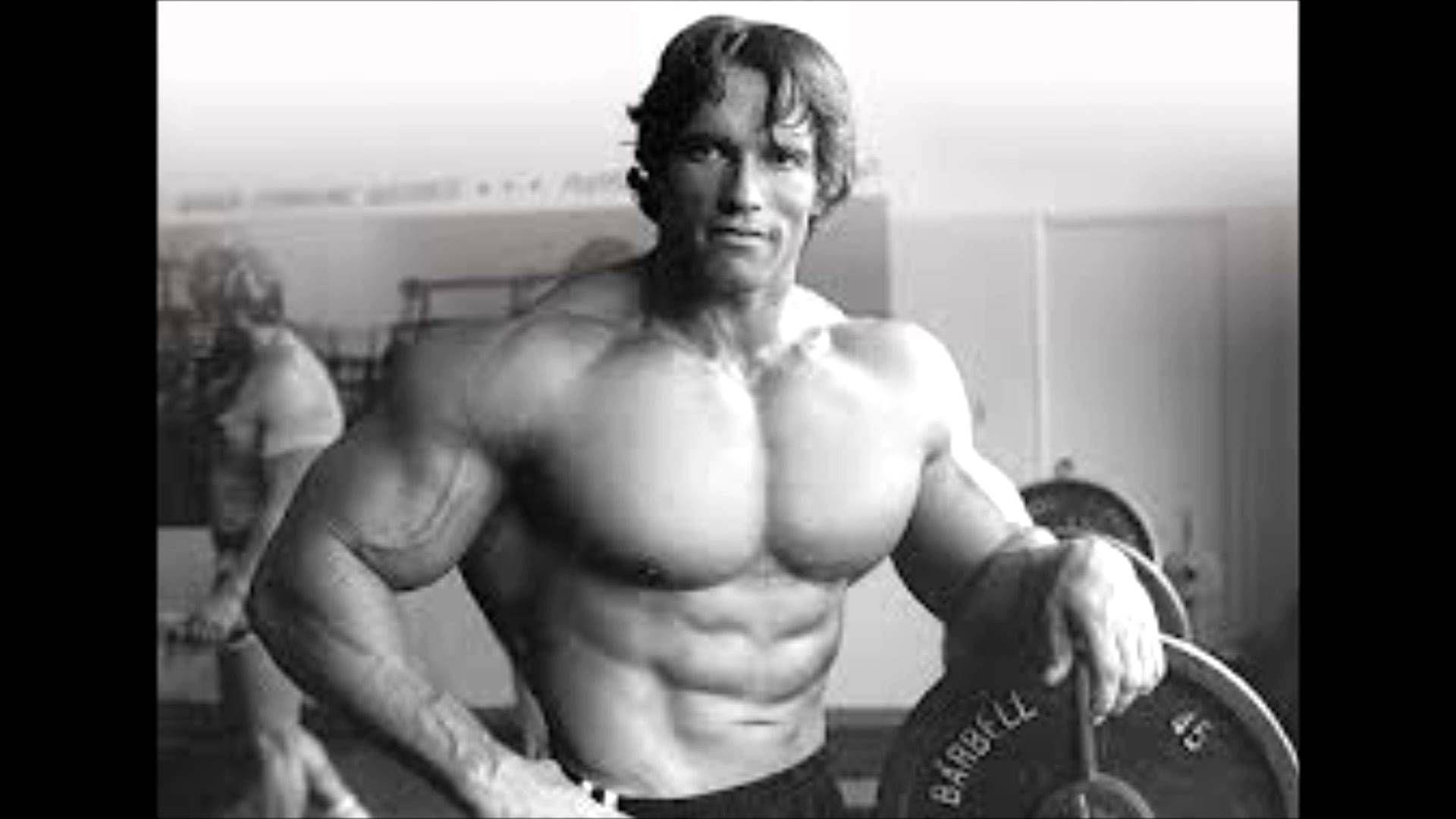
Arnold Schwarzenegger’s rise in bodybuilding was defined by a transition from rural Austria to global stardom, fueled by an unprecedented work ethic and the mentorship of Joe Weider. He dominated the sport by winning seven Mr. Olympia titles (1970–1975, 1980), effectively moving bodybuilding from a niche subculture into the mainstream through his charisma and the 1977 documentary Pumping Iron.
The Austrian Oak: Early Influences and the First Glimmer of Greatness
Arnold Schwarzenegger was born in 1947 in Thal, Austria, a small village where the prospects for international fame were virtually non-existent. His upbringing was characterized by a strict household and a focus on physical activity. Initially a soccer player, Schwarzenegger discovered weightlifting in the early 1960s after visiting a local gym in Graz. It was here that he encountered his first major influence: Reg Park.
Reg Park was a British bodybuilder and three-time Mr. Universe who had successfully transitioned into film, playing Hercules in several movies. For the young Arnold, Park provided the ultimate blueprint. He didn't just want to be strong; he wanted to use his physique as a vehicle for a career in America. By the age of 15, Schwarzenegger had committed himself to the "iron game," often breaking into the local gym on weekends when it was closed to ensure he never missed a training session.
In 1965, Schwarzenegger’s dedication was put to the test during his mandatory service in the Austrian Army. He went AWOL (absent without leave) to participate in the Junior Mr. Europe contest in Stuttgart. Despite having to borrow a posing trunks and being relatively unknown, he won the competition. The victory cost him a week in military prison, but it confirmed his potential. By the time he was 20, he became the youngest ever Mr. Universe (NABBA), a record that solidified his status as a rising phenomenon in Europe.
The Move to America and the Weider Influence
While Schwarzenegger was finding success in Europe, he knew that the true "Mecca" of bodybuilding was California. In 1968, his performances caught the eye of Joe Weider, the "Master Blaster" and co-founder of the International Federation of Bodybuilders (IFBB). Weider saw more than just a massive physique; he saw a charismatic personality that could market the sport to the masses.
Weider invited Schwarzenegger to move to California to train and compete in the IFBB circuit. This move was the most critical turning point in Arnold’s career. Upon his arrival, however, he faced a humbling reality. Despite his size, he lost the 1968 Mr. Universe title in Miami to Frank Zane, who was much smaller but significantly more "defined" or "ripped." This loss taught Schwarzenegger that sheer mass was not enough; he needed symmetry, muscle separation, and a sophisticated approach to nutrition and "cutting."
Under Weider’s guidance, Schwarzenegger began training at Gold’s Gym in Venice Beach. He immersed himself in the culture of American bodybuilding, learning from greats like Dave Draper and Franco Columbu, who became his lifelong training partner. Weider utilized Arnold as a central figure in his magazines (Muscle & Fitness and Flex), creating a persona that was both intimidating and approachable.
The Rivalry with the Myth: Sergio Oliva
The path to the top of the bodybuilding world was blocked by Sergio Oliva, a Cuban powerhouse known as "The Myth." Oliva possessed genetics that many thought were unbeatable, including a tiny waist and massive, flowing muscle bellies. In 1969, Schwarzenegger entered his first Mr. Olympia—the most prestigious title in the sport—and lost to Oliva. It was the only time Schwarzenegger would ever lose a Mr. Olympia contest.
The 1969 defeat sparked a relentless drive in Arnold. He analyzed Oliva’s strengths and weaknesses, realizing that to beat "The Myth," he had to master the art of psychological warfare. In their 1970 rematch at the Mr. World in Columbus, Ohio, and subsequently at the 1970 Mr. Olympia, Arnold utilized his height and superior posing to make Oliva appear smaller.
During the 1970 Olympia, Schwarzenegger famously tricked Oliva. After a long period of posing, Arnold whispered to Sergio that they should leave the stage, as the judges had seen enough. Sergio walked off, but Arnold stayed behind and struck several more poses, winning the crowd and the judges over. Schwarzenegger captured his first Mr. Olympia title in 1970 at the age of 23, beginning a six-year reign of dominance.
Technical Mastery: The Arnold Training Philosophy
Schwarzenegger’s rise was not merely a result of genetics; it was rooted in a high-volume training philosophy that became the standard for the "Golden Era" of bodybuilding. Unlike modern "heavy-duty" or low-volume approaches, Arnold believed in exhausting the muscle from every possible angle.
The Mind-Muscle Connection
Schwarzenegger was a pioneer in advocating for the "mind-muscle connection." He argued that one must "become" the muscle during a workout, focusing intensely on the contraction and the "pump." He famously compared the feeling of the pump to sexual gratification, a quote that later became a staple of pop culture but reflected his genuine belief in the psychological aspect of growth.
Volume and Frequency
Arnold’s workouts were grueling. He often trained twice a day (the "double-split" routine), working different body parts in the morning and evening. A typical week involved training each muscle group three times.
- Chest and Back: He frequently supersetted these opposing muscle groups to maximize blood flow to the upper body.
- The Arnold Press: He developed a specific shoulder exercise, now known as the Arnold Press, which involves a rotational movement to engage both the anterior and lateral deltoids.
- High-Rep Calves: Realizing his calves were a weakness early in his career, he prioritized them by training them with extremely high volume and heavy weights, often cutting his training pants into shorts to remind himself of the work that needed to be done.
Table: Arnold Schwarzenegger’s Major Bodybuilding Titles
The following table outlines the key victories that defined Schwarzenegger’s competitive career during his rise.
| Year | Competition | Organization | Result | Key Significance |
|---|---|---|---|---|
| 1965 | Junior Mr. Europe | IFBB | 1st | First major international win; occurred during military service. |
| 1967 | Mr. Universe (Amateur) | NABBA | 1st | Youngest Mr. Universe at age 20. |
| 1968 | Mr. Universe (Pro) | NABBA | 1st | Established dominance in Europe before moving to the US. |
| 1970 | Mr. World | AAU | 1st | First major victory over Sergio Oliva. |
| 1970 | Mr. Olympia | IFBB | 1st | The beginning of his legendary six-year streak. |
| 1971–1974 | Mr. Olympia | IFBB | 1st | Defended title against legends like Franco Columbu and Lou Ferrigno. |
| 1975 | Mr. Olympia | IFBB | 1st | Subject of the documentary Pumping Iron; announced first retirement. |
| 1980 | Mr. Olympia | IFBB | 1st | Controversial comeback victory in Sydney, Australia. |
The Pumping Iron Era and Mainstream Recognition
By 1975, Schwarzenegger had won six consecutive Mr. Olympia titles and was looking for a way out of the sport and into the film industry. However, filmmakers George Butler and Robert Fiore were planning a documentary called Pumping Iron, which aimed to showcase the world of professional bodybuilding.
Arnold agreed to compete one last time in South Africa to provide the film with a central protagonist. Pumping Iron (1977) was revolutionary. It portrayed Schwarzenegger not as a mindless "muscle head," but as a highly intelligent, cunning, and charismatic athlete. The film highlighted his rivalry with a young, shy Lou Ferrigno and cemented Arnold’s status as a cultural icon. It was through this film that the general public was introduced to the concepts of "shredding," "bulking," and the sheer discipline required for elite-level physique competition.
The success of the film and his accompanying book, The Education of a Bodybuilder, transformed the fitness industry. Suddenly, gyms were no longer dark basements for fringe athletes; they were becoming centers for health and self-improvement for the average person.
The 1980 Comeback: A Final Statement
After a five-year hiatus to focus on his acting career (Conan the Barbarian was in pre-production), Schwarzenegger made a surprise return to the stage in 1980. He had been training for the role of Conan and felt he was in good enough shape to win a seventh title.
His entry into the 1980 Mr. Olympia in Sydney was kept secret until the very last moment. While he was noticeably leaner and smaller than he had been in 1975—particularly in his legs—his charisma and superior posing once again swayed the judges. This victory remains one of the most controversial in bodybuilding history, as many felt that competitors like Chris Dickerson or Mike Mentzer deserved the win. Regardless of the controversy, the 1980 win brought Arnold’s total Olympia count to seven, a record that stood until Lee Haney surpassed it in 1991.
Legacy and the Arnold Sports Festival
Arnold Schwarzenegger’s rise did not end with his competitive retirement. In 1989, he co-founded the Arnold Classic (now the Arnold Sports Festival) in Columbus, Ohio. As of 2026, this event has grown into one of the largest multi-sport festivals in the world, often rivaling the Mr. Olympia in prestige.
His Encyclopedia of Modern Bodybuilding, first published in the 1980s and updated many times since, remains the "bible" for aspiring bodybuilders. In it, he detailed the exact methods he used to build his physique, ensuring that his technical knowledge was passed down to future generations. In 2026, his influence is still seen in the "Classic Physique" division of the IFBB, which seeks to return to the aesthetic standards—wide shoulders, small waists, and vacuum poses—that Arnold championed during his peak.
FAQ: Understanding the Rise of the Austrian Oak
How old was Arnold Schwarzenegger when he won his first Mr. Olympia? Arnold won his first Mr. Olympia title in 1970 at the age of 23. This victory made him the youngest Mr. Olympia in history at the time, a record that still holds weight in the annals of the sport given the maturity required to build a championship physique.
Did Arnold Schwarzenegger use steroids during his rise? Arnold has been open about his use of performance-enhancing drugs during the 1960s and 70s. At the time, these substances were legal and were used under medical supervision to maintain muscle mass while dieting. He has since cautioned against their use, citing the health risks and the evolving standards of the sport.
What was Arnold’s "secret" to his massive chest and back? His primary secret was the use of supersets. He would perform a set of bench presses for the chest immediately followed by a set of wide-grip pull-ups or rows for the back. This approach ensured a massive "pump" in the entire torso and allowed him to train with higher intensity in less time.
How tall was Arnold during his bodybuilding prime? Arnold Schwarzenegger is generally listed at 6'2" (188 cm). His height was a significant advantage on stage, as it allowed him to carry a massive amount of weight (around 235–240 lbs in contest shape) while still maintaining a majestic and powerful presence.
Why did Arnold retire in 1975, only to return in 1980? Arnold retired in 1975 because he felt he had achieved everything possible in the sport and wanted to pursue acting. He returned in 1980 largely as a personal challenge and because he was already in peak condition while training for the film Conan the Barbarian.
Practical Recommendation for Fitness Enthusiasts
To apply the lessons of Arnold Schwarzenegger’s rise to your own fitness journey, focus on the principle of progressive overload combined with the mind-muscle connection. Do not just move weights from point A to point B; visualize the muscle contracting and growing. Additionally, prioritize symmetry over raw size. Like Arnold after his 1968 loss, identify your weakest body parts and train them first in your routine when your energy levels are highest. For those looking to understand the technical nuances of his era, studying his Encyclopedia of Modern Bodybuilding remains the most effective starting point for structured, high-volume hypertrophy training.