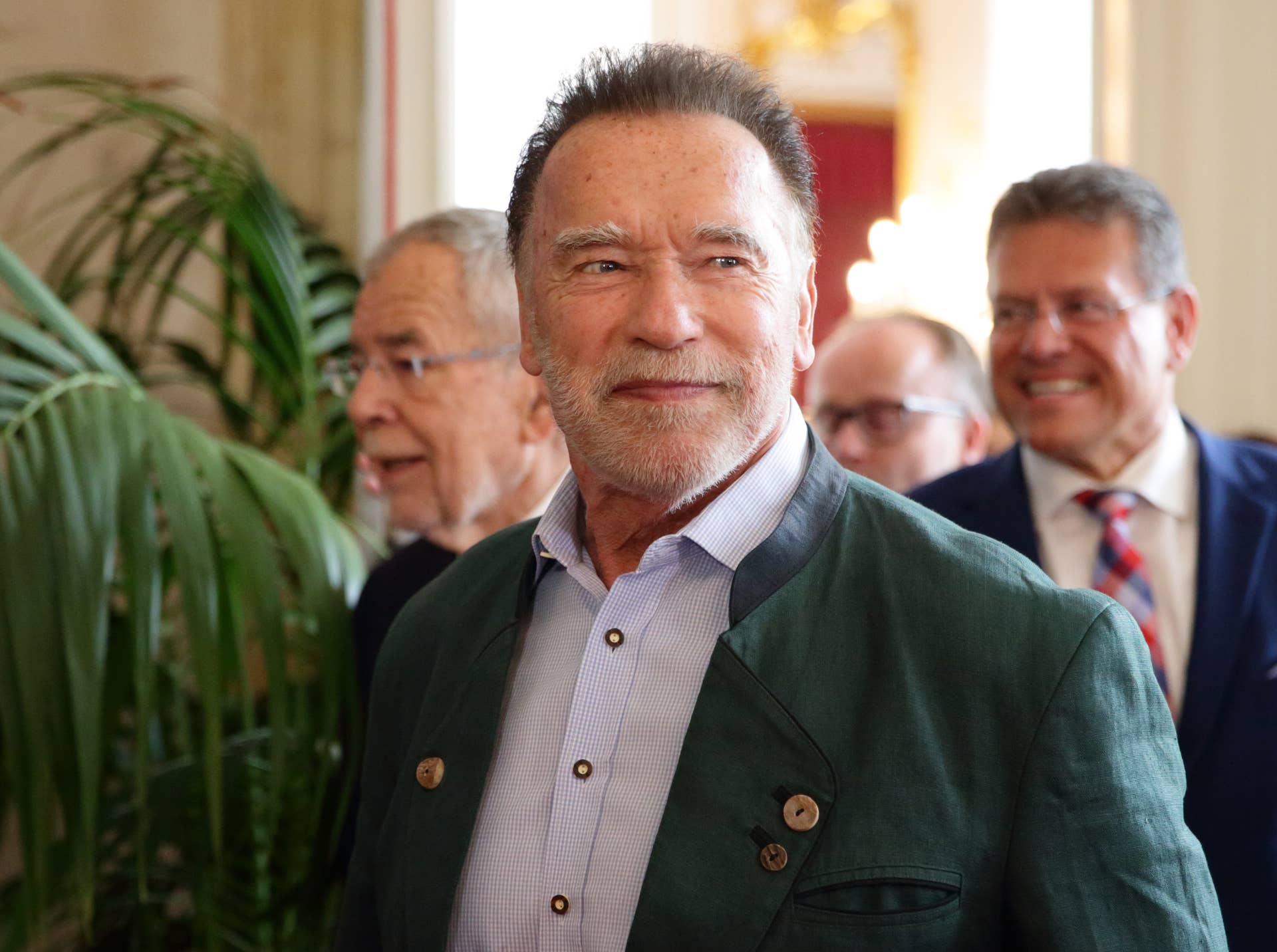
Arnold Schwarzenegger cannot currently run for President of the United States because he is not a "natural-born citizen," as required by Article II, Section 1 of the U.S. Constitution. Although he served as the Governor of California and has been a U.S. citizen since 1983, his birth in Austria remains an absolute legal barrier to the presidency under existing constitutional law.
The Constitutional Barrier: Article II and the Natural-Born Citizen Clause
The primary obstacle preventing Arnold Schwarzenegger from seeking the nation’s highest office is found in the foundational text of American law. Article II, Section 1, Clause 5 of the United States Constitution states: "No Person except a natural born Citizen, or a Citizen of the United States, at the time of the Adoption of this Constitution, shall be eligible to the Office of President."
This clause establishes three specific requirements for any presidential candidate:
- Natural-born citizenship: The candidate must have been a citizen at birth.
- Age: The candidate must be at least 35 years old.
- Residency: The candidate must have been a resident of the United States for at least 14 years.
While Schwarzenegger easily meets the age and residency requirements, the "natural-born" status is the definitive dealbreaker. Born in Thal, Austria, in 1947, Schwarzenegger emigrated to the United States in 1968 and became a naturalized citizen in 1983. In the eyes of the Constitution, there is a legal distinction between a "naturalized" citizen and a "natural-born" citizen that applies exclusively to the eligibility for the Presidency and the Vice Presidency.
The Historical Intent of the Clause
Constitutional scholars often debate the original intent of the "natural-born" requirement. Most historians agree that the Framers included this provision to protect the nascent republic from foreign influence. Following the Revolutionary War, there was a deep-seated fear that a European noble or a foreign operative could naturalize, gain popularity, and eventually seize the executive branch to return the United States to a monarchy or a colonial state.
John Jay, who would become the first Chief Justice of the Supreme Court, wrote to George Washington in 1787, suggesting that the command of the military should not be entrusted to anyone but a "natural born Citizen." This sentiment was codified into the Constitution to ensure the President had no competing allegiances to a foreign power.
Schwarzenegger’s Political Career and Public Ambition
Despite the legal prohibition, the question of a "President Schwarzenegger" has persisted for over two decades. This is largely due to his successful tenure as the 38th Governor of California (2003–2011). Having won a historic recall election, Schwarzenegger proved that his celebrity appeal, combined with a centrist Republican platform, could win over a diverse and massive electorate.
In various interviews, most notably in 2023 and early 2024, Schwarzenegger has been candid about his desire to run. When asked by journalists if he would enter the race if the law allowed it, his response has been a consistent "yes." He has argued that the current political landscape is "wide open" and that voters are looking for a leader who can bring people together rather than polarize them.
The "Governator" Legacy as a Presidential Template
Schwarzenegger’s time in Sacramento is often cited by supporters as proof of his presidential viability. As Governor, he navigated a heavily Democratic legislature, championing environmental causes (such as the Global Warming Solutions Act of 2006) while maintaining traditional fiscal conservatism. His ability to pivot from a "bodybuilder-actor" persona to a serious policymaker remains a unique phenomenon in American politics. This transition is what fuels the recurring public interest in his eligibility, especially during cycles where voters express dissatisfaction with traditional career politicians.
Legislative Attempts to Change the Law: The "Equal Opportunity to Govern" Amendment
The only way Arnold Schwarzenegger could legally run for President is through a Constitutional Amendment. This is a notoriously difficult process that requires a two-thirds majority vote in both the House of Representatives and the Senate, followed by ratification by three-fourths of the State legislatures (38 states).
In the early 2000s, there was a legitimate, albeit unsuccessful, movement to change the natural-born citizen requirement. This was often nicknamed the "Arnold Amendment."
The Hatch and Rohrabacher Proposals
In 2003 and 2004, several Republican lawmakers introduced bills aimed at expanding presidential eligibility:
- The Equal Opportunity to Govern Amendment: Sponsored by Senator Orrin Hatch, this proposal sought to make any person who had been a naturalized U.S. citizen for at least 20 years eligible for the presidency.
- The Rohrabacher Proposal: Representative Dana Rohrabacher introduced a similar measure in the House, arguing that it was discriminatory to tell millions of naturalized citizens—many of whom serve in the military—that they can never reach the highest office.
These efforts ultimately stalled. Critics argued that the Constitution should not be amended to suit the ambitions of a single popular individual. Furthermore, the political climate following the 9/11 attacks made many lawmakers hesitant to relax rules regarding the national origin of the Commander-in-Chief.
Comparing Eligibility: Natural-Born vs. Naturalized Citizens
To understand why Schwarzenegger is excluded from the presidency while being eligible for almost every other office, it is helpful to compare the legal requirements for various levels of government.
| Office | Requirement: Natural-Born Citizen? | Requirement: U.S. Citizenship Duration | Age Requirement |
|---|---|---|---|
| President | Yes | From Birth | 35 |
| Vice President | Yes | From Birth | 35 |
| U.S. Senator | No | 9 Years | 30 |
| U.S. Representative | No | 7 Years | 25 |
| Governor (CA) | No | Registered Voter / Citizen | 18+ |
| Supreme Court Justice | No | Not Constitutionally Defined | None |
As shown in the table, Schwarzenegger reached the pinnacle of what a naturalized citizen can achieve in the executive branch at the state level. While he could theoretically be appointed to the Supreme Court or elected to the Senate, the Executive Mansion remains out of reach.
Modern Interpretations and Potential Legal Challenges
While the "natural-born" clause seems straightforward, it has faced modern scrutiny in other contexts. During the 2016 primary, questions were raised about Senator Ted Cruz (born in Canada to a U.S. citizen mother) and in 2008 regarding Senator John McCain (born in the Panama Canal Zone). In those cases, the consensus among legal scholars was that "natural-born" includes anyone who is a citizen at the moment of birth without needing a naturalization process.
Unfortunately for Schwarzenegger, his case does not fall into this gray area. He was born to two Austrian parents in Austria and did not acquire U.S. citizenship until his naturalization in his mid-30s. There is no serious legal theory that could re-interpret "natural-born" to include someone who underwent the naturalization process as an adult.
The Role of the Supreme Court
Could a legal challenge reach the Supreme Court? If Schwarzenegger were to file for candidacy and be rejected by a Secretary of State, he could sue. However, legal experts agree the Court would almost certainly uphold the plain language of Article II. The Supreme Court has historically been extremely reluctant to interfere with the specific eligibility requirements explicitly written into the Constitution.
The Political Climate of 2026: Why the Topic Persists
As we move through 2026, the discussion around Schwarzenegger’s eligibility often serves as a proxy for broader debates about American identity and the definition of a "citizen."
- The Rise of Independent Voters: With a growing number of Americans identifying as independents, Schwarzenegger's brand of "post-partisan" politics remains attractive.
- Immigration Reform: The debate often resurfaces during discussions about immigration reform. Supporters of a change argue that the natural-born clause creates a "second-class" citizenship for the over 20 million naturalized Americans.
- The Celebrity Politician Era: Following the presidencies of Donald Trump and the political involvement of figures like Dwayne "The Rock" Johnson, the barrier between Hollywood and Washington has thinned, making a Schwarzenegger run seem more culturally plausible, even if it is legally impossible.
Practical Alternatives for Political Influence
While the presidency is off the table, Schwarzenegger continues to exert significant influence on American policy in 2026. His work through the Schwarzenegger Institute for State and Global Policy at the University of Southern California (USC) focuses on redistricting reform, environmental policy, and voting rights.
He also remains a potent force in the "Never Trump" wing of the Republican Party, often using his platform to advocate for a return to "Reagan-style" internationalism and fiscal responsibility. For those who wish to see his policies enacted, his role as a kingmaker and policy advocate is the most realistic path forward.
Frequently Asked Questions
Can Arnold Schwarzenegger be Vice President?
No. The 12th Amendment of the U.S. Constitution states that "no person constitutionally ineligible to the office of President shall be eligible to that of Vice-President of the United States." Because he is ineligible for the presidency due to his birth in Austria, he is also ineligible for the vice presidency.
Was there ever a serious attempt to change the Constitution for him?
Yes. Between 2003 and 2004, the "Equal Opportunity to Govern" amendment was proposed by Senator Orrin Hatch. It was widely seen as a way to allow Schwarzenegger to run. However, the bill never received the necessary two-thirds support in Congress and did not move to the states for ratification.
If he was born on a U.S. military base in Austria, would he be eligible?
If Schwarzenegger had been born to U.S. citizen parents on a military base or abroad, he likely would have been considered a natural-born citizen under the principle of jus sanguinis (right of blood). However, since both of his parents were Austrian citizens at the time of his birth, this scenario does not apply.
Could he run if he moved back to Austria and then back to the U.S.?
No. Moving or changing residency does not change the fact that he was naturalized as an adult. The "natural-born" requirement is based on the circumstances of one’s birth, which cannot be altered by later actions or residency changes.
Can a naturalized citizen serve in the Cabinet?
Yes, naturalized citizens can serve in the Cabinet (e.g., Madeleine Albright or Henry Kissinger). However, they are skipped over in the Presidential Line of Succession. If a naturalized citizen is the Secretary of State and the President and Vice President are incapacitated, the succession skips them and moves to the next eligible person in line.
Final Assessment for 2026
As of 2026, the legal reality for Arnold Schwarzenegger remains unchanged: he cannot run for President. The "Natural-Born Citizen" clause of Article II is one of the few rigid requirements in the U.S. Constitution that has resisted the evolution of modern political norms. While his popularity and gubernatorial experience make him a fascinating "what if" in American history, any path to the White House would require a monumental Constitutional Amendment—a feat that has not been achieved for any eligibility requirement since the 26th Amendment lowered the voting age in 1971.
Supporters and political analysts should look toward his ongoing work in environmental advocacy and redistricting reform as his primary means of shaping the American political landscape, rather than a direct bid for the executive branch.