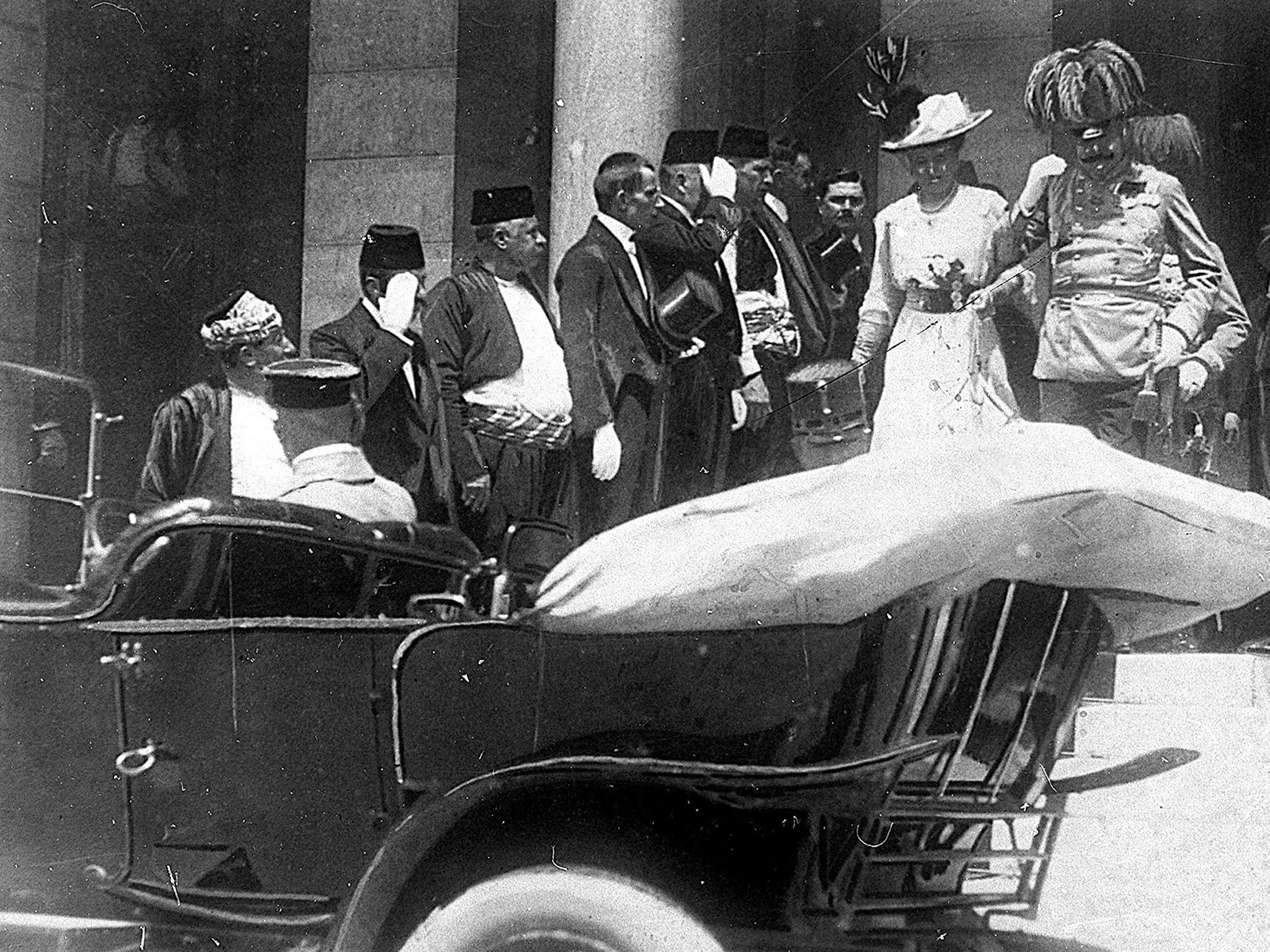
Archduke Franz Ferdinand’s impact on history stems primarily from his 1914 assassination, which triggered the "July Crisis" and World War I. Beyond being a catalyst for global conflict, his reformist vision for a federated Austro-Hungarian empire represents a significant historical "what-if" that might have altered the course of 20th-century European nationalism and prevented imperial collapse.
The Heir Apparent: Origins and Character
Born in 1863, Archduke Franz Ferdinand Karl Ludwig Maria of Austria was never originally intended to occupy the center stage of European geopolitics. As the eldest son of Archduke Karl Ludwig—the younger brother of Emperor Franz Joseph I—Franz Ferdinand was a secondary figure in the Habsburg line. This changed abruptly following the 1889 suicide of Crown Prince Rudolf at Mayerling and the subsequent death of his father in 1896. Suddenly, the stern, somewhat reclusive Archduke became the heir presumptive to one of the most complex and volatile empires in the world.
His character was often described as abrasive and difficult. Unlike the beloved, albeit traditional, Emperor Franz Joseph, Franz Ferdinand was a man of modern sensibilities but reactionary temperaments. He was a devoted family man, a passionate hunter, and a person who deeply distrusted the Hungarian political elite. These personality traits played a significant role in how he was perceived by both his subjects and foreign diplomats, often leading to a lack of popular mourning when his life was eventually cut short.
The Morganatic Marriage and Imperial Friction
One of the most consequential aspects of Franz Ferdinand’s life was his marriage to Sophie Chotek, a Czech countess. Because she was not from a reigning or formerly reigning dynasty, the marriage was deemed "morganatic." Emperor Franz Joseph only consented to the union under the condition that Sophie would never hold the title of Empress and their children would have no claim to the throne.
This domestic struggle had profound political implications. Sophie was frequently humiliated by the rigid Viennese court protocol, which often dictated that she could not sit in the same royal carriage as her husband during official functions. It is widely believed that Franz Ferdinand’s decision to visit Sarajevo in June 1914 was partly motivated by the fact that Sophie could stand by his side with full honors in the provincial setting of Bosnia-Herzegovina, away from the stifling rules of Vienna. This personal desire to honor his wife placed them both directly in the path of the Black Hand assassins.
Political Vision: The United States of Greater Austria
To understand Franz Ferdinand’s potential impact on history, one must examine his proposed reforms. He was acutely aware that the "Dual Monarchy" system—established by the Compromise of 1867—was failing. The empire was a patchwork of ethnicities, including Germans, Hungarians, Czechs, Poles, Ukrainians, Serbs, Croats, Slovaks, Romanians, and Italians.
Franz Ferdinand supported the idea of "Trialism" or, more radically, the "United States of Greater Austria." This plan, heavily influenced by the scholar Aurel Popovici, aimed to:
- Decentralize power: Granting autonomy to ethnic groups within their own designated territories.
- Balance Hungarian Influence: By elevating the status of Slavic populations, he hoped to curb the dominance of the Hungarian elite, whom he viewed as a threat to the crown's authority.
- Preserve the Monarchy: He believed that if the various ethnicities felt they had a stake in the empire's governance, they would be less likely to seek total independence or join neighboring states like Serbia.
Historians in 2026 continue to debate whether this plan would have saved the empire or accelerated its demise. If successful, it might have prevented the ethnic fractures that led to the Yugoslav Wars decades later. However, his vision made him a target for Serbian nationalists, who feared that a reformed, inclusive Austro-Hungarian Empire would make their dream of a "Greater Serbia" impossible to achieve.
The Sarajevo Assassination: The Spark of 1914
On June 28, 1914, Franz Ferdinand and Sophie were assassinated in Sarajevo, Bosnia. The perpetrator, Gavrilo Princip, was a member of Young Bosnia, a group seeking to liberate South Slavs from Austrian rule, backed by the Serbian secret society known as the Black Hand.
The assassination was a comedy of errors and security failures. After an initial bomb attempt earlier in the day failed, the Archduke’s motorcade took a wrong turn while attempting to visit the hospital where the morning's victims were being treated. The car stalled directly in front of Princip, who fired two shots. These bullets did more than end the lives of a royal couple; they shattered the fragile peace of the Concert of Europe.
The Chain Reaction: From Sarajevo to World War
The death of the Archduke initiated the "July Crisis," a month of intense diplomatic maneuvering and ultimatum-issuing. Because of the complex system of alliances, the localized conflict between Austria-Hungary and Serbia quickly escalated:
- Austria-Hungary declared war on Serbia after the latter failed to meet all terms of a draconian ultimatum.
- Russia, acting as the protector of Slavic peoples, mobilized its army to support Serbia.
- Germany, bound by treaty to Austria-Hungary and fearing a two-front war, declared war on Russia and its ally, France.
- Great Britain entered the fray after Germany violated Belgian neutrality.
Within weeks, the Archduke's death had plunged the globe into a total war that would claim over 16 million lives.
The Collapse of the Old World Order
The long-term impact of Franz Ferdinand’s assassination was the total dismantling of the world as it was known in the 19th century. By the end of World War I in 1918, four major empires had vanished:
- The Austro-Hungarian Empire: Dissolved into several new nations, including Austria, Hungary, Czechoslovakia, and parts of Yugoslavia, Poland, and Romania.
- The German Empire: The monarchy was abolished, leading to the unstable Weimar Republic.
- The Russian Empire: Collapsed into the Russian Revolution, giving rise to the Soviet Union and the spread of Communism.
- The Ottoman Empire: Its dissolution reshaped the Middle East, leading to the creation of modern Turkey and various mandates that still influence regional geopolitics today.
The vacuum left by the Archduke’s empire and the subsequent Treaty of Versailles created the economic and political grievances that would eventually fuel the rise of Nazi Germany and the onset of World War II. In this sense, the shots fired in Sarajevo are the "Big Bang" of modern history.
Comparative Geopolitical Shift: 1914 vs. 1920
The following table illustrates the dramatic shift in European political structure directly resulting from the events surrounding Franz Ferdinand.
| Feature | Pre-Assassination (Early 1914) | Post-War Settlement (1920) |
|---|---|---|
| Dominant Form of Gov. | Absolute or Constitutional Monarchy | Republics and Parliamentary Democracies |
| Major Central Power | Austro-Hungarian Empire | Fragmented into nation-states (Austria, Hungary) |
| Russian Governance | Romanov Tsardom | Bolshevik Soviet Russia |
| Middle East Status | Ottoman Provinces | British and French Mandates |
| Global Hegemony | Centered in Europe (London, Berlin, Paris) | Rising American and Japanese influence |
| Balkan Identity | Imperial frontier / Subject states | The Kingdom of Serbs, Croats, and Slovenes |
Socio-Cultural and Technical Impact
The war triggered by the Archduke's death accelerated technological and social changes that might otherwise have taken decades. The necessity of total war led to:
- Medical Advancements: Innovations in blood transfusions, reconstructive surgery, and the treatment of psychological trauma (then called "shell shock").
- Technological Leaps: The rapid development of aviation, motorized transport, and chemical engineering.
- Social Reform: The mobilization of women into the workforce during the war became a primary catalyst for the women’s suffrage movements across the Western world.
- The End of Aristocracy: The physical and financial destruction of the war broke the power of the landed nobility in Europe, clearing the way for modern meritocratic and democratic systems.
Historical Analysis: The "What If" Factor
In the context of 2026, many historians focus on the Archduke not as a victim, but as a potential savior of European stability. Had he survived, it is possible that he would have succeeded Emperor Franz Joseph (who died in 1916) and implemented his federalist reforms. This might have satisfied Slavic nationalist aspirations within a democratic framework, potentially preventing the rise of the radical ideologies that dominated the 20th century.
However, a competing school of thought suggests that the tensions within the Austro-Hungarian Empire were too deep for any one man to resolve. Franz Ferdinand’s abrasive personality might have alienated the Hungarian leadership to the point of civil war, leading to a collapse regardless of the Sarajevo assassination. Nevertheless, his impact remains undeniable: he is the figure whose absence from the throne was far more influential than his presence on it.
Frequently Asked Questions
Was Archduke Franz Ferdinand popular in his own country?
No, he was generally unpopular. The Hungarian elite despised his reformist ideas, the Austrian conservatives were wary of his morganatic marriage, and the various ethnic minorities often saw him as just another Habsburg oppressor. His death did not initially cause an outpouring of national grief, but rather a sense of political panic.
Would World War I have happened if he hadn't been assassinated?
Most historians agree that Europe was a "powder keg" of tensions, but the assassination was the specific spark that determined the timing and nature of the war. Without it, a conflict might have broken out later over colonial disputes or different Balkan tensions, perhaps under conditions that wouldn't have led to a full global conflagration.
What happened to Franz Ferdinand's children?
Because of the morganatic nature of the marriage, his children (Sophie, Maximilian, and Ernst) were barred from the throne. After the war, their properties were confiscated by the new Czechoslovak state. During World War II, Maximilian and Ernst were sent to the Dachau concentration camp by the Nazis due to their pro-Austrian, anti-Nazi stances; they survived, but their health was permanently broken.
Did Franz Ferdinand want war with Serbia?
Paradoxically, he was one of the strongest voices for peace in the years leading up to 1914. He feared that a war with Serbia would inevitably lead to a conflict with Russia, which he believed would destroy both the Austrian and Russian monarchies. He famously stated that he did not want to lead an army against the Slavs because it would result in internal revolution.
How is his legacy viewed in the Balkans today?
The legacy is deeply divided. In parts of Bosnia and Serbia, Gavrilo Princip is sometimes still seen as a freedom fighter against imperialist rule. In other areas, particularly those that thrived under Austrian administration, the Archduke is viewed more sympathetically as a reformer whose death ended the possibility of a peaceful, multi-ethnic federation.
Recommendation for Further Study
To fully grasp the magnitude of the Archduke's impact, one should move beyond the assassination itself and study the United States of Greater Austria proposal. Understanding the internal ethnic tensions of 19th-century Austria-Hungary provides essential context for the current geopolitical landscape of Central and Eastern Europe. Visiting the Heeresgeschichtliches Museum (Museum of Military History) in Vienna is highly recommended, as it houses the Gräf & Stift automobile in which the Archduke was killed, as well as his blood-stained uniform—tangible reminders of the moment the modern world began.