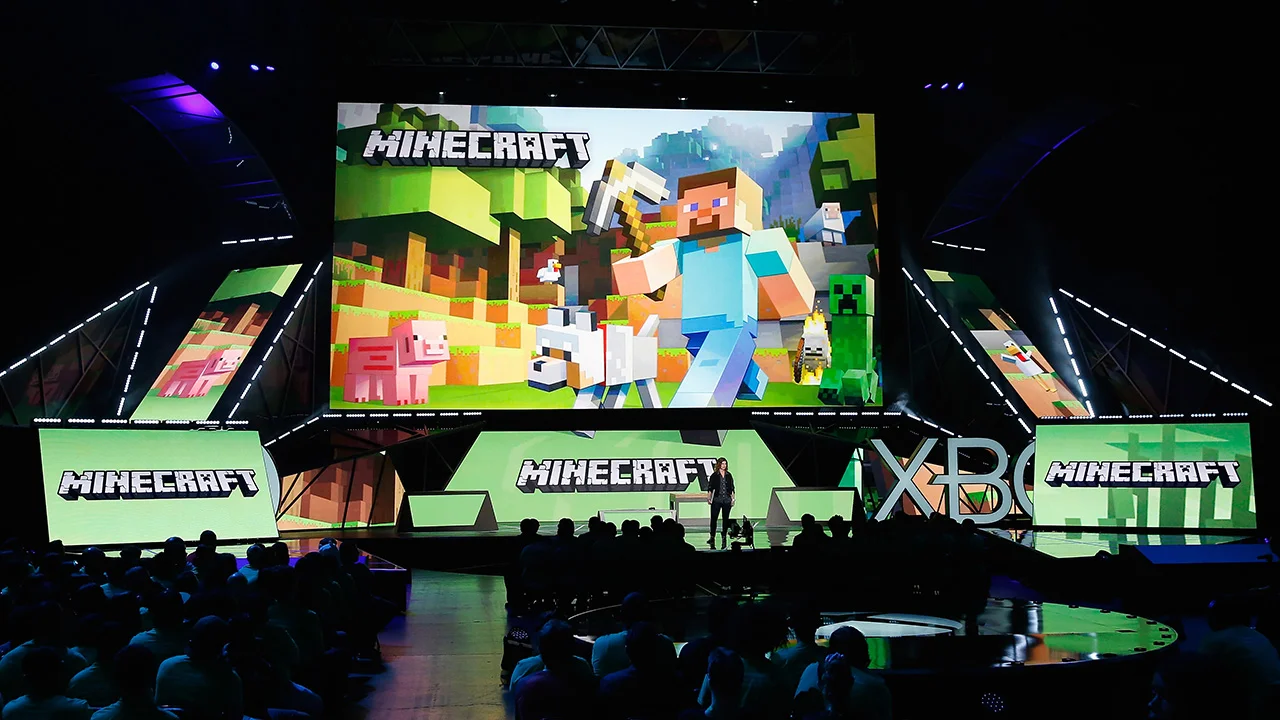
Minecraft Earth was an ambitious attempt by Mojang Studios to bring the world-building mechanics of the iconic block-based game into the physical world through augmented reality (AR). Launched in 2019 and officially shuttered in June 2021, the game invited players to explore their surroundings, collect resources, and construct collaborative structures in real-time. This overview examines the game’s mechanics, its technical requirements, and the legacy it left behind for future AR experiences.
The Core Concept of Minecraft Earth
The primary objective of Minecraft Earth was to bridge the gap between virtual creativity and physical space. Unlike the standard Minecraft experience, which is confined to a screen, Minecraft Earth utilized AR technology to project game environments—known as "Buildplates"—onto the user’s surroundings. Whether it was a tabletop in a living room or a public park, players could manipulate blocks, spawn mobs, and interact with the environment through their mobile devices.
The game operated on a location-based system similar to other prominent AR titles of the era. By traversing their neighborhood, players would encounter "Tappables," which yielded raw materials like wood, stone, and rare mobs. The social aspect was a defining feature, allowing multiple users to contribute to the same Buildplate simultaneously, turning communal spaces into digital construction sites.
Technical Infrastructure and Requirements
To function effectively, Minecraft Earth relied on advanced AR frameworks. At the time of its operation, it required devices that supported ARCore (on Android) or ARKit (on iOS). This ensured that the virtual blocks could correctly detect surfaces, maintain consistent light levels, and stay anchored to specific geographic coordinates.
Key technical components included:
- Spatial Mapping: The ability of the device to scan the floor or table to create a flat plane for the game to sit on.
- Geospatial Anchoring: Utilizing GPS data to ensure that "Adventures" (instanced gameplay segments) occurred at specific real-world locations.
- Multi-user Synchronization: A cloud-based backend that tracked block placement from multiple users and updated the visual state on all devices in real-time.
For players to engage with the game effectively, a stable high-speed data connection was essential. The constant streaming of geospatial data and the synchronization of hundreds of virtual blocks meant that the application placed significant strain on both battery life and data plans.
Gameplay Mechanics: Building and Adventures
The gameplay loop of Minecraft Earth was divided into two distinct modes: Building and Adventures.
1. Building (Buildplates): Players would select a Buildplate, which acted as a canvas. In the small-scale view, players could manipulate blocks with precision. When expanded to full scale, players could physically walk around their creation in the real world. This provided a unique perspective, allowing architects to look under, over, and through their structures.
2. Adventures: These were life-sized, procedurally generated encounters that appeared on the map. During an Adventure, the phone screen would essentially turn into a window into the Minecraft world. Players had to navigate these areas, fend off hostile mobs like zombies or skeletons, and solve puzzles to secure loot. Unlike the creative building phase, these moments were high-stakes and required tactical movement in the real world to succeed.
Why Minecraft Earth Was Discontinued
Despite its innovative approach, Minecraft Earth was officially discontinued on June 30, 2021. The decision was primarily driven by the limitations imposed by global lockdowns during 2020. Since the game was designed to encourage movement, social interaction, and outdoor exploration, the inability of users to gather or travel freely rendered the core experience impossible to enjoy as intended.
Mojang Studios officially noted that the game’s infrastructure required a level of physical participation that could no longer be supported in the current landscape. After the shutdown, all game data was purged, and the app was removed from digital storefronts. This serves as a reminder of the fragility of location-based AR services that depend heavily on user mobility.
Comparative Overview of AR Gaming
To better understand the niche Minecraft Earth occupied, it is helpful to compare its features with other AR titles that emphasize different elements of the genre.
| Feature | Minecraft Earth | Pokemon GO | AR Navigation/Utility Apps |
|---|---|---|---|
| Primary Goal | Construction/Creative | Collection/Battle | Wayfinding/Information |
| User Agency | High (Change environment) | Medium (Interact with entities) | Low (Passive data layer) |
| Social Focus | Collaborative building | Competitive/Cooperative | Minimal |
| Physical Space | Requires flat surfaces | Requires walking distance | Requires GPS precision |
Challenges and Limitations of AR Gaming
Developing for augmented reality presents a unique set of challenges that Minecraft Earth faced during its lifecycle. One of the most significant issues was the "occlusion" problem—where virtual objects would sit "on top" of real-world objects rather than being hidden behind them. While later updates attempted to improve depth sensing, the hardware limitations of mid-range smartphones often led to immersion-breaking visuals.
Furthermore, thermal throttling was a common issue. Running a high-fidelity AR engine alongside GPS, cellular data, and camera processing would cause many devices to heat up rapidly, leading to performance drops and forced app closures. These technical hurdles represent the broader struggle for mobile AR to reach the polish of traditional console gaming.
Legacy and Future Outlook
While Minecraft Earth is no longer playable, the technology developed for it did not disappear. Many of the proprietary AR algorithms used by Mojang and Microsoft were integrated into other projects. The concept of "Shared AR"—where multiple users see the same digital objects from their unique perspectives—remains a gold standard in the industry.
The project demonstrated that a global community could collaborate on complex, large-scale projects without being in the same room. For developers, it provided a massive dataset on how users interact with virtual objects in uncontrolled, natural lighting environments. This data is fundamental to the development of modern AR headsets and advanced smart glasses which are becoming more prevalent in the mid-2020s.
Frequently Asked Questions
Can I still download or play Minecraft Earth in 2026? No. Minecraft Earth was completely shut down in June 2021. The servers are offline, and the application has been removed from all official app stores. Any "download links" found online for the game are unauthorized and may contain malware or outdated, non-functional code.
What happened to the items I purchased in the game? When the game closed, Mojang provided a migration path for players who had spent real money. Eligible players were given a complimentary copy of Minecraft: Bedrock Edition and a bundle of Minecoins to use in the in-game Marketplace of that version as a gesture of goodwill.
Are there any alternatives to Minecraft Earth? While there is no direct successor to Minecraft Earth, various sandbox building games and location-based AR games exist. Players looking for the building aspect should continue with standard Minecraft, while those interested in location-based exploration might look toward established titles like Pokémon GO or Pikmin Bloom.
Why did the game require so much battery power? The game simultaneously utilized the phone’s camera, the GPS receiver, the accelerometer/gyroscope, the CPU for AR calculations, and the GPU for rendering 3D textures. This heavy multi-threading puts significant strain on mobile hardware, leading to rapid battery consumption.
Will Microsoft ever bring back Minecraft AR? Microsoft has not announced plans to revive Minecraft Earth. However, the company continues to invest heavily in AR through the HoloLens ecosystem and other experimental initiatives. It is possible that AR features may eventually return to the Minecraft ecosystem through different hardware platforms rather than mobile phones.
Recommendations for AR Enthusiasts
If you are interested in the evolution of AR, the best way to stay informed is to follow the development of OpenXR and other industry-standard APIs. These standards are making it easier for developers to create high-quality AR experiences that are not restricted to a single platform. For those who enjoy the "building" aspect of AR, look for apps that utilize the latest LiDAR sensors found in high-end 2026 mobile devices, as these offer the most accurate spatial mapping currently available to the public.