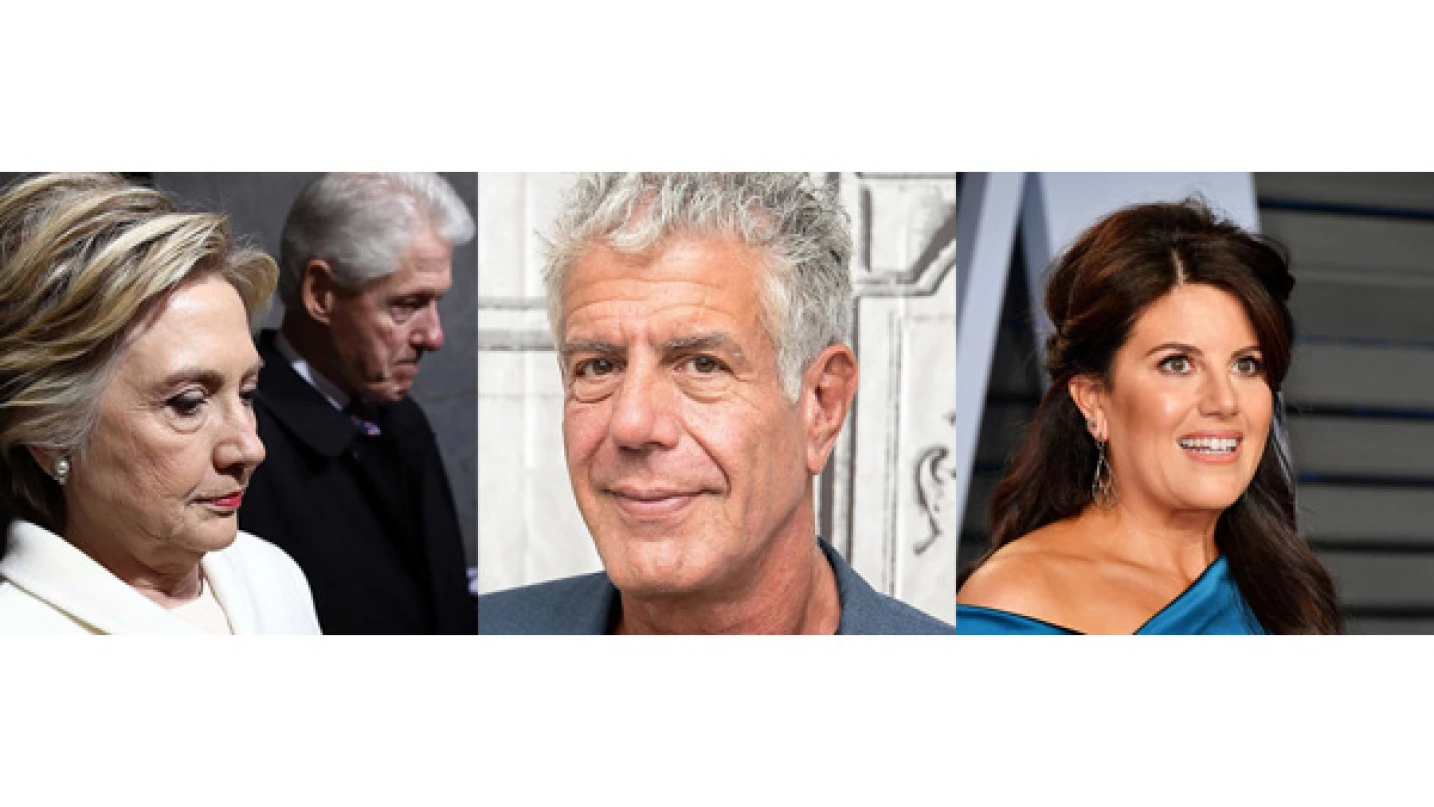
The convergence of Anthony Bourdain’s cultural storytelling and Hillary Clinton’s political journey illustrates the seismic shift from centralized legacy media to a fragmented, personality-driven digital ecosystem. While Bourdain successfully leveraged "prestige TV" to build a brand of radical authenticity, Clinton faced the challenges of navigating an institutional media structure that was rapidly losing its gatekeeping authority to social media algorithms.
The decade between 2010 and 2020 served as a transformative era for global communication. During this period, the world witnessed the rise of the "personality-led" narrative, where the individual’s voice often carried more weight than the institution they represented. Two of the most significant figures to navigate this transition—albeit from vastly different sectors—were Anthony Bourdain and Hillary Clinton. Their presence in the media landscape offers a profound study in how authenticity is manufactured, perceived, and weaponized in a digital-first world.
As of 2026, looking back at these two figures allows us to see the blueprint for modern communication. Bourdain represented the outsider who became the ultimate insider by never losing his "outsider" edge, while Clinton represented the ultimate insider who struggled to find a foothold in a media landscape that increasingly rewarded the disruption of establishment norms.
The Bourdain Model: Authenticity as a Media Commodity
Anthony Bourdain’s transition from a professional chef to a global media icon was not merely a career change; it was a masterclass in narrative framing. Beginning with the publication of Kitchen Confidential in 2000, Bourdain established a "punk rock" ethos that prioritized transparency and raw honesty over polished presentation.
From Travelogue to Culinary Diplomacy
By the time Bourdain moved to CNN for Parts Unknown in 2013, the media landscape was shifting toward "prestige" documentary content. Bourdain’s genius lay in his ability to use food as a Trojan horse to discuss geopolitics, history, and sociology. In the changing media landscape of the mid-2010s, viewers were fatigued by traditional news cycles. Bourdain offered a "slow media" alternative—cinematic, subjective, and deeply human.
His 2016 sit-down with President Barack Obama in Hanoi, Vietnam, remains a definitive media moment. It bypassed the White House Press Corps' formal constraints, utilizing a low-profile, "street-food" setting to humanize the most powerful man in the world. This reflected a broader trend: the public’s growing preference for "authentic" interactions over scripted press conferences.
Navigating the Parasocial Relationship
Bourdain was one of the first major figures to master the parasocial relationship. Through his social media presence and his first-person narration, he made millions of viewers feel like they were "in" on the secret. In a landscape where trust in traditional institutions was declining, Bourdain’s willingness to admit his own flaws and biases made him a trusted arbiter of truth.
Hillary Clinton and the Institutional Friction
If Bourdain was the beneficiary of the shift toward raw authenticity, Hillary Clinton often found herself at odds with the changing mechanics of the media. Throughout her 2016 presidential campaign, Clinton operated within a framework of traditional political communication that was being actively dismantled by the rise of social media echo chambers and algorithmic polarization.
The Legacy Media Gatekeeper Era
For most of her career, Clinton thrived in an environment where media was controlled by a few major networks and newspapers. In this "one-to-many" broadcast model, policy depth and institutional backing were the primary currencies. However, by 2016, the "many-to-many" model of Twitter (now X) and Facebook had taken over.
Clinton’s struggle was not a lack of media presence, but rather the nature of that presence. While she was highly visible, her messaging often felt "curated" in an era that was beginning to demand "unfiltered" content. The media landscape of 2016 penalized her for the very professionalized caution that had been a requirement for women in politics for decades.
The Algorithm and the "Likability" Narrative
The changing media landscape introduced a new challenge for public figures: the feedback loop of the algorithm. Negative narratives about Clinton—ranging from her "likability" to her use of a private email server—were amplified by social media structures that prioritize high-arousal emotions like anger and suspicion. Unlike Bourdain, who could control his narrative through long-form storytelling, Clinton’s message was often sliced into soundbites and memes that were easily weaponized by opponents.
Comparative Analysis: Media Strategies and Outcomes
The following table compares how Anthony Bourdain and Hillary Clinton engaged with key elements of the evolving media landscape during the mid-to-late 2010s.
| Feature | Anthony Bourdain | Hillary Clinton |
|---|---|---|
| Primary Medium | Prestige TV & Long-form Prose | Traditional Journalism & Political Ads |
| Messaging Style | Subjective, Raw, First-Person | Objective, Polished, Policy-Oriented |
| Public Perception | The "Authentic" Outsider | The "Establishment" Professional |
| Use of Social Media | Curated behind-the-scenes glimpses | Strategic campaign announcements |
| Narrative Control | High (Produced his own content) | Low (Subject to 24/7 news cycle) |
| Audience Relationship | Parasocial / Direct Trust | Institutional / Formal |
The Convergence of Food, Politics, and Celebrity
The intersection of Bourdain and Clinton in the media landscape highlights a significant cultural phenomenon: the politicization of lifestyle and the "lifestyling" of politics. Bourdain frequently addressed political issues, such as the rights of immigrant workers in the US or the impact of Henry Kissinger’s foreign policy, but he did so through the lens of culture. This allowed him to reach audiences that were otherwise "checked out" of political discourse.
Conversely, Clinton tried to bridge the gap by appearing on non-traditional media platforms, such as Between Two Ferns or podcasts. However, the media landscape often viewed these attempts as "calculated," whereas Bourdain’s forays into politics were seen as "organic." This distinction is crucial for understanding the 2026 media environment, where the "effortlessness" of a message is often more important than its factual content.
The "Dinner Table" Philosophy
Bourdain’s philosophy was built on the idea that sitting down and eating with someone is a political act. This localized approach to understanding the world contrasted sharply with the high-level, globalist perspective that Clinton represented. In the changing media landscape, Bourdain’s "micro-view" of the world felt more relatable to a public that was feeling increasingly alienated by global systems.
The Impact of Technological Fragmentation
By 2026, the fragmentation that began in the 2010s has reached its zenith. The "mass media" that both Bourdain and Clinton relied on in different ways has been replaced by hyper-niche communities.
- The Death of the "Water Cooler" Moment: In Bourdain's era, a new episode of Parts Unknown could dominate cultural conversation for a week. Today, content is consumed in silos.
- The Rise of the Individual over the Brand: Bourdain was a precursor to the modern "creator economy." His brand was himself, not the network. Clinton, conversely, was always tied to the "Clinton brand," which carried decades of institutional baggage.
- Algorithmic Governance: Media is no longer curated by editors but by code. This shift has made it harder for complex figures like Clinton to maintain a nuanced public image, while rewarding the "vibe-based" communication style perfected by Bourdain.
Lessons for the 2026 Media Environment
For media professionals, creators, and public figures in 2026, the contrast between Bourdain and Clinton offers several vital lessons:
- Vulnerability is a Strength: Bourdain’s willingness to show the "messy" parts of travel and life created a level of loyalty that Clinton’s polished exterior could not match.
- Context is King: Bourdain succeeded because he provided deep context for the places he visited. In a world of 15-second clips, the ability to provide a "why" behind the "what" remains a rare and valuable skill.
- The Medium is still the Message: Marshall McLuhan’s famous adage holds true. Clinton’s message was often lost because the medium (social media) was inherently hostile to the complexity of her policy-heavy approach.
Frequently Asked Questions
Did Anthony Bourdain ever interview Hillary Clinton?
No, Anthony Bourdain did not have a formal sit-down interview with Hillary Clinton on his shows. However, he was often asked about her during the 2016 election cycle. While Bourdain was a critic of many institutional structures, he expressed concern over the rhetoric used against Clinton, though he remained largely focused on the cultural and human impact of political decisions rather than partisan endorsements.
How did the 2016 election change Bourdain's show?
The 2016 election significantly darkened the tone of Parts Unknown. Bourdain became more vocal about his disdain for the "coarsening" of American culture. The media landscape post-2016 became more polarized, and Bourdain responded by leaning even harder into the stories of marginalized communities, effectively using his platform as a form of cultural resistance.
Why is Hillary Clinton considered a "legacy media" figure?
Hillary Clinton is considered a legacy media figure because her political rise occurred during the era of the "Big Three" networks and major national newspapers. Her communication style—formal, prepared, and mediated through press secretaries—was designed for an environment that valued stability and expertise over the spontaneity and disruption of the digital age.
How does the media landscape of 2026 differ from the 2016 era?
By 2026, the media landscape has shifted entirely away from centralized "truth-telling" institutions toward decentralized, AI-curated feeds. While 2016 was the beginning of the "post-truth" era, 2026 is defined by "synthetic reality," where the authenticity Bourdain championed is harder to verify, and the institutional authority Clinton represented has further eroded in favor of individual "influencer" expertise.
What is the "Bourdain Effect" in modern journalism?
The "Bourdain Effect" refers to the trend of journalists and creators placing themselves at the center of the story. It prioritizes the "witness" over the "objective observer," emphasizing that the person telling the story is just as important as the story itself. This has become the standard for modern documentary filmmaking and digital content creation.
Practical Recommendation for Navigating Modern Media
To succeed in the current media landscape, one must balance the institutional credibility of a Clinton with the relatable authenticity of a Bourdain. In 2026, this means utilizing long-form platforms (like newsletters or podcasts) to build deep trust, while using short-form, algorithmic platforms (like social media) to provide "raw" entry points into your narrative. The goal is to move away from being a "representative of a brand" and toward being a "trusted guide" for your audience.