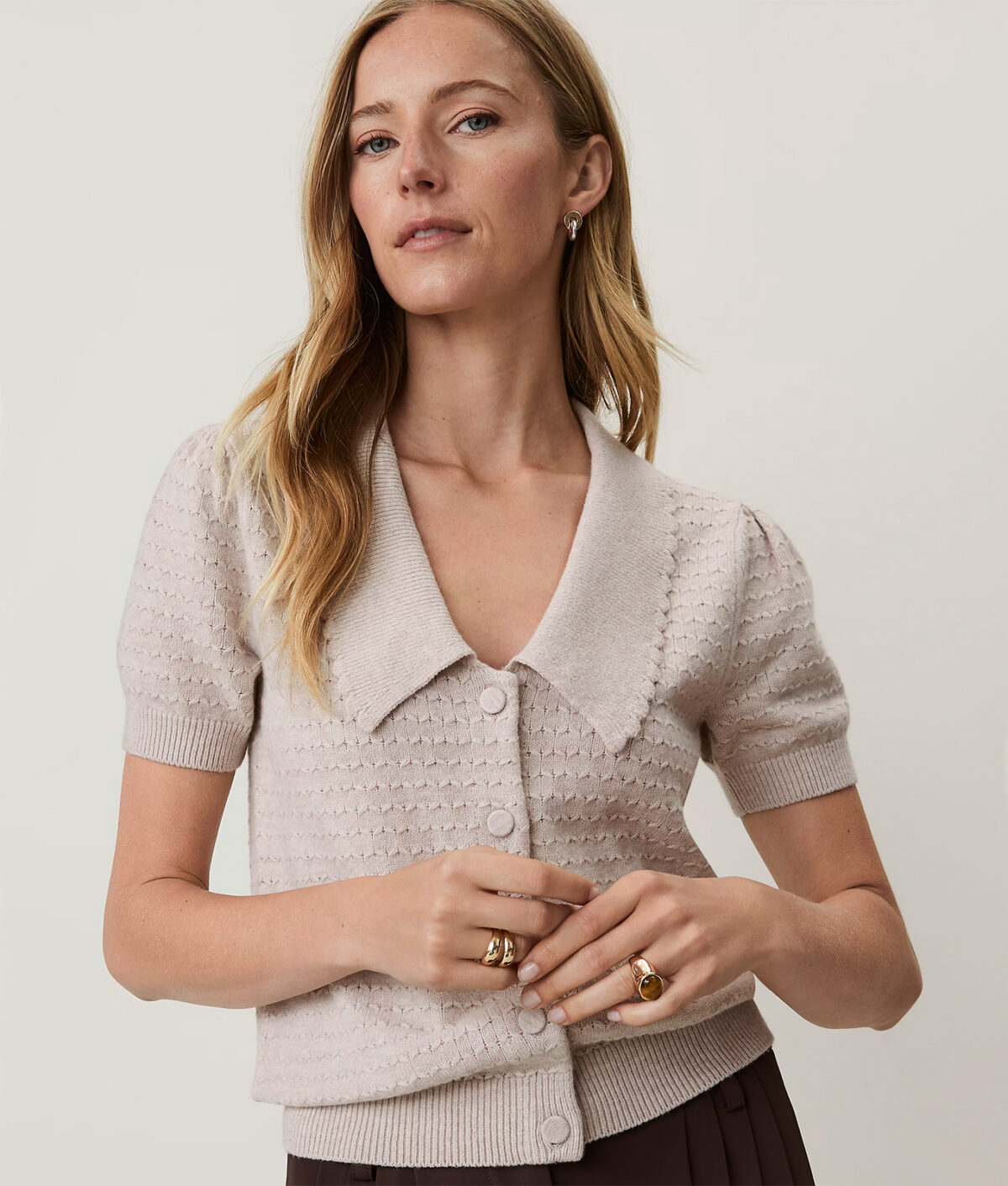
Ann Taylor grew from a single specialty boutique founded in New Haven, Connecticut, in 1954 into one of America’s most recognizable women's apparel brands. Built on classic tailoring and tailored workwear for professional women, the brand expanded through strategic sub-brands like LOFT, multi-channel retail development, and corporate evolution within the global fashion landscape.
1. The Origins in New Haven: How Ann Taylor Was Born (1954)
The story of Ann Taylor began in 1954 when founder Richard Liebeskind opened a small women's fashion boutique in New Haven, Connecticut. Located near Yale University, the store aimed to provide stylish, classic clothing for modern, educated women who required sophisticated attire for academic, civic, and professional settings.
Contrary to common belief, "Ann Taylor" was not a real person. The name originated from a best-selling dress style in the store owned by Liebeskind’s father. The "Ann" represented a classic, traditional American woman, while "Taylor" evoked the imagery of precision tailoring and custom craftsmanship. Liebeskind adopted the name for his new store to communicate timeless elegance, superior craftsmanship, and tailored fit.
- 1954: Founded in New Haven
- Named after a popular tailored dress style
- 1970s–1980s: National Mall Expansion
- Focus on career wear for working women
- 1996: Launch of Ann Taylor LOFT
- Diversification into casual and lifestyle attire
- 2010s–2020s: Corporate Consolidation
- Ascena Acquisition (2015) to KnitWell Group / Sycamore
During the 1950s, women’s retail fashion was largely divided between conservative, high-end department stores and informal casual shops. Liebeskind recognized an unserved middle ground: women needed well-made, understated garments that bridged daily life and formal engagements. The original New Haven boutique quickly established a loyal clientele among college students, faculty, and local professionals, setting the stage for regional expansion across New England.
2. Defining the Modern Working Woman’s Wardrobe
As American women entered the professional workforce in record numbers throughout the 1970s and 1980s, corporate dress codes required a shift in retail offerings. Ann Taylor adapted its product strategy to focus squarely on modern career apparel, positioning itself as a premier destination for women navigating corporate environments.
The Shift to Professional Wardrobe Essentials
During this era, corporate wardrobe expectations were dominated by traditional male suit silhouettes modified for female executives. Ann Taylor altered this paradigm by offering feminine, tailored alternatives that maintained professional authority while incorporating refined fabrics, flattering cuts, and versatile color palettes.
Key apparel lines that defined the brand during this decade included:
- Tailored Suiting: Wool blend and linen suits engineered for durability and structure.
- Silk Blouses and Button-Downs: Classic shirting designed to pair seamlessly under blazers or wear independently.
- Sheath Dresses: Structured, single-piece garments suitable for meetings and evening events.
- Versatile Separates: Mix-and-match skirts, trousers, and knitwear that expanded wardrobe options for working professionals.
By emphasizing interchangeable separates, Ann Taylor allowed working women to build functional, high-quality wardrobes without purchasing entire suit sets for every occasion. This functional design philosophy established deep customer brand loyalty across corporate America.
3. Retail Expansion and the Birth of LOFT
Throughout the late 1970s and 1980s, Ann Taylor transitioned from a regional specialty retailer into a national brand, opening flagship stores in major metropolitan centers and establishing a presence in suburban shopping malls across North America.
Launching Ann Taylor LOFT (1996)
By the mid-1990s, workplace fashion began shifting toward business casual dress codes. In response to changing customer demographics and price expectations, the company introduced Ann Taylor LOFT in 1996 (later simplified to LOFT).
While the flagship Ann Taylor brand remained focused on polished career wear and formal suiting, LOFT was designed to deliver relaxed, versatile, and accessible everyday style.
- ANN TAYLOR BRAND
- ANN TAYLOR (Main)
- Polished Careerwear
- Tailored Suiting
- Premium Price Point
- High-End Fabrics
- LOFT (Sub-Brand)
- Business Casual
- Relaxed Denim/Knits
- Everyday Essentials
- Accessible Pricing
- ANN TAYLOR (Main)
The introduction of LOFT allowed the parent organization to capture a broader market share:
- Demographic Reach: Maintained relationship with corporate professionals while attracting younger buyers, educators, and creative workers.
- Price Segmentation: Offered fashion-forward staples at accessible price points without diluting the flagship brand's premium standing.
- Lifestyle Versatility: Provided off-duty wear, denim, casual knits, and weekend outfits alongside office-ready garments.
The launch of LOFT proved to be one of the most successful brand extensions in specialty retail history, eventually growing to match or exceed the physical store footprint of the core Ann Taylor chain.
4. Corporate Milestones, Ownership Changes, and Restructuring
The financial structure of Ann Taylor evolved alongside its retail growth. Over several decades, the company went through initial public offerings, corporate rebrandings, private equity acquisitions, and strategic reorganizations.
Public Listing and the Formation of ANN INC.
In 1991, Ann Taylor completed an initial public offering (IPO), listing on the New York Stock Exchange. To reflect its expanding portfolio of sub-brands—including Ann Taylor, LOFT, Ann Taylor Factory, and LOFT Outlet—the corporate entity formally renamed itself ANN INC. in 2011.
During this period, ANN INC. invested heavily in supply chain modernization, inventory optimization, and e-commerce capabilities, allowing customers to order online and access expanded sizing options like Petite and Tall collections.
Acquisition by Ascena Retail Group (2015)
In 2015, Ascena Retail Group acquired ANN INC. in a transaction valued at approximately $2 billion. The deal brought Ann Taylor and LOFT under the same corporate umbrella as other national specialty retail brands, including Lane Bryant and Catherines.
The acquisition was intended to generate operational synergies across logistics, real estate negotiations, and shared backend technology. However, broader retail headwinds—including shifting foot traffic from regional malls to direct-to-consumer e-commerce—presented challenges across the retail sector.
Restructuring and the KnitWell Group Transition
The retail disruptions of 2020 accelerated structural shifts across the apparel industry, prompting Ascena Retail Group to file for Chapter 11 bankruptcy protection. During the reorganization process, private equity firm Sycamore Partners acquired the corporate retail assets, including Ann Taylor, LOFT, and Lou & Grey, placing them under a management company known as Premium Apparel LLC.
Later integrated into KnitWell Group, the brand focused on financial stabilization, direct-to-consumer digital channels, and optimizing retail footprints to match modern consumer shopping habits.
5. Strategic Retail Matrix: Milestones in Brand Evolution
The table below outlines key milestones, product strategies, and retail footprints across major eras of Ann Taylor's history.
| Era / Phase | Primary Brand Focus | Key Product Lines | Target Market | Major Retail Strategy |
|---|---|---|---|---|
| 1954–1960s(Boutique Era) | Classic American elegance and tailored dresses | Custom dresses, structured skirts, tailored blouses | University students, faculty, and local New England women | Single specialty shop in New Haven, Connecticut |
| 1970s–1980s(Career Boom) | Professional corporate apparel for women | Power suiting, silk blouses, tailored sheath dresses | Executive and corporate professional women | Regional and national mall expansion across North America |
| 1990s–2000s(Brand Extension) | Multi-tiered lifestyle and workplace fashion | Business casual knits, separates, everyday wear (LOFT launch 1996) | Broad demographic of working women and casual dressers | Dual-brand retail real estate strategy; public listing on NYSE |
| 2010s(Omnichannel Shift) | E-commerce integration and corporate consolidation | Versatile work-from-anywhere separates, extended sizing | Digital-first shoppers, modern professionals | Corporate merger with Ascena Retail Group (2015); e-commerce investment |
| 2020s–Present(Modern Era) | Flexible workwear, inclusive fits, direct-to-consumer | Smart casual, stretch suiting, elevated casual attire | Hybrid workers, modern professional women | Management under KnitWell Group; streamlined physical footprint and digital integration |
6. Omnichannel Transformation and Modern Merchandising Strategy
In recent years, shifts in workplace norms—particularly the rise of hybrid and remote work schedules—required Ann Taylor to modernize its product mix and distribution strategy.
Evolution of the Product Assortment
Traditional stiff suiting and formal wool outerwear were replaced by flexible, high-performance fabrics that balance comfort with a tailored appearance. Modern collections focus heavily on:
- Soft Tailoring: Stretch blazers and unlined jackets that offer structure without rigidity.
- Machine-Washable Fabrics: Low-maintenance care garments designed for active professional routines.
- Work-from-Anywhere Separates: Elevated tops, polished knits, and tailored pull-on trousers suitable for video conferences and in-person meetings alike.
- TRADITIONAL CAREERWEAR
- Stiff, structured wool suiting
- Dry-clean-only garments
- Rigid executive dress codes
- MODERN FLEXIBLE WORKWEAR
- Soft tailoring & stretch fabrics
- Machine-washable care lines
- Smart-casual hybrid separates
Inclusive Sizing and Digital Convenience
Ann Taylor was an early adopter of comprehensive sizing options within mainstream specialty retail. By systematically expanding dedicated sizing fits, the brand addressed longstanding fit challenges in women's apparel:
- Petite Collections: Proportionally scaled patterns for women 5'4" and under, adjusting shoulder widths, sleeve lengths, and torso proportions.
- Tall Collections: Lengthened hemlines, torsos, and inseams for taller silhouettes.
- Extended & Curve Fits: Garments cut to accommodate broader waist-to-hip ratios without sacrificing tailoring.
Through its direct-to-consumer e-commerce platform and mobile apps, Ann Taylor offers omnichannel conveniences such as buy-online-pick-up-in-store (BOPIS), streamlined digital returns, and personalized styling recommendations.
7. Strategic Takeaways for Retailers and Fashion Enthusiasts
The journey of Ann Taylor from a single New Haven boutique to a national fashion staple provides several practical insights for retail strategists, brand builders, and fashion historians:
- Solve a Specific Market Need: Ann Taylor built its early reputation by filling the gap between informal dresses and masculine suiting, establishing a clear brand identity tied to women's professional advancement.
- Segment Audiences Through Sub-Brands: Rather than diluting its core high-end line when workplace dress codes casualized in the 1990s, the company launched LOFT, creating a distinct growth vehicle while preserving the flagship brand's positioning.
- Adapt Product Design to Lifestyle Shifts: As executive work patterns shifted toward hybrid environments, updating fabric compositions and garment structures ensured ongoing relevance.
- Invest in Fit Consistency: Offering true petite and specialized proportions builds high long-term customer retention, reducing return rates and driving consumer loyalty.
8. Frequently Asked Questions
Was Ann Taylor a real person?
No, Ann Taylor was not an actual person. Founder Richard Liebeskind chose the name when opening his New Haven store in 1954. He combined "Ann," representing a classic American woman, with "Taylor," symbolizing precise tailoring and craftsmanship, inspired by a popular dress style sold at his father's apparel store.
When was Ann Taylor founded and where was the first store?
Ann Taylor was founded in 1954 in New Haven, Connecticut. The original specialty boutique served college students, faculty, and local professional women near Yale University.
What is the main difference between Ann Taylor and LOFT?
Ann Taylor focuses primarily on classic, polished workwear, formal suiting, and elevated professional attire at a higher price point. LOFT, introduced in 1996 as Ann Taylor LOFT, offers more casual, everyday apparel, business-casual separates, and trend-focused items at an accessible price point.
Who currently owns the Ann Taylor brand?
Ann Taylor is owned by brand management group KnitWell Group, an entity backed by private equity firm Sycamore Partners. Sycamore Partners acquired the brand assets following the corporate restructuring of Ascena Retail Group in 2020.
How has Ann Taylor adapted to changing office dress codes?
Ann Taylor adapted to modern casualized and hybrid office environments by introducing "soft tailoring," machine-washable fabrics, stretch-infused suiting, and elevated knitwear that provide professional structure while maintaining comfort.
Summary & Next Actions
From its 1954 origins in New Haven to its modern status under the KnitWell Group umbrella, Ann Taylor’s legacy demonstrates the power of targeted brand positioning and product evolution. For consumers and fashion buyers looking to build a versatile professional wardrobe today, the following practical steps are recommended:
- Establish Core Base Separates: Start with classic neutral sheath dresses, tailored blazers, and versatile trousers from the main Ann Taylor line for formal meetings or executive presentations.
- Incorporate Smart Casual Elements: Blend casual knits, soft blouses, and comfortable skirts from LOFT to accommodate casual work environments or travel days.
- Utilize Fit-Specific Sizing: Utilize dedicated Petite and Tall sizing collections to minimize tailoring costs and ensure proper garment proportions.