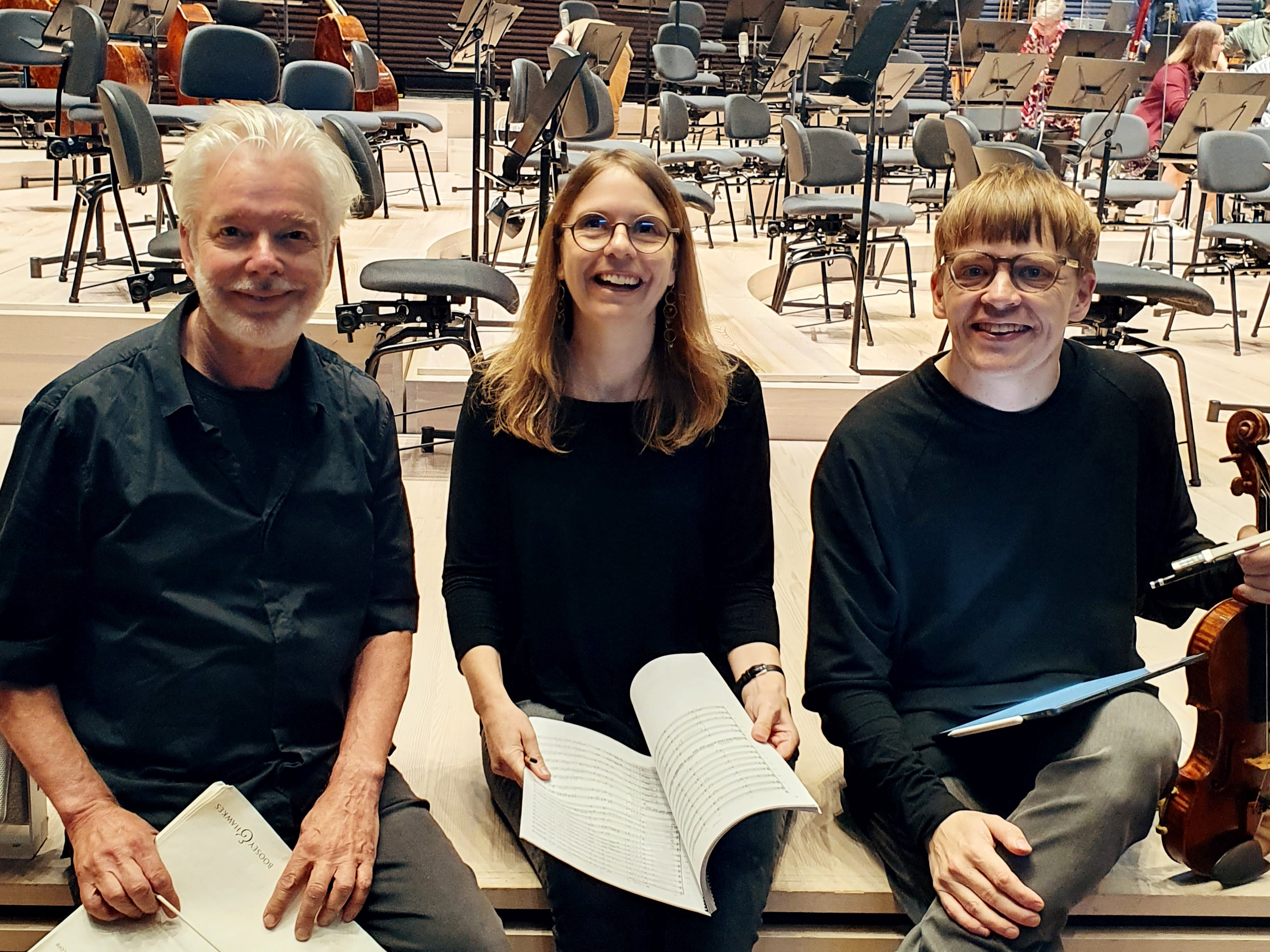
Anna Clyne is a Grammy-nominated British-American composer whose innovative blend of acoustic orchestration, electroacoustic elements, and interdisciplinary art has redefined 21st-century concert music. By incorporating visual art, poetry, and tape loops into traditional orchestral frameworks, Clyne expands the sonic color palette of modern ensembles, bridging classical tradition with contemporary multimedia performance.
Who Is Anna Clyne? Background and Artistic Philosophy
Born in London in 1980, Anna Clyne has emerged as one of the most frequently performed and influential composers of her generation. Her music occupies a unique space within contemporary classical composition, characterized by visceral rhythmic drive, rich harmonic textures, and intense emotional resonance.
Clyne’s formal training laid a strong foundation for her expansive acoustic and electronic palette. She studied music at the University of Edinburgh before moving to the United States to complete her Master of Music degree at the Manhattan School of Music. Studying under prominent figures in contemporary music, including Julia Wolfe, Aaron Jay Kernis, and Marjorie Merryman, Clyne developed a voice that honors classical structure while actively breaking through rigid stylistic boundaries.
- Anna Clyne's Philosophy
- Visual Arts & Graphic Palette
- Electroacoustic Integration
- Collaborative Dynamic Design
Her artistic philosophy centers on cross-disciplinary creation. Rather than treating music as an isolated acoustic medium, Clyne frequently draws direct inspiration from visual art, literature, dance, and architecture. She often creates physical paintings, sketches, or graphic score panels during the preliminary stages of composition. This visual process directly influences her approach to orchestration, where instrumental timbres are applied like pigments across a musical canvas.
Defining Characteristics of Clyne's Orchestral Soundscape
Understanding how Anna Clyne shapes contemporary orchestral sound requires examining the specific structural, timbral, and technological innovations she brings to the concert hall. Her music does not merely add contemporary effects to an orchestra; it fundamentally re-imagines how an orchestra functions as a single unified acoustic organism.
1. Seamless Integration of Electroacoustic Elements
One of Clyne's signature contributions is her sophisticated blend of live orchestral instrumentation with pre-recorded audio, tape processing, and digital sound manipulation. Unlike earlier mid-20th-century electroacoustic experiments that emphasized sharp contrasts between synthetic sounds and traditional instruments, Clyne treats electronic elements as organic extensions of the orchestra.
- Pre-Recorded Audio: Works like Steelworks incorporate recorded industrial sounds, interviews, and ambient noise, woven tightly into the acoustic texture of percussion and winds.
- Tape Loops and Delay: Clyne utilizes delay systems and tape loops to create cascading canons and shimmering acoustic halos around live soloists and sections.
- Spatial Processing: Electronic layers are engineered to move fluidly around concert halls, altering the perceived physical acoustics of the venue.
2. Rhythmic Vitality and Timbral Coloration
Clyne’s orchestral writing is renowned for its propulsive kinetic energy. She frequently uses irregular meter, ostinato patterns, and percussive articulation across non-percussive sections. String players are often called upon to use extended techniques—such as heavy sul ponticello (bowing near the bridge), col legno (striking the string with the wood of the bow), and rapid microtonal glissandi—to create gritty, distorted timbres that resemble electronic synthesizer filters.
Conversely, her lyricism is profoundly expressive. She uses dense, shimmering string divisi to construct vast, contemplative acoustic spaces. This polarity between intense, aggressive rhythmic drive and delicate, static beauty forms the structural backbone of her major orchestral canvasses.
3. Structural Dynamism and Narrative Arc
Rather than strictly adhering to traditional sonata or arch forms, Clyne constructs works around narrative vectors, poetry, or visual transformations. Her compositions unfold with cinematic fluidity, using abrupt cuts, cross-fades, and gradual acoustic transformations that mirror film editing techniques.
Key Orchestral Works Shaping the Modern Repertoire
To understand Clyne’s impact on modern orchestral sound, it is essential to examine her most celebrated compositions across symphonic, concerto, and chamber orchestra genres.
- [2008] Within Her Arms: Intimate string ensemble & spatial warmth
- [2012] Night Ferry: Full orchestral power & visual graphic score
- [2012] Prince of Clouds: Dual-violin concerto redefining classic form
- [2013] Masquerade: Virtuosic showcase for BBC Proms
- [2022] Weathered: Four-movement concerto for clarinet & orchestra
Night Ferry (2012): Oceanic Energy and Mental Landscapes
Commissioned by the Chicago Symphony Orchestra during her tenure as Mead Composer-in-Residence, Night Ferry is a tour de force of modern orchestral scoring. Dedicated to conductor Riccardo Muti, the piece takes its inspiration from Samuel Taylor Coleridge’s The Rime of the Ancient Mariner as well as the turbulent mental landscapes associated with bipolar disorder.
To compose Night Ferry, Clyne created a 15-foot visual score consisting of painted panels, collage, and sketches that mapped out the work's emotional and structural dynamics before a single note was written on traditional staff paper. Musically, the work features:
- Massed brass chorales colliding with turbulent, tumbling woodwind lines.
- Heavy percussive drives simulating the surge of ocean waves.
- Unsettling sonic pauses that contrast intense acoustic density with quiet, delicate chamber textures.
Within Her Arms (2008–2009): Intimacy in String Writing
Written in memory of her mother, Within Her Arms is scored for 15 individual string players (6 violins, 3 violas, 3 cellos, and 3 double basses). The work demonstrates Clyne’s ability to achieve monumental emotional weight through economical acoustic means.
The composition relies on intricate polyphonic voice-leading, where each player acts as an independent soloist. By staggering entrances and weaving modal harmonies reminiscent of Renaissance polyphony, Clyne creates a warm, cocoon-like atmosphere. The work has quickly entered the standard string orchestra repertoire and is performed globally by leading ensembles.
Prince of Clouds (2012): Innovations in the Concerto Form
Nominated for a Grammy Award for Best Classical Contemporary Composition in 2015, Prince of Clouds is a double concerto for two violins and string orchestra. In this work, Clyne reinterprets the traditional dialogue between soloist and orchestra.
Rather than setting the two solo violins in direct competition, she intertwines their lines, making them appear as dual projections of a single musical idea. The supporting string orchestra functions like an acoustic amplifier, picking up the soloists' motifs and echoing them back through layered textures and sparkling harmonics.
Masquerade (2013) and PIVOT (2021): Festival Overtures
Clyne has significantly contributed to the modern festival overture. Masquerade, commissioned by the BBC to open the Last Night of the Proms in 2013, draws inspiration from the 18th-century pleasure gardens of London. It blends mid-18th-century promenade melodies with modern orchestral flourishes, rich brass fanfares, and dynamic percussion sweeps.
Similarly, PIVOT, which opened the 2021 BBC Proms, draws on the folk music traditions of Scotland, incorporating fragments of the Scottish reel The Ewie wi' the Crookit Horn. Clyne transforms these folk elements through modern rhythmic displacement and expanded orchestral coloration, offering a vibrant bridge between historical tradition and modern expression.
Recent Masterworks: Weathered (2022) and Glasslands (2023)
Clyne continues to expand the concerto repertoire through high-profile collaborations with world-class soloists:
- Weathered (2022): A four-movement concerto written for clarinetist Martin Fröst, co-commissioned by the Royal Concertgebouw Orchestra and Philharmonia Orchestra. Each movement explores structures eroded by time and climate: Dry Earth, Rust, Overgrown, and Stone.
- Glasslands (2023): A concerto for soprano saxophone and orchestra written for soloist Jess Gillam. The piece draws upon Irish folklore, specifically the legend of the Banshee, using virtuosic saxophone glissandi and shimmering orchestral percussion to evoke ethereal landscapes.
Comprehensive Overview of Major Compositions
The following table provides a breakdown of selected major compositions by Anna Clyne, detailing their instrumentation, thematic focus, and key technical elements.
| Work Title | Year | Instrumentation | Key Technical & Stylistic Elements | Premiere / Commissioning Body |
|---|---|---|---|---|
| Within Her Arms | 2008 | 15 String Instruments (6-3-3-3) | Complex polyphonic voice-leading, modal harmonies, spatial string placement. | Los Angeles Philharmonic (Chamber Ensemble) |
| Steelworks | 2006 | Flute, Bass Clarinet, Percussion, Tape | Integration of industrial pre-recorded audio, tape loops, motoric rhythms. | Eighth Blackbird |
| Night Ferry | 2012 | Full Symphony Orchestra | Graphical score mapping, extreme dynamic contrasts, heavy brass/percussion scoring. | Chicago Symphony Orchestra (Riccardo Muti) |
| Prince of Clouds | 2012 | 2 Solo Violins, String Orchestra | Interlocking double-soloist lines, acoustic delay simulation, microtonal inflection. | Chicago Symphony Orchestra |
| Masquerade | 2013 | Full Symphony Orchestra | 18th-century folk motifs, virtuosic orchestral fanfares, dense percussive sweeps. | BBC Symphony Orchestra (BBC Proms) |
| RIFT | 2016 | Full Symphony Orchestra | Spatial brass placement, theatrical dynamic drops, visceral rhythmic drives. | Cabrillo Festival of Contemporary Music |
| PIVOT | 2021 | Full Symphony Orchestra | Scottish folk reel adaptations, rhythmic displacement, bright timbral palettes. | BBC Symphony Orchestra |
| Weathered | 2022 | Clarinet Solo, Full Orchestra | Multi-movement descriptive textures, extended clarinet techniques, atmospheric percussion. | Royal Concertgebouw Orchestra / Martin Fröst |
| Glasslands | 2023 | Soprano Saxophone, Orchestra | Microtonal saxophone bends, metallic percussion halos, Irish folklore narrative arcs. | Detroit Symphony Orchestra / Jess Gillam |
Collaborative Residencies and Cultural Impact
Anna Clyne’s influence on the orchestral landscape is tied not only to her scoring techniques but also to her extensive residencies with major global orchestras. Through these positions, she has actively shaped programming, mentored emerging composers, and built bridges between institutions and audiences.
| Major Artistic Residencies | Role / Tenure |
|---|---|
| Chicago Symphony Orchestra | Mead Composer-in-Residence (2010–2015) |
| Baltimore Symphony Orchestra | Composer-in-Residence (2015–2016) |
| Philharmonia Orchestra | Visiting Composer (2019–2022) |
| Scottish Chamber Orchestra | Associate Composer (2019–2022) |
| Helsinki Philharmonic | Composer in Residence (2023–2025) |
Chicago Symphony Orchestra Residency (2010–2015)
Appointed alongside composer Mason Bates by Music Director Riccardo Muti, Clyne served as Mead Composer-in-Residence at the Chicago Symphony Orchestra (CSO) for five years. This landmark residency was crucial in demonstrating how modern composers can engage deeply with major American orchestras.
During her time in Chicago, Clyne:
- Composed major symphonic works including Night Ferry and Prince of Clouds.
- Curated the CSO's contemporary music series, MusicNOW, introducing audiences to groundbreaking international chamber and electroacoustic music.
- Led community engagement initiatives, working with youth ensembles, incarcerated populations, and local arts schools to foster creative composition.
Global Commissions and Institutional Leadership
Following her Chicago tenure, Clyne held major residencies with the Baltimore Symphony Orchestra, the Philharmonia Orchestra in London, the Scottish Chamber Orchestra, and the Helsinki Philharmonic.
Her residency with the Scottish Chamber Orchestra highlighted her ability to tailor her expressive language to chamber orchestra forces, resulting in works like Sound and Fury, which pairs Haydn-esque classical balance with aggressive, modern timbral commentary.
Technical Analysis: How Clyne Scores for the Modern Orchestra
For performers, conductors, and musicologists, analyzing Clyne's scores reveals a systematic, highly meticulous approach to notation and instrumental color.
Electroacoustic Processing and Tape Loops
When integrating electronics, Clyne provides detailed spatial diagrams and technical riders for front-of-house sound engineers. Her scores explicitly indicate how acoustic instruments should interact with electronic processing:
Acoustic Triggering: Specific instrumental cues (such as a tam-tam stroke or low piano string strike) act as signals for electronic sound playback or live delay triggers.
Frequency Matching: Electronics are EQ'd to occupy frequency pockets left open by the acoustic orchestration—such as ultra-low sub-bass frequencies (below 40 Hz) or shimmering high frequencies (above 10 kHz)—preventing the muddying of the orchestra's natural sound.
Click Tracks and Free Synchronization: Depending on the piece, Clyne utilizes either strict click tracks for high-precision rhythmic synchronization with electronics or flexible temporal windows where electronic textures float ambiently beneath conductor-led phrasing.
Acoustic Instrument (e.g., Violin)
Live Input
Digital Delay / Loop System
Layered Stereo / Surround Output
Spatial Mixing
Audience Listening Field
Visual Notation and Color Palettes
Clyne’s background in visual arts directly informs her score layout and instructions. While her published scores predominantly use standard Western notation for accessibility, they contain detailed performance notes outlining non-standard techniques:
- Varied Bowing Pressures: Graphical symbols indicating transitions from overpressure (producing scratchy, distorted sub-harmonics) to flautando (producing airy, whistle-like tones).
- Microtonal Shading: Precise quarter-tone accidentals used to create acoustic beats and shimmering dissonance between unison string lines.
- Prepared Instruments: Utilizing mutes, paper, or metal objects placed on piano strings or percussion heads to alter harmonic overtones.
Comparative Analysis: Anna Clyne in the Context of Contemporary Classical Music
To understand Clyne’s distinct voice, it is helpful to place her within the broader ecosystem of 21st-century composition alongside her peers.
| Anna Clyne | Mason Bates | Caroline Shaw |
|---|---|---|
| Visceral, filmic textures, visual art integration | Electronic beat synthesis, EDM club influences | Vocal-centric, chamber-scale, haptic acoustic |
Anna Clyne vs. Mason Bates
While both Clyne and Mason Bates gained prominent recognition during their shared residency at the Chicago Symphony Orchestra, their approaches to electronics differ significantly. Bates often integrates electronic drum loops, synth basses, and techno beats into symphonic structures. Clyne, by contrast, uses electronics to enhance texture, ambient atmosphere, and timber, focusing on acoustic manipulation, tape manipulation, and spatial decay rather than driving dance rhythms.
Anna Clyne vs. Caroline Shaw
Both Clyne and Pulitzer Prize-winner Caroline Shaw represent a shift toward highly accessible, deeply expressive contemporary music that avoids the dry intellectualism of mid-20th-century serialism. However, while Shaw frequently centers her exploration on vocal mechanics, string quartet intimacy, and historical classical quotes, Clyne focuses on expansive symphonic canvases, dramatic narrative arcs, and visual art connections.
Anna Clyne vs. Kaija Saariaho
Clyne’s spatial and electroacoustic work shares common ground with late Finnish master Kaija Saariaho. Both composers excel at transforming instrument timbres into shimmering spectral landscapes. However, Clyne often incorporates faster rhythmic ostinatos and direct folk-music inflections, resulting in a kinetic energy that contrasts with Saariaho's slow, contemplative spectral developments.
Frequently Asked Questions
What makes Anna Clyne’s music distinctive in the orchestral world?
Anna Clyne is recognized for integrating visual arts, electroacoustics, and literature into symphonic compositions. Her music combines dynamic rhythmic energy with dense, expressive harmonies, creating immersive soundscapes that appeal to traditional classical audiences and contemporary listeners alike.
Has Anna Clyne won major awards for her work?
Yes. Clyne was nominated for a Grammy Award for Best Classical Contemporary Composition in 2015 for her double violin concerto Prince of Clouds. She has also received commissions from prestigious institutions worldwide, including the BBC Proms, Chicago Symphony Orchestra, and Royal Concertgebouw Orchestra, along with awards from the American Academy of Arts and Letters and ASCAP.
How does Anna Clyne incorporate visual art into her music?
Clyne frequently paints or skitches graphic art before and during the composition process. For example, when composing Night Ferry, she created a 15-foot visual score mapping out the structure, colors, and emotional shifts of the piece. These visual elements translate directly into her choice of instrumentation, dynamics, and timbral density.
What is the role of electronics in Anna Clyne’s orchestral compositions?
In Clyne’s music, electronics serve as an extension of the acoustic orchestra rather than a separate layer. She uses pre-recorded audio, tape loops, and real-time electronic delays to expand the spatial footprint of the instruments, creating rich surround-sound textures within the concert hall.
Which Anna Clyne pieces are recommended for first-time listeners?
Beginners should start with Within Her Arms for an intimate, deeply emotional string ensemble experience. For full orchestral power, Night Ferry and Masquerade showcase her dynamic use of brass, woodwinds, and percussion. Concerto lovers should explore Prince of Clouds (for two violins) and Weathered (for clarinet and orchestra).
Recommended Listening and Next Steps for Programmers and Listeners
For music directors, performers, and classical music enthusiasts looking to explore or program the works of Anna Clyne, the following structured roadmap offers a practical entry point:
For Concert Programmers and Conductors:
- Opener/Overture: Program Masquerade (5 minutes) or PIVOT (9 minutes) as energetic, accessible concert openers that showcase full orchestral virtuosic forces.
- Chamber Orchestra / Strings: Select Within Her Arms (14 minutes) for string programs requiring high emotional intimacy and polyphonic clarity.
- Full Symphonic Feature: Stage Night Ferry (20 minutes) alongside 19th-century works (such as Berlioz's Symphonie Fantastique or Tchaikovsky's 6th Symphony) to draw connections between historical and contemporary depictions of psychological drama.
For Soloists and Chamber Musicians:
- Explore her concerto catalogue, particularly Prince of Clouds (double violin), Weathered (clarinet), or Glasslands (soprano saxophone), which offer modern showcases for virtuosic expression without compromising melodic line or structural integrity.
For Students and Musicologists:
- Study Clyne's graphic score methods for Night Ferry, observing how visual spatial planning can be translated into traditional notation, orchestral balance, and timbre management.
By continuing to bridge visual art, modern electronics, and acoustic orchestration, Anna Clyne remains a central figure shaping the trajectory of 21st-century orchestral music. Her works demonstrate that the modern symphony orchestra remains a flexible, vibrant, and evolving medium for artistic expression.