Ann-Margret defined 1960s cinematic dance through her high-octane blend of athletic jazz technique, magnetic charisma, and expressive screen energy. Her performances in classic films such as Bye Bye Birdie (1963) and Viva Las Vegas (1964) set the benchmark for modern youth-culture dance on screen, pairing dynamic choreography with unmatched star presence.
The Emergence of a Motion Picture Force
When Ann-Margret Olsson arrived in Hollywood in the early 1960s, the classic studio-era musical was undergoing a radical transformation. The pristine, balletic grace of 1940s and 1950s cinema—championed by icons like MGM's Cyd Charisse, Judy Garland, and Gene Kelly—was giving way to a louder, faster, and more rhythmically aggressive style driven by rock and roll and contemporary jazz dance. Ann-Margret became the defining face and body of this stylistic shift.
Born in Valsjöbyn, Sweden, in 1941 and raised in Wilmette, Illinois, Ann-Margret began taking dance lessons as a child at the Marjorie Young School of Dance. Her early training provided a foundation in tap, ballet, and acrobatics. This formal discipline, combined with a natural instinct for syncopated movement, allowed her to perform complex physical routines without sacrificing vocal precision or dramatic expression.
After brief musical engagements in Chicago and Las Vegas, comedian George Burns discovered her, leading to a recording contract with RCA Victor and a movie contract with 20th Century Fox. She made her feature film debut in Frank Capra’s Pocketful of Miracles (1961), but it was her immediate transition into dance-heavy roles that turned her into a international sensation.
- Early Training (Ballet, Tap, Acrobatics)
- Las Vegas & Stage Performances
- Hollywood Discovery (1961)
- Modern Jazz & Rock Cinematic Breakthrough (1963–1964)
- Hollywood Discovery (1961)
- Las Vegas & Stage Performances
Breakthrough Moments: Bye Bye Birdie (1963) and Youth Culture
Ann-Margret’s breakthrough came when Columbia Pictures cast her as Kim MacAfee in the film adaptation of the Broadway hit Bye Bye Birdie (1963). Directed by George Sidney, the film was designed as a satirical look at American teen culture and the frenzy surrounding Elvis Presley-esque rock stars. However, Ann-Margret’s explosive screen presence completely shifted the focal point of the movie.
Choreography and Movement Analysis
Choreographed by Onna White, who had won a Tony Award for The Music Man, the routines in Bye Bye Birdie were tailored to bridge traditional Broadway showmanship with mid-century teen dance crazes. Ann-Margret’s performance in numbers like "How Lovely to Be a Woman" showed a fluid transition from domestic domesticity to vibrant, modern jazz movement.
Her flagship dance sequence in the film occurs during "Got a Lot of Livin' to Do," performed alongside Bobby Rydell and Jesse Pearson. In this sequence, her choreography features:
- Rapid Shoulder Isolations: Accentuated beats tied directly to the brass instrumentation of the arrangement.
- Sharp Directional Shifts: Quick pivots and high kicks executed with strict alignment.
- Expressive Facial Choreography: Seamlessly shifting between youthful innocence and fiery intensity to match the music's dynamics.
Director George Sidney recognized her unique camera appeal early in production. He famously brought her back after principal photography wrapped to film the opening and closing title sequence, where she sang and danced to the title song "Bye Bye Birdie" against a plain blue backdrop. Performing entirely alone on screen, her hair flying, hips swaying, and voice soaring, she delivered one of the most famous musical introductions in film history, cementing her status as a primary icon of 1960s pop culture.
Electricity on Screen: Viva Las Vegas (1964) with Elvis Presley
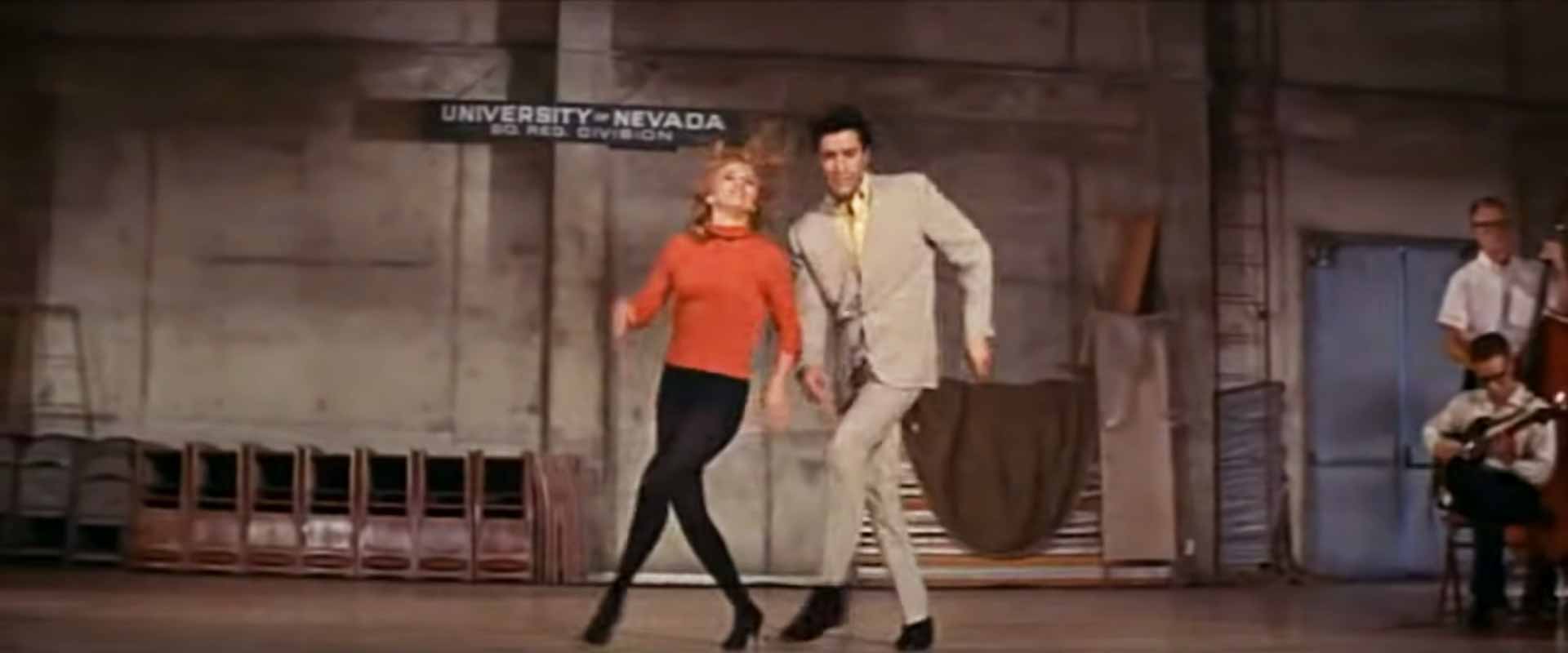
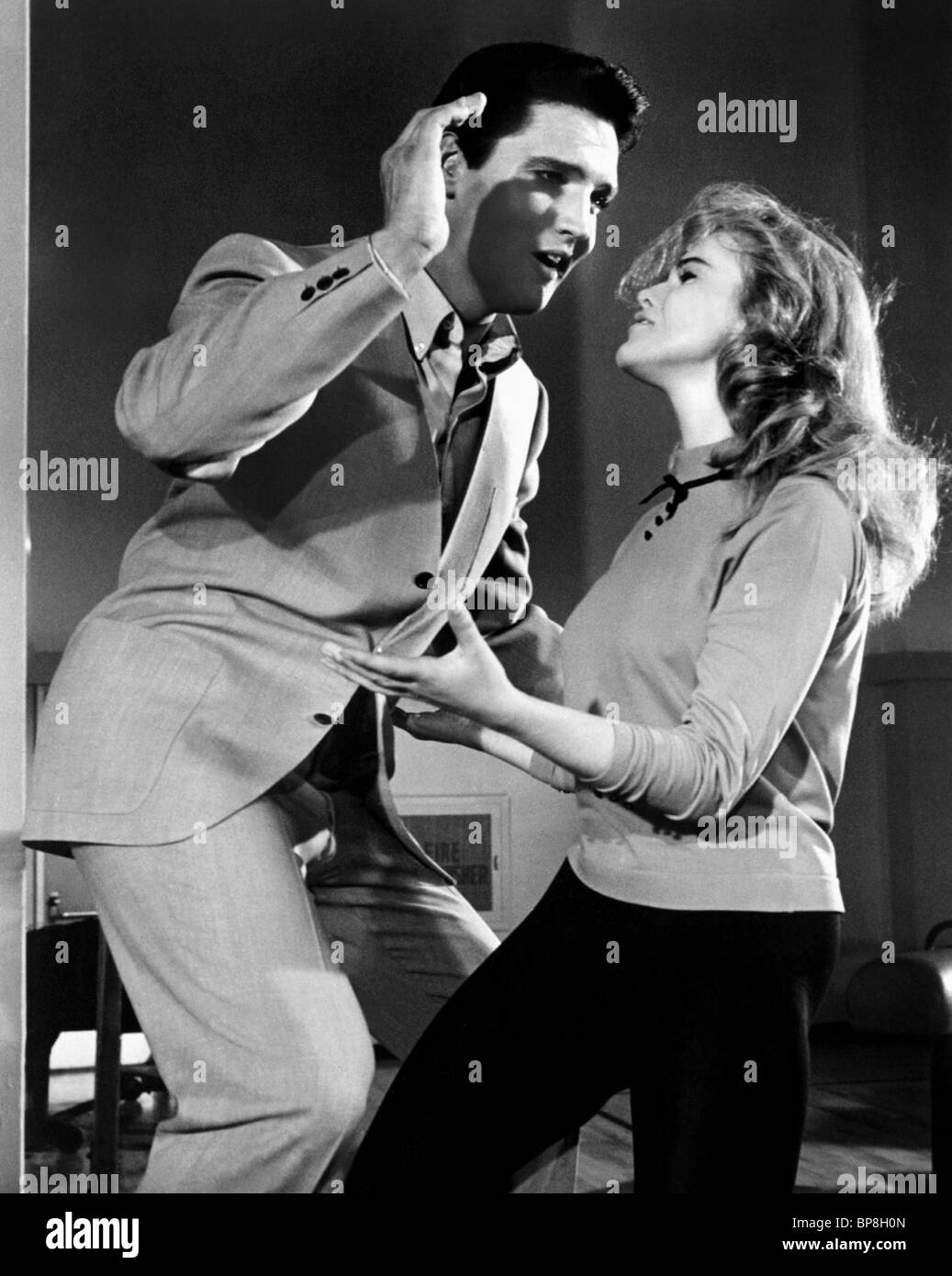
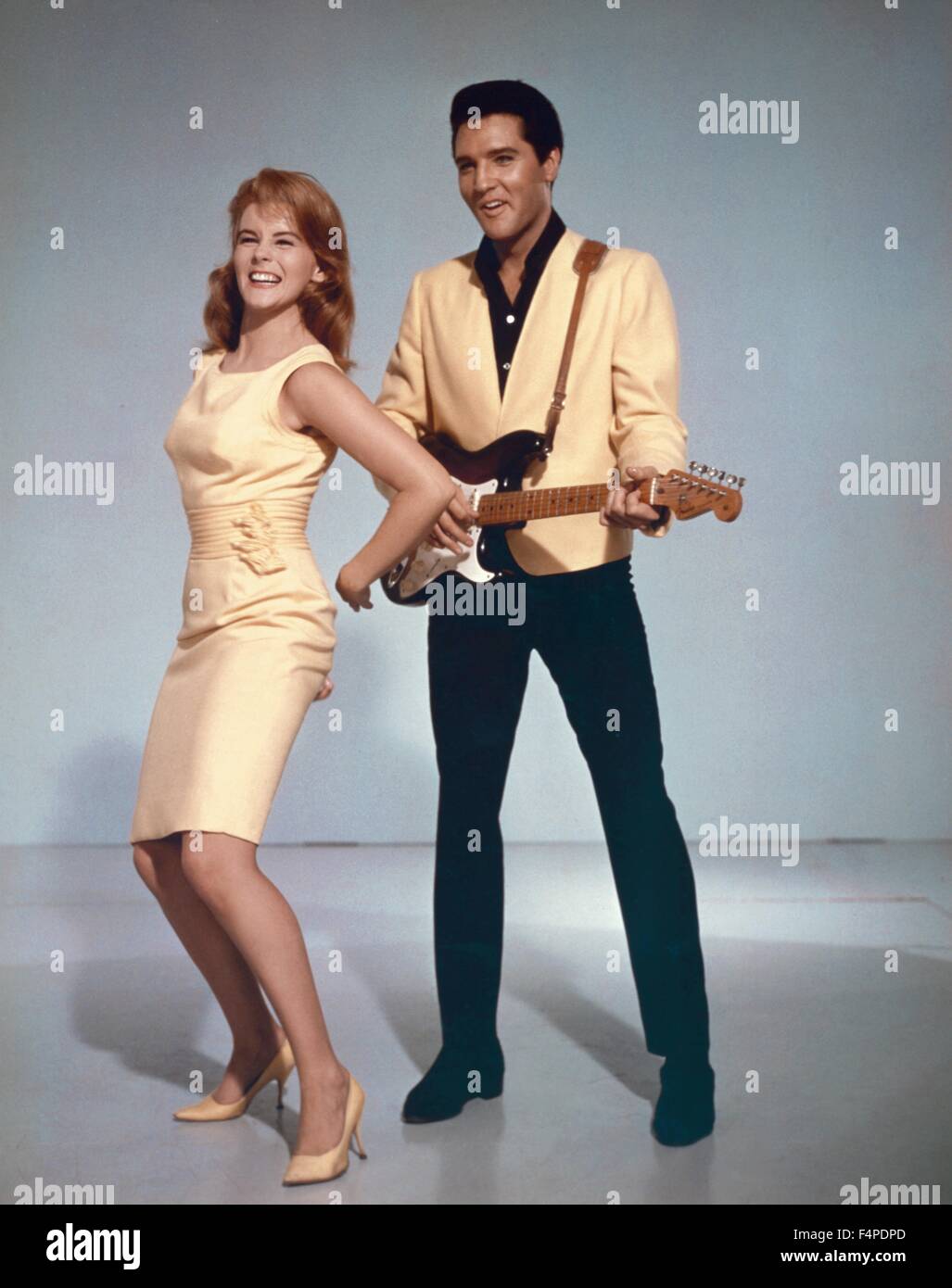
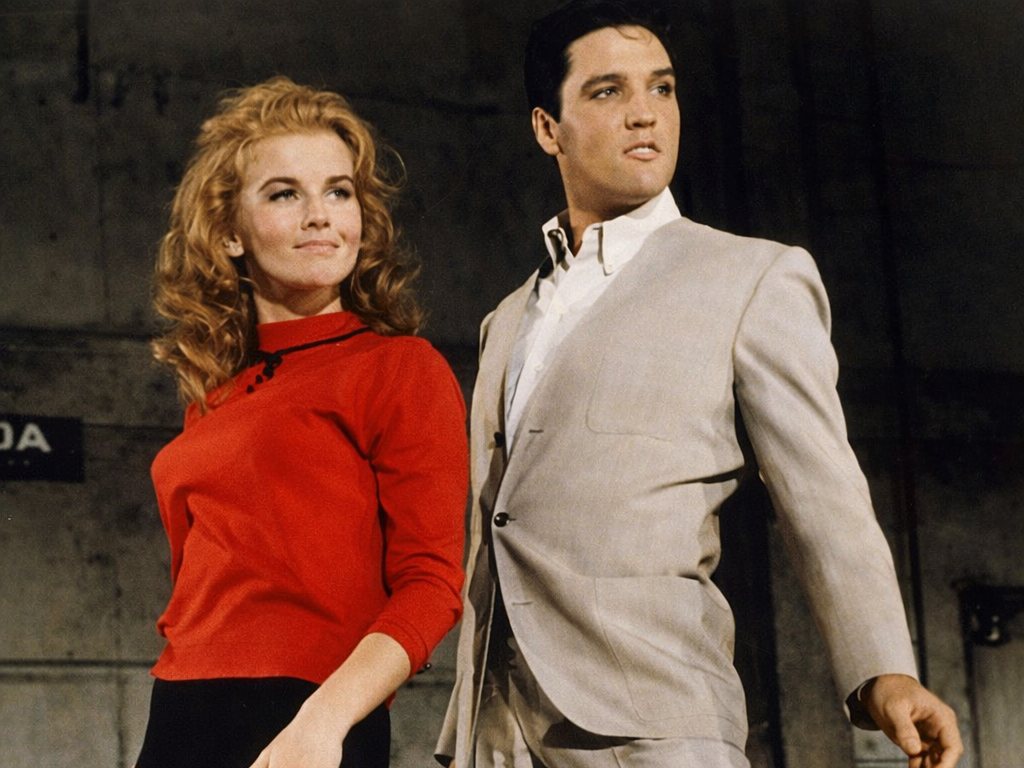
If Bye Bye Birdie made Ann-Margret a star, Viva Las Vegas (1964) solidified her position as the premier female dancer of her generation. Paired with Elvis Presley, Ann-Margret played Rusty Martin, a hotel swimming instructor who engages in both romantic and musical rivalry with Presley’s character, Lucky Jackson.
- "C'mon Everybody" (Viva Las Vegas, 1964)
- Choreographer: David Winters
- Lead Performers: Ann-Margret & Elvis Presley
- Musical Style: Rock-and-Roll / Up-tempo Pop-Jazz
- Key Technical Elements: Hip isolations, fast-paced footwork, call-and-response framing
The Synergy of Ann-Margret and Elvis Presley
Viva Las Vegas remains celebrated because Ann-Margret was one of the few female co-stars who could match Presley’s physical intensity and charismatic screen presence. Director George Sidney returned to direct, while David Winters—a former dancer in the original Broadway and film versions of West Side Story—handled the choreography.
Winters created routines that leaned heavily into youth-oriented, high-energy jazz dance, incorporating elements of the Twist, the Frug, and the Mashed Potato. The centerpiece of the film's dance repertoire is "C'mon Everybody":
- Intimate Framing and Staging: The scene takes place in an intimate rehearsal setting, allowing the camera to move closely around the dancers.
- Duet Dynamics: Ann-Margret begins the number seated, slowly building energy before launching into an athletic routine that matches Presley move for move.
- Synchronization: The sequence highlights complex call-and-response dance phrasing, where Ann-Margret initiates sharp body rolls and spins that Presley answers, creating a genuine sense of dance duel improvisation.
Her performance in "The Lady Loves Me," a duet set poolside, showcased her talent for comedic physical storytelling. Utilizing lawn chairs, swimming pools, and towels as props, her movement remained precise while projecting effortlessly casual playfulness.
Expanding the Spectrum: Mid-1960s Dance Highlights
Following the immense commercial success of Viva Las Vegas, Hollywood studios rushed to feature Ann-Margret in showcase dance sequences across various genres, ranging from romantic comedies to crime capers.
Made in Paris (1966)
In Made in Paris, Ann-Margret starred alongside Louis Jourdan. The film features an avant-garde beatnik nightclub dance sequence that stands as one of her most technically demanding numbers. Choreographed with a jazz-fusion slant, Ann-Margret dances to intense percussion, performing floor work, sudden stops, and rapid backbends that highlighted her physical flexibility and stamina.
The Swinger (1966)
The Swinger allowed choreographer David Winters to push the boundaries of 1960s pop art dance aesthetics. The title sequence features Ann-Margret dancing while covered in colorful paint, mud, and water, executing energetic routines amidst kinetic set designs. The choreography emphasizes continuous bodily motion, high kicks, and sharp rhythmic isolations, reflecting the free-form, counterculture movement of the mid-1960s.
Murderers' Row (1966)
Even in spy spoof films like Murderers' Row, co-starring Dean Martin, her dance talent took center stage. In a memorable discotheque sequence, Ann-Margret dances alongside the band The Dino, Desi & Billy, executing the "Jerk" and other contemporary 1960s social dances with unmatched precision, turning a standard background scene into a visual highlight of the film.
Maturation and Dramatic Movement: Carnal Knowledge and Tommy
As the traditional movie musical faded in the late 1960s and early 1970s, Ann-Margret transitioned into serious dramatic acting. However, her background in dance and physical expression remained central to her acting approach, allowing her to convey deep emotional narrative through body language and spatial awareness.
- 1960s Pop Musicals (Bye Bye Birdie)
- Dramatic Physical Acting (Carnal Knowledge)
- Avant-Garde Rock Cinema (Tommy)
Carnal Knowledge (1971)
Directed by Mike Nichols, Carnal Knowledge represented a major turning point in Ann-Margret’s career, earning her an Academy Award nomination for Best Supporting Actress. While not a musical, her performance as Bobbie relies heavily on physical posture and movement. Her background as a dancer gave her complete control over her body, allowing her to portray emotional exhaustion, vulnerability, and tension through subtle shifts in posture and physical rhythm.
Tommy (1975)
In Ken Russell’s film adaptation of The Who’s rock opera Tommy, Ann-Margret delivered a legendary, fearless physical performance as Nora Walker. Her work in the famous "Champagne" / "TV Suite" sequence is a masterclass in modern, visceral performance art:
- Uninhibited Physicality: She writhes, dances, and jumps through foam, baked beans, and melted chocolate burst from a television screen.
- Rhythmic Precision: Despite the surrealist, chaotic nature of the set, her movements remain tightly synced to Pete Townshend's music score.
- Critical Acclaim: Her dramatic and physical commitment earned her a Golden Globe Award and an Academy Award nomination for Best Actress.
Technical Analysis of Ann-Margret's Dance Style
To understand why Ann-Margret’s dance performances remain compelling decades later, one must examine the specific technical elements that defined her style.
- ANN-MARGRET'S DANCE STYLE
- Athletic Jazz
- Strong center gravity
- Clean extension
- Modern floorwork
- Syncopated Isolations
- Sharp head/shoulder rolls
- Fast hip articulation
- Rhythm tied to brass
- Camera Awareness
- Angles directly to lens
- High-energy eye contact
- Fluid spatial awareness
- Athletic Jazz
1. Athletic Jazz and Control
Unlike dancers trained purely in soft classical ballet, Ann-Margret possessed a low center of gravity and high muscular control. This allowed her to execute powerful isolations—moving her shoulders, hips, or torso independently—without compromising her balance or posture.
2. High-Impact Syncopation
Her timing was exceptionally sharp. Dancers often struggle to keep up with fast-tempo big band or early rock orchestrations, but Ann-Margret consistently hit the accented beats (the off-beats) with explosive clarity. This gave her movements a characteristic "snapping" quality.
3. Screen-Specific Choreography
Ann-Margret understood how to dance for the camera lens rather than a distant theater audience. She frequently directed her gaze directly into the camera lens, breaking the invisible fourth wall and drawing viewers directly into her space. Her movements were executed along diagonal lines relative to the camera, maximizing spatial depth on flat cinema screens.
Comparative Overview of Classic Dance Performances
The table below outlines Ann-Margret's most significant dance roles in classic cinema, detailing the key creative personnel, musical highlights, and stylistic characteristics of each performance.
| Film Title | Year | Primary Choreographer | Key Musical/Dance Sequence | Primary Dance Style & Aesthetic |
|---|---|---|---|---|
| Bye Bye Birdie | 1963 | Onna White | "Got a Lot of Livin' to Do" / Title Song | Classic Broadway Jazz blended with early 1960s Teen Pop movement. |
| Viva Las Vegas | 1964 | David Winters | "C'mon Everybody" / "The Lady Loves Me" | High-energy Rock and Roll Jazz, call-and-response partner dance. |
| Kitten with a Whip | 1964 | Uncredited / Staged | Jukebox Living Room Sequence | Dramatic, expressive Twist-era social dance used for narrative tension. |
| Made in Paris | 1966 | Uncredited | Underground Club Beatnik Dance | Experimental percussion Jazz featuring fast floorwork and isolations. |
| The Swinger | 1966 | David Winters | Title Sequence ("The Swinger") | Pop-Art Kinetic Jazz incorporating continuous fluid body movement. |
| Murderers' Row | 1966 | Uncredited | Discotheque Sequence | Mid-60s Go-Go and Jerk choreography with high-tempo pop rhythms. |
| Tommy | 1975 | Choreographed with Ken Russell | "Champagne" / TV Hallucination | Modern Surrealist Performance Art and expressive dramatic movement. |
Influence and Cultural Legacy
Ann-Margret’s approach to screen dance fundamentally altered how Hollywood presented young female performers. Before her breakthrough, female musical stars were often divided into distinct categories: classical dancers (such as Vera-Ellen or Cyd Charisse) or comedic musical theater singers (such as Doris Day or Betty Hutton). Ann-Margret shattered these rigid boundaries by combining high-level athletic dance technique with raw rock-and-roll vocal performance and modern star appeal.
Her dynamic dance routines directly influenced the presentation of pop music dance in late 20th-century entertainment. Her high-octane stage presence, sharp hair flips, and rhythmic hip isolations established a visual blueprint that echoed through music videos, live pop tours, and modern movie musicals in the decades that followed.
"Ann-Margret brought an entirely new language of movement to film musicals—she took the formal structure of theatrical jazz and fused it with the raw, untamed energy of rock and roll." — Film History Perspective
Frequently Asked Questions
Did Ann-Margret have formal dance training before her movie career?
Yes. Ann-Margret received formal dance training throughout her childhood and adolescence, most notably at the Marjorie Young School of Dance in Wilmette, Illinois. Her training included ballet, tap, acrobatics, and jazz, which provided the strong technical foundation required for her demanding film choreography.
Who choreographed Ann-Margret's most famous dance numbers?
Her two most influential film choreographers were Onna White, who created the routines for Bye Bye Birdie (1963), and David Winters, who choreographed her iconic numbers in Viva Las Vegas (1964) and The Swinger (1966). Winters, in particular, worked closely with her to develop her signature high-energy rock-jazz style.
Did Ann-Margret do her own dancing in Viva Las Vegas?
Yes, Ann-Margret performed all of her own dancing in Viva Las Vegas. She and co-star Elvis Presley executed all the choreography themselves under the direction of David Winters, including the complex, fast-paced partner routines in "C'mon Everybody."
Which movie dance scene is considered Ann-Margret's artistic breakthrough?
Her solo performance in the opening and closing title sequence of Bye Bye Birdie (1963), singing and dancing to the title song against a plain backdrop, is widely considered her breakthrough moment. It established her instantly as an international superstar and an icon of 1960s cinema.
How did her dance background assist her later dramatic acting roles?
Her extensive dance background gave her complete control over her body posture, physical placement, and spatial awareness. In dramatic films like Carnal Knowledge (1971) and Tommy (1975), she used physical movement, tension, and rhythmic control to convey intense emotional states, earning Academy Award nominations for both roles.
Viewing Recommendations for Film Enthusiasts
To fully appreciate Ann-Margret's evolution as a dancer and screen performer, film enthusiasts should view her classic works in chronological order:
- Start with Bye Bye Birdie (1963): Pay close attention to her spatial control and how choreographer Onna White uses her energy to frame scenes.
- Continue to Viva Las Vegas (1964): Observe the dynamic dance chemistry between Ann-Margret and Elvis Presley, particularly during the rapid tempo changes of "C'mon Everybody."
- Explore Made in Paris (1966) and The Swinger (1966): Examine the shift toward mid-1960s pop-art aesthetics, beatnik percussion jazz, and kinetic solo routines.
- Conclude with Tommy (1975): Experience her transition into avant-garde, dramatic physical movement that showcases the full range of her artistic performance capability.