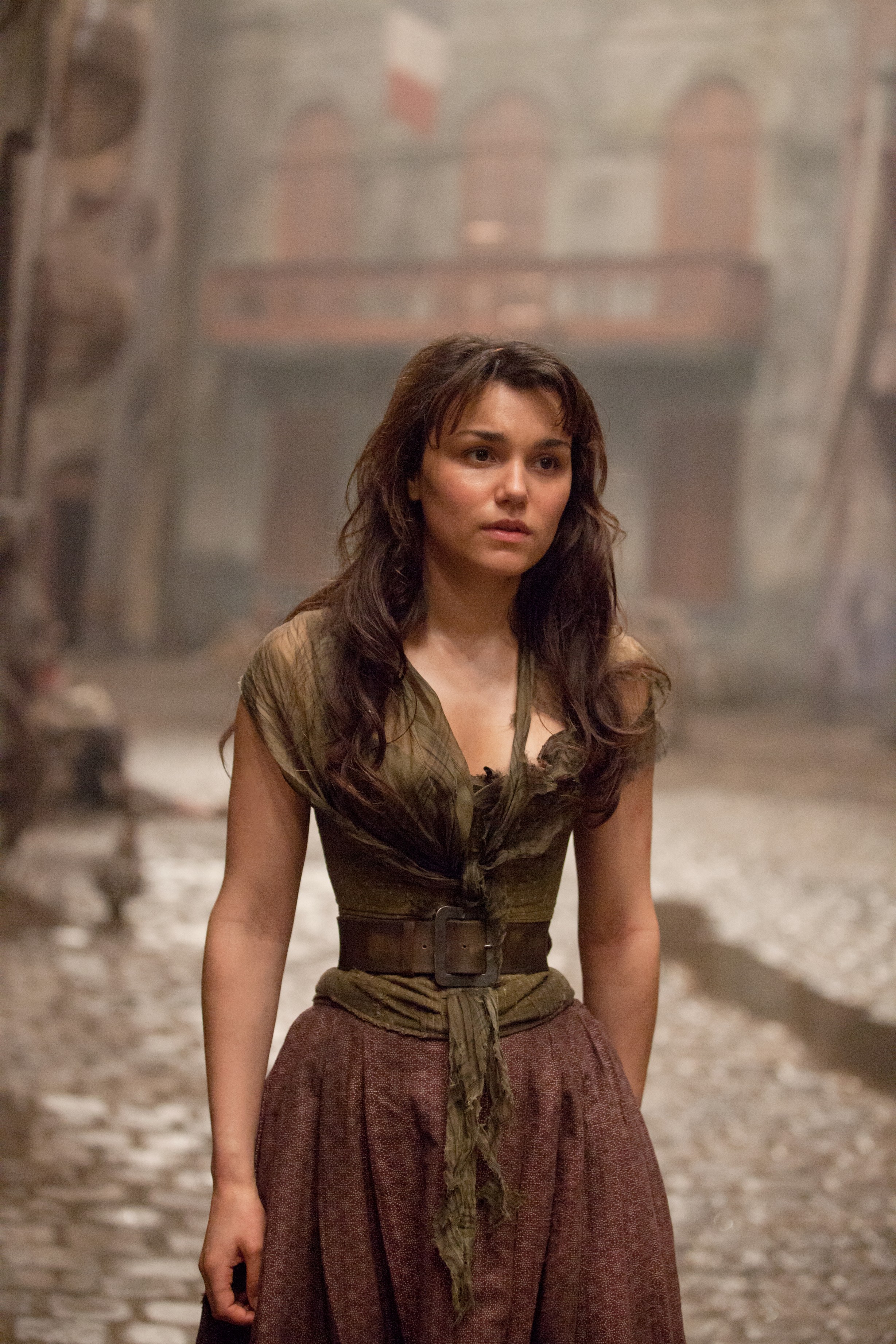
Amanda Seyfried portrayed the adult Cosette in the 2012 film adaptation of the musical Les Misérables, directed by Tom Hooper. Her performance is defined by her distinct operatic vocal delivery, the film's unconventional live-singing production method, and the character's role as the emotional anchor for Jean Valjean’s journey toward redemption.
The Casting and Artistic Vision of Tom Hooper
When director Tom Hooper began casting the 2012 adaptation of Les Misérables, he sought actors who could bring raw, immediate emotion to the screen. Unlike traditional film musicals where tracks are pre-recorded in a studio, Hooper mandated that all actors sing live on set, accompanied by a piano earpiece. This approach was intended to prioritize the dramatic weight of the performance over technical vocal perfection.
For the role of the adult Cosette, the production needed an actress capable of bridging the gap between innocence and the burgeoning strength required by the story's climax. Amanda Seyfried, known for her background in classical vocal training, underwent a rigorous audition process. Her selection was rooted in her ability to maintain a delicate, operatic soprano register while navigating the intense, intimate close-ups that characterize Hooper’s filmmaking style.
Vocal Technique and the "Live-Singing" Challenge
The decision to record vocals live on set presented a significant technical challenge for the cast. In professional musical theater, performers rely on acoustic feedback and the physical support of a live orchestra to sustain vocal resonance. In Les Misérables, the actors were isolated, listening to a piano track through an earpiece while the orchestra was added in post-production.
For Seyfried, this meant she had to modulate her voice to fit the emotional micro-expressions of the camera. The character of Cosette requires a sustained "head voice" or light soprano quality to convey her sheltered, ethereal nature. Because the camera was often mere inches from her face, Seyfried had to project vulnerability without the benefit of the power-belting techniques used by her co-stars, such as Anne Hathaway or Hugh Jackman. Her rendition of "In My Life" and "A Heart Full of Love" highlights this technical constraint, showcasing a controlled, vibrato-light style that mirrors Cosette's sheltered upbringing in the convent and her naivety in early adulthood.
Character Arc: From Convent Girl to Revolutionary Muse
In the narrative of Victor Hugo’s Les Misérables, as adapted by Alain Boublil and Claude-Michel Schönberg, Cosette functions as the catalyst for change. She is the living embodiment of the promise Jean Valjean made to Fantine. Seyfried’s portrayal reflects this transition from a silent, submissive daughter to a woman experiencing the sudden intensity of first love.
- The sheltered youth: Early in her arc, Seyfried uses soft, hesitant body language to communicate Cosette’s isolation within the convent walls.
- The awakening: Upon meeting Marius Pontmercy, her performance shifts. Seyfried captures the dizzying suddenness of infatuation, which acts as a jarring interruption to the life of discipline and secrecy enforced by Valjean.
- The emotional synthesis: By the film's final act, Cosette represents the future. Her performance is less about historical tragedy and more about the hope that drives Valjean’s final sacrifices.
Production Comparison: Stage vs. Screen
The following table outlines the key differences in how the role of Cosette is executed in a standard stage production versus the 2012 film adaptation.
| Feature | Stage Musical (Traditional) | 2012 Film Adaptation |
|---|---|---|
| Vocal Delivery | Projected for large theaters | Intimate, conversational, live-on-set |
| Orchestration | Live orchestra in the pit | Post-produced symphonic recording |
| Acting Style | Broad, expressive, theatrical | Micro-expressions for close-ups |
| Focus | Lyrical soaring and sustain | Emotional narrative and dialogue-singing |
| Audience Relation | Distanced by stage proximity | Direct connection via lens |
The "A Heart Full of Love" Sequence
The musical interaction between Cosette, Marius (Eddie Redmayne), and Eponine (Samantha Barks) in the song "A Heart Full of Love" serves as a structural centerpiece for the film. In this sequence, Seyfried is tasked with conveying a sense of genuine discovery.
Because the live-singing format allowed for varying tempos, Seyfried and Redmayne were able to take creative liberties with the pacing of their dialogue. This resulted in a more natural, less rigid exchange than is typically heard on the stage cast recording. The interplay captures the awkward, breathless nature of adolescent romance, effectively grounding a high-stakes operatic scene in a relatable human moment. Critics of the time noted that this sequence demonstrated the specific efficacy of the film’s "raw" audio approach, as it allowed for sighs, pauses, and breaths that are often lost in polished studio recordings.
Challenges and Critical Reception
Seyfried’s performance was met with a spectrum of reactions, reflecting the broader debate regarding the film’s live-singing methodology. Supporters praised the delicacy of her voice and her ability to remain "in character" even during the most challenging sustained notes. Detractors argued that the live-singing, while innovative, occasionally resulted in pitch instability, particularly in the upper register where Cosette’s music sits.
However, from an industry perspective, her performance is widely cited as a successful example of "acting through song." The technical difficulty of maintaining a high-register soprano sound while performing dramatic weeping or whispering remains a high bar for any performer. Her ability to keep the character consistent across a long, grueling filming schedule solidified her reputation as a performer capable of handling complex musical adaptations.
Legacy of the 2012 Performance
As of 2026, the 2012 version of Les Misérables remains a primary point of reference for the "live-on-set" musical genre. It proved that audiences were willing to trade high-fidelity vocal perfection for a sense of immediate, cinematic reality. Amanda Seyfried’s work as Cosette serves as the benchmark for this style, proving that the actress’s ability to "act" the lyrics—treating them as extensions of speech—is as important as the notes themselves.
For aspiring actors and vocalists, her performance serves as a case study in how to navigate the tension between musical requirements and the demands of the camera. The key takeaway for those studying the film is the importance of breath control and emotional consistency, even when the musical score requires a high degree of vocal fragility.
Frequently Asked Questions
Did Amanda Seyfried use a vocal double for her role as Cosette? No, Amanda Seyfried performed all of her own singing. Her classical vocal training prepared her for the demands of the score, and she recorded her vocals live on set during the filming process.
How did the live-singing format affect Cosette’s musical performance? The live-singing format allowed for more naturalistic phrasing. Unlike a studio-recorded musical, Seyfried could adjust her tempo and vocal power based on the immediate emotional context of the scene, leading to a more intimate and less "polished" sound compared to stage versions.
What was the most difficult aspect of the role for Seyfried? The primary challenge was maintaining a consistent, delicate, and operatic vocal quality while performing intensely emotional scenes directly for the camera. Balancing the physical act of singing with the intimate acting required by close-up shots necessitated a unique level of breath control.
How does Seyfried’s Cosette compare to the stage version? The film version is more conversational and character-focused, while the stage version relies on soaring, projection-heavy vocals that are designed to reach the back of a theater. Seyfried’s performance emphasizes the character's internal thoughts through subtle vocal choices rather than pure melodic projection.
What should performers learn from her performance? Performers should note how Seyfried treats the music as dialogue. By focusing on the intent behind each line of the song, she keeps the character grounded and believable, which is crucial when transitioning from stage musical theater to screen performance.
Recommendation for Further Analysis
To fully understand the nuance of this performance, watch the "In My Life" sequence with the volume leveled to focus on the vocal textures. Pay close attention to how Seyfried balances the technical requirements of the soprano register with the breathing patterns of a person in the midst of a emotional realization. By isolating the vocals, you can discern how she uses the live-singing format to add "human" imperfections, which ultimately serve the narrative of the character's awakening.