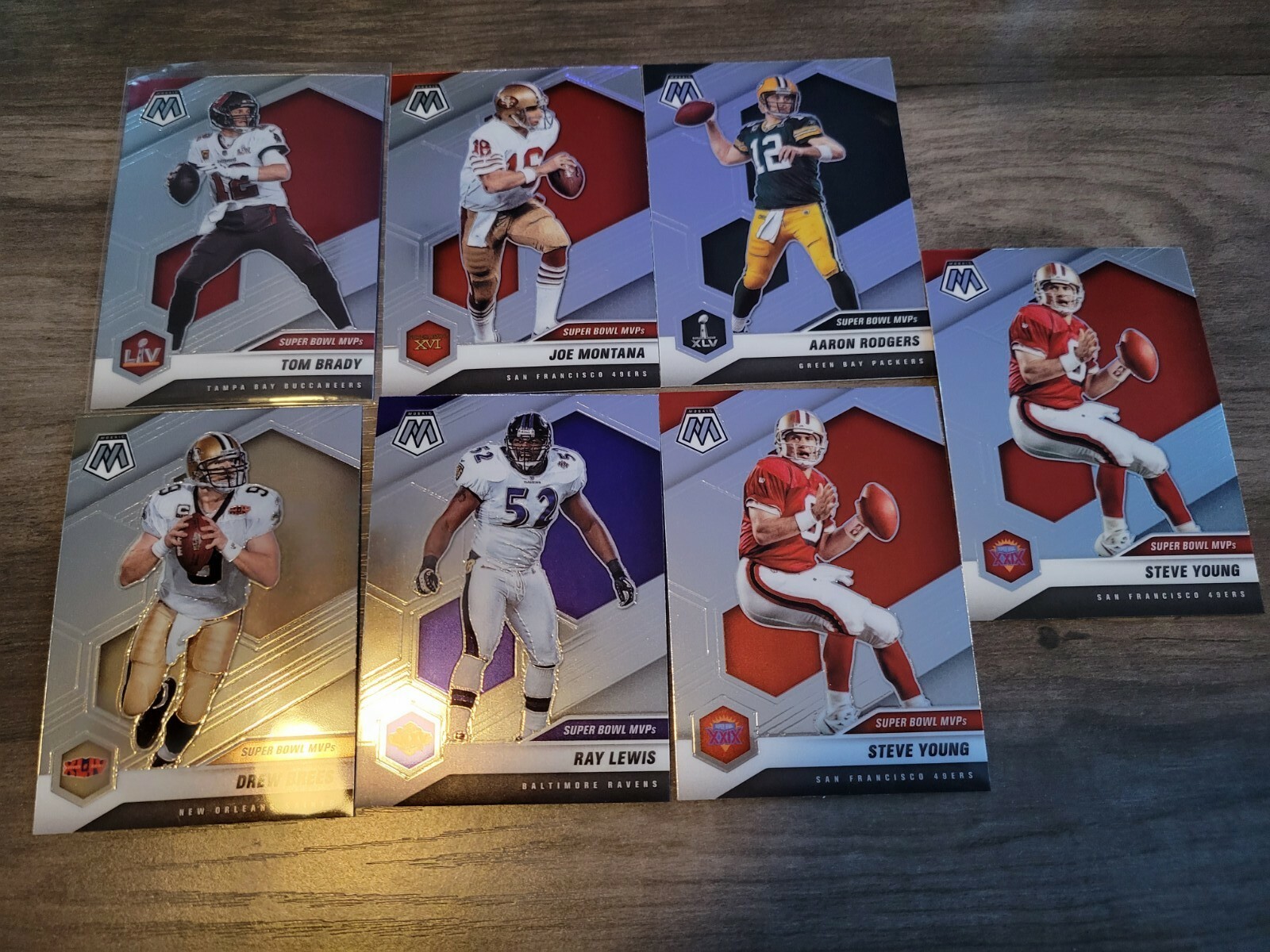
The Super Bowl Most Valuable Player (MVP) award is the most prestigious individual honor in American football, presented annually to the player who demonstrates the most impactful performance in the NFL's championship game. Since its inception in 1967, the award—officially known as the Pete Rozelle Trophy—has been dominated by quarterbacks, though it has also celebrated legendary performances by defenders, wide receivers, and special teams specialists.
While the award often mirrors the winning team’s star power, the selection process highlights the specific moments of brilliance that define a championship season. As of 2026, the list of Super Bowl MVPs represents a "who's who" of football royalty, spanning from the early dominance of the Green Bay Packers to the modern dynasties of the New England Patriots and Kansas City Chiefs.
The Evolution and Significance of the Pete Rozelle Trophy
The Super Bowl MVP award was first presented at Super Bowl I. In 1990, the NFL dedicated the trophy to Pete Rozelle, the former NFL Commissioner who was instrumental in the growth of the league and the creation of the Super Bowl itself. Unlike the regular-season MVP award, which is decided by a panel of 50 media members before the playoffs begin, the Super Bowl MVP is decided during the game.
The current voting system is a blend of perspectives. A panel of 16 football writers and broadcasters accounts for 80% of the vote, while the remaining 20% is determined by fans voting electronically during the game. This hybrid model ensures that both statistical excellence and popular impact are considered, though the "quarterback bias" remains a significant trend in the award's history.
Why Quarterbacks Dominate the Award
Statistically, the quarterback is the most frequent recipient of the Super Bowl MVP. This is largely due to the nature of modern football, where the offensive scheme revolves around the passer. A quarterback’s ability to manage the clock, convert third downs, and deliver under pressure makes them the most visible contributor to a victory. To date, quarterbacks have won the award more than 30 times, nearly doubling the count of all other positions combined.
The Early Eras: Establishing the Legend
The first two Super Bowls were defined by the Green Bay Packers and their Hall of Fame quarterback, Bart Starr. Starr’s efficiency and leadership in Super Bowl I and II set the standard for what an MVP performance looked like. However, the award truly entered the national consciousness with Super Bowl III.
Joe Namath, the charismatic quarterback of the New York Jets, became the first MVP to "guarantee" a victory against the heavily favored Baltimore Colts. His MVP win was not just about his stats—it was about the cultural shift he brought to the AFL-NFL merger.
The 1970s saw a diversification of the winner’s circle. The Pittsburgh Steelers' "Steel Curtain" defense and the Dallas Cowboys' "Doomsday Defense" pushed non-quarterbacks into the spotlight. In Super Bowl V, Chuck Howley of the Cowboys became the first—and so far, only—player from a losing team to win the MVP. His two interceptions and forced fumble were so dominant that voters could not ignore him, despite the Cowboys' loss to the Colts.
The Dynasty Years: Montana and the 1980s
The 1980s belonged to the San Francisco 49ers and the Washington Redskins (now Commanders). Joe Montana solidified his legacy by winning three Super Bowl MVPs (XVI, XIX, and XXIV). Montana’s calm demeanor in the pocket and his "West Coast Offense" precision made him the archetype for the modern MVP.
This era also produced some of the most memorable non-quarterback performances:
- John Riggins (SB XVII): The "Diesel" rushed for 166 yards, including a legendary 43-yard touchdown on fourth down.
- Jerry Rice (SB XXIII): Widely considered the greatest receiver ever, Rice’s 215 receiving yards remains a Super Bowl record.
- Richard Dent (SB XX): Representing the 1985 Bears, Dent’s 1.5 sacks and two forced fumbles highlighted one of the greatest defensive team efforts in history.
The Brady Era and the Shift to the Modern Game
From 2001 to 2021, the Super Bowl MVP narrative was largely written by Tom Brady. Winning five MVPs (four with the Patriots and one with the Buccaneers), Brady broke Joe Montana’s record and redefined longevity. His performances often focused on late-game drives and surgical efficiency, most notably in the historic comeback win in Super Bowl LI against the Atlanta Falcons.
As the league moved toward a pass-heavy ruleset in the 2010s, wide receivers began to reclaim some of the spotlight. Julian Edelman (SB LIII) and Cooper Kupp (SB LVI) won MVPs by serving as the primary engines of their respective offenses, proving that a high-volume receiver could rival a quarterback's impact if the game’s scoring was low or the defensive pressure on the QB was high.
The Rise of Patrick Mahomes
Following the Brady era, Patrick Mahomes emerged as the new face of the MVP trophy. With wins in Super Bowls LIV, LVII, and LVIII, Mahomes joined the elite ranks of Montana and Brady as the only players with three or more MVP trophies. His ability to create plays outside the pocket and lead second-half comebacks has become the defining characteristic of the 2020s.
Defensive Anomalies and Special Teams History
While rare, defensive MVPs provide a fascinating look at games where the "stars" were neutralized. Since 2000, only a handful of defensive players have hoisted the Pete Rozelle Trophy:
- Ray Lewis (SB XXXV): The heart of a Baltimore Ravens defense that allowed only 7 points.
- Dexter Jackson (SB XXXVII): Two interceptions in the first half for the Tampa Bay Buccaneers.
- Malcolm Smith (SB XLVIII): A pick-six and a fumble recovery in the Seahawks' rout of the Broncos.
- Von Miller (SB 50): Two forced fumbles that directly led to touchdowns, carrying the Broncos' defense to a win in Peyton Manning's final game.
The most unique MVP in history remains Desmond Howard (SB XXXI). As a return specialist for the Green Bay Packers, Howard totaled 244 return yards, including a 99-yard kickoff return touchdown that iced the game. He is the only special teams player to ever win the award.
Complete List of Super Bowl MVPs
The following table provides a comprehensive record of every Super Bowl MVP from the inaugural game through the 2024 season (Super Bowl LVIII).
| Super Bowl | Season | Player | Position | Team |
|---|---|---|---|---|
| I | 1966 | Bart Starr | QB | Green Bay Packers |
| II | 1967 | Bart Starr | QB | Green Bay Packers |
| III | 1968 | Joe Namath | QB | New York Jets |
| IV | 1969 | Len Dawson | QB | Kansas City Chiefs |
| V | 1970 | Chuck Howley | LB | Dallas Cowboys |
| VI | 1971 | Roger Staubach | QB | Dallas Cowboys |
| VII | 1972 | Jake Scott | S | Miami Dolphins |
| VIII | 1973 | Larry Csonka | RB | Miami Dolphins |
| IX | 1974 | Franco Harris | RB | Pittsburgh Steelers |
| X | 1975 | Lynn Swann | WR | Pittsburgh Steelers |
| XI | 1976 | Fred Biletnikoff | WR | Oakland Raiders |
| XII | 1977 | Harvey Martin / Randy White | DE / DT | Dallas Cowboys |
| XIII | 1978 | Terry Bradshaw | QB | Pittsburgh Steelers |
| XIV | 1979 | Terry Bradshaw | QB | Pittsburgh Steelers |
| XV | 1980 | Jim Plunkett | QB | Oakland Raiders |
| XVI | 1981 | Joe Montana | QB | San Francisco 49ers |
| XVII | 1982 | John Riggins | RB | Washington Redskins |
| XVIII | 1983 | Marcus Allen | RB | Los Angeles Raiders |
| XIX | 1984 | Joe Montana | QB | San Francisco 49ers |
| XX | 1985 | Richard Dent | DE | Chicago Bears |
| XXI | 1986 | Phil Simms | QB | New York Giants |
| XXII | 1987 | Doug Williams | QB | Washington Redskins |
| XXIII | 1988 | Jerry Rice | WR | San Francisco 49ers |
| XXIV | 1989 | Joe Montana | QB | San Francisco 49ers |
| XXV | 1990 | Ottis Anderson | RB | New York Giants |
| XXVI | 1991 | Mark Rypien | QB | Washington Redskins |
| XXVII | 1992 | Troy Aikman | QB | Dallas Cowboys |
| XXVIII | 1993 | Emmitt Smith | RB | Dallas Cowboys |
| XXIX | 1994 | Steve Young | QB | San Francisco 49ers |
| XXX | 1995 | Larry Brown | CB | Dallas Cowboys |
| XXXI | 1996 | Desmond Howard | KR/PR | Green Bay Packers |
| XXXII | 1997 | Terrell Davis | RB | Denver Broncos |
| XXXIII | 1998 | John Elway | QB | Denver Broncos |
| XXXIV | 1999 | Kurt Warner | QB | St. Louis Rams |
| XXXV | 2000 | Ray Lewis | LB | Baltimore Ravens |
| XXXVI | 2001 | Tom Brady | QB | New England Patriots |
| XXXVII | 2002 | Dexter Jackson | S | Tampa Bay Buccaneers |
| XXXVIII | 2003 | Tom Brady | QB | New England Patriots |
| XXXIX | 2004 | Deion Branch | WR | New England Patriots |
| XL | 2005 | Hines Ward | WR | Pittsburgh Steelers |
| XLI | 2006 | Peyton Manning | QB | Indianapolis Colts |
| XLII | 2007 | Eli Manning | QB | New York Giants |
| XLIII | 2008 | Santonio Holmes | WR | Pittsburgh Steelers |
| XLIV | 2009 | Drew Brees | QB | New Orleans Saints |
| XLV | 2010 | Aaron Rodgers | QB | Green Bay Packers |
| XLVI | 2011 | Eli Manning | QB | New York Giants |
| XLVII | 2012 | Joe Flacco | QB | Baltimore Ravens |
| XLVIII | 2013 | Malcolm Smith | LB | Seattle Seahawks |
| XLIX | 2014 | Tom Brady | QB | New England Patriots |
| 50 | 2015 | Von Miller | LB | Denver Broncos |
| LI | 2016 | Tom Brady | QB | New England Patriots |
| LII | 2017 | Nick Foles | QB | Philadelphia Eagles |
| LIII | 2018 | Julian Edelman | WR | New England Patriots |
| LIV | 2019 | Patrick Mahomes | QB | Kansas City Chiefs |
| LV | 2020 | Tom Brady | QB | Tampa Bay Buccaneers |
| LVI | 2021 | Cooper Kupp | WR | Los Angeles Rams |
| LVII | 2022 | Patrick Mahomes | QB | Kansas City Chiefs |
| LVIII | 2023 | Patrick Mahomes | QB | Kansas City Chiefs |
Positional Breakdown: A Statistical View
Analyzing the distribution of the MVP award by position reveals the NFL's tactical evolution. While the ground game was king in the 1970s, the modern era is almost exclusively a showcase for passers and their targets.
- Quarterback (33): The undeniable leaders of the pack.
- Wide Receiver (8): Often winning when the QB has a "steady" game but the receiver makes spectacular, game-winning catches (e.g., Santonio Holmes).
- Running Back (7): Most of these wins occurred before the year 2000. Terrell Davis (1998) was the last "traditional" workhorse back to win until the modern game shifted.
- Linebacker (4): Defenders who disrupted the passing game or created turnovers.
- Defensive End / Defensive Tackle (3): Impacted the game via sacks and pressure.
- Safety / Cornerback (3): Usually awarded for multiple-interception games.
- Kick Returner (1): Desmond Howard’s unique special teams contribution.
Shared MVPs and Rare Feats
There has only been one instance of a shared Super Bowl MVP award. In Super Bowl XII, the Dallas Cowboys' defensive line was so dominant that voters could not choose between defensive tackle Randy White and defensive end Harvey Martin. Together, they led a unit that forced eight turnovers and held the Denver Broncos to just 156 total yards.
In terms of franchise success, the Dallas Cowboys and Pittsburgh Steelers have historically produced the highest variety of MVPs across different positions, reflecting their eras of balanced roster dominance. Conversely, the New England Patriots' MVP history is inextricably linked to Tom Brady, who accounts for nearly all of the franchise's honors in this category.
FAQs About Super Bowl MVPs
Has a player from the losing team ever won Super Bowl MVP?
Yes, it has happened exactly once. Chuck Howley, a linebacker for the Dallas Cowboys, won the MVP in Super Bowl V despite his team losing 16-13 to the Baltimore Colts. Howley intercepted two passes and forced a fumble. To this day, he remains the only player to receive the honor in a losing effort, as the league and voters generally prefer to reward a player from the championship-winning side.
Who has the most Super Bowl MVP awards?
Tom Brady holds the record with five Super Bowl MVP awards. He won four with the New England Patriots (XXXVI, XXXVIII, XLIX, LI) and one with the Tampa Bay Buccaneers (LV). Following him are Joe Montana and Patrick Mahomes, who each have three.
How is the Super Bowl MVP chosen?
The winner is chosen by a panel of 16 media members (representing 80% of the vote) and a fan vote (representing 20%). The voting takes place during the fourth quarter of the game. This ensures the award is announced immediately following the game’s conclusion during the trophy presentation.
What does the Super Bowl MVP win besides the trophy?
In addition to the Pete Rozelle Trophy, winners historically received a brand-new vehicle from the game's sponsor (often Cadillac or Chevrolet). However, in recent years, the emphasis has shifted toward the prestige of the award and the associated marketing opportunities. Winners also traditionally participate in the "I'm going to Disney World!" commercial campaign, which began in 1987 with Phil Simms.
Can a defensive player still win the MVP in the modern NFL?
While difficult, it is possible. For a defensive player to win today, they typically need to record multiple high-impact plays, such as two or more sacks, a forced fumble, or an interception returned for a touchdown, especially in a game where the offenses struggle to score. Von Miller (Super Bowl 50) is the most recent example of a defender completely taking over a game to earn the trophy.
Summary of the Winner's Legacy
The list of Super Bowl MVPs is a timeline of football's greatest moments. From the grinding run games of the 70s to the high-flying aerial attacks of the 2020s, the award captures the essence of what it means to be a "big game" performer. For fans and historians, tracking these winners provides more than just a list of names; it offers a blueprint of how the game of football has changed and which players were able to rise to the occasion when the stakes were at their absolute highest.
If you are looking to dive deeper into NFL history, exploring the individual season statistics of these MVPs often reveals the specific "hot streaks" that led to their championship glory. Whether it is Brady’s precision or Miller’s pass-rushing speed, each MVP represents a unique chapter in the story of the National Football League.