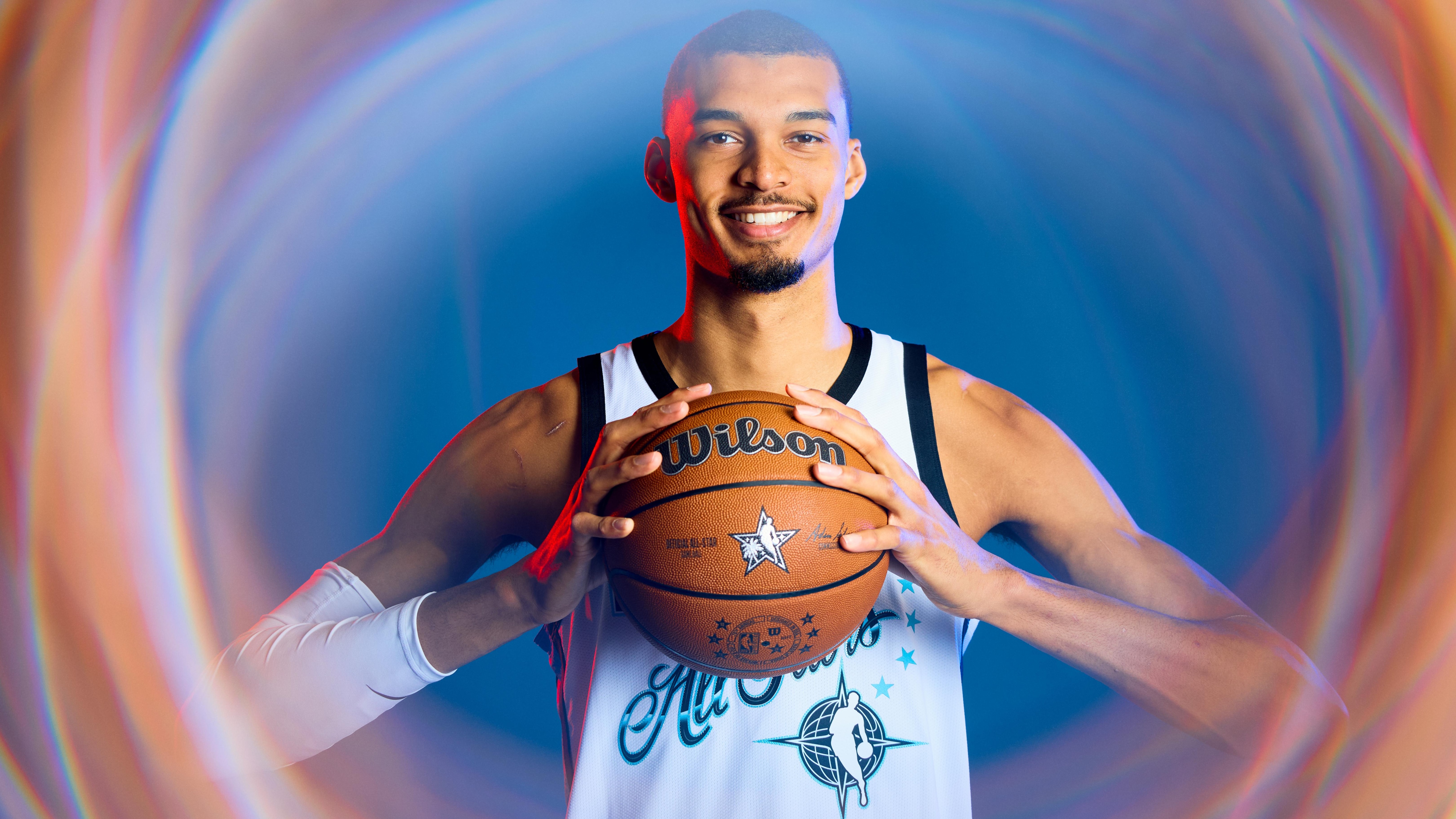
The NBA All-Star Game Kobe Bryant MVP Award is presented annually to the player voted most valuable in the league's mid-season exhibition game. As of 2026, the record for most selections is shared by Bob Pettit and Kobe Bryant, each having won the honor four times. LeBron James, Michael Jordan, Oscar Robertson, and Shaquille O'Neal follow closely with three awards each.
The All-Star Game MVP award is more than a simple exhibition trophy; it is a historical marker of the league's greatest talents performing at the peak of their powers. Established in 1953 (with retroactive winners named for the 1951 and 1952 games), the award has evolved alongside the league, transitioning from a gritty showcase of fundamentals to a high-octane display of three-point shooting and elite athleticism. In 2020, the NBA permanently renamed the trophy to honor the late Kobe Bryant, a decision that cemented the award's prestige.
The Evolution and Renaming of the All-Star MVP
The award underwent its most significant transformation in February 2020. Following the tragic passing of Kobe Bryant—an 18-time All-Star and four-time MVP of the event—NBA Commissioner Adam Silver announced that the trophy would be renamed the Kobe Bryant MVP Award. This wasn't merely a name change; it introduced a brand-new trophy design rich with symbolism.
The modern trophy features an eight-sided base (representing Bryant's #8 jersey) and 24 stars (representing his #24 jersey). It consists of four levels:
- Level 1 (2 inches): Recognizes Kobe’s 2002 MVP and his five NBA championships.
- Level 2 (7 inches): Honors his 18 All-Star selections and two Finals MVPs.
- Level 3 (9 inches): Commemorates his 2008 NBA MVP award.
- Level 4 (11 inches): Highlights his four All-Star MVP awards.
This architectural approach to the award has increased the desire among modern players to secure it, viewing it as a direct link to the "Mamba Mentality."
Record-Holding Legends: The Four-Time Winners
Only two players in NBA history have managed to take home the All-Star MVP trophy four times. Their dominance spanned different eras, illustrating how the game changed over half a century.
Bob Pettit (1956, 1958, 1959, 1962)
Bob Pettit was the first true superstar of the All-Star Game. Playing for the St. Louis Hawks, Pettit’s dominance was rooted in the paint. His 1958 performance was particularly noteworthy, where he hauled in 26 rebounds, a record that stood for decades as a testament to the physicality of the early NBA. Pettit shared the 1959 award with Elgin Baylor, the first of only four times in history the award has been split between two players.
Kobe Bryant (2002, 2007, 2009, 2011)
Kobe Bryant’s approach to the All-Star Game was unique. While many players used the event for rest or light-hearted play, Bryant treated it with playoff-level intensity. His first win in 2002 came in his hometown of Philadelphia, while his 2011 win in Los Angeles saw him score 37 points and grab 14 rebounds. Bryant’s relentless pursuit of excellence in an exhibition setting is precisely why the award now bears his name.
The Three-Time MVP Club
To win the All-Star MVP three times requires a combination of longevity and consistent fan/media appeal. The names in this category represent the "Mount Rushmore" of basketball history.
- Oscar Robertson (1961, 1964, 1969): "The Big O" was the first player to master the All-Star format as a triple-double threat, showcasing his versatility during the 1960s.
- Michael Jordan (1988, 1996, 1998): Jordan’s 1988 performance in Chicago is often cited as the greatest All-Star individual performance, where he scored 40 points on 17-of-23 shooting. His 1997 triple-double (though he didn't win MVP that specific year) and his 1998 "flu game" era dominance remain legendary.
- Shaquille O'Neal (2000, 2004, 2009): Shaq brought showmanship to the MVP race. He is one of the few players to win the award as a co-MVP twice: once with Tim Duncan in 2000 and once with Kobe Bryant in 2009.
- LeBron James (2006, 2008, 2018): LeBron’s wins are spread across three different decades. His 2018 victory was particularly significant as it was the first year of the "Draft Format" (Team LeBron vs. Team Stephen), where he led a fourth-quarter comeback that revitalized the game's competitive spirit.
Shared MVP Honors: A Rare Occurrence
In the history of the mid-season classic, the voting has resulted in a tie on four distinct occasions. These moments often highlighted incredible chemistry between teammates or rivals.
- 1959 - Bob Pettit and Elgin Baylor: A battle of the boards and scoring that the voters couldn't separate.
- 1993 - Karl Malone and John Stockton: The Utah Jazz duo shared the trophy in front of their home crowd in Salt Lake City, a fitting tribute to one of the greatest tandems in sports history.
- 2000 - Shaquille O'Neal and Tim Duncan: The two dominant big men of the era shared the honors during a transition period for the league.
- 2009 - Shaquille O'Neal and Kobe Bryant: Perhaps the most famous co-MVP moment, as the former teammates reconciled on the podium in Phoenix, signaling the end of their well-documented feud.
Voting Criteria and the Selection Process
The All-Star Game MVP is not chosen by a single entity. Instead, it relies on a weighted voting system designed to balance expert analysis with fan engagement.
- Media Panel (75%): A group of basketball writers and broadcasters cast ballots during the fourth quarter of the game. They evaluate based on statistical impact, "clutch" moments, and the overall narrative of the game.
- Fan Vote (25%): Fans worldwide can vote via the NBA app and social media platforms. While the media usually dictates the winner based on performance, the fan vote can act as a tiebreaker or push a popular player over the edge.
Winning the award usually requires being on the winning team. Historically, only one player has won the All-Star MVP while playing for the losing squad: Jerry West in 1972. Since then, the unofficial rule has been that the MVP must come from the victorious roster.
Complete List of NBA All-Star Game MVP Winners (1951–2024)
The following table details the winners of the award from its inception through the 2024 season.
| Year | Player | Team | Key Achievement |
|---|---|---|---|
| 2024 | Damian Lillard | Milwaukee Bucks | 39 points, 11 three-pointers |
| 2023 | Jayson Tatum | Boston Celtics | Record 55 points |
| 2022 | Stephen Curry | Golden State Warriors | 16 three-pointers (Record) |
| 2021 | Giannis Antetokounmpo | Milwaukee Bucks | 16-of-16 shooting (100% FG) |
| 2020 | Kawhi Leonard | LA Clippers | First Kobe Bryant Trophy winner |
| 2019 | Kevin Durant | Golden State Warriors | 31 points |
| 2018 | LeBron James | Cleveland Cavaliers | 29 points, 10 rebounds, 8 assists |
| 2017 | Anthony Davis | New Orleans Pelicans | 52 points (then-record) |
| 2016 | Russell Westbrook | Oklahoma City Thunder | Back-to-back MVP |
| 2015 | Russell Westbrook | Oklahoma City Thunder | 41 points |
| 2014 | Kyrie Irving | Cleveland Cavaliers | 31 points, 14 assists |
| 2013 | Chris Paul | LA Clippers | 20 points, 15 assists |
| 2012 | Kevin Durant | Oklahoma City Thunder | 36 points |
| 2011 | Kobe Bryant | Los Angeles Lakers | 37 points, 14 rebounds |
| 2010 | Dwyane Wade | Miami Heat | 28 points, 11 assists |
| 2009 | Kobe Bryant / Shaquille O'Neal | Lakers / Suns | Co-MVPs |
| 2008 | LeBron James | Cleveland Cavaliers | 27 points, 8 rebounds, 9 assists |
| 2007 | Kobe Bryant | Los Angeles Lakers | 31 points, 6 assists, 6 steals |
| 2006 | LeBron James | Cleveland Cavaliers | Youngest MVP at the time |
| 2005 | Allen Iverson | Philadelphia 76ers | 15 points, 10 assists |
| 2004 | Shaquille O'Neal | Los Angeles Lakers | 24 points, 11 rebounds |
| 2003 | Kevin Garnett | Minnesota Timberwolves | 37 points, 9 rebounds |
| 2002 | Kobe Bryant | Los Angeles Lakers | 31 points, 5 rebounds |
| 2001 | Allen Iverson | Philadelphia 76ers | Led 21-point comeback |
| 2000 | Shaq O'Neal / Tim Duncan | Lakers / Spurs | Co-MVPs |
| 1998 | Michael Jordan | Chicago Bulls | 23 points, 8 assists |
| 1997 | Glen Rice | Charlotte Hornets | 20 points in a single quarter |
| 1996 | Michael Jordan | Chicago Bulls | Return from retirement |
| 1995 | Mitch Richmond | Sacramento Kings | 23 points on 90% shooting |
| 1994 | Scottie Pippen | Chicago Bulls | 29 points, 11 rebounds |
| 1993 | Karl Malone / John Stockton | Utah Jazz | Co-MVPs at home |
| 1992 | Magic Johnson | LA Lakers | Emotional return to the game |
| 1991 | Charles Barkley | Philadelphia 76ers | 17 points, 22 rebounds |
| 1990 | Magic Johnson | LA Lakers | 22 points |
| 1988 | Michael Jordan | Chicago Bulls | 40 points in Chicago |
Note: The 1999 All-Star Game was cancelled due to the league lockout.
Notable Trends in Recent MVP Winners
In the modern era (roughly 2015 to 2026), the criteria for winning the All-Star MVP has shifted toward perimeter scoring and record-breaking volume.
The Three-Point Explosion
In 2022, Stephen Curry fundamentally changed the expectations for an All-Star performance. By hitting 16 three-pointers, he proved that the MVP could be won almost exclusively from beyond the arc. This trend continued with Damian Lillard in 2024, who utilized half-court shots to capture the attention of voters.
The Scoring Surge
For decades, Wilt Chamberlain’s 42 points (1962) was considered an unbreakable All-Star record. That record has been shattered multiple times in the last ten years:
- Anthony Davis (2017): 52 points.
- Stephen Curry (2022): 50 points.
- Jayson Tatum (2023): 55 points.
The lack of defensive intensity in the first three quarters of the modern game allows elite scorers to reach these heights, making the MVP race essentially a pursuit of the 50-point mark.
The Rise of International Stars
Reflecting the global nature of the NBA in 2026, international players have become frequent recipients of the award. Giannis Antetokounmpo (Greece) became the first European player to win the award in 2021 with a perfect shooting night. This follows the footsteps of players like Kyrie Irving (born in Australia) and Tim Duncan (U.S. Virgin Islands).
Why the All-Star MVP Matters for Hall of Fame Resumes
While critics often dismiss the All-Star Game as a "meaningless exhibition," the Basketball Hall of Fame takes All-Star accolades seriously. An All-Star MVP award serves as a "tiebreaker" for players on the bubble of greatness. It demonstrates that a player was not just an All-Star, but the best player among the league's elite on a specific night.
For players like Paul George, Damian Lillard, or Russell Westbrook, multiple All-Star MVPs add a layer of "star power" that bolsters their legacy against peers who may have similar regular-season statistics but lacked the showmanship to dominate the mid-season stage.
Common Mistakes and Trivia
- The Jerry West Anomaly: Many fans believe you must win the game to be MVP. While true today, Jerry West won it in 1972 despite the West losing to the East.
- The Rookie MVP: Only one rookie has ever won the All-Star MVP: Elgin Baylor in 1959 (shared with Pettit). Since then, it has become nearly impossible for a rookie to win, as they rarely receive the minutes or touches necessary to compete with established veterans.
- Back-to-Back Winners: Only two players have won the award in consecutive years: Bob Pettit (1958, 1959) and Russell Westbrook (2015, 2016).
Frequently Asked Questions
Who has the most All-Star Game MVP awards?
Kobe Bryant and Bob Pettit share the record with four awards each. Bryant won his in 2002, 2007, 2009, and 2011. Pettit won his in 1956, 1958, 1959, and 1962. Among active players as of 2026, LeBron James is the closest to the record with three wins.
When was the All-Star MVP trophy renamed?
The trophy was officially renamed the Kobe Bryant MVP Award in February 2020 by Commissioner Adam Silver. This occurred during the first All-Star weekend following Bryant's death in January 2020. Kawhi Leonard was the first recipient of the newly designed trophy.
Can a player on the losing team win the All-Star MVP?
Technically, yes, but it is extremely rare. Jerry West (1972) is the only player in NBA history to achieve this. In the modern era, voters exclusively select from the winning team to emphasize the competitive nature of the game’s conclusion, especially under the "Elam Ending" format used in recent years.
What is the record for most points scored by an All-Star MVP?
Jayson Tatum holds the record for most points in an All-Star Game with 55 points, achieved in 2023. He surpassed the previous record of 52 points set by Anthony Davis in 2017.
How is the All-Star MVP winner decided?
The winner is determined by a panel of media members (accounting for 75% of the vote) and a fan vote (accounting for 25%). The voting takes place during the game, usually concluding just before the final buzzer.
Final Recommendation for Fans and Historians
If you are tracking the history of the All-Star MVP, it is essential to look beyond the box scores. Each award typically reflects the "narrative" of that NBA season—whether it was Magic Johnson's emotional return, Michael Jordan's farewell, or the rise of the next generation like Jayson Tatum. For the most up-to-date information on future winners and updated statistics, visit the official NBA All-Star website.