All season pest control is a proactive, subscription-based management strategy designed to prevent infestations before they occur by addressing the specific biological cycles of pests across all four seasons. Unlike reactive "one-time" treatments, this year-round approach utilizes Integrated Pest Management (IPM) to maintain a protective barrier, monitor high-risk areas, and adapt treatments to seasonal pest behaviors.
The Evolution of Pest Management in 2026
By 2026, the philosophy of pest control has shifted decisively from reactive chemical applications to comprehensive, preventative environmental management. Property owners no longer wait for a visible infestation of ants or the sound of rodents in the walls to take action. Instead, all season pest control focuses on the understanding that pests are a constant pressure, merely changing their tactics as the temperature and food availability fluctuate throughout the year.
The core of an all-season program is the "Perimeter Protection" model. This involves a systematic application of barriers and exclusion techniques that treat the home as a fortress. In the current landscape, modern pest professionals utilize low-impact, target-specific botanicals and advanced monitoring sensors that provide real-time data on pest activity. This ensures that treatments are not only effective but also environmentally responsible, adhering to the highest standards of safety for families and pets.
The Seasonal Lifecycle: Why Year-Round Service is Necessary
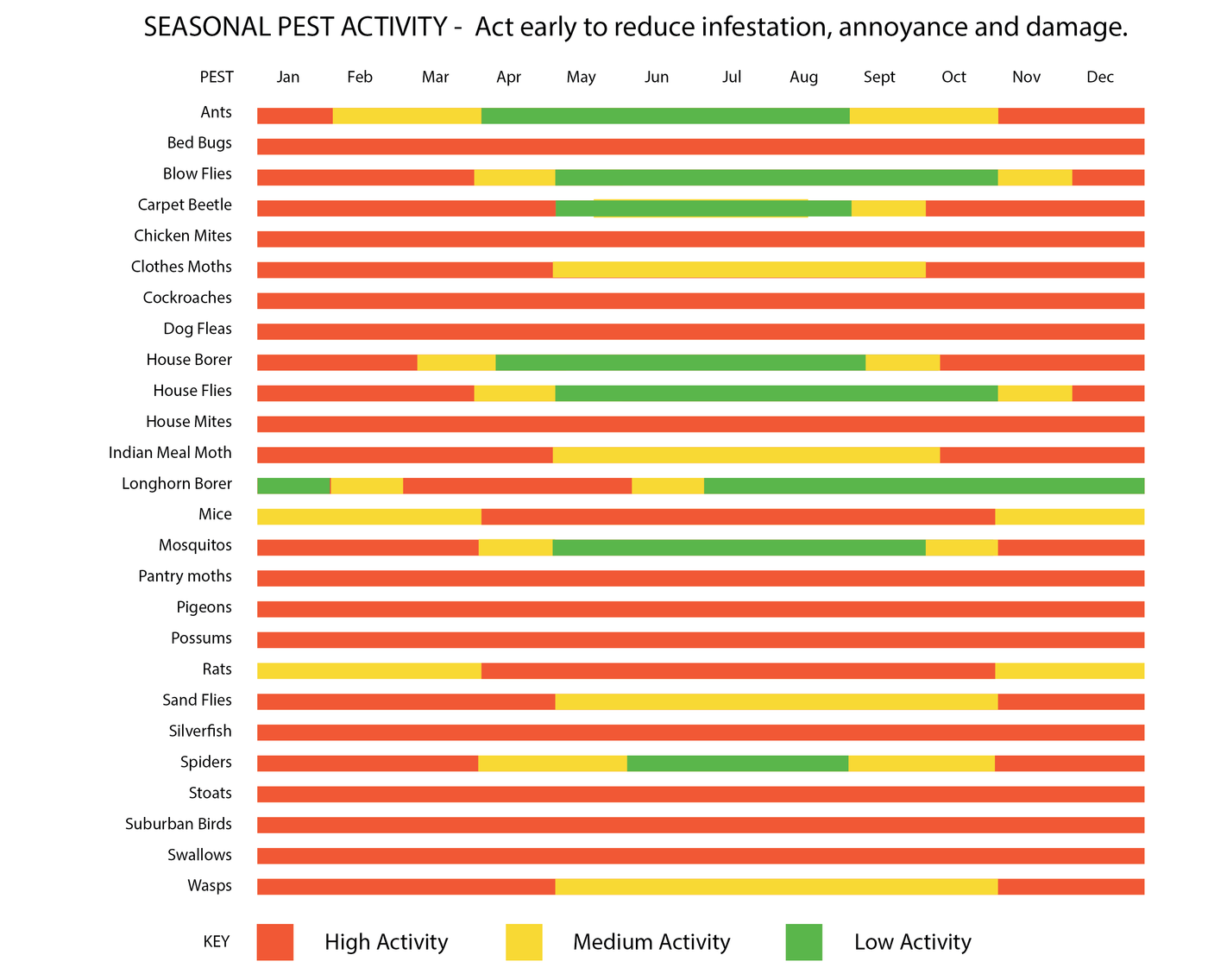
Pests do not disappear when the temperature drops; they simply change their habitat and behavior. To understand why all season pest control is the gold standard for property maintenance, one must look at the specific threats posed during each quarter of the year.
Spring: The Season of Emergence and Breeding
As the ground thaws and moisture levels rise, the spring season marks the beginning of high-volume pest activity. This is the period when most insects wake from diapause (a period of suspended development) or hatch from eggs laid the previous year.
- Ants and Termites: With the spring rains, subterranean termites often begin their "swarming" phase to establish new colonies. Ants, searching for sugar-based food sources to feed a growing queen, begin scouting interior kitchens and pantries.
- Moisture Management: Professional all-season services in the spring focus heavily on the exterior foundation. Technicians identify areas of standing water or mulch that is too thick, as these provide the humidity necessary for pest survival.
- The Protective Barrier: This is the most critical time for establishing a chemical and physical barrier around the home's perimeter to intercept scouts before they find a way inside.
Summer: Peak Activity and Rapid Reproduction
In the heat of the summer, pest metabolisms are at their peak. This leads to rapid reproduction cycles, where a small colony can become a full-scale infestation within weeks.
- Stinging Insects: Wasps, hornets, and yellow jackets build nests aggressively during the summer months. An all-season plan includes "eave sweeps" to remove small nests before they become a safety hazard.
- Mosquitoes and Ticks: As outdoor living increases, the risk of vector-borne diseases rises. Professional services in 2026 emphasize the treatment of foliage and shaded areas where these pests rest during the day.
- Crawl Space Inspections: High humidity in the summer can lead to fungal growth and attracts wood-boring beetles and cockroaches. All-season technicians often use this time to inspect the "dark zones" of a property.
Fall: The Great Inward Migration
As the first frost approaches, pests begin looking for a place to overwinter. This is the most common time for homeowners to experience "accidental invaders"—pests that don't necessarily want to eat your food but want to use your home for warmth.
- Rodent Exclusion: Mice and rats can squeeze through holes as small as a dime. Fall services focus on "exclusion," which is the process of sealing gaps in the foundation, around utility pipes, and under door sweeps with chew-proof materials like steel wool or copper mesh.
- Overwintering Insects: Pests like stink bugs, boxelder bugs, and lady beetles cluster on the sunny sides of buildings and attempt to crawl into siding or attic spaces. A fall perimeter treatment is designed to repel these clusters.
Winter: Interior Focus and Structural Audits
While many believe pest control is unnecessary in winter, this is actually the best time for a deep-dive structural audit. Pests that successfully entered in the fall are now established, and food sources are scarce, making them easier to trap and bait.
- Rodent Monitoring: Because rodents are active year-round indoors, winter is the time to check bait stations and traps in attics and basements.
- Spider Web Removal: Spiders tend to move toward the ceiling and corners of garages and basements during winter. Removing these webs also removes egg sacs that would hatch in the spring.
- Termite Inspections: Winter is an ideal time for interior termite inspections, as the lack of foliage and outdoor activity allows technicians to get a clearer view of the home’s structural elements.
Technical Components of an All-Season Plan
A professional all-season pest control strategy is built on several technical pillars that go beyond simple spray applications. Understanding these components helps property owners evaluate the quality of their service provider.
Integrated Pest Management (IPM)
IPM is a science-based decision-making process that identifies and reduces risks from pests and pest management tools. In 2026, IPM is the foundation of all reputable all-season programs. It involves:
- Inspection: A thorough walkthrough to identify current pests and potential entry points.
- Identification: Determining exactly which species is present, as treatments for a Carpenter Ant differ significantly from those for an Odorous House Ant.
- Monitoring: Using pheromone traps and digital sensors to track pest population trends.
- Prevention: Implementing physical changes to the environment (like trimming branches away from the roof) to make the home less attractive to pests.
Advanced Barrier Technology
Modern pest control utilizes micro-encapsulated formulas. These treatments consist of microscopic bubbles of active ingredients that adhere to the surfaces where pests travel. This technology allows for a "timed-release" effect, ensuring the barrier remains effective for 60 to 90 days despite rain or UV exposure. This longevity is what makes a quarterly (four times per year) service schedule scientifically sound.
Exclusion Services
The most effective form of pest control is preventing entry entirely. All-season plans frequently include minor exclusion work as part of the maintenance fee. This includes:
- Caulking: Sealing cracks in the masonry or around window frames.
- Screen Repair: Checking that attic vents and crawl space covers are intact.
- Threshold Maintenance: Ensuring door sweeps make a tight seal with the floor.
Comparative Analysis: Reactive vs. All Season Pest Control
For many homeowners, the decision between calling an exterminator only when a problem arises versus paying for a year-round plan comes down to cost and perceived value. The following table outlines the material differences between these two approaches.
| Feature | Reactive (One-Time) Service | All Season (Subscription) Control |
|---|---|---|
| Primary Goal | Elimination of a visible infestation. | Prevention and long-term suppression. |
| Cost Structure | High one-time fee ($250–$500+). | Lower recurring fee ($40–$75/month). |
| Warranty | Usually 30 days for the specific pest. | Continuous "Retreatment Guarantee." |
| Chemical Load | High; requires intensive "knockdown" agents. | Low; uses preventative and targeted baits. |
| Risk Factor | High; pests may have already caused damage. | Low; problems are caught in the early stages. |
| Service Scope | Limited to the specific room or area. | Comprehensive (Foundation, Yard, Eaves, Attic). |
Economic and Structural Value
The true value of all season pest control lies in risk mitigation. Pests are not merely a nuisance; they are a threat to the structural integrity of a property and the health of its occupants.
Protecting Structural Integrity
Termites and Carpenter Ants cause billions of dollars in property damage annually. By the time a homeowner sees a termite swarm in the spring, the colony has likely been feeding on the home's framing for years. An all-season plan includes regular inspections of mud tubes and wood moisture levels, often catching these "silent destroyers" before the damage requires structural repair.
Health and Safety Considerations
Pests are known vectors for a variety of pathogens. Cockroaches are a primary trigger for asthma in children, while rodents carry Hantavirus and Salmonella. Ticks and mosquitoes are responsible for the spread of Lyme disease and West Nile virus. A year-round management plan reduces the "bioload" of these pests around the home, significantly lowering the risk of disease transmission to family members and pets.
Choosing the Right Service Provider in 2026
When selecting an all-season pest control provider, look for companies that prioritize transparency and education. A high-quality provider should provide a digital "Service Report" after every visit, detailing exactly what was found, what products were used, and what structural recommendations they have for the homeowner.
Key certifications to look for include QualityPro (the "mark of excellence" in pest management) and GreenPro for those seeking eco-friendly options. In 2026, reputable companies also provide clear data regarding the safety of their products for indoor air quality and local pollinators.
Frequently Asked Questions
What happens if I see a bug between my scheduled all-season visits?
Most professional all-season plans include a "re-treatment guarantee." This means that if a pest problem arises between your quarterly or bi-monthly services, the company will send a technician to address the issue at no additional cost. This provides peace of mind that you are paying for a "pest-free environment" rather than just a specific number of visits.
Are the chemicals used in all-season pest control safe for my pets?
Modern pest control focuses on "Targeted Delivery." This means products are applied in cracks, crevices, and bait stations where pets cannot reach them. Most liquid treatments used in 2026 are safe once dry, which usually takes 30 to 60 minutes. Always inform your technician about specific pets (like birds or fish) that may be more sensitive to environmental changes.
Do I need to be home for every all-season service?
Generally, no. Because the primary goal of all season pest control is maintaining the exterior perimeter barrier, many companies perform "exterior-only" maintenance for the majority of the year. If you are experiencing an interior issue, you can schedule an interior inspection, but the exterior barrier is what prevents 90% of infestations.
How much does all season pest control typically cost in 2026?
While prices vary by region and property size, a standard residential all-season plan typically costs between $450 and $900 per year. This is often broken down into an initial setup fee followed by monthly or quarterly payments. When compared to the cost of a single termite remediation or a major rodent cleanup, the preventative investment is generally considered more cost-effective.
Does all-season pest control include termite protection?
This depends on the specific plan. Many "all-in-one" premium plans do include termite monitoring and a damage repair guarantee. However, standard plans may focus only on general pests (ants, spiders, roaches, rodents). It is vital to read the service agreement to understand exactly which pests are covered and which require a separate rider.
Summary and Next Steps
All season pest control is the most effective way to ensure a property remains comfortable, safe, and structurally sound throughout the year. By moving away from reactive "firefighting" and toward a consistent, preventative model, property owners can eliminate the stress of unexpected infestations.
Recommended Action: Conduct a "perimeter audit" of your home. Look for gaps where utility lines enter the house and check for any wood-to-soil contact around your foundation. If you find multiple entry points or see early signs of spring pest activity, contact a certified Integrated Pest Management professional to discuss an all-season protection plan tailored to your local climate and property needs.