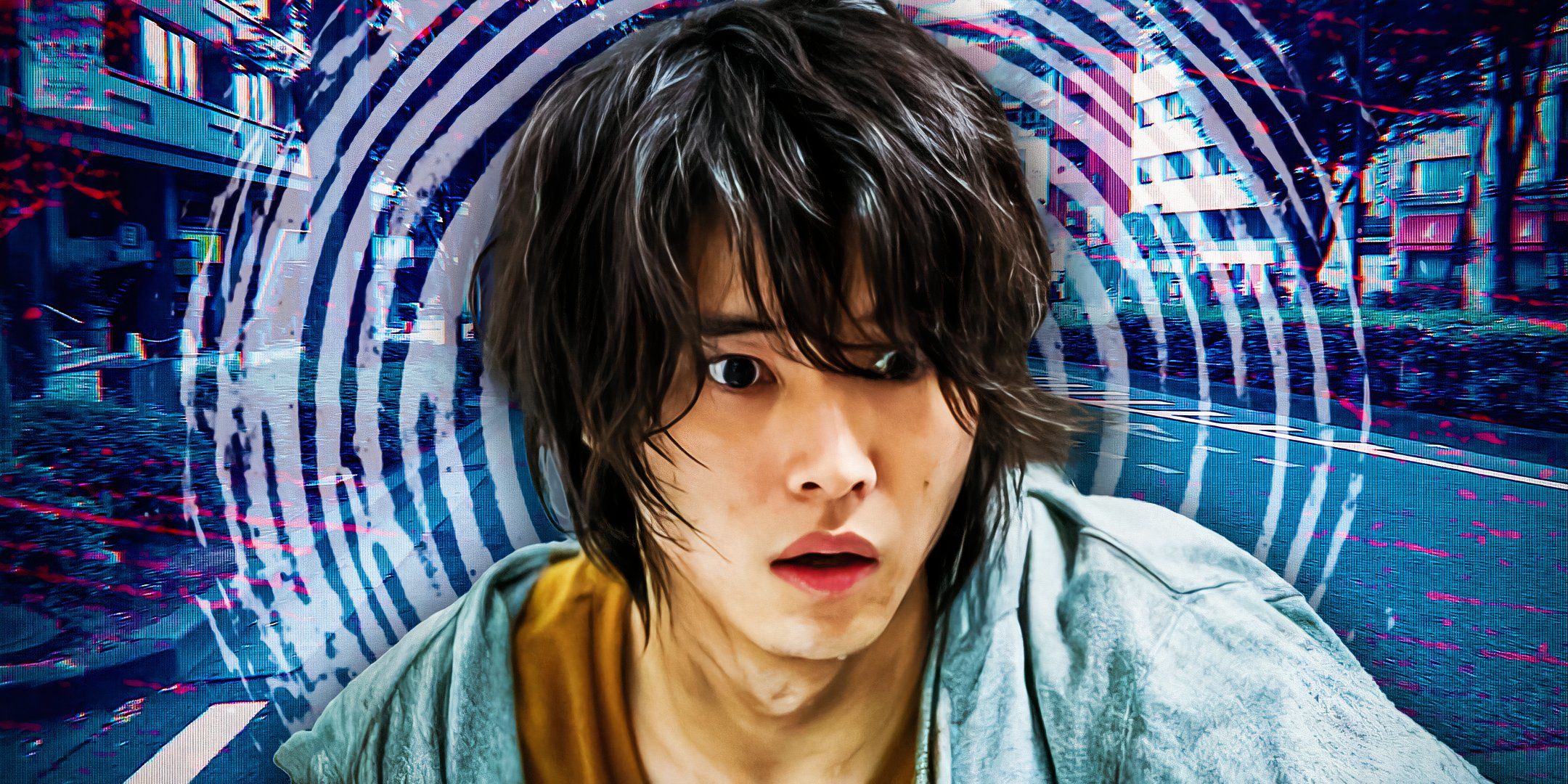
The ending of Alice in Borderland Season 2 reveals that the Borderlands are a collective limbo for victims of a meteorite disaster in Tokyo. After defeating the Queen of Hearts, players choose between staying as "citizens" or returning to reality. Those who return wake up in hospitals with no memory of the games.
The conclusion of the second season of Netflix’s hit survival drama, Alice in Borderland, shifted the series from a high-stakes death game into a profound philosophical exploration of the will to live. As of 2026, the series remains a cornerstone of the "survival" subgenre, largely due to how it resolved the central mystery of why Arisu and his companions were forced into these sadistic challenges. To understand what happens after the games, one must look at the intersection of the final game's psychological manipulation and the physical reality of the characters' situation in Tokyo.
The Final Game: Arisu vs. The Queen of Hearts
The climax of Season 2 revolves around the final "Face Card" game, hosted by Mira Kano, the Queen of Hearts. Unlike the physically grueling King of Spades battle that preceded it, the Queen of Hearts game was purely psychological. The rules were deceptively simple: Arisu just had to complete three rounds of croquet without forfeiting. He did not even have to win the match; he simply had to finish it.
However, Mira used this simple framework to launch a devastating psychological assault on Arisu’s mind. She attempted to convince him that his reality was a lie—that the Borderlands were a hallucination created by his trauma following the death of his friends, Karube and Chota. Mira offered several "fake" explanations for the world they were in:
- The Futuristic Tech Theory: That they were in a virtual reality simulation for wealthy tourists.
- The Alien Theory: That they were being toyed with by extraterrestrial beings.
- The Mental Breakdown Theory: That Arisu was a patient in a psychiatric hospital and she was his doctor.
This last manipulation was the most dangerous. Mira nearly convinced Arisu to take "medication" that would have led to his forfeiture and death. It was only through Usagi’s intervention—specifically her willingness to harm herself to prove her reality—that Arisu snapped out of the trance. By completing the croquet game, Arisu successfully "cleared" the final stage of the Borderlands.
The Choice: Permanent Residency or Return
Upon the defeat of all Face Cards, a voice announced to all surviving players that they had two choices: become "Permanent Residents" of the Borderlands or decline the offer. This choice is the defining moment for every character's arc.
Becoming a Citizen
Choosing permanent residency means staying in the Borderlands forever. These individuals become the new "Face Cards" or "Dealers" for the next cycle of games. In the Season 2 finale, characters like Banda and Matsushita chose to stay, presumably because they found the Borderlands to be a place where they held more power or felt more "alive" than in the real world. For them, the real world offered nothing but stagnation or misery, whereas the Borderlands provided a clear, albeit violent, hierarchy.
Returning to Reality
Arisu, Usagi, Chishiya, Kuina, Aguni, Niragi, and Heiya all chose to decline residency. This decision signified their renewed desire to live, despite the pain and suffering inherent in human existence. By choosing to leave, they were effectively choosing to return to their physical bodies in the "real" world.
The Big Reveal: The Meteorite Incident
The most significant revelation regarding what happens after the games is the discovery of what the Borderlands actually are. The series concludes by showing a meteorite strike that devastated the Shibuya district of Tokyo. Every person who was in the Borderlands was actually a victim of this disaster.
The timeline of the Borderlands is revealed to be a form of "time dilation" occurring in the seconds between life and death. While Arisu and his friends felt as though they had been fighting for weeks or months, in the real world, only a few moments had passed. Their hearts had stopped or they were on the brink of death. The Borderlands served as a "limbo" or a "purgatory" where the souls of those caught in the explosion fought to see if they had the survival instinct required to return to their bodies.
Those who died in the games died of their injuries in the real world (e.g., from falling debris or the blast). Those who survived the games and chose to return were the ones who were successfully resuscitated by medical teams in the hospital.
Life After the Games: The Hospital Scenes
The final sequence of Season 2 provides a detailed look at the survivors in the real world. This segment is crucial for understanding the lasting impact of the games, even if the characters do not consciously remember them.
Collective Amnesia
A key mechanic of the return to reality is that the survivors have no memory of the Borderlands. They remember the meteorite strike, but the weeks spent playing deadly games are gone from their conscious minds. This creates a bittersweet atmosphere; while they are physically safe, the bonds they forged are seemingly lost.
Character Fates and Physical Conditions
The physical state of the characters in the hospital mirrors their experiences in the games. For example:
- Arisu and Usagi: They meet at a hospital vending machine. While they don’t recognize each other, they feel a profound sense of "deja vu" and a shared connection that transcends memory.
- Chishiya and Niragi: They are seen in the same hospital ward, recovering from the gunshot wounds they sustained in the King of Spades' final arena.
- Aguni and Heiya: Both are shown in intensive care, surviving despite the massive physical trauma they endured during the final battles.
Status of Major Characters After the Games
| Character | Real-World Status | Borderlands Choice | Recovery Notes |
|---|---|---|---|
| Arisu | Survived | Declined Residency | Seeking to live more purposefully. |
| Usagi | Survived | Declined Residency | Emotional connection to Arisu remains. |
| Chishiya | Survived | Declined Residency | Reflective and less nihilistic. |
| Kuina | Survived | Declined Residency | Reunited with her family. |
| Aguni | Survived | Declined Residency | Heavily injured but stable. |
| Heiya | Survived | Declined Residency | Survived against extreme odds. |
| Banda | Unknown | Accepted Residency | Will likely appear as a future Game Master. |
| Mira Kano | Deceased | N/A (Previous Resident) | Died upon losing her own game. |
The Meaning of the Joker Card
The very final shot of Season 2 is a close-up of a Joker card sitting on a table in the hospital garden. This has led to significant debate among fans and is a primary hook for the confirmed third season.
In the original manga by Haro Aso, the Joker is a supernatural entity—a ferryman of sorts—who meets Arisu at the boundary between life and death. The Joker represents the mystery of the universe and the arbitrariness of life. In the Netflix adaptation, the card serves a dual purpose:
- Metaphorical: It suggests that life itself is the "final game." Just because they have escaped the Borderlands doesn't mean the struggle for survival is over. Life is unpredictable, challenging, and often cruel—much like a Joker in a deck of cards.
- Literal/Tease: It hints that the games may not be entirely over, or that there is one final layer of reality they have yet to uncover. In many card games, the Joker is a wild card that can change everything.
Comparison: Netflix Series vs. The Manga Ending
While the core reveal—the meteorite strike and the limbo state—remains identical between the manga and the live-action series, the execution of the "aftermath" differs slightly in tone.
In the manga, the encounter with the Joker is more explicit. Arisu asks the Joker if he is a god or a demon, and the Joker simply responds by being a "non-interfering observer." The manga also spends more time on the recovery process and the psychological weight of the "missing memories."
The Netflix series focuses more on the romantic tension between Arisu and Usagi in the hospital, providing a more cinematic and emotional resolution for the general audience. However, the 2023 announcement of a Season 3 (currently in production/release as of this 2026 timeframe) suggests that the "Joker" phase will be expanded far beyond the source material, potentially exploring a new tier of the games or the consequences of the survivors' return.
How the Survivors Changed
Even without their memories, it is evident that the survivors have been fundamentally altered by their experiences. This "soul-level" change is what truly happens after the games.
- Arisu's Transformation: At the start of the series, Arisu was a shut-in with no direction. In the hospital, despite his amnesia, he shows a newfound appreciation for the fragility of life. He is no longer looking for an escape; he is looking for a connection.
- Usagi's Trust: Usagi, who struggled with the death of her father and a distrust of society, finds herself open to Arisu’s presence. The games stripped her of her cynicism.
- Chishiya’s Empathy: Known for his cold, calculating nature, Chishiya’s interactions in the hospital suggest a man who has found a degree of peace with his own humanity, moving away from his previous sociopathic tendencies.
FAQs: Alice in Borderland Season 2 Ending
Did they really go back to the real world?
Yes, the ending confirms they returned to the real world. The meteorite strike was a real-world event that occurred in Shibuya. The injuries they have in the hospital correspond to the survival struggle they faced in the Borderlands, but they are now in a tangible, physical reality.
Why don't they remember the games?
The Borderlands exist in a subconscious or spiritual realm. Much like a dream that fades upon waking, the "limbo" experience is suppressed by the conscious mind as the brain reboots following clinical death or severe trauma. This is a common trope in stories involving "near-death experiences."
Is the Joker card a sign they are still in a game?
While some fans believe the Joker signifies a "Level 3" of the Borderlands, most interpretations suggest it is a symbol that the "Game of Life" has begun. In the real world, there are no lasers from the sky, but the stakes of survival remain just as high. However, for the purposes of the television show, it also acts as a cliffhanger for future seasons.
What happened to the people who chose to stay?
Those who stayed, like Banda and Matsushita, have essentially traded their chance at a real-world recovery for immortality within the Borderlands system. They will now act as the administrators of the next "cycle" of games, creating challenges for the next group of people who find themselves in the border between life and death.
Is Season 3 a direct continuation?
As of 2026, Season 3 is the most anticipated development in the franchise. It is expected to delve into the "Joker" card's significance. Since the original manga ended where Season 2 ended, Season 3 features original content or draws from the spin-off manga, Alice in Borderland: Retry, where Arisu is pulled back into the Borderlands years later following another accident.
Final Recommendation for Fans
If you have finished Season 2 and are looking for more context, the best next step is to explore the manga Alice in Borderland: Retry. This short sequel provides a look at an adult Arisu and how his experience in the original games influenced his ability to survive a second, shorter stint in the Borderlands. It reinforces the theme that the "will to live" is a muscle that, once trained, can never be fully forgotten—even if the specific memories of the training are gone.