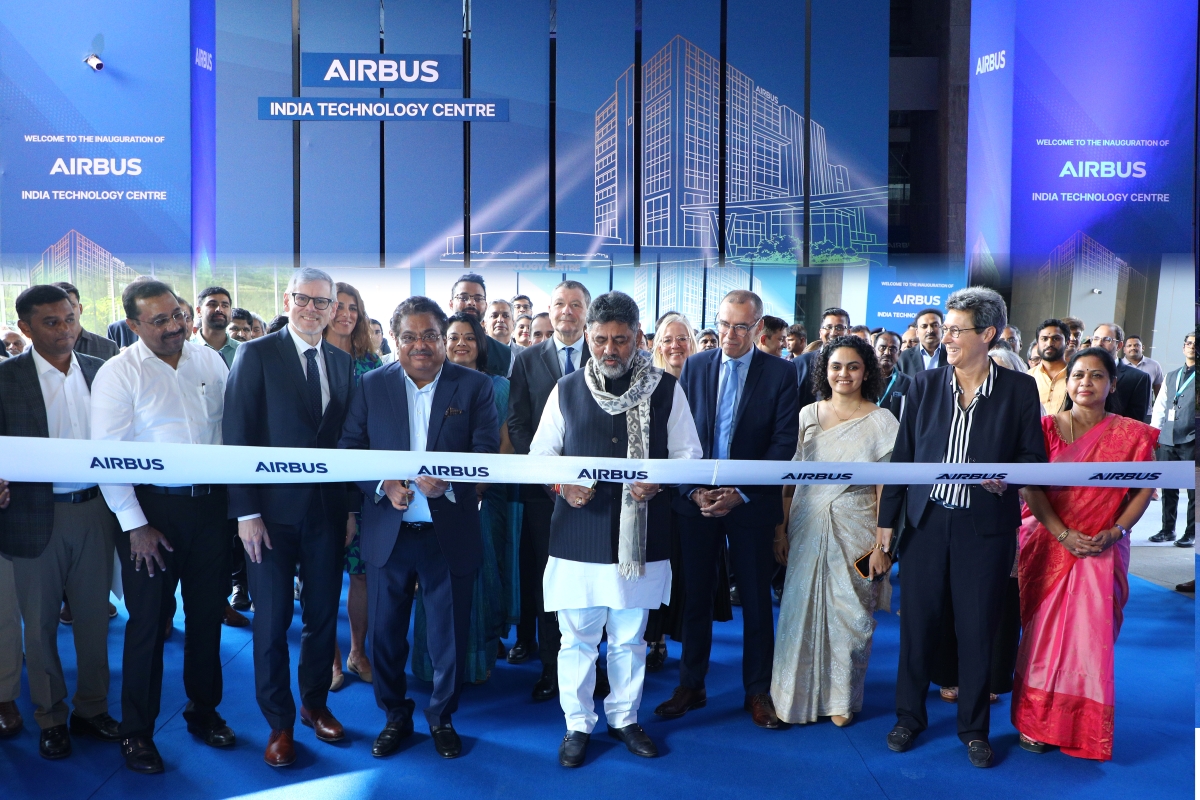
Airbus has significantly scaled its presence in India by inaugurating its new Integrated Campus in Bangalore. This state-of-the-art facility consolidates engineering, digital transformation, and information management capabilities into a single hub. As of 2026, the centre serves as a critical node for global aircraft programs, driving innovations in decarbonization, data analytics, and next-generation airframe design.
Overview of the Airbus Integrated Campus in Bengaluru
The expansion of Airbus in Bangalore represents more than just a physical increase in office space; it signifies a fundamental shift in how the aerospace giant integrates Indian expertise into its global value chain. Located in the heart of India’s technology capital, the new Integrated Campus is designed to house over 5,000 professionals, bringing together diverse functions that were previously spread across multiple locations.
This facility is a "smart" campus, built with a focus on sustainability and collaborative engineering. By centralizing its Indian operations, Airbus has streamlined the communication between its engineering teams and its digital/IT divisions. This proximity is essential for modern aerospace development, where hardware design and software integration must happen simultaneously. The Bangalore centre is now the largest such facility for Airbus outside of its traditional European hubs in Toulouse, France, and Hamburg, Germany.
The strategic rationale for this expansion is two-fold. First, India represents one of the fastest-growing aviation markets in the world, with domestic carriers placing record-breaking orders for hundreds of aircraft. Second, the vast pool of highly skilled engineering and digital talent in Bangalore allows Airbus to execute complex global projects cost-effectively while maintaining 24/7 operational cycles across different time zones.
Core Technical Focus: Engineering and Digital Transformation
The Bangalore tech centre is not merely a back-office support unit; it is a front-line engineering powerhouse. The work performed here directly impacts the safety, efficiency, and environmental footprint of every Airbus aircraft flying today.
Advanced Airframe and Systems Engineering
The engineering teams in Bangalore are deeply involved in the design and analysis of major aircraft components. This includes structural design for the A320, A330, and A350 families. Engineers utilize high-end Computational Fluid Dynamics (CFD) and Finite Element Analysis (FEA) to optimize wing structures and fuselage integrity.
In 2026, a significant portion of the centre's resources is dedicated to the A350 program, specifically focusing on composite materials. Indian engineers are working on weight-reduction strategies that are vital for improving fuel efficiency. Furthermore, the centre plays a pivotal role in "Systems Engineering," which involves the integration of complex avionics, flight control systems, and landing gear.
Digital Transformation and the Skywise Platform
A major pillar of the Bangalore expansion is digital innovation. Airbus has placed its "Digital Transformation Office" at the core of the new campus. One of the primary responsibilities of this team is the management and evolution of Skywise, the Airbus open data platform.
Skywise collects massive amounts of data from thousands of aircraft in operation worldwide. The Bangalore team develops predictive maintenance algorithms that allow airlines to identify potential mechanical issues before they lead to flight delays. By using machine learning (ML) and artificial intelligence (AI), these engineers help global airlines optimize their fleet performance, reduce fuel consumption, and enhance passenger safety.
Information Management (IM) and Cybersecurity
With the aviation industry becoming increasingly interconnected, cybersecurity has become a top priority. The Bangalore tech centre houses a dedicated cybersecurity operations cell that monitors and protects Airbus’s global digital infrastructure. Additionally, the Information Management teams here are responsible for the end-to-end lifecycle of the software and applications used by Airbus employees and customers globally, ensuring seamless connectivity and data integrity.
Strategic Significance for "Make in India"
The expansion of Airbus in Bangalore is a cornerstone of the company’s commitment to the Indian government’s "Make in India" and "Skill India" initiatives. While the Bangalore centre focuses on engineering and digital services, its work is inextricably linked to manufacturing and assembly projects across the country.
Supporting Domestic Manufacturing
The engineering work done in Bangalore provides the technical blueprints for local manufacturing partners. For instance, Airbus collaborates with Indian firms like Tata Advanced Systems Limited (TASL) and Dynamatic Technologies to produce critical components like aircraft doors and wing flaps. The Bangalore tech centre acts as the bridge between these manufacturing units and the global design standards of Airbus.
The C295 and H125 Projects
Although the Final Assembly Lines (FAL) for the C295 military transport aircraft and the H125 helicopters are located in other regions (such as Vadodara), the Bangalore tech centre provides the necessary engineering support and digital backbone for these programs. This creates a holistic ecosystem where Indian engineering feeds into Indian manufacturing, eventually supporting both domestic needs and global exports.
Sustainability and Future-Ready Aviation
As the aviation industry moves toward a "Net Zero 2050" goal, the Bangalore tech centre has become a vital site for sustainability research. As of 2026, Airbus is leveraging its Indian talent to explore alternative propulsion systems and Sustainable Aviation Fuel (SAF) integration.
The ZEROe Project
Indian engineers in Bangalore are contributing to the ZEROe project, Airbus’s ambition to develop the world’s first hydrogen-powered commercial aircraft. The technical challenges associated with hydrogen storage and combustion require a multidisciplinary approach, combining thermal management, cryogenic engineering, and advanced materials science—all fields where the Bangalore talent pool excels.
Green Campus Initiatives
The Integrated Campus itself serves as a model for sustainable infrastructure. It features:
- Renewable Energy: A significant portion of the facility's power is derived from on-site solar installations.
- Water Management: Advanced rainwater harvesting and zero-liquid discharge systems are in place.
- Smart Building Technology: IoT-enabled sensors optimize lighting and climate control to minimize energy waste.
Comparative Analysis: Airbus Bangalore vs. Global Hubs
To understand the scale and importance of the Bangalore expansion, it is useful to compare its functions with other major Airbus sites.
| Feature | Bangalore (India) | Toulouse (France) | Hamburg (Germany) | Mobile (USA) |
|---|---|---|---|---|
| Primary Function | Engineering, Digital, IT | Global HQ, Final Assembly | Cabin Design, Assembly | Final Assembly (A220/A320) |
| Workforce Scale | 5,000+ Professionals | 25,000+ Professionals | 12,000+ Professionals | 2,000+ Professionals |
| Key Technical Area | Data Analytics & AI | Aerodynamics & Flight Test | Cabin Innovation | Regional Supply Chain |
| Project Focus | Global Fleet Support | Wide-body Development | Narrow-body Production | North American Market |
| Sustainability Role | SAF & Hydrogen Research | ZEROe Flight Testing | Eco-Design Cabins | Manufacturing Efficiency |
Career Opportunities and Talent Acquisition
The expansion has triggered a massive hiring drive, making Airbus one of the most sought-after employers in the Indian tech sector. The company is not just looking for traditional aeronautical engineers but is increasingly recruiting software developers, data scientists, and UI/UX designers.
Airbus has established partnerships with premier Indian institutions like the Indian Institutes of Technology (IITs) and the Indian Institute of Science (IISc) to create a pipeline of specialized talent. These collaborations involve joint research projects and internship programs that ensure graduates are "industry-ready" for the complex requirements of aerospace engineering.
Training and Upskilling
Within the new campus, Airbus has invested in an "Airbus Academy" to upskill its existing workforce. As technologies like digital twins and 3D printing (additive manufacturing) become standard in aerospace, the Bangalore centre provides continuous learning paths to ensure its employees remain at the cutting edge of global aviation standards.
FAQs
What is the primary purpose of the new Airbus centre in Bangalore?
The primary purpose is to consolidate Airbus’s engineering, digital transformation, and information management capabilities in India. It acts as a global hub that supports aircraft design, data analytics via the Skywise platform, and cybersecurity for Airbus's worldwide operations.
How does the Bangalore expansion affect the "Make in India" initiative?
The expansion strengthens "Make in India" by providing the high-level engineering and digital support required for domestic manufacturing. It ensures that the technical expertise needed to build aircraft components in India is available locally, facilitating smoother collaboration with domestic manufacturing partners.
Is the Bangalore tech centre involved in designing new aircraft?
Yes. The engineers in Bangalore are actively involved in the structural design and systems integration for current models like the A320neo and A350. They are also contributing to future projects, including the ZEROe hydrogen-powered aircraft initiative.
What kind of jobs are available at the Airbus Bangalore campus?
The centre offers a wide range of roles, including structural engineers, avionics specialists, data scientists, cybersecurity analysts, and software developers. There is a particularly high demand for professionals skilled in AI, machine learning, and cloud computing as applied to aviation.
How does this centre contribute to aviation sustainability?
The centre contributes by developing software to optimize flight paths (reducing fuel burn) and researching the integration of Sustainable Aviation Fuels (SAF). It also supports the engineering challenges of hydrogen propulsion systems for future zero-emission aircraft.
Where exactly is the new campus located?
The new Integrated Campus is located in North Bengaluru, near the Kempegowda International Airport. This location was chosen for its proximity to the aerospace SEZ (Special Economic Zone) and the growing tech corridor in the region.
Practical Next Steps for Stakeholders
For professionals and industry partners looking to engage with the new Airbus expansion, the following actions are recommended:
- For Job Seekers: Monitor the official Airbus Careers portal specifically for the Bangalore location. Ensure certifications in CAD/CAM for engineering roles or AWS/Azure for digital roles are up to date.
- For Potential Suppliers: Indian MSMEs in the aerospace sector should align their quality standards with AS9100 certification to become eligible for the supply chain ecosystem supported by the Bangalore tech centre.
- For Academic Institutions: Explore Research & Development (R&D) partnerships through the Airbus India "BizLab" and university relations programs to facilitate knowledge exchange.
- For Industry Analysts: Watch for quarterly updates on Airbus’s "Global Services" revenue, as the Bangalore centre is a primary driver for the digital services and maintenance solutions that contribute significantly to this segment.