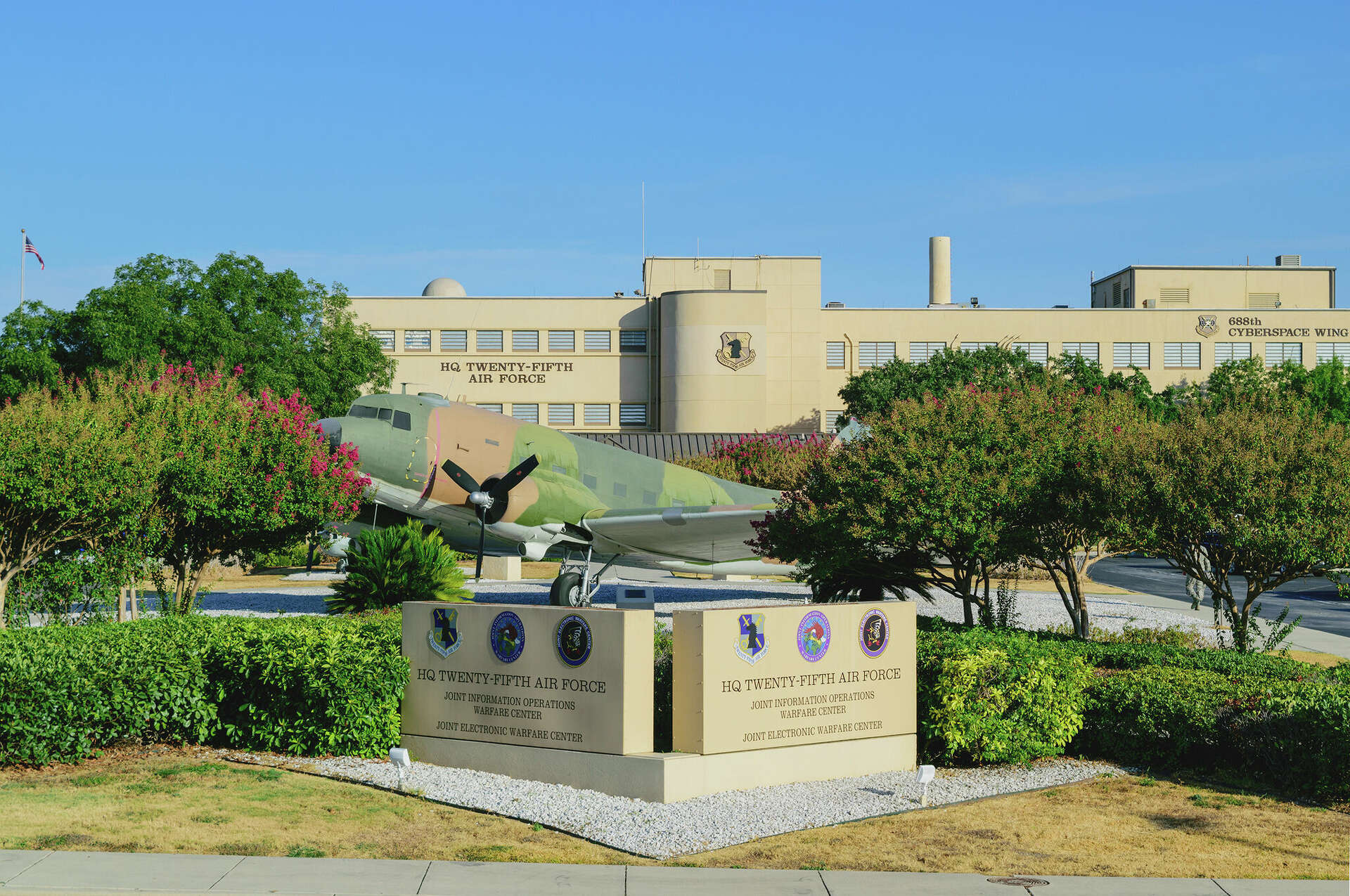
San Antonio, Texas, officially known as Joint Base San Antonio (JBSA) in a military context, serves as the primary hub for United States Air Force training, flight education, and cyber operations. The city hosts three major installations—Lackland, Randolph, and Kelly Field—each fulfilling specialized roles ranging from basic military training and pilot instructor schooling to global intelligence and cyber warfare.
As of 2026, San Antonio remains the most significant concentration of Department of Defense (DoD) assets in the United States. While the administrative structure was consolidated under the Joint Base San Antonio (JBSA) umbrella following the 2005 Base Realignment and Closure (BRAC) commission, the individual identities and missions of these "legacy" bases remain distinct. Understanding the roles of these bases requires looking at how they function both independently and as part of the massive JBSA ecosystem, which supports a population of over 260,000 personnel, including active-duty members, retirees, and civilian contractors.
The Evolution of Joint Base San Antonio (JBSA)
To understand the current landscape of air bases in San Antonio, one must first understand the consolidation that occurred in 2010. JBSA was created to combine the installation support functions of three major locations: Lackland Air Force Base, Randolph Air Force Base, and the Army’s Fort Sam Houston.
The primary goal of this consolidation was to increase efficiency and reduce redundant administrative costs. Under this structure, the 802nd Mission Support Group (at Lackland) and the 902nd Mission Support Group (at Randolph) report to the 502nd Air Base Wing. While the "Air Force Base" suffix is often omitted in official documentation in favor of "JBSA-Lackland" or "JBSA-Randolph," the operational missions within those gates remain air-centric and vital to national security.
Lackland Air Force Base: The Gateway to the Air Force
JBSA-Lackland is arguably the most famous air base in San Antonio due to its role as the "Gateway to the Air Force." It is the sole location for Air Force Basic Military Training (BMT). Every enlisted Airman in the United States Air Force, Air Force Reserve, and Air National Guard begins their military career at Lackland.
Basic Military Training (BMT) and the 37th Training Wing
The 37th Training Wing (37 TRW) is the host unit at Lackland. Its most visible mission is the 7.5-week BMT program. As of 2026, Lackland processes approximately 35,000 to 40,000 recruits annually. The role of the base here is foundational: transforming civilians into military personnel through rigorous physical conditioning, weaponry training, and indoctrination into Air Force core values.
Beyond basic training, the 37th Training Wing manages technical training schools. These schools provide "Phase II" training for career fields such as Security Forces (military police), contracting, and logistics. The presence of the Inter-American Air Forces Academy (IAAFA) also highlights Lackland's international role, as it provides technical and professional education to partner nation militaries across the Americas.
The 16th Air Force and Cyber Operations
While Lackland is steeped in training tradition, it is also the cutting edge of modern warfare. The base serves as the headquarters for the 16th Air Force (Air Forces Cyber). This unit is responsible for integrating multisource intelligence, surveillance, and reconnaissance (ISR), cyber warfare, electronic warfare, and information operations.
In the 2026 security environment, the role of the 16th Air Force is critical for protecting national infrastructure and conducting offensive cyber operations. This mission makes San Antonio a primary hub for the "Cyber City, USA" moniker, drawing thousands of specialized contractors and intelligence officers to the Lackland annexes.
Randolph Air Force Base: The Showplace of the Air Force
Located on the northeast side of San Antonio, JBSA-Randolph is distinguished by its unique Spanish Colonial Revival architecture and its iconic "Taj Mahal" administration building. Its role is predominantly academic and administrative, serving as the headquarters for the Air Education and Training Command (AETC).
Pilot Instructor Training (PIT) and the 12th Flying Training Wing
The 12th Flying Training Wing (12 FTW) is the primary operational unit at Randolph. Unlike other bases that train new pilots, Randolph’s primary flying mission is Pilot Instructor Training (PIT). Before an experienced pilot can teach students at other bases like Laughlin or Vance, they must first come to Randolph to learn how to teach.
The skies over northeast San Antonio are frequently filled with T-6A Texan II, T-38C Talon, and T-1A Jayhawk aircraft. By 2026, the transition toward the T-7A Red Hawk has become a focal point at Randolph, as the Air Force modernizes its trainer fleet to prepare pilots for fifth-generation fighters like the F-35.
Air Education and Training Command (AETC) and AFPC
Randolph serves as the "brain" of the Air Force. AETC is responsible for the recruitment, training, and education of all Airmen. Additionally, the Air Force Personnel Center (AFPC) is located here. AFPC manages assignments, promotions, and retirements for the entire force. If an Airman is moving to a new base or being promoted to a new rank, the paperwork is likely being processed at Randolph.
Kelly Field and Port San Antonio: The Industrial Nexus
The history of air bases in San Antonio is incomplete without Kelly Air Force Base. While Kelly was officially closed as a standalone military installation in 2001, its airfield (Kelly Field) remains active and is currently managed as part of JBSA-Lackland.
The Role of Kelly Field Annex
Today, Kelly Field serves as the heavy-lift runway for the region. Because the runways at Lackland are restricted, the Kelly Field Annex provides the necessary infrastructure for large cargo aircraft, such as the C-5 Galaxy and C-17 Globemaster III, to land. It supports the 433rd Airlift Wing (the "Alamo Wing"), an Air Force Reserve unit, and the 149th Fighter Wing of the Texas Air National Guard, which flies F-16 Fighting Falcons.
Port San Antonio
The former footprint of Kelly AFB was transitioned into Port San Antonio, a massive industrial and technology park. While not a military base, it maintains a symbiotic relationship with the Air Force. It houses major aerospace contractors like Boeing and StandardAero, which perform deep-level maintenance and modernization on military aircraft. This public-private partnership ensures that the "role" of the former base continues to support military readiness through logistics and engine repair.
Comparative Overview of San Antonio Air Installations
| Installation Name | Primary Host Unit | Core Mission/Role | Key Aircraft/Technology |
|---|---|---|---|
| JBSA-Lackland | 37th Training Wing | Basic Military Training (BMT), Security Forces, Cyber Warfare | 16th Air Force (Cyber), ISR Assets |
| JBSA-Randolph | 12th Flying Training Wing | Pilot Instructor Training (PIT), AETC HQ, Personnel Management | T-6A, T-38C, T-1A, T-7A |
| Kelly Field Annex | 433rd Airlift Wing | Heavy Airlift, Fighter Training (Guard), Logistics | C-5M Galaxy, F-16 Fighting Falcon |
| Camp Bullis | JBSA Support | Combat Readiness, Field Training, Medical Training | Land-based combat maneuvers |
Supporting Roles: Fort Sam Houston and Camp Bullis
While Fort Sam Houston is historically an Army post, its role within the joint base structure is essential to the Air Force mission in San Antonio. Fort Sam Houston is the home of the Medical Education and Training Campus (METC).
All Air Force medics (Aerospace Medical Service Technicians) undergo their technical training at Fort Sam Houston alongside their Army and Navy counterparts. This makes San Antonio the "Home of Military Medicine." Furthermore, Camp Bullis, located in North San Antonio, provides the field training environment where Airmen from Lackland and Randolph practice combat skills, land navigation, and firing range qualifications in a simulated deployed environment.
Access and Requirements for Visiting San Antonio Air Bases
As of 2026, security protocols at JBSA installations remain stringent. Access is generally restricted to personnel with a valid Common Access Card (CAC), military retirees with proper ID, or dependents.
- Visitor Access: Civilians wishing to attend BMT graduations at Lackland or visit the Taj Mahal at Randolph must be sponsored by a military member or undergo a background check at a Visitor Control Center (VCC).
- REAL ID Compliance: All visitors must present a REAL ID-compliant driver's license or a passport to enter the installations.
- Vetting Procedures: Expect 100% ID checks at all gates. Vehicles are subject to random searches. If you are attending a public event (such as the Great Texas Airshow at Randolph), specialized screening areas are typically established.
- Base Tours: Educational groups and JROTC units can request formal tours through the Public Affairs offices of the specific wings (37th TRW or 12th FTW), though these must be scheduled months in advance.
Economic and Community Impact
The roles of these air bases extend far beyond the runways. The military presence in San Antonio contributes over $30 billion annually to the Texas economy. This relationship is deeply ingrained in the city's culture, from the "Celebrate America's Military" events held annually to the significant veteran population that chooses to retire in the area to maintain proximity to military medical facilities like the Brooke Army Medical Center (BAMC).
The synergy between the bases and the local tech sector has also expanded. With the 16th Air Force at Lackland, San Antonio has seen a surge in cybersecurity firms, creating a "Silicon Prairie" effect that supports both national defense and private sector innovation.
Common Questions About San Antonio Air Bases
What is the difference between Lackland and Randolph?
Lackland is primarily a training base for enlisted recruits and a hub for cyber and intelligence operations. Randolph is focused on officer training, specifically pilot instructors, and serves as the administrative and educational headquarters for the Air Force.
Can civilians visit the historic buildings at Randolph AFB?
Direct access to the interior of the "Taj Mahal" and other historic sites is generally restricted to those with base access. However, the base occasionally hosts public airshows and community days where specific areas are opened to the public.
Is Kelly Air Force Base still open?
Kelly AFB is officially closed, but the airfield remains active as Kelly Field Annex (part of JBSA-Lackland). The rest of the former base is now Port San Antonio, a commercial tech and aerospace hub.
Where do Air Force pilots learn to fly in San Antonio?
While introductory flight training often happens elsewhere, experienced pilots come to Randolph AFB to become instructors. Additionally, the Texas Air National Guard trains F-16 pilots at the Kelly Field Annex.
Why is it called a "Joint Base"?
The "Joint Base" designation (JBSA) means that one branch (the Air Force) handles the "city management" functions (utilities, road repair, security) for multiple installations, including those traditionally run by the Army (Fort Sam Houston), to save money and resources.
Summary of Next Steps for Researchers and Visitors
If you are a recruit or family member preparing for a transition to San Antonio, your first point of contact should be the JBSA official website or the specific Wing Public Affairs office. For those interested in the historical aspects of the bases, the Airman Heritage Museum at Lackland and the Fort Sam Houston Museum offer deep insights into the evolution of Military City, USA. Always verify current gate hours and access requirements before travel, as security levels (FPCON) can change without notice based on current global events.