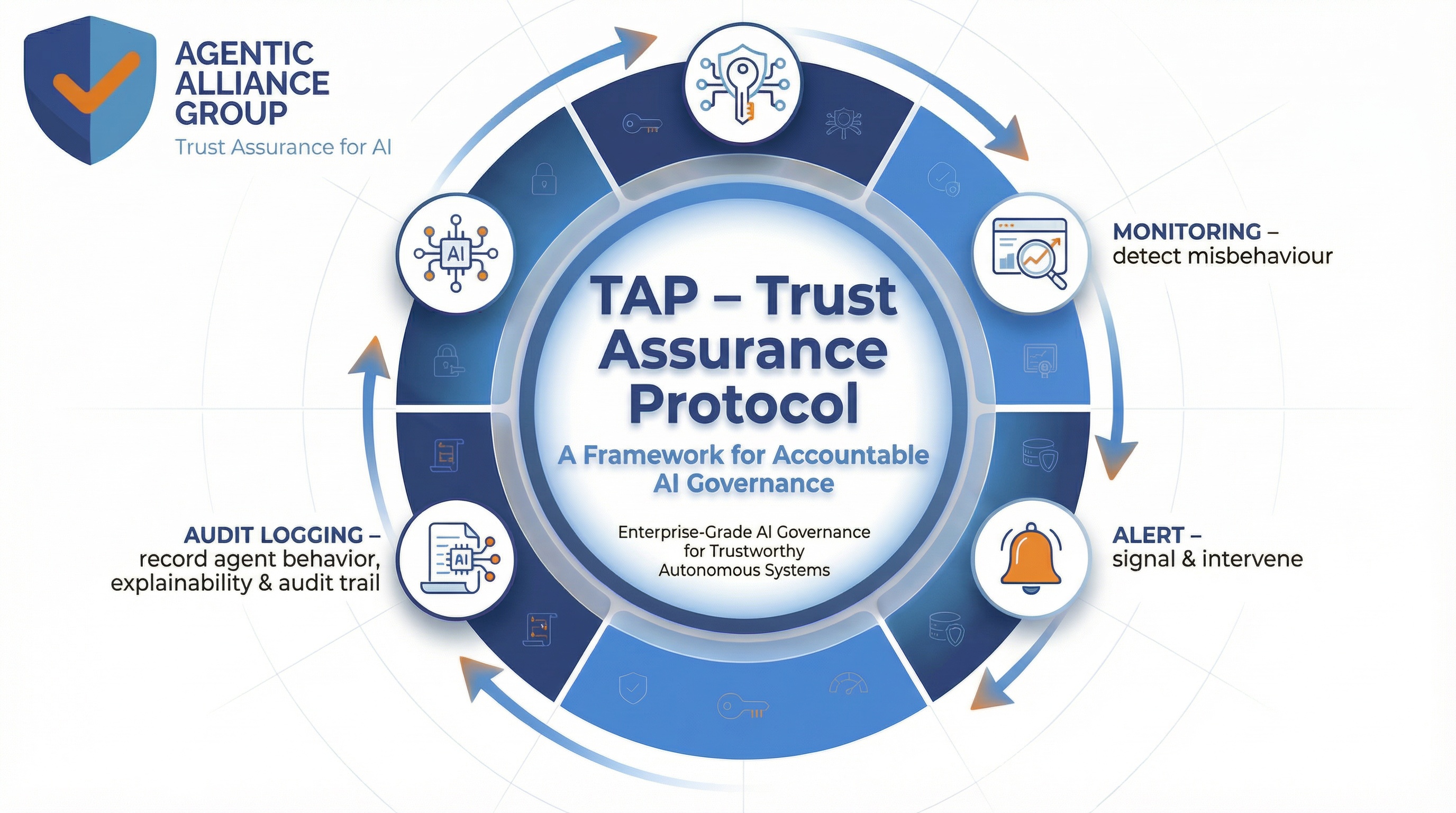
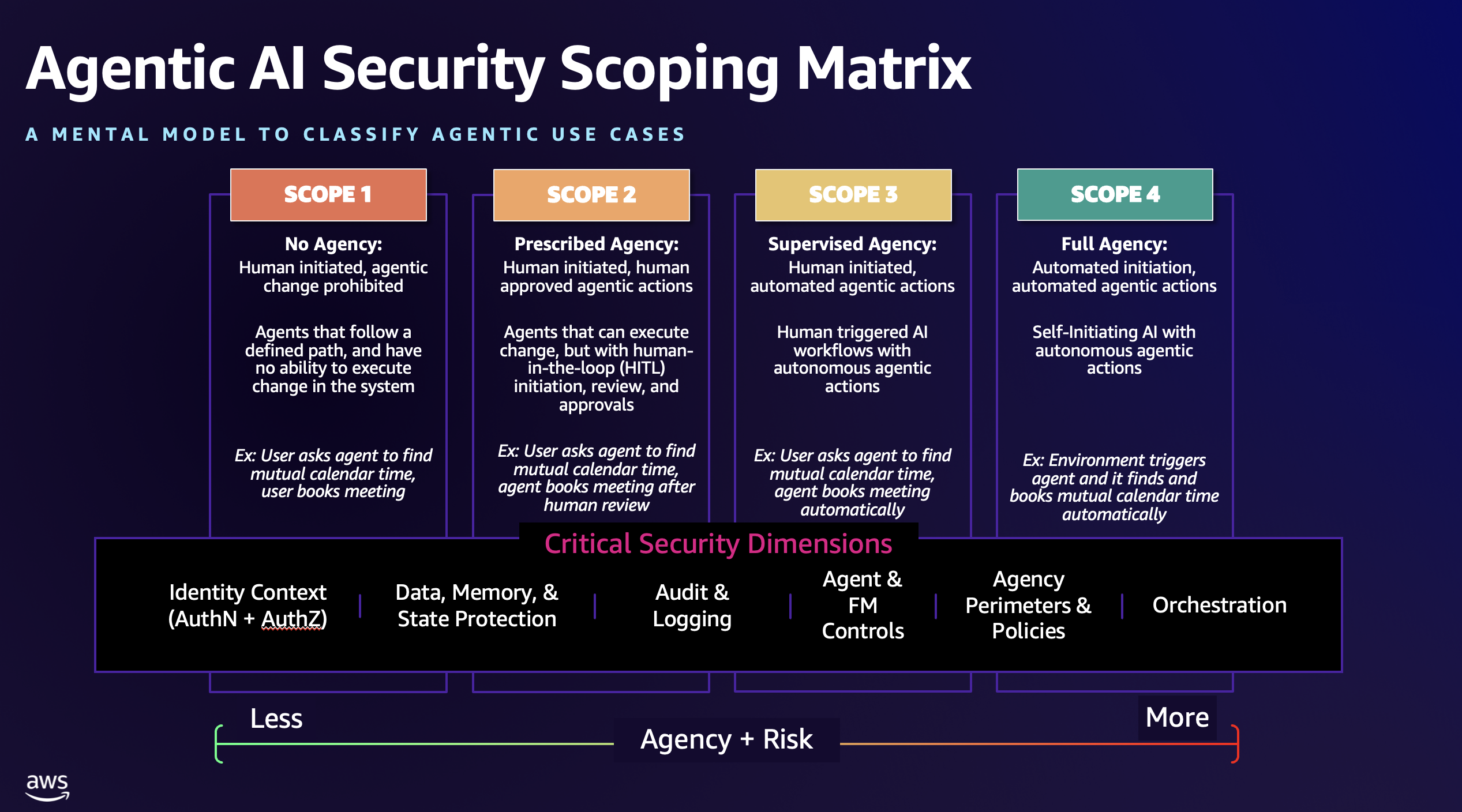
The Agentic Trust Framework, launched by the Cloud Security Alliance (CSA), provides a standardized set of security controls and governance protocols specifically designed for autonomous AI agents. It enables organizations to verify agent identities, limit their operational "blast radius," and maintain strict auditability over automated decision-making processes within cloud environments.
The Critical Shift Toward Agentic AI Governance
As we move through 2026, the landscape of enterprise technology has shifted from static large language models (LLMs) to dynamic, autonomous agents. Unlike earlier AI iterations that required constant human prompting, agentic AI systems can plan tasks, use external tools, and interact with other software agents to achieve complex goals. While this shift has unlocked unprecedented productivity, it has also introduced a new class of security vulnerabilities that traditional cloud security models were never designed to handle.
The Cloud Security Alliance recognized this gap early. The launch of the Agentic Trust Framework represents the culmination of industry-wide collaboration to move beyond "AI safety" as a theoretical concept and into "AI security" as a technical reality. This framework addresses the fundamental problem of trust: how can a system trust an autonomous entity that executes code, modifies databases, and communicates with third-party APIs without direct human oversight?
In the current 2026 regulatory environment, where the EU AI Act and updated NIST frameworks have set high bars for transparency, the CSA Agentic Trust Framework serves as the practical implementation layer. It translates high-level legal requirements into specific technical configurations, identity standards, and monitoring requirements that security teams can deploy today.
Core Pillars of the Agentic Trust Framework
The framework is built upon four primary pillars that address the lifecycle of an AI agent. Each pillar contains a subset of controls that must be satisfied for an agent to be considered "trusted" within a cloud ecosystem.
1. Non-Human Identity (NHI) and Authentication
In an agentic workflow, the "user" is often another machine. The framework mandates a robust Non-Human Identity (NHI) management system. Every agent must be issued a unique cryptographic identity that is not tied to a human user’s credentials. This prevents "shadow AI" and ensures that if an agent is compromised, the breach can be isolated without affecting human accounts.
The CSA guidelines recommend using short-lived, identity-based tokens rather than long-term API keys. This approach mimics the principles of Zero Trust, requiring agents to re-authenticate frequently and prove their "provenance"—essentially a digital birth certificate that verifies the agent's origin, version, and the training data used to create it.
2. Granular Permission Brokering and Dynamic Authorization
Traditional Role-Based Access Control (RBAC) is often too static for AI agents. An agent might need high-level access for five minutes to resolve a database issue but should return to zero-privilege immediately after. The Agentic Trust Framework introduces the concept of Dynamic Authorization.
This pillar focuses on "Just-In-Time" (JIT) access. Instead of an agent having permanent "Write" access to a production environment, it must request specific permissions for a specific task. The framework provides templates for automated approval workflows where a central "Policy Decision Point" (PDP) evaluates the risk of the agent's request in real-time based on the current security context.
3. Blast Radius Limitation and Sandboxing
Autonomous agents are powerful because they can use tools. However, a malicious prompt—known as an indirect prompt injection—could trick an agent into using those tools against its own host system. The Agentic Trust Framework requires agents to operate within strictly defined sandboxes.
These sandboxes are monitored environments that limit the agent's network access, file system visibility, and API call frequency. The framework defines "Safe Tool Usage" protocols, ensuring that even if an agent is misled by a prompt, it cannot delete a database or exfiltrate sensitive data because its sandbox environment physically lacks those capabilities.
4. Traceability and "Chain of Thought" Logging
For an agent to be trustworthy, its decisions must be reconstructible. The framework mandates Chain of Thought (CoT) logging. This goes beyond standard system logs; it requires the agent to record its internal reasoning process for every action taken.
If an agent decides to move $50,000 between corporate accounts, the security team must be able to see the logic the agent used to justify that action. This pillar ensures that organizations can comply with 2026 auditing standards, which increasingly require explainability for autonomous systems.
Comparative Security Architectures
To understand why the Agentic Trust Framework is necessary, it is helpful to compare it to the legacy security models that preceded it.
| Feature | Legacy Cloud Security (Pre-AI) | Agentic Trust Framework (2026) |
|---|---|---|
| Primary Identity | Human Users (IAM) | Non-Human Entities (NHI) |
| Access Model | Static RBAC / Permissions | Dynamic, Task-Based JIT Access |
| Risk Focus | Unauthorized Human Access | Prompt Injection & Autonomous Drift |
| Logging Depth | Activity Logs (Who/What/When) | Reasoning Logs (Why/How/Logic) |
| Security Perimeter | Network Firewalls / VPNs | Semantic Firewalls / Tool Sandboxes |
| Verification | MFA / Single Sign-On | Cryptographic Provenance / Attestation |
Implementing the Framework: A Step-by-Step Approach
Adopting the Agentic Trust Framework is not a "set-and-forget" process. It requires a fundamental shift in how IT operations and security teams collaborate. Organizations looking to align with CSA standards in 2026 should follow this implementation roadmap.
Phase 1: Inventory and Classification
Before applying controls, you must know what agents are running. This phase involves scanning the environment for "Shadow AI"—agents embedded in SaaS tools or deployed by developers without formal approval. Each agent should be classified by its autonomy level (High, Medium, or Low) and the sensitivity of the data it touches.
Phase 2: Identity Integration
Integrate your AI agents into a centralized Identity and Access Management (IAM) system. Use the CSA-recommended SPIFFE/SPIRE standards for machine identity. Ensure that every agent has a unique identifier and that all actions are signed with its private key. This establishes the foundation of non-repudiation.
Phase 3: Semantic Firewall Deployment
Unlike traditional firewalls that look at IP addresses and ports, a Semantic Firewall looks at the intent of the input and output. Implementation involves deploying a layer between the agent and the LLM that filters for malicious instructions or unauthorized data exfiltration. This is a core requirement of the Agentic Trust Framework to prevent indirect prompt injection.
Phase 4: Establishing Human-in-the-Loop (HITL) Thresholds
Not every action should be autonomous. The framework suggests setting "Risk Thresholds" where an agent must pause and wait for a human "OK." For example, an agent might have the autonomy to schedule meetings, but any action involving financial transfers or software deployment to production requires a manual bypass.
Addressing the Challenge of Agentic "Drift"
One of the most complex aspects of the Agentic Trust Framework is managing "Agentic Drift." As AI models are updated or fine-tuned, their behavior can change over time. An agent that was safe yesterday might develop unsafe shortcuts today.
The CSA framework addresses this through Continuous Attestation. Instead of a one-time security review, agents are subjected to automated "red teaming" or "stress tests" on a weekly basis. If an agent's behavior deviates from its established safety baseline, its identity tokens are automatically revoked, and it is quarantined for re-evaluation. This proactive approach is essential for maintaining a secure posture in a rapidly evolving 2026 threat landscape.
Compliance and Legal Implications
In 2026, the Agentic Trust Framework is more than just a set of best practices; it is a critical tool for legal defense. Regulators have moved toward a "Security by Design" requirement for AI. Organizations that can demonstrate adherence to a recognized framework like the CSA's are in a much stronger position during audits or after a security incident.
The framework directly maps to several key international standards:
- ISO/IEC 42001 (AI Management System): The CSA framework provides the technical controls to satisfy ISO’s high-level management requirements.
- NIST AI 100-1: The framework’s focus on "Reliability" and "Accountability" mirrors the pillars of the NIST AI Risk Management Framework.
- EU AI Act Compliance: For agents classified as "High-Risk," the logging and transparency requirements of the Agentic Trust Framework are essential for maintaining market access in Europe.
Common Pitfalls to Avoid
Despite the comprehensive nature of the framework, implementation errors can still lead to vulnerabilities.
- Over-Privileging Agents: The most common mistake is granting an agent "Admin" access because it is "easier" than configuring granular permissions. This creates a massive security hole. Always use the Principle of Least Privilege.
- Neglecting Third-Party Agents: Many companies focus only on the agents they build internally, forgetting that the agents built into their CRM or HR software also need to be governed. The Agentic Trust Framework should be applied to the entire vendor ecosystem.
- Ignoring the "Data Privacy" Layer: Security and privacy are linked. If an agent is allowed to process PII (Personally Identifiable Information), it must do so within a "Privacy-Preserving" environment, such as using differential privacy or data masking techniques mentioned in the CSA guidelines.
Frequently Asked Questions
What is the difference between an AI model and an AI agent?
An AI model (like an LLM) is a passive engine that generates text or data based on a prompt. An AI agent is a wrapper around that model that gives it the ability to use tools, plan steps, and execute actions autonomously. The Agentic Trust Framework focuses on the actions and tool usage of the agent, rather than just the output of the model.
Does the Agentic Trust Framework apply to local AI deployments?
Yes. While the Cloud Security Alliance focuses on cloud environments, the principles of identity, sandboxing, and logging apply whether the agent is running on a public cloud, a private data center, or a local edge device. The framework is designed to be environment-agnostic.
How does this framework handle prompt injection?
The framework handles prompt injection through two main methods: Output Validation and Input Filtering (Semantic Firewalls). It also mandates that agents should never be given "Raw" access to system shells or administrative APIs, ensuring that even if an injection is successful, the damage is contained within a restricted sandbox.
Is the Agentic Trust Framework mandatory?
While the CSA itself is not a regulatory body, its frameworks are often adopted as industry standards. Many insurance providers and enterprise clients in 2026 require evidence of framework alignment (such as a STAR Registry entry) before they will sign contracts or provide cybersecurity insurance coverage.
Can an agent be "Trusted" if it uses a third-party LLM?
Yes, but the framework requires you to assess the "Model Supply Chain." You must verify that the third-party provider meets specific security criteria and that the connection between your agent and their model is encrypted and authenticated. The framework treats the model as a "Service Provider" within the trust boundary.
Practical Recommendation for Organizations
If you are currently deploying or planning to deploy autonomous agents, your first step should be to download the official CSA Agentic Trust Framework documentation. Assign a dedicated "AI Security Architect" to conduct a gap analysis between your current IAM practices and the framework's NHI (Non-Human Identity) requirements.
Begin by securing your most autonomous agents first—those with write-access to production data or those that interact with customers. By establishing a "Trust Foundation" now, you ensure that your organization can scale its AI capabilities without exposing itself to the catastrophic risks of unmanaged autonomous systems.