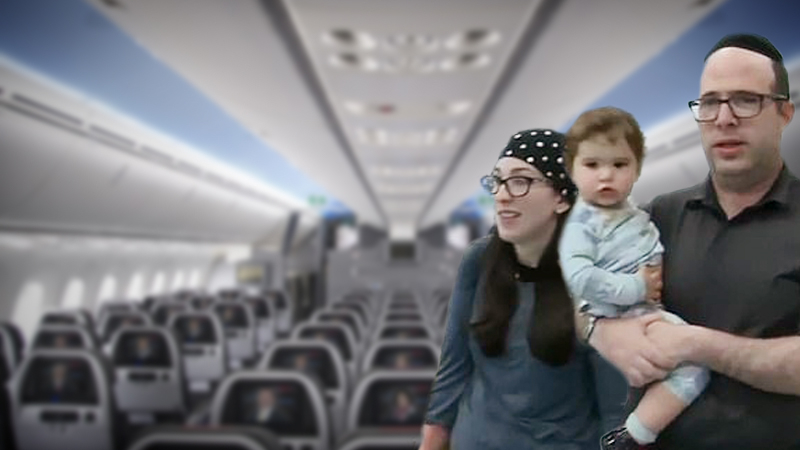
In January 2019, Yehuda and Jennie Adler, along with their infant daughter, were removed from an American Airlines flight following complaints about their body odor. While the airline maintained the decision was based on passenger comfort, the Adlers alleged religious discrimination, leading to a high-profile lawsuit that highlighted the tension between airline crew discretion and passenger civil rights.
The Timeline of the January 2019 Incident
The incident occurred on January 23, 2019, at Miami International Airport. The Adler family, residents of Southfield, Michigan, had boarded Flight 1922 destined for Detroit. Having already taken their seats and settled in for the flight, the family was approached by a flight attendant and asked to deplane. According to the Adlers, the crew initially cited an "emergency" as the reason for their removal, which caused the family immediate distress and confusion.
Once they were back in the terminal, the narrative shifted. The Adlers were informed by ground staff that they were being removed because several passengers and crew members had complained about their body odor. The family was shocked by this claim; they had showered that morning and maintained that the allegation was a pretext for something more insidious.
In the hours following their removal, Yehuda Adler began recording his interactions with American Airlines staff. In these recordings, he can be heard asking other passengers in the terminal if they detected any foul odor coming from his family. According to the Adlers, the strangers they approached confirmed there was no discernible smell. Despite these efforts, the airline refused to allow them back on the original flight, citing the pilot’s discretion and the comfort of the other passengers.
The family’s luggage remained on the aircraft, leaving them in Miami without their belongings, including essential items for their 19-month-old daughter. American Airlines provided the family with a hotel room and meal vouchers, rebooking them on a flight the following morning. However, the emotional toll of the public removal and the nature of the accusation set the stage for a protracted legal battle.
American Airlines’ Position and the Contract of Carriage
American Airlines remained steadfast in its defense of the crew’s actions. The airline’s official statement maintained that the decision was not discriminatory but was a direct response to multiple complaints regarding the family's hygiene. From the airline’s perspective, a "malodorous condition" is a legitimate ground for removal under the guidelines established to ensure the comfort and well-being of all passengers in a confined space.
Central to the airline's legal defense was the Contract of Carriage. This document is a legally binding agreement between the passenger and the airline, agreed upon at the time of ticket purchase. It outlines the rights and responsibilities of both parties. Most major carriers, including American Airlines, include specific language regarding personal hygiene.
Understanding the Hygiene Clause
In the version of the Contract of Carriage active during the incident, American Airlines specified that they may refuse to transport a passenger if that passenger has an "offensive odor not caused by a disability." This clause grants the flight crew and the captain significant authority. Because an airplane is an enclosed environment with recirculated air, the "reasonableness" of an odor is often left to the subjective judgment of the crew on the scene.
The airline argued that once the pilot was made aware of the complaints, they had the authority—and the obligation—to address the issue to prevent further disruption to the flight. By providing a hotel and rebooking the family, the airline contended it had fulfilled its basic duty of care while adhering to its internal safety and comfort protocols.
Allegations of Religious Discrimination and Bias
The Adlers, who are Orthodox Jews, viewed the incident through a fundamentally different lens. They alleged that the "body odor" claim was a fabrication used to mask anti-Semitic bias. In their formal complaints and subsequent lawsuit, the family pointed to specific interactions with ground staff that they believed revealed the true motivation behind their removal.
Yehuda Adler claimed that after they were removed from the plane, a gate agent made a derogatory comment suggesting that the family needed to "go home and take a shower" because he knew that "Orthodox Jews only bathe once a week" for their Sabbath. The Adlers argued that this specific reference to their religious practices proved that the removal was motivated by prejudice rather than actual hygiene issues.
The family also noted that they were wearing traditional religious attire, including yarmulkes (kippahs), which made their faith immediately apparent to staff and other passengers. They contended that they were singled out and humiliated in front of a full plane of passengers, not because of a smell, but because of their identity. This distinction turned a routine "refusal to transport" case into a significant civil rights discussion.
Legal Proceedings: Adler v. American Airlines
In January 2020, exactly one year after the incident, the Adler family filed a federal lawsuit against American Airlines in the U.S. District Court for the Northern District of Texas. The lawsuit sought damages for:
- Discrimination under 42 U.S.C. § 1981: This federal statute prohibits discrimination based on race or ethnicity in the making and enforcement of contracts.
- Breach of Contract: The Adlers argued that the airline failed to fulfill its obligation to transport them without a valid, non-discriminatory reason.
- Defamation: The family alleged that the false claims of body odor damaged their reputation.
- Intentional Infliction of Emotional Distress: The suit detailed the trauma experienced by the family, particularly the humiliation of being removed from the aircraft and the distress caused to their young child.
American Airlines filed a motion to dismiss, arguing that the claims were preempted by the Airline Deregulation Act (ADA) and the Federal Aviation Act. These laws generally protect airlines from state-law claims related to their "prices, routes, or services," often funneling disputes into a narrow regulatory framework.
The Resolution of the Case
Looking back from 2026, the legal record shows that the case did not reach a public jury verdict. In late 2021, the court dismissed the case with prejudice. In the legal world, a "dismissal with prejudice" following a period of litigation often indicates that the parties reached a confidential settlement agreement. While the terms of such settlements are rarely disclosed, they typically involve a financial payment to the plaintiffs in exchange for dropping all claims and agreeing not to pursue further legal action.
Comparison of Airline Policies on Passenger Hygiene
To understand how the Adler incident fits into the broader aviation landscape, it is helpful to compare how different major carriers handle similar situations. Most airlines maintain a "refusal to transport" policy that includes hygiene.
| Airline | Contract of Carriage Language | Criteria for Removal |
|---|---|---|
| American Airlines | "Offensive odor not caused by a disability." | Crew/Pilot discretion; complaints from others. |
| Delta Air Lines | "Hygiene or other conditions that pose a risk of offense or discomfort." | Must be disruptive to the flight environment. |
| United Airlines | "Malodorous condition" (except for persons with a disability). | Subjective assessment by flight lead or captain. |
| Southwest Airlines | "Engaging in offensive conduct... including having an offensive odor." | Focus is on "disruptive" nature of the condition. |
| JetBlue | "A condition that is offensive or annoying to other customers." | Broadly defined; highly dependent on crew report. |
The key commonality across all these policies is the exception for disabilities. Under the Air Carrier Access Act (ACAA), airlines cannot discriminate against passengers with disabilities. If a medical condition or disability causes an odor, the airline is generally required to accommodate the passenger rather than remove them, provided it does not pose a direct safety threat.
Broader Implications for Passenger Rights
The Adler incident serves as a cautionary tale regarding the immense power held by airline crews. While the Federal Aviation Administration (FAA) grants pilots ultimate authority over the safety and security of their aircraft, the line between "safety/comfort" and "discrimination" can be thin.
Crew Discretion vs. Civil Rights
One of the most significant outcomes of cases like the Adlers' is the increased scrutiny of training programs for airline staff. From an industry perspective, the 2019 incident prompted a re-evaluation of how hygiene complaints are handled. Experts in aviation law often point out that removing a passenger for odor should be a last resort, typically involving a private conversation and an attempt to resolve the issue before deplaning occurs.
The Role of Social Media and Recording
The Adlers' decision to record their interactions was a pivotal factor in the public's perception of the case. In 2026, the practice of recording airline disputes has become standard. These "viral" moments often force airlines to respond more quickly and transparently than they might in a private legal dispute. For the Adlers, the video evidence provided a counter-narrative to the airline's official statements, even if it did not lead to a definitive court ruling on the facts.
Guidance for Travelers Facing Similar Situations
While rare, being removed from a flight for hygiene or behavior can be a logistical and legal nightmare. Based on the precedents set by the Adler case and others, there are specific steps passengers should take if they are challenged by airline staff.
- Remain Calm and Compliant: Regardless of the perceived unfairness, interfering with a flight crew's instructions can lead to federal charges. It is better to deplane and fight the battle from the terminal.
- Request Specific Reasons in Writing: If possible, ask the gate agent or supervisor to provide a written statement or a specific reference to the Contract of Carriage clause they are invoking.
- Document Everything: Like Yehuda Adler, use your phone to record interactions (where legal) and take notes on the names of staff and the flight number.
- Gather Witnesses: If you believe the claim is false (e.g., you do not have an odor), ask nearby passengers for their contact information or if they are willing to provide a quick statement on video regarding your appearance or smell.
- Seek Legal Counsel: If you believe your removal was motivated by race, religion, or a disability, contact an attorney specializing in civil rights or aviation law immediately.
FAQ
Can an airline legally remove you just because someone says you smell?
Yes. Under the Contract of Carriage, airlines have the right to refuse transport to anyone with an "offensive odor" that is not caused by a disability. This is considered a matter of passenger comfort and "service." However, the airline must apply this rule consistently and without discriminatory intent.
What did the Adler family claim was the real reason for their removal?
The Adlers claimed they were removed due to religious discrimination. They alleged that the "body odor" complaint was a pretext used by anti-Semitic staff members, citing a comment made by a gate agent regarding Jewish bathing rituals.
Did American Airlines ever apologize to the Adler family?
Publicly, American Airlines defended its crew's decision, maintaining that the removal was strictly based on hygiene complaints from multiple people. While a private settlement likely occurred, the airline did not issue a public admission of wrongdoing or a formal apology.
How does the Air Carrier Access Act (ACAA) protect passengers?
The ACAA prohibits discrimination on the basis of disability in air travel. If a passenger has a medical condition that results in a physical symptom (including odor) that others might find offensive, the airline must make reasonable accommodations and cannot simply remove the passenger unless there is a legitimate safety risk.
What happened to the Adler family's lawsuit?
The lawsuit, filed in 2020, was dismissed with prejudice in late 2021. This typically indicates that a settlement was reached out of court, preventing the case from going to trial and keeping the specific terms of the resolution private.
Practical Recommendation
If you find yourself in a dispute with airline personnel regarding your presence on a flight, prioritize immediate documentation. The success of a legal challenge often hinges on the ability to prove that the airline's stated reason (such as hygiene) was a "pretext" for an unlawful reason (such as discrimination). Record conversations where permitted, gather witness contact information from fellow passengers before they depart, and ensure you have a copy of the airline's specific Contract of Carriage for the date of your travel.