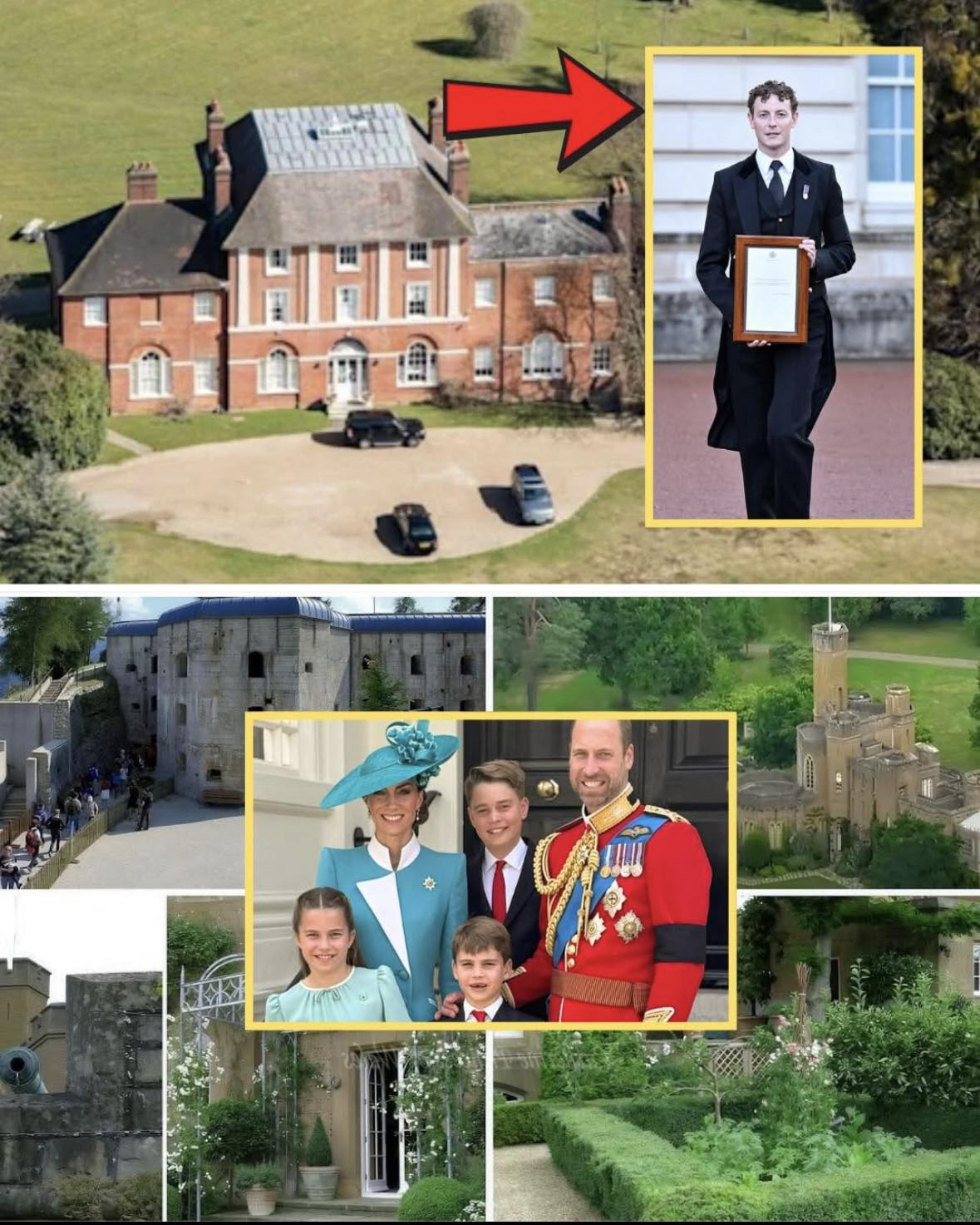
Adelaide Cottage serves as the primary residence for the Prince and Princess of Wales, offering a strategic balance of privacy, proximity to Windsor Castle, and relative fiscal modesty. While the "cost" involves the ongoing maintenance of a Grade II* listed building, its lack of massive taxpayer-funded renovations and its functional role in modernizing the monarchy's image make it a highly efficient and valuable royal asset.
The Historical Significance of Adelaide Cottage
Nestled in the heart of the 655-acre Home Park at Windsor, Adelaide Cottage is far more than a simple "cottage." Built in 1831 for Queen Adelaide, the wife of King William IV, the residence was designed by the renowned architect Sir Jeffry Wyatville. Wyatville was the same architect responsible for the massive Gothic transformation of Windsor Castle under George IV, but Adelaide Cottage represented a departure from that grandiosity. It was conceived as a "petit château" or a summer retreat—a place where the Queen could enjoy the picturesque surroundings of the park without the stifling formality of the main castle.
The structure itself is a masterpiece of the cottage orné style, a movement in late 18th and early 19th-century architecture that sought to create "ornamental" rustic dwellings. This style was characterized by asymmetrical layouts, intricate bargeboards, and a deliberate attempt to blend the building into its natural landscape. For Queen Adelaide, the house was a sanctuary of peace. Historically, it has been used by various members of the Royal Family and "grace and favour" residents, most notably Group Captain Peter Townsend, whose mid-20th-century romance with Princess Margaret brought the cottage into the tabloid spotlight.
In the context of 2026, the historical value of Adelaide Cottage has only increased. As a Grade II* listed building, it is protected by Historic England for its architectural and historic interest. Preserving such a site is not merely a matter of housing a family; it is a matter of maintaining national heritage. When evaluating whether the cottage is "worth the cost," one must factor in the intrinsic value of preserving a Wyatville original that has stood for nearly two centuries.
The Architecture and Internal Design Philosophy
To understand the "worth" of Adelaide Cottage, one must look at the specific architectural choices that define it. Unlike the sprawling apartments of Kensington Palace, Adelaide Cottage is relatively compact, reportedly featuring four bedrooms. This modest scale is central to why it was chosen by the Prince and Princess of Wales in 2022. It reflects a "downsizing" that aligns with a more modern, relatable royal image.
The interior design of the cottage is a blend of Regency elegance and rustic charm. One of its most famous features is the master bedroom, which reportedly features a coved ceiling decorated with gilded dolphins and rope ornament, reused from the former Royal Yacht, the Royal George. This detail is significant because it exemplifies the royal tradition of upcycling and preserving naval history within residential architecture.
The house also features a veranda on its north side and several ornate fireplaces in the Egyptian and Greaco-Egyptian styles. These elements were high fashion in the 1830s and remain remarkably intact today. The architectural cost of maintaining such specific period details is high, as repairs often require specialized craftsmen who understand lime mortar, lead roofing, and period-accurate woodworking. However, the result is a home that functions as a living museum, providing a backdrop for the Royal Family that is both historic and intimate.
Why the Prince and Princess of Wales Chose Adelaide Cottage
The move of the Wales family from Kensington Palace to Windsor was a calculated decision driven by three primary factors: family, proximity to the late Queen Elizabeth II (and subsequently King Charles III), and the desire for a "normal" upbringing for their children.
- Educational Stability: Moving to Windsor allowed Prince George, Princess Charlotte, and Prince Louis to attend Lambrook School, a highly regarded preparatory school in Berkshire. The proximity of Adelaide Cottage to the school—a short drive away—reduced the logistical strain of a London-based school run.
- Privacy and Security: While Kensington Palace is a public-facing landmark with thousands of tourists daily, Adelaide Cottage is located within the private Home Park. This provides a level of security that is far easier (and cheaper) to maintain than a metropolitan palace. The natural boundaries of the park act as a buffer, allowing the children to play outdoors without the constant threat of long-lens photography.
- Symbolism of Modesty: In an era where the cost of the monarchy is frequently scrutinized, choosing a four-bedroom house over a sprawling mansion sends a clear message. By opting for a residence that did not require a multi-million-pound taxpayer-funded overhaul, the Prince and Princess of Wales positioned themselves as fiscally responsible leaders.
Analyzing the Financial "Cost": Taxpayers vs. Private Funding
The question of whether Adelaide Cottage is "worth the cost" often centers on public expenditure. To analyze this, we must distinguish between the Sovereign Grant and the personal funds of the Royal Family.
Renovations and Maintenance
Unlike Frogmore Cottage, which famously underwent a £2.4 million renovation (later repaid by the Duke and Duchess of Sussex), Adelaide Cottage was described as "move-in ready" in 2022. The property had undergone a substantial renovation in 2015, which meant that when the Wales family moved in, the costs were largely limited to security upgrades and minor cosmetic changes.
In 2026, the ongoing maintenance of the cottage is funded via the Crown Estate, which manages the land and properties belonging to the monarch. The revenue from the Crown Estate goes to the UK Treasury, and a portion (the Sovereign Grant) is returned to the monarchy to fund official duties and property maintenance. Because Adelaide Cottage is a Grade II* listed building, the maintenance is a statutory requirement regardless of who lives there. Therefore, the "cost" of the Prince and Princess of Wales living there is essentially the cost of a "caretaker" who also happens to be the future King.
Comparing Costs to Other Residences
| Feature | Adelaide Cottage | Kensington Palace (Apt 1A) | Anmer Hall (Norfolk) |
|---|---|---|---|
| Primary Use | Main Residence | Official Office / London Base | Holiday/Weekend Home |
| Size | 4 Bedrooms | 20+ Rooms | 10 Bedrooms |
| Renovation Cost | Minimal (2022 move) | £4.5 million (2014) | Private Funding (2013) |
| Staffing Needs | Minimal / Live-out | High / Live-in | Moderate |
| Security | High (Internal Park) | High (Public Access Area) | High (Private Estate) |
As shown in the table, Adelaide Cottage represents the most "efficient" use of space and resources among the family’s primary residences. By living in a four-bedroom home with no live-in staff, the family has significantly reduced the overhead costs associated with royal living.
The Intangible Value: Privacy and Mental Health
The "cost" of a royal residence isn't just measured in pounds and pence; it's also measured in the well-being of the occupants. For the Princess of Wales, especially during her health challenges in recent years, the privacy afforded by Adelaide Cottage has been invaluable. The cottage is shielded from the public eye, allowing for a private recovery and a stable environment for the children.
In the fast-paced, high-pressure world of the 2020s, the ability for the future King to have a "sanctuary" that is close to his father (at Windsor Castle) but separate from the machinery of the state is a massive benefit. This psychological stability likely improves their efficacy in their official roles, making the residence a "value add" to the institution of the monarchy.
Security Considerations in Windsor Great Park
Security is perhaps the most significant ongoing cost for any royal residence. However, Adelaide Cottage benefits from being situated within the already-secured perimeter of the Windsor Estate. This means that the Metropolitan Police's Royalty and Specialist Protection Command (RaSP) does not need to create a new "fortress" around the home; they are simply adding a layer to an existing, highly secure zone.
The cost of security for a royal in a central London location like Kensington is astronomical due to the complexity of urban crowds, traffic, and high-rise vantage points. In contrast, the rural but controlled environment of Windsor Home Park allows for a more streamlined security presence. The use of modern surveillance technology—drones, thermal imaging, and motion sensors—is more effective in the open parkland than in the dense streets of London.
Addressing the "Worth" for the British Taxpayer
From the perspective of the British public in 2026, the "worth" of Adelaide Cottage is tied to its lack of controversy. The Royal Family has faced criticism for the size of its property portfolio, but Adelaide Cottage is rarely the target of this ire.
- Economic Efficiency: By utilizing existing stock rather than building new or demanding expensive retrofits, the Waleses have demonstrated a sustainable approach to royal housing.
- Preservation of Heritage: The public generally supports the maintenance of historic buildings. Since the cottage is a listed asset, the money spent on its upkeep is viewed as a preservation of British history rather than just "luxury housing."
- Institutional Stability: A settled, happy family at the heart of the monarchy provides a sense of continuity and stability for the nation, which has its own intangible economic and social value.
Common Misconceptions and Limitations
It is important to clarify that "cottage" is a relative term. While small by royal standards, it remains a luxury property by any average citizen's metrics. However, compared to the 54,000 square feet of Buckingham Palace or the vastness of Windsor Castle, it is indeed a modest dwelling.
Another limitation is the lack of "official" space. Because Adelaide Cottage is small, it cannot host state dinners or large-scale receptions. This means the Prince and Princess of Wales still rely on Windsor Castle or Kensington Palace for their professional duties. Some critics argue that this "split" life increases travel costs, but given the proximity of the cottage to the Castle (about a 10-minute walk), this argument carries little weight.
Frequently Asked Questions
Can the public visit Adelaide Cottage?
No, Adelaide Cottage is a private residence located within the secure Home Park of the Windsor Estate. Unlike Windsor Castle or parts of Kensington Palace, it is not open to the public for tours. Its purpose is to provide a private family home for the Prince and Princess of Wales.
Who owns Adelaide Cottage?
The property is part of the Crown Estate. It is not the private property of Prince William or King Charles III. It is a "grace and favour" residence, meaning the monarch grants the use of the house to the occupants, often in exchange for their service to the Crown.
How many rooms are in Adelaide Cottage?
While the exact floor plan is not public for security reasons, it is widely reported to be a four-bedroom house. It does not have the sprawling guest wings or servant quarters found in larger royal residences like Bagshot Park or Clarence House.
Is the cottage energy efficient?
Maintaining energy efficiency in a 19th-century Grade II* listed building is a significant challenge. However, during the 2015 renovations, efforts were made to improve the building's thermal performance within the constraints of heritage preservation. In 2026, like many Crown Estate properties, it likely utilizes modern heating solutions that comply with environmental standards.
Why is it called Adelaide Cottage?
It was named after Queen Adelaide, who commissioned it in 1831. It was originally intended as a "day cottage" or retreat where she could take tea and enjoy the park, though it was eventually upgraded to a full residence.
Practical Recommendation
For those interested in the intersections of royal history and architectural preservation, Adelaide Cottage stands as a prime example of the cottage orné style. While you cannot visit the interior, the best way to appreciate the "worth" of the site is to visit Windsor Great Park. From the public paths, you can get a sense of the landscape and the strategic privacy that the Home Park affords.
In 2026, as the monarchy continues to evolve under King Charles III, Adelaide Cottage remains the blueprint for how future royals can live: historically grounded, physically secure, and fiscally responsible. It is, by all reasonable metrics, a royal retreat that is well worth its maintenance costs.