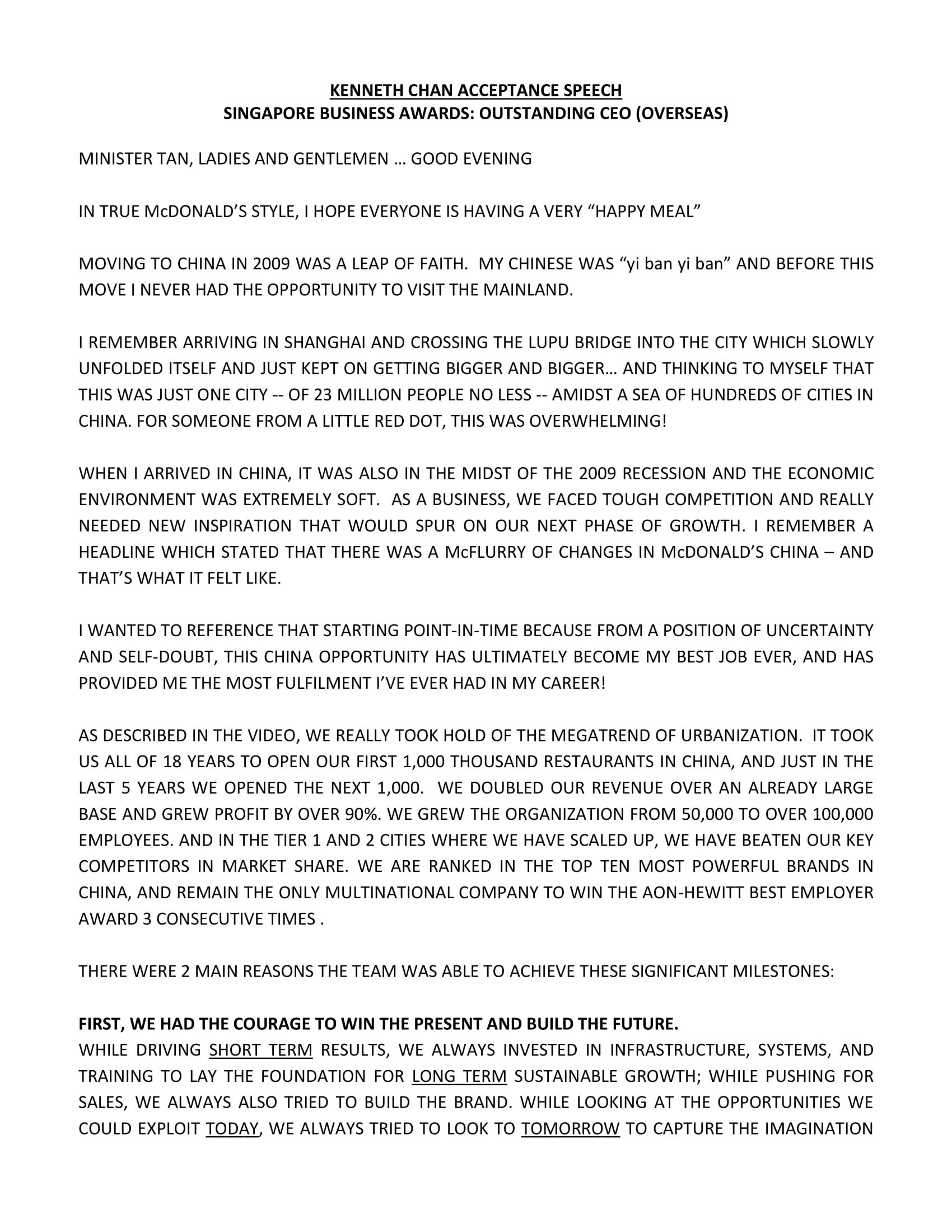
An acceptance speech is a formal address delivered by an individual or a representative of a group upon receiving an award, honor, promotion, or political office. Its primary purpose is to express sincere gratitude to the granting organization, acknowledge the support of peers and mentors, and briefly contextualize the significance of the achievement within the recipient's career or community.
Acceptance speeches serve as a critical bridge between personal achievement and public recognition. Whether delivered on a global stage like the Academy Awards or at a local community ceremony, the speech acts as a tool for social cohesion. It allows the recipient to demonstrate humility while reinforcing the values of the institution providing the honor. In 2026, the demand for authentic, concise, and impactful communication has made the art of the acceptance speech more relevant than ever, particularly as these moments are often shared and archived across digital platforms.
The Core Objectives of an Acceptance Speech
Every effective acceptance speech must fulfill three fundamental objectives to be considered successful. Failing to meet these can result in a speech that feels self-indulgent, disorganized, or ungrateful.
Expression of Gratitude
The most vital component is the "thank you." This is not merely a polite formality but the rhetorical foundation of the speech. The speaker must acknowledge the awarding body and the specific individuals who made the achievement possible. This includes mentors, colleagues, family members, and often the "competition"—the other nominees or candidates—which signals professional grace and sportsmanship.
Acknowledgment of Significance
An acceptance speech should briefly touch upon what the award means to the recipient and the field at large. This adds depth to the moment, moving it beyond a simple transaction of a trophy or title. It provides an opportunity to reflect on the hard work, the mission of the organization, or the future of the industry. In a professional or academic setting, this often involves highlighting a specific challenge overcome or a goal reached.
Connection with the Audience
While the award is given to an individual, the speech is for the audience. A successful speaker finds a way to make their personal win resonate with the room. This is achieved through shared values, storytelling, or an inspiring "call to action." By the end of the speech, the audience should feel a sense of shared pride or motivation, rather than just witnessing someone else’s success.
Structural Framework of a Winning Speech
A well-structured acceptance speech prevents the speaker from rambling and ensures that no key contributors are forgotten. While the length may vary depending on the venue, the following four-part framework is the industry standard for 2026.
1. The Opening: Immediate Gratitude
Start strong by acknowledging the honor immediately. Avoid long-winded introductions or "warming up" the crowd with unrelated jokes. The first sentence should state clearly how honored or humbled you are to receive the recognition. This sets a tone of humility and respect from the first second.
2. The Context: The "How" and "Why"
This section is the heart of the speech. Briefly explain the journey that led to this moment. This is not a full biography; rather, it is a curated snapshot of the effort involved. Mention a specific turning point, a lesson learned, or the core philosophy that drove the project or career milestone being honored. This provides the "substance" that makes the speech memorable.
3. The Credits: Specific Acknowledgments
This is where many speakers falter by either listing too many people (the "grocery list" effect) or forgetting crucial names. To navigate this, group people into categories—such as "my dedicated team at the lab" or "my family who stood by me"—and then highlight one or two individuals who had a transformative impact. This maintains emotional resonance without losing the audience's attention.
4. The Closing: Looking Forward or Giving Back
End the speech by pivoting away from yourself. Acknowledge the future of the work, dedicate the award to a cause, or offer a final word of encouragement to others in the field. The final sentence should be a "punchy" reiteration of thanks that allows the audience to transition naturally into applause.
Technical Nuances of 2026 Acceptance Speeches
In the current landscape of 2026, the "viral" potential of a speech has changed how they are written. Speeches are no longer just for the people in the room; they are for the global audience watching via stream or social media clips.
- Brevity as a Virtue: With attention spans continuing to shift, the "sweet spot" for a standard acceptance speech is now 60 to 90 seconds. Only major keynote or political acceptances should exceed three minutes.
- The "Soundbite" Strategy: Modern speakers often include one "sticky" sentence—a powerful quote or a unique observation—that is designed to be easily shared.
- Digital Decorum: Speakers are now expected to be mindful of the "camera-ready" nature of the event. This includes maintaining eye contact with both the physical audience and the lens, and ensuring that physical movements (like holding an award) do not obscure the face or the microphone.
Comparison of Acceptance Speech Contexts
The tone and requirements of an acceptance speech change significantly based on the environment. The table below outlines the primary differences between common types of speeches.
| Feature | Entertainment/Arts | Corporate/Professional | Political/Civic | Academic/Scientific |
|---|---|---|---|---|
| Primary Tone | Emotional & Creative | Professional & Humble | Visionary & Grateful | Analytical & Collaborative |
| Key Audience | Fans & Peers | Executives & Clients | Voters & Constituents | Scholars & Institutions |
| Duration | 45–90 Seconds | 1–2 Minutes | 5–15 Minutes | 2–3 Minutes |
| Visual Focus | Personal Style/Brand | Professionalism/Team | Leadership/Strength | Research/Legacy |
| Core Message | Passion & Inspiration | Growth & Results | Service & Policy | Discovery & Progress |
Best Practices for Preparation and Delivery
Effective delivery is just as important as the written word. Even the most beautifully crafted speech can fail if the recipient appears insincere or unprepared.
The "Just in Case" Draft
One of the most common mistakes is not preparing because of a "fear of jinxing it" or wanting to appear "surprised." Professional speakers recommend always having a bulleted list of names and a core theme ready. A prepared speaker looks professional and respectful; an unprepared speaker often appears scattered or ungrateful.
Authenticity vs. Performance
There is a fine line between a polished speech and a rehearsed performance. To maintain authenticity, avoid over-scripting. Use bullet points rather than a full manuscript. This allows for natural pauses, eye contact, and the ability to react to the energy in the room. If you are genuinely moved to tears or laughter, embrace it—authenticity is the highest currency in public speaking.
Managing Nerves and Adrenaline
The "fight or flight" response is common when a name is called. To counteract this, practice "box breathing" before the announcement. When walking to the stage, take a moment to set the award down (if applicable) and adjust the microphone before starting. These three seconds of silence signal confidence and give the speaker a moment to ground themselves.
Common Pitfalls to Avoid
Understanding what not to do is often more helpful than following a checklist of requirements.
- The "I wasn't expecting this" Lie: Unless it is truly a surprise, avoid claiming you have nothing prepared. It often comes across as a lack of respect for the event's importance.
- Excessive Self-Deprecation: While humility is key, insulting your own work or the award itself devalues the honor and the organization that gave it to you.
- The Political Pivot: Unless the award is specifically for political activism, using an acceptance speech to launch into a divisive political rant can alienate the audience and overshadow the achievement.
- Reading from a Phone: While digital notes are common in 2026, reading directly from a glowing screen can wash out the speaker's face on camera and feels less personal than a small note card or speaking from the heart.
Frequently Asked Questions
How long should a standard acceptance speech be?
For most awards ceremonies, the ideal length is between 60 and 90 seconds. This allows enough time for a "hook," a brief story, and essential thank-yous without losing the audience's interest. In political or high-level corporate settings, this may extend to 5-10 minutes, but brevity is generally preferred.
What should I do if I forget someone’s name on stage?
If you realize you have missed a key person while on stage, do not panic. Use a catch-all phrase like, "And to the many people behind the scenes whose names I can't possibly list in this short time, you know who you are, and this is for you too." If it is a major omission, it is standard practice to acknowledge them immediately afterward on social media or in a follow-up press statement.
Is it okay to use humor in an acceptance speech?
Yes, humor is an excellent way to break the tension and connect with the audience. However, the humor should be self-directed or situational. Avoid "inside jokes" that the broader audience won't understand, as this can make the speech feel exclusionary.
Should I bring notes on stage?
Yes, bringing a small index card with bullet points is highly recommended. It serves as a safety net if your mind goes blank due to adrenaline. Avoid bringing large sheets of paper or reading a full script word-for-word, as this hinders your ability to connect with the audience.
How do I handle an acceptance speech for a group award?
When accepting on behalf of a group, the speaker must use "we" and "our" throughout the speech. The primary focus should be on the collective effort rather than individual contributions. It is often helpful to have the entire team stand or join you on stage, even if only one person speaks.
Moving Forward: Mastering the Moment
The transition from nominee to recipient happens in a heartbeat. By understanding the structural requirements and the social etiquette of the acceptance speech, you ensure that your moment of recognition is handled with grace. The most successful speeches in 2026 are those that balance personal achievement with a wider sense of community and purpose.
As a next step, if you are expecting a nomination or an honor, draft three bullet points today: one for the primary "thank you," one for a brief anecdote of the journey, and one for a concluding thought. Having this foundation will allow you to enjoy the ceremony with the confidence that you are ready to represent your work and your supporters with the professional decorum the occasion deserves.
For further guidance on public speaking and rhetorical structure, resources like Toastmasters International or the Harvard Business Review's guides on executive communication provide excellent frameworks for advanced delivery techniques.