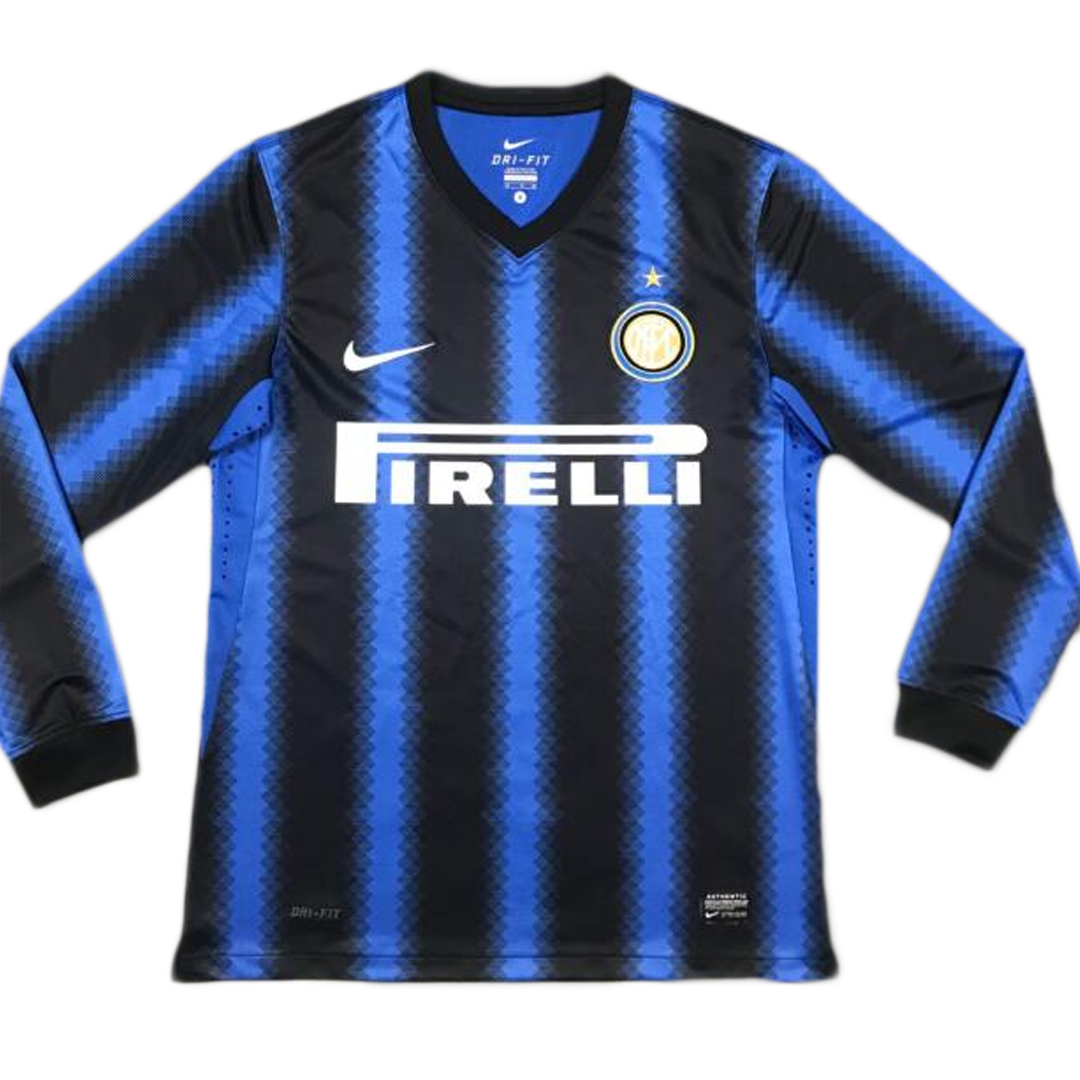
Inter Milan secured the 2009-2010 Serie A title with a total of 82 points, serving as the domestic foundation for their historic continental treble. Under the management of José Mourinho, the Nerazzurri achieved 24 wins, 10 draws, and 4 losses, finishing just two points ahead of a resurgent AS Roma.
The 2009-2010 campaign remains the most significant season in the history of Football Club Internazionale Milano. While the 82-point tally in Serie A was technically lower than the 84 points achieved the previous year or the record-breaking 97 points in 2006-2007, the context of this specific campaign is unparalleled. It was a season defined by tactical evolution, high-stakes recruitment, and a relentless schedule that saw the club compete on three fronts until the final week of May. In 2026, as we look back at the tactical shifts in Italian football, the 2010 Inter side stands as the ultimate blueprint for "result-oriented" excellence.
The Strategic Recruitment of Summer 2009
The path to 82 points began with arguably the most successful transfer window in Italian football history. Following the 2008-2009 season, José Mourinho and technical director Marco Branca recognized that while the team was dominant in Italy, it lacked the technical profile to succeed in Europe and the tactical flexibility to handle diverse domestic challenges.
The marquee move was the departure of Zlatan Ibrahimovic to Barcelona. In exchange, Inter received Samuel Eto’o plus a significant cash sum (approximately €46 million). This move fundamentally changed how Inter played. Ibrahimovic was a focal point who required the ball at his feet; Eto’o was a high-intensity striker capable of stretching defenses and, crucially, sacrificing himself for the team's defensive structure.
Complementing Eto'o were several other vital arrivals:
- Diego Milito and Thiago Motta: Signed from Genoa, Milito provided the clinical finishing Inter had lacked in tight games, while Motta offered composure in the midfield pivot.
- Lúcio: Acquired from Bayern Munich, the Brazilian defender brought veteran leadership and physical dominance to the backline.
- Wesley Sneijder: Arriving late in the window from Real Madrid, Sneijder was the "missing piece." He functioned as the pure number 10 that Mourinho’s 4-3-1-2 and eventual 4-2-3-1 systems required to link the midfield to the attack.
Tactical Evolution: From 4-3-1-2 to 4-2-3-1
Mourinho’s tactical management was the primary driver behind the 82-point finish. Early in the season, Inter utilized a diamond midfield (4-3-1-2) with Sneijder behind Milito and Eto’o. This formation allowed Inter to dominate the center of the pitch, evidenced by their 4-0 thrashing of AC Milan in only the second matchday of the season.
However, as the season progressed and the Champions League knockout stages loomed, Mourinho transitioned to a 4-2-3-1. This shift was necessitated by the need for more width and defensive cover on the flanks. The most famous aspect of this transition was Samuel Eto’o’s willingness to play as a wide forward with heavy defensive responsibilities. This tactical flexibility allowed Inter to grind out results in Serie A even when fatigue set in, ensuring they maintained their point-per-game average during the grueling spring months.
The double-pivot of Javier Zanetti and Esteban Cambiasso (or Thiago Motta) provided a shield for the "Wall" of Lúcio and Walter Samuel. This defensive solidity meant that even in games where the attack was not firing, Inter remained difficult to beat, resulting in only four losses across the 38-game league season.
The Narrative of the 82-Point Race
The 2009-2010 Serie A season was not a procession. Unlike previous years where Inter won the league with several games to spare, the 2010 title was a legitimate "dogfight" against Claudio Ranieri’s AS Roma.
The Autumn Dominance
Inter started the season with intent. After an opening-day draw against Bari, they went on a tear. The 4-0 victory over Milan and a 5-0 win over Genoa signaled a team that had improved significantly in terms of goal-scoring fluidity. By the winter break, Inter were comfortably ahead, and many pundits expected a routine fourth consecutive Scudetto.
The February-March Slump
The pursuit of 82 points hit a significant roadblock in early 2010. A string of draws against Parma, Napoli, Sampdoria, and Genoa saw the lead evaporate. It was during this period that Mourinho famously performed the "handcuffs" gesture during a match against Sampdoria, suggesting a bias against his team. This "siege mentality" was a calculated psychological move to unite the squad against external pressure as AS Roma began a 24-game unbeaten run.
The Turning Point: Roma vs. Sampdoria
By Matchday 33, Inter had actually fallen behind Roma in the standings after losing the head-to-head battle at the Stadio Olimpico. The title was no longer in Inter's hands. However, on Matchday 35, Roma faced Sampdoria at home. Despite leading 1-0, Roma conceded two second-half goals to Giampaolo Pazzini. Inter’s concurrent victory meant they reclaimed the top spot—a lead they would not relinquish.
The Final Day at Siena
On May 16, 2010, Inter entered the final matchday against relegated Siena needing a win to secure the title. Roma was winning their match against Chievo, meaning anything less than three points for Inter would see the trophy go to the capital. The match was tense and scoreless until the 57th minute when Diego Milito, assisted by Javier Zanetti, scored the winning goal. That goal brought Inter to 82 points and secured the first trophy of the Treble.
Statistical Breakdown of the 2009-2010 Serie A Season
To understand the efficiency of this campaign, we must look at the final standings and the performance metrics of the top three teams.
| Metric | Inter Milan | AS Roma | AC Milan |
|---|---|---|---|
| Final Points | 82 | 80 | 70 |
| Wins | 24 | 24 | 20 |
| Draws | 10 | 8 | 10 |
| Losses | 4 | 6 | 8 |
| Goals For | 75 | 68 | 60 |
| Goals Against | 34 | 41 | 39 |
| Goal Difference | +41 | +27 | +21 |
| Home Record (W-D-L) | 15-4-0 | 15-1-3 | 12-5-2 |
The statistics highlight two critical factors: Inter’s superior goal difference and their unbeaten record at the San Siro. Winning 15 out of 19 home games and drawing the other four provided a stable platform that allowed them to survive the pressure from Roma.
Key Players in the 82-Point Journey
While the 2010 Inter team is often praised for its collective discipline, several individuals were indispensable to the 82-point league total.
Diego Milito: The "Prince" of Efficiency
Milito finished the season with 22 league goals. More importantly, his goals were often "clutch" winners. Beyond the final-day goal against Siena, Milito’s ability to play as a lone striker allowed Mourinho to pack the midfield in difficult away fixtures. His movement and clinical finishing were the primary difference between a draw and a win in at least six league matches.
Wesley Sneijder: The Creative Catalyst
Sneijder provided 8 assists and 4 goals in the league, but his impact was greater than the raw data suggests. Before his arrival, Inter’s midfield was functional but lacked imagination. Sneijder’s ability to find pockets of space between the opposition’s midfield and defensive lines forced Serie A managers to change their defensive setups, often opening up space for Maicon to charge down the right wing.
Maicon: The Powerhouse Fullback
In 2010, Maicon was arguably the best right-back in the world. His fitness levels allowed him to function as both a defender and a secondary winger. In many of the "grind" games of the 82-point campaign, Maicon’s overlapping runs were the primary source of width, stretching defenses that attempted to sit deep and narrow against Inter.
Julio Cesar: The Last Line of Defense
While the "Wall" of Lúcio and Samuel was formidable, Julio Cesar’s performances in goal were vital. He recorded 17 clean sheets in Serie A. His penalty save against Ronaldinho in the Milan derby and his reflexive stops during the tense final weeks kept Inter’s narrow lead intact.
The Significance of the 82-Point Total in 2026
From the perspective of 2026, the 82-point total is a reminder of the competitive parity that existed in Serie A during that era. Modern title winners in Italy and across Europe often reach 90 to 100 points, reflecting a widening gap between the elite and the rest of the league. In 2010, the "Seven Sisters" era of Serie A had faded, but teams like Roma, Milan, Juventus, Napoli, and Sampdoria still possessed the quality to take points off the leaders.
Reaching 82 points while simultaneously winning the Champions League and the Coppa Italia required a level of squad rotation and mental fortitude that few teams have replicated. It was a points total achieved through "game management." Mourinho’s Inter rarely sought to humiliate opponents; they sought to control them. Once a lead was established, the team would often transition into a low block, conserving energy for the mid-week European fixtures.
Comparing 2010 to Other Inter Championship Teams
| Season | Points | Manager | Note |
|---|---|---|---|
| 2006-07 | 97 | Roberto Mancini | Record points total for the club at the time. |
| 2008-09 | 84 | José Mourinho | Mourinho's first season; dominant but UCL failure. |
| 2009-10 | 82 | José Mourinho | The Treble-winning season. |
| 2020-21 | 91 | Antonio Conte | Ended the Juventus dominance. |
| 2023-24 | 94 | Simone Inzaghi | The "Second Star" (20th Title) campaign. |
The comparison shows that while 82 points is on the lower end for Inter champions in the 3-points-for-a-win era, the degree of difficulty was significantly higher due to the deep runs in other competitions. The 2023-24 side, for example, could focus almost exclusively on the league after an earlier exit from Europe, whereas the 2010 side had to play the maximum possible number of games in a season.
FAQs About the 82-Point Campaign
Who was the top scorer for Inter Milan in the 2009-2010 Serie A season?
Diego Milito was the top scorer with 22 goals. He finished second in the overall Capocannoniere race behind Antonio Di Natale (29 goals). Milito's contributions were vital as he scored the decisive goals in the matches that secured all three trophies of the Treble, including the lone goal against Siena on the final day of the league.
How many games did Inter Milan lose during the 82-point campaign?
Inter Milan lost only 4 games in the 2009-2010 Serie A season. These losses came against Juventus (2-1), Sampdoria (1-0), Catania (3-1), and AS Roma (2-1). Despite these setbacks, their consistency in winning 24 matches and remaining unbeaten at home ensured they stayed ahead of Roma in the final standings.
Did José Mourinho win Manager of the Year for the 82-point season?
Yes, José Mourinho was awarded the Serie A Coach of the Year (Oscar del Calcio) for the 2009-2010 season. His tactical mastery, particularly the mid-season shift to a 4-2-3-1 and his management of the squad's psychology during the "handcuffs" incident, were cited as the primary reasons for the honor.
What was the importance of the 4-0 derby win against AC Milan?
The 4-0 win in Matchday 2 was a statement of intent. It featured a debut goal from Thiago Motta and an incredible performance by Wesley Sneijder just hours after he signed his contract. This match effectively ended the "psychological" challenge from their city rivals early in the season and established Inter as the clear favorites for the title.
How much did the Champions League run affect the 82-point league total?
The Champions League run significantly stressed the squad, leading to a dip in domestic form in February and March. Inter had to play high-intensity matches against Chelsea, CSKA Moscow, and Barcelona. Mourinho was forced to rotate players like Goran Pandev, Dejan Stankovic, and Cristian Chivu to ensure the starting XI didn't collapse under the physical demand of playing every three days.
Final Analysis: The Legacy of 82 Points
The 82 points Inter Milan earned in the 2010 campaign represent more than just a league title; they represent the successful navigation of the most difficult schedule in the club's history. For modern analysts in 2026, the season serves as a masterclass in how to prioritize results over aesthetics. The team was built on a foundation of veteran intelligence—players like Javier Zanetti and Esteban Cambiasso understood the tempo of the game and when to "kill" a match to preserve a lead.
While subsequent Inter teams have reached higher point totals, the 2009-2010 squad remains the gold standard for "winning when it matters." The 82 points were achieved not through dominance alone, but through the ability to respond to pressure, such as reclaiming the lead from Roma in the final weeks of April. This campaign solidified Inter Milan's place in the pantheon of footballing greats and ensured that the name "Inter 2010" would forever be synonymous with the pinnacle of Italian football.
Next Action for Readers: To truly appreciate the tactical depth of this campaign, study the Matchday 35 results of the 2009-2010 season. Analyzing how Inter responded to Roma's slip-up against Sampdoria provides the best insight into the mental fortitude required to reach that 82-point championship mark.