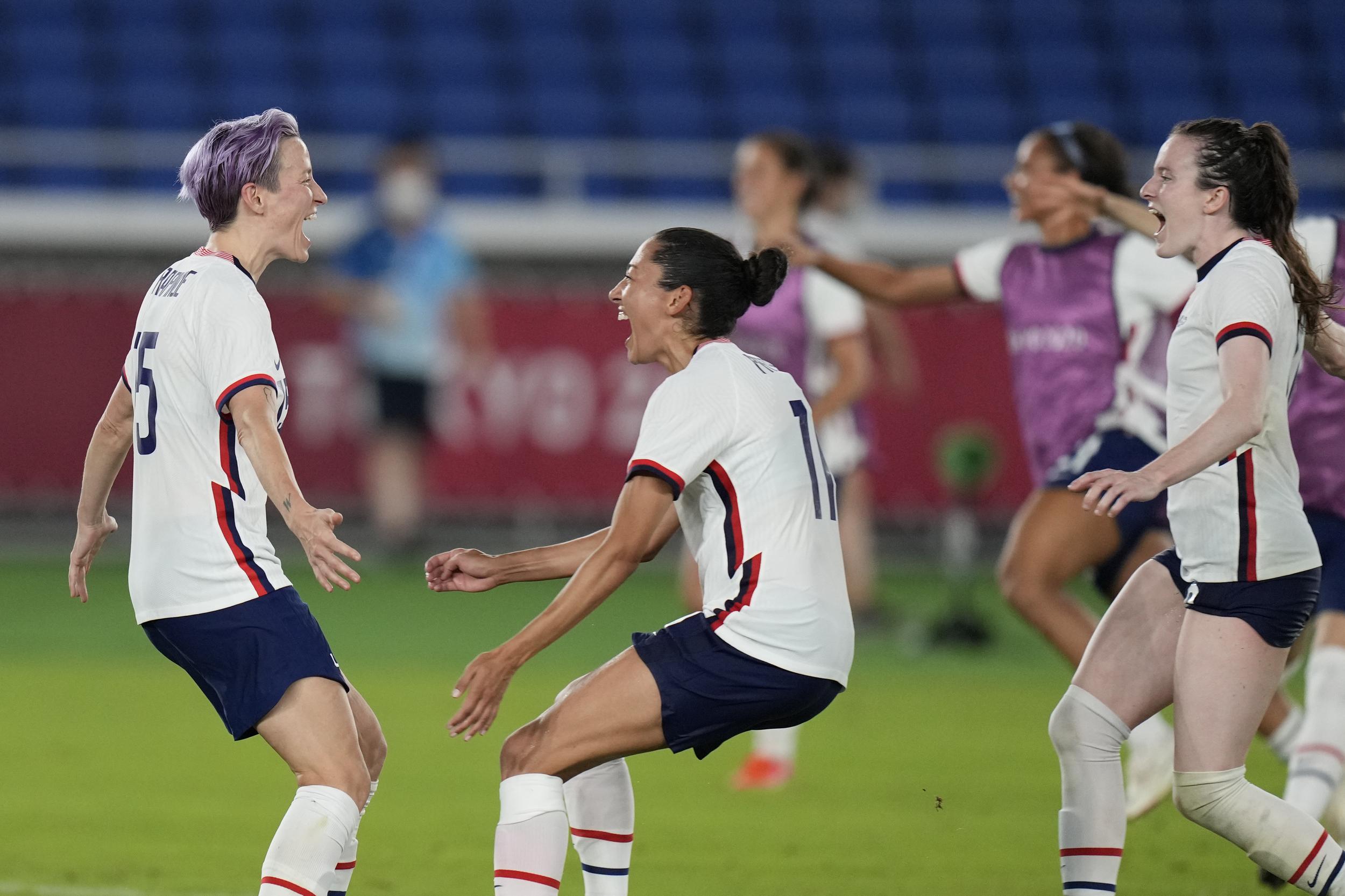
The controversy surrounding Megan Rapinoe and the United States flag stems from a viral video captured during the 2019 World Cup celebrations. While critics alleged a deliberate act of disrespect, supporters argued the incident was an accidental byproduct of a chaotic victory celebration. The event remains a flashpoint for debates on patriotism and sportsmanship.
The incident occurred on July 7, 2019, immediately following the United States Women’s National Team (USWNT) victory over the Netherlands in the FIFA World Cup final in Lyon, France. As the players celebrated on the pitch, a video clip surfaced showing Megan Rapinoe and teammate Allie Long posing for a photo. In the footage, a small American flag is seen on the grass, and Rapinoe appears to be standing over or near it. The clip quickly migrated from social media to national news, fueling a narrative that Rapinoe—already a polarizing figure due to her political activism—had intentionally stepped on the flag.
To understand the "why" behind this event, one must look at both the physical circumstances of the moment and the socio-political climate of the era. Here are seven reasons that explain the context, the physical reality, and the public perception of why Megan Rapinoe was seen in that position.
1. The Chaos of Post-Match Victory Adrenaline
The primary physical reason the flag ended up on the ground was the sheer chaos inherent in a World Cup victory. Following the final whistle, the pitch is swarmed by players, coaching staff, FIFA officials, photographers, and security. In such an environment, items are frequently dropped, stepped on, or lost in the shuffle.
When the USWNT won their fourth title, the players were operating under intense emotional and physical exhaustion combined with high adrenaline. During these celebrations, fans and staff often throw items—scarves, jerseys, and flags—toward the players. The flag in question was not a formal ceremonial flag but a small, hand-held version likely tossed from the stands or handed over by a staff member. In the frenzy of jumping, hugging, and posing for hundreds of cameras, maintaining perfect "Flag Code" etiquette becomes secondary to the immediate physical celebration.
2. Handling Multiple Props for Media Photography
During the trophy presentation and the subsequent "victory lap," players are bombarded with props for photographs. On that day in Lyon, Rapinoe and her teammates were juggling the World Cup trophy, individual medals, "Golden Boot" and "Golden Ball" awards, and various pieces of apparel.
In the specific video clip often cited by critics, Rapinoe and Allie Long are attempting to coordinate a specific pose for a photographer. Long is seen holding a flag, which then ends up on the ground. Rapinoe is focused on the camera lens, not the ground at her feet. The "reason" she was in that proximity was simply the logistics of a multi-player photoshoot where items are constantly being moved, dropped, and picked up to get the "perfect shot" for global media outlets.
3. The Role of Camera Angles and Depth Perception
One of the most significant reasons the public believed Rapinoe stepped on the flag was the nature of the footage itself. Most of the viral "proof" came from a low-resolution, two-dimensional video filmed from a specific angle. In videography, depth perception can be easily distorted.
Analyses of the full footage from different angles suggested that while Rapinoe was standing extremely close to the flag, her cleats may not have made direct, weighted contact with the fabric in the way a "stomp" would imply. However, the angle shared most widely on social media created the visual illusion of direct contact. This technical limitation of the source material provided the visual "evidence" necessary for the controversy to take root, regardless of the physical reality of where her foot landed.
4. Pre-existing Political Activism and Public Predisposition
Perhaps the most influential reason for the outcry was Rapinoe’s history of political protest. In 2016, Rapinoe became the first high-profile white athlete to kneel during the national anthem in solidarity with Colin Kaepernick to protest police brutality and racial injustice.
Because of this history, a large segment of the public was already predisposed to interpret any action involving Rapinoe and national symbols through a lens of "protest." When the flag touched the ground, it was not viewed as a mistake; it was viewed as a continuation of her political messaging. This predisposition turned a potentially minor logistical error into a symbolic act of defiance in the eyes of her critics.
5. The Influence of Social Media Algorithms and Echo Chambers
The "stepping on the flag" narrative gained momentum primarily because of how social media operated in 2019. The clip was edited into short loops, often stripped of the context of the preceding and succeeding seconds where players are seen picking up the flags and celebrating with them.
Once the "Rapinoe steps on flag" headline was created, it was amplified by social media algorithms that prioritize high-arousal, controversial content. Users who already held negative views of Rapinoe were fed the video repeatedly, reinforcing the idea that the act was intentional. The speed at which the video traveled meant that by the time a full context or a defense could be mounted, the "reason" for the event had already been solidified in the public consciousness as an act of disrespect.
6. Interpretations of the United States Flag Code
The controversy was further fueled by different interpretations of the United States Flag Code (4 U.S.C. § 1 et seq.). The code states that the flag should never touch anything beneath it, such as the ground, the floor, or water.
For traditionalists and veterans' groups, the mere fact that the flag was on the grass while Rapinoe stood over it was a violation of the code, regardless of her intent. The "reason" for the backlash was a strict adherence to these rules. While the Flag Code is a set of guidelines and carries no federal penalties for civilian "misuse" in this context, the visual of a national symbol on the ground provided a factual basis for those who wished to criticize her conduct.
7. Political Polarization and the "Anti-American" Narrative
In 2019, the United States was experiencing a period of intense political polarization. The USWNT, led by vocal figures like Rapinoe, became a proxy for larger cultural battles regarding gender equality, LGBTQ+ rights, and patriotism.
Critics used the flag incident to support a narrative that the team was "anti-American." Conversely, supporters argued that the team was representing the best of American values through their success and advocacy. The "reason" the flag incident became such a massive story was that it served as a perfect Rorschach test for the American public: people saw in that video exactly what their political affiliations encouraged them to see.
Comparison: Allegation vs. Reported Context
| Aspect | The Allegation | The Reported Context |
|---|---|---|
| Intent | Deliberate act of protest or disrespect. | Accidental result of a chaotic celebration. |
| Action | Intentionally stepping on the fabric of the flag. | Standing in close proximity during a photoshoot. |
| Handling | Dropping the flag with contempt. | The flag falling while juggling multiple awards/props. |
| Teammate Role | Allied in the act of disrespect. | Allie Long was seen attempting to retrieve the flag. |
| Duration | A sustained act of standing on the flag. | A fleeting moment lasting only a few seconds. |
Fact-Checking the Incident: What Really Happened?
While the debate continues to resurface in 2026 as a point of reference for athlete activism, the factual record suggests a more nuanced reality than the viral headlines of the time.
Allie Long, the teammate featured in the video, explicitly defended the group, stating on social media that they have the utmost respect for the flag and that the incident was a momentary lapse in handling a prop during the excitement. Rapinoe herself has frequently stated that her protests—such as kneeling—were intended to hold the country to a higher standard of its own ideals, rather than to show "hatred" for national symbols.
Furthermore, additional footage from the same celebration shows Rapinoe and other players draped in the flag, waving it proudly, and treating it with the celebratory reverence typical of Olympic and World Cup champions. The "reason" the specific "stepping" clip became the dominant story was its utility as a political tool, rather than its accuracy as a representation of the entire event.
The Impact on Rapinoe’s Legacy
The flag incident did not significantly hinder Rapinoe’s professional success, but it did cement her status as a cultural lightning rod. She went on to win the Ballon d'Or Féminin and was named the 2019 Sports Illustrated Sportsperson of the Year. However, the "flag-stepping" narrative remains one of the most cited points of criticism by her detractors, often brought up whenever she receives civic honors or participates in public discourse.
Frequently Asked Questions
Did Megan Rapinoe ever apologize for the flag incident? Megan Rapinoe did not issue a formal apology for "stepping" on the flag, primarily because she and her teammates maintained that it was an accident and that no intentional disrespect occurred. She has consistently defended her right to peaceful protest while maintaining that her actions are rooted in a desire for national improvement.
What does the U.S. Flag Code say about flags on the ground? The U.S. Flag Code states in Section 8(b) that "The flag should never touch anything beneath it, such as the ground, the floor, water, or merchandise." While this is the official guideline, it is not a set of enforceable laws for civilians, and "violations" occur frequently in sporting events where flags are used as capes or props.
Was there a formal investigation into the incident? No, there was no formal investigation by U.S. Soccer or FIFA. The organizations generally view post-match celebrations as informal, high-emotion environments. While the incident was discussed in the media, it did not lead to any disciplinary action or fines against the players.
How did Allie Long respond to the controversy? Allie Long, who was holding the flag before it fell, took to Twitter (now X) shortly after the incident to clarify. She stated, "I am the one who dropped it... I love my country and would never disrespect our flag." Her statement was intended to take responsibility for the logistical mishap and de-escalate the anger directed at Rapinoe.
Why is this still a topic of discussion in 2026? The incident remains relevant because it represents the intersection of sports, politics, and the "culture wars." As a prominent figure in the history of athlete activism, Rapinoe’s past actions are frequently analyzed to discuss the evolution of how athletes engage with national symbols and social justice issues.
Final Perspective: Context over Clips
When analyzing the "7 reasons why Megan Rapinoe stepped on the flag," it becomes clear that the event was a mixture of physical logistical errors and a highly charged political atmosphere. While the visual of the flag on the grass is a matter of record, the intent behind it remains a subject of interpretation. For readers looking to understand the event, it is essential to view the viral clip within the context of a 90-minute high-stakes match, the subsequent hour of celebration, and the complex history of the athlete involved.
The most practical takeaway is the realization of how easily a few seconds of footage can be transformed into a lasting national narrative when it aligns with pre-existing social tensions.