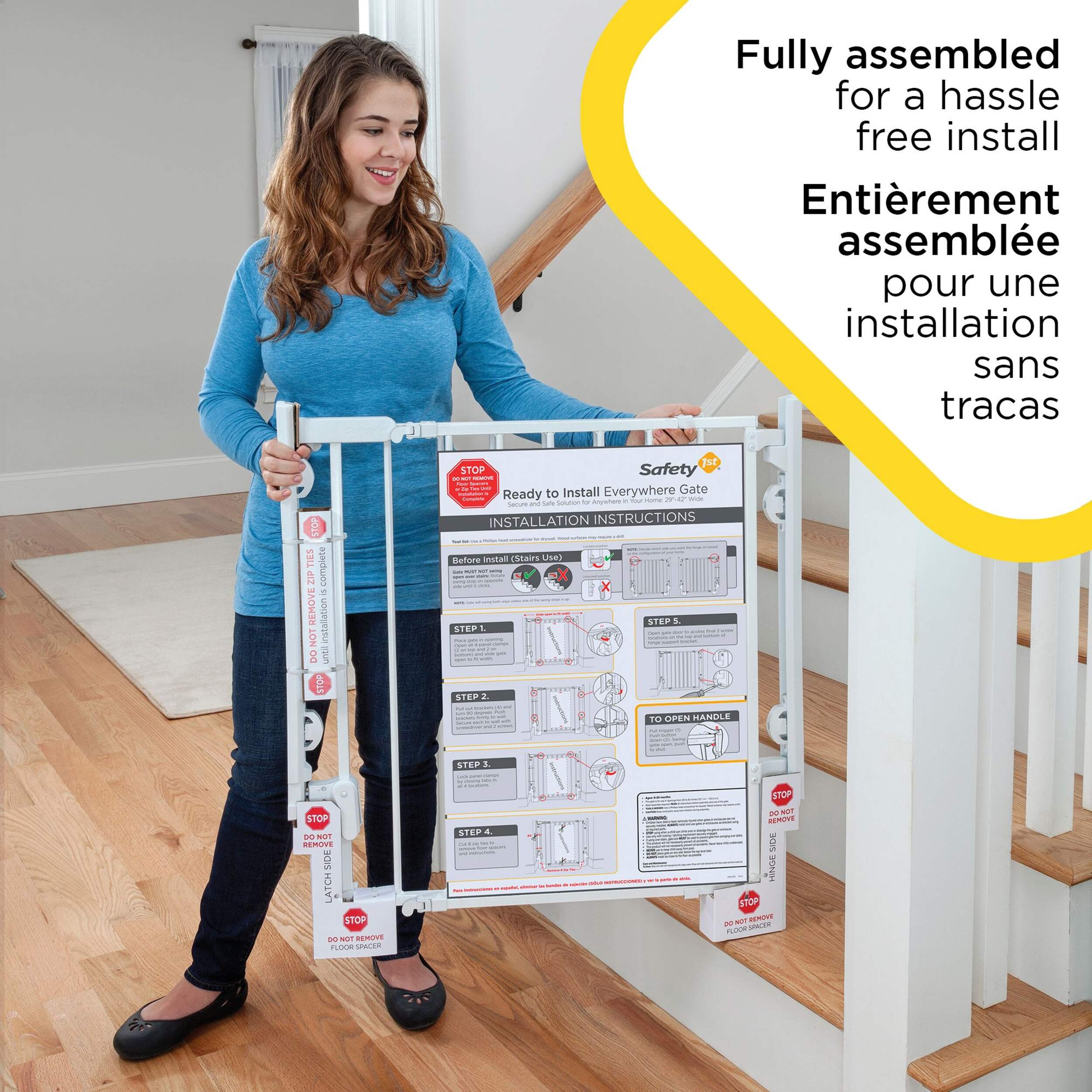
Choosing the right safety gate for a staircase requires understanding the critical distinction between pressure-mounted and hardware-mounted systems, with hardware-mounted gates being the only safe choice for the top of stairs due to the risk of a gate dislodging from downward pressure. When selecting a baby gate to protect children or pets from elevation hazards, key considerations include opening width, latch mechanisms, self-closing capabilities, and the presence of a trip hazard at the threshold.
Installing a baby gate at a staircase is one of the most vital childproofing steps a parent or caregiver can take. Stairs present an immediate, severe physical hazard to crawling infants, toddlers learning to walk, and even curious pets. However, not all safety gates are engineered to withstand the unique structural challenges and safety demands of staircases.
Evaluating the marketplace involves examining mounting integrity, ease of operation, material durability, and compliance with safety standards. This guide analyzes five top-performing safety gates engineered for stair use, distinguishing between top-of-stairs and bottom-of-stairs suitability to help you make an informed investment.
Understanding Stair Safety Gate Requirements
Before evaluating specific models, it is essential to understand the engineering principles that govern stair safety. The primary rule in child safety is that pressure-mounted gates must never be used at the top of stairs.
- STAIR SAFETY RULE
- TOP OF STAIRS: Hardware-Mounted Only (Drilled into studs)
- BOTTOM OF STAIRS: Hardware-Mounted OR Pressure-Mounted
Pressure-mounted gates rely on opposing tension against walls or banisters to stay in place. If a child leans heavily against a pressure-mounted gate at the top of a flight of stairs, the entire unit can shift or dislodge, sending the child tumbling down the steps.
Hardware-mounted gates, conversely, are screwed directly into wall studs, wooden posts, or banisters. They swing open like a door, leaving zero threshold barrier at floor level—another critical safety feature that prevents tripping when a person is carrying a child down the steps.
The 5 Best Safety Gates for Stairs Compared
The following selections represent top-tier options based on structural integrity, user feedback, safety certifications, and functional versatility.
| Product Name | Mounting Type | Primary Location | Key Feature | Walk-Through Width |
|---|---|---|---|---|
| Regalo Top of Stairs Gate | Hardware-Mounted | Top & Bottom | Steel design, no bottom threshold bar | 24 to 40.5 inches |
| Summer Infant Deluxe Stairway | Hardware-Mounted | Top & Bottom | Dual-lock handle, removable swing stop | 30 to 48 inches |
| Cardinal Gates Stairway Special | Hardware-Mounted | Top & Bottom | Aluminum build, optional angle mounting | 27 to 42.5 inches |
| Evenflo Gold SecureStep | Hardware-Mounted | Top & Bottom | Step-to-open foot pedal mechanism | 29 to 42 inches |
| RetractableBaby Gate (Mesh) | Hardware-Mounted | Bottom Only | Retractable mesh, space-saving profile | Up to 55 inches |
Detailed Reviews of the Top 5 Stair Safety Gates
1. Regalo Top of Stairs White Safety Gate
The Regalo Top of Stairs gate is specifically engineered to address the hazards of elevated openings. Constructed from heavy-duty steel, this gate offers a robust physical barrier that meets stringent safety standards set by the Juvenile Products Manufacturers Association (JPMA).
- Mounting and Installation: This is a dedicated hardware-mounted system. It includes templates and hardware required to anchor securely into wood studs or drywall with wooden backing.
- Operation: It features a simple, one-touch release safety lock that adults can easily operate with one hand, which is essential when carrying laundry or an infant.
- Width Adjustability: The frame adjusts to fit openings ranging from 24 to 40.5 inches wide and stands 30.5 inches tall.
- Pros: All-steel construction; no hazardous bottom threshold bar to trip over; highly secure hardware attachment.
- Cons: Installation requires precise measuring and drilling; the locking mechanism can feel stiff out of the box.
2. Summer Infant Deluxe Stairway Wood Gate
For households preferring a warmer aesthetic that blends with traditional home décor, the Summer Infant Deluxe Stairway Wood Gate provides a robust wooden solution without compromising safety standards.
- Mounting and Installation: Built strictly for hardware installation. It features an adjustable-width system that accommodates uneven walls and baseboards using a quick-adjust template.
- Operation: Equipped with a dual-lock operation on the handle, making it difficult for toddlers to figure out while remaining accessible for adults. It also features a unique swing-control bracket that can restrict the gate from opening out over the stairs.
- Width Adjustability: Fits openings from 30 to 48 inches wide, making it one of the wider options for expansive staircases or hallways.
- Pros: Attractive wood finish; extra-wide accommodation; swing-control feature prevents outward opening over drops.
- Cons: Wood material can be susceptible to scuffs; bulkier profile than metal competitors.
3. Cardinal Gates Stairway Special
Cardinal Gates is widely recognized among child safety professionals for commercial-grade durability. The Stairway Special model is constructed from lightweight, rust-proof aluminum rather than heavier steel or wood.
- Mounting and Installation: Hardware-mounted. A standout feature of this gate is its ability to mount at an angle up to 30 degrees, making it ideal for staircases where posts or walls do not align squarely opposite each other.
- Operation: Features a spring-loaded latch that automatically locks when closed. An optional one-way stop prevents the gate from swinging out over the stairs entirely.
- Width Adjustability: Adjusts from 27 to 42.5 inches. Extension kits are available for wider spans.
- Pros: Can be installed at awkward angles; aluminum construction resists corrosion; very sturdy locking latch.
- Cons: Higher price point compared to standard consumer gates; industrial aesthetic may not suit all interior designs.
4. Evenflo Gold SecureStep Safety Gate
The Evenflo Gold SecureStep introduces hands-free convenience to stairway safety, addressing the common parental dilemma of having both hands full while navigating steps.
- Mounting and Installation: Hardware-mounted for secure placement at the top or bottom of stairs.
- Operation: Utilizes a patented step-to-open foot pedal mechanism. A caregiver simply steps down on the foot pedal to unlock the gate, allowing the door to swing open smoothly. It also features a self-closing hinge mechanism that gravity-pulls the gate shut.
- Width Adjustability: Fits openings from 29 to 42 inches wide.
- Pros: Foot-operated opening mechanism for hands-free use; self-closing capability adds peace of mind.
- Cons: Mechanical foot pedal requires occasional clearing of dust and debris to maintain smooth operation; complex assembly compared to basic swinging gates.
5. RetractableBaby Gate (Mesh Style)
While mesh retractable gates are popular for their minimalist footprint, they require strict adherence to placement guidelines. Mesh retractable gates should only be used at the bottom of stairs, never at the top, due to potential give in the fabric under heavy lateral loads.
- Mounting and Installation: Hardware-mounted brackets anchor the roll housing and the catch mounts on opposite sides.
- Operation: The durable mesh screen pulls smoothly across openings up to 55 inches wide and retracts completely out of the way when unlocked and not in use.
- Width Adjustability: Highly versatile for wide openings, spanning up to 55 inches.
- Pros: Virtually invisible when retracted; no tripping hazard at the floor level; excellent for wide or irregular bottom-stair landings.
- Cons: Soft mesh can deflect if a child or pet leans hard against it; strictly prohibited for top-of-stair installations.
Critical Factors to Evaluate Before Buying
Selecting the best safety gate involves more than matching measurements. Careful assessment of your home's architecture and your household's daily routines ensures long-term satisfaction and safety.
Banister-to-Wall vs. Wall-to-Wall Installation
Many staircases feature a wooden banister (newel post) on one side and a drywall surface on the other. Standard hardware mounting kits assume two flat, vertical walls. If you are mounting a gate against a cylindrical or square wooden banister, you will likely need an auxiliary installation accessory—often called a banister adapter kit—which clamps around the post without requiring you to drill holes directly into finished wood furniture or structural posts.
Swing Direction Restrictions
At the top of a flight of stairs, a gate must never swing out over the steps. If a gate swings outward and a child leans against it while it is unlatched, or if an adult pulls it open over empty space, a fall can occur. Always verify that your chosen gate includes a swing-stop bracket or physical stop mechanism that restricts the door to opening inward, toward the landing or hallway only.
Height and Climbing Resistance
Children grow rapidly, and clever toddlers quickly learn to scale horizontal bars or footholds. Look for gates with vertical slats rather than horizontal crossbars that act as built-in ladder rungs. Standard safety gates stand between 30 and 31 inches tall, but extra-tall models (36 inches or higher) are recommended if you have climbing-prone toddlers or large dogs.
Common Installation Mistakes to Avoid
Even the highest-rated safety gate will fail if installed incorrectly. Avoiding these frequent pitfalls ensures maximum structural integrity:
- Skipping Stud Finders: Anchoring hardware directly into drywall without hitting a wooden stud or using heavy-duty toggle anchors will cause the screws to tear out under pressure. Always anchor into solid wood framing.
- Ignoring Manufacturer Instructions on Height: Installing a gate too high off the floor creates a crawl space underneath where a small infant or pet could slip through. The bottom gap should generally be no more than two to three inches from the floor.
- Using Tension Gates Where Hardware is Required: As emphasized, pressure-mounted gates rely entirely on friction. Relying on them at the top of stairs is a severe safety hazard.
- Failing to Check Latches Regularly: Over weeks of heavy use, hardware screws can loosen due to the vibration of slamming or swinging doors. Inspect and tighten mounting screws monthly.
Frequently Asked Questions
Can I use a pressure-mounted gate at the top of the stairs if I tighten it extra hard?
No. No amount of tightening makes a pressure-mounted gate safe for the top of stairs. The structural design relies on friction against vertical surfaces. If a child pushes, trips, or falls against the mesh or bars, the entire unit can slip downward off the landing, resulting in a dangerous fall down the staircase. Always use a hardware-mounted gate secured directly into studs or posts at the top of stairs.
How do I install a safety gate if I have a wooden banister on one side and drywall on the other?
You will need a hardware-mounted gate combined with a specialized banister installation kit (sometimes sold separately by brands like Cardinal Gates or Regalo). These kits use metal brackets and straps to clamp securely around the wooden banister post without requiring you to drill holes into finished woodwork, while the opposite side screws directly into the wall stud.
What is the difference between top-of-stairs and bottom-of-stairs safety gates?
Top-of-stairs gates must be hardware-mounted and should not feature a bottom threshold bar, eliminating any risk of an adult tripping while carrying a child down the steps. Bottom-of-stairs gates have more flexibility; while hardware mounting is still recommended for maximum security, pressure-mounted gates and retractable mesh gates are acceptable at the bottom because a fall from the floor level does not involve an elevation drop.
How wide can safety gates get for wide staircases or landings?
Standard safety gates typically span openings between 29 and 42 inches. However, many manufacturers offer modular extension panels that can extend coverage up to 50 or 60 inches. For exceptionally wide bottom landings, retractable mesh gates can span up to 55 inches while maintaining a clean, compact footprint when retracted.
Are wooden or metal safety gates better for stairs?
Both materials meet rigorous safety standards if certified by organizations like the JPMA. Metal gates (usually steel or aluminum) offer superior durability, slim profiles, and resistance to chewing if you have teething pets or children. Wooden gates provide a warmer, furniture-matching aesthetic that blends seamlessly with home interiors but may show scuffs or wear over time.
Final Recommendation
Securing your staircase is a non-negotiable aspect of home childproofing. For the top of the stairs, prioritize safety above all else by selecting a robust hardware-mounted model like the Regalo Top of Stairs Gate or the Cardinal Gates Stairway Special, ensuring it is anchored firmly into wall studs and configured to swing only away from the drop. For the bottom of the stairs, you have greater flexibility to use hardware-mounted swing gates or convenient retractable mesh options depending on your space and foot traffic needs. Always measure your opening accurately, check for baseboard clearance, and perform monthly maintenance checks on all mounting hardware to ensure continuous protection for your family.